

Pharmacy in England has changed again lately. Since Pharmacy First began in January 2024, your local chemist can supply prescription-only medicines for a handful of common complaints, such as sore throats and urinary tract infections, without you booking a GP appointment. If you have queued at the counter for an earthy-smelling remedy and a bit of advice, you have stepped into very old territory. The history of the apothecary explains why: the chemist and the GP both grew out of one muddled, hard-working trade.
The short version is this. The apothecary was a tradesman who prepared and sold medicines, and by the eighteenth century he was also treating patients. In 1815 the law made that official, and over the next century the trade split in two. The dispensing side became the pharmacist. The medical side became the general practitioner.
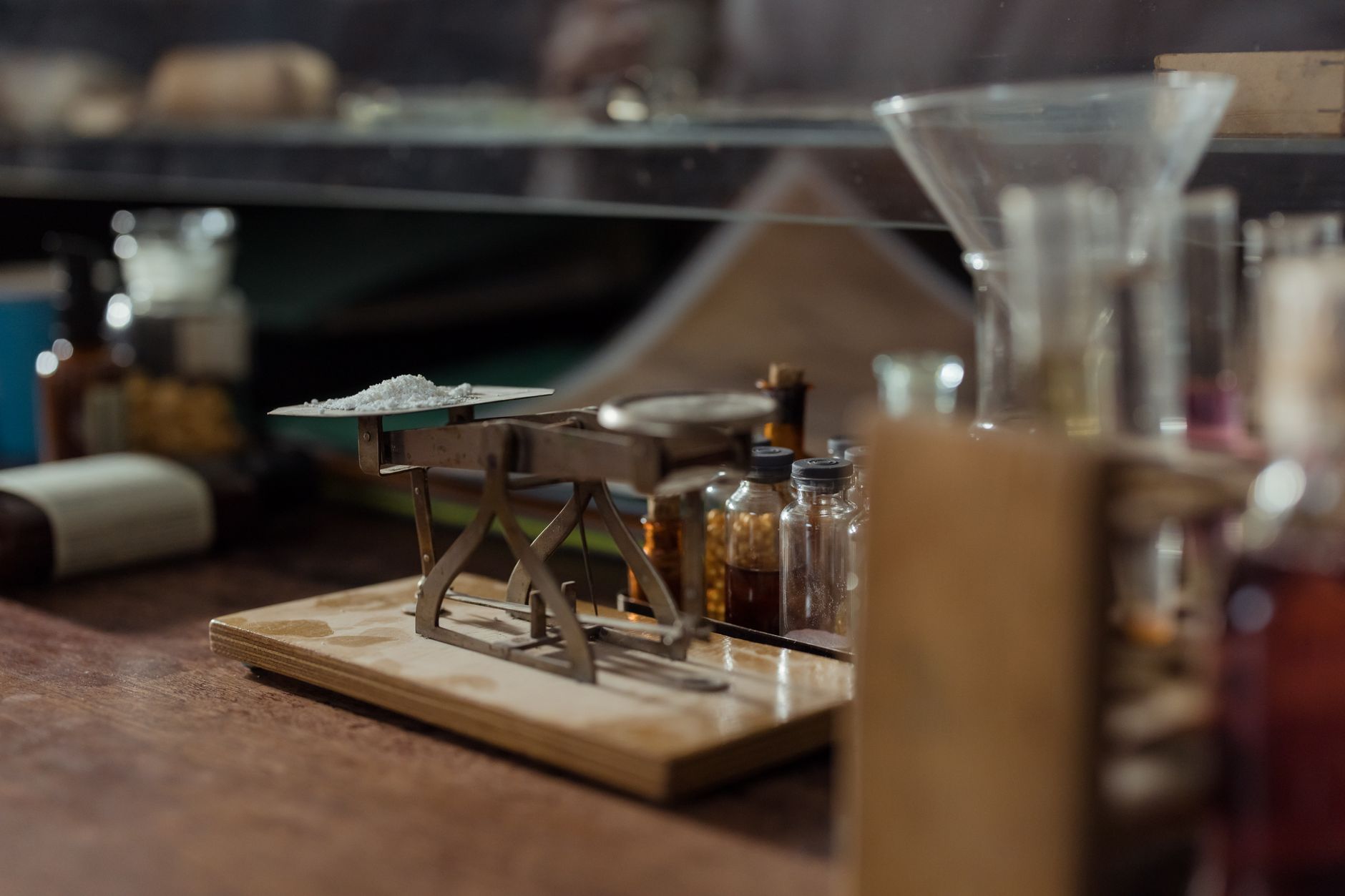
A short history of the apothecary
In medieval England, the apothecary was a spice and drug seller, and he usually belonged to the Grocers’ Company. The Royal College of Physicians, founded in 1518, looked down on him from a great height. Physicians were university men who diagnosed and prescribed. Apothecaries were tradesmen who weighed things out and handed them over. Not a lot of mixing at dinner parties, one imagines.
In 1617 James I granted a royal charter to the Society of Apothecaries of London, splitting them from the grocers. That gave the trade its own identity, its own rules and eventually its own grand premises: Apothecaries’ Hall, near Blackfriars, which the Society still uses today.
The physicians kept up the pressure. Their view was that apothecaries should compound drugs on a physician’s orders and keep their noses out of diagnosis. The ordinary public disagreed, mostly because physicians were expensive and apothecaries were round the corner.
What did an apothecary actually do?
An apothecary prepared medicines from herbs, minerals and animal products, sold them over the counter, and from the seventeenth century increasingly advised and treated patients too. A physician’s fee put him out of reach of most households. The apothecary charged for the medicine rather than the advice, which was a tidy way of dodging the physicians’ monopoly.
A court case settled the muddle for a while. In 1704 the House of Lords ruled in the Rose case, involving a London butcher who had been treated by an apothecary, that giving medical advice and prescribing as part of supplying medicines was legitimate apothecary work. It was a quiet revolution. From then on the apothecary was a front-line healer for ordinary people, the forerunner of the family doctor.
Physician, apothecary, chemist: how they compared
By about 1800 England had three overlapping kinds of medical tradesman. The table sets out how they differed, though the edges were never tidy.
| Trade | Training | What they did | Who used them |
|---|---|---|---|
| Physician | University degree, often Oxford or Cambridge | Diagnosed and prescribed, rarely handled medicines | Wealthy patients |
| Apothecary | Apprenticeship, usually several years | Dispensed, advised and treated everyday illness | Middling and working households |
| Chemist and druggist | Shop trade, no set qualification until the 1800s | Sold drugs, chemicals and ready-made remedies | Anyone with a few coppers |
If you were rich and ill in Georgian London, you sent for the physician. If you were anyone else, you went to the apothecary and hoped for the best. The chemist and druggist, meanwhile, was a shopkeeper who supplied both of them and the general public.
The Apothecaries Act of 1815
The Apothecaries Act of 1815 gave the Society of Apothecaries the power to license practitioners in England and Wales. It required an apprenticeship and an examination, and it produced the Licentiate of the Society of Apothecaries, or LSA. The poet John Keats trained this way and qualified at Apothecaries’ Hall in 1816, before choosing poetry over medicine.
The Act had an odd effect. It made apothecaries into general medical practitioners, because the licence was about treating patients, not just selling drugs. Many added surgery to their skills, and the apothecary-surgeon became the village doctor. That is the direct ancestor of the GP.
How the trade split in two
The shop side went a different way. The Pharmaceutical Society was founded in 1841, led by Jacob Bell, to give chemists and druggists a professional body of their own. The Pharmacy Act of 1852 began a register of pharmacists, and the 1868 Pharmacy Act restricted the sale of poisons to registered chemists and druggists. The shop counter became a regulated place of professional work.
On the medical side, doctors were brought under a single register by the Medical Act of 1858, and the old divisions of physician, surgeon and apothecary faded into plain "doctor". The National Health Service arrived in 1948, and the Royal College of General Practitioners followed in 1952, giving the family doctor an institutional home. The apothecary had not vanished. He had been cut neatly in half.

Quacks, patent medicines and the modern shopkeeper
The old trade was never entirely respectable. Patent medicines of the Victorian era promised cures for everything and often contained little more than alcohol or opium. Honest apothecaries competed with confident salesmen and spent a good deal of energy complaining about them.
The independent chemist is still a small shopkeeper at heart, and small shopkeepers still attract chancers. Say a pharmacy owner opens the post and finds an invoice for web hosting they never ordered, written in suitably official language. The write-up on 0lly shows what one of those fake hosting invoices looks like, which is handy to know before anyone in the accounts office pays it.
Who to thank for what
So, who should you credit? If you value the person who knows your family and treats the everyday ailments, thank the apothecary-surgeon, who gave us the GP. If your favourite person is the one who checks your prescription and spots a clash between two tablets, thank the chemist and druggist, who gave us the pharmacist. Pharmacy First is a small reunion of the two. You can find out which services your local chemist offers on the NHS pharmacy services page.
For a wider look at the sort of shops that fed ordinary British life, our piece on the British corner shop follows a neighbouring trade. And if you are ever in Blackfriars, Apothecaries’ Hall is worth knowing about: it is one of the City’s surviving livery halls, still tied to the trade that started all this.
Frequently Asked Questions
What was the difference between an apothecary and a physician?
A physician was a university-educated doctor who diagnosed illness and wrote prescriptions, and charged accordingly. An apothecary learnt through apprenticeship, prepared and sold medicines, and by the eighteenth century also treated patients. Apothecaries were the affordable option for most households.
When did apothecaries stop being called apothecaries?
The title faded through the nineteenth century as the trade divided. The Pharmacy Acts created the registered pharmacist, and the Medical Act of 1858 merged doctors onto one register. The Society of Apothecaries still exists and awards qualifications today.
What was the Apothecaries Act of 1815?
It gave the Society of Apothecaries the power to license apothecaries in England and Wales, requiring an apprenticeship and an examination. It created the LSA qualification and turned apothecaries into general medical practitioners. This is why it is seen as a key step towards the modern GP.
Does the Society of Apothecaries still exist?
Yes. The Society of Apothecaries of London, chartered in 1617, is still active as a livery company and awards diplomas in some medical fields. It is based at Apothecaries’ Hall near Blackfriars in the City of London.
Did apothecaries really replace the physician for ordinary people?
For most people, yes. The 1704 Rose case allowed apothecaries to advise and prescribe as part of supplying medicines. Since physicians were costly, the apothecary became the first port of call for everyday illness.


Leave a Reply