Category: Local

  • England’s Wool Towns: How the Medieval Fleece Trade Built Some of Our Most Beautiful High Streets

    England’s Wool Towns: How the Medieval Fleece Trade Built Some of Our Most Beautiful High Streets

    Walk through Lavenham on a quiet Tuesday morning and you’d be forgiven for thinking time had simply forgotten to move on. The timber-framed guildhall leans slightly, the way old buildings do when they’ve earned the right. The church of St Peter and St Paul looms over the market square with the quiet confidence of something built by people who fully expected God to notice. And the whole place smells faintly of the past. All of this, every crooked beam and every soaring flint tower, was paid for by sheep.

    The medieval wool trade was, for several centuries, the engine of the English economy. At its height, wool and cloth exports accounted for the majority of England’s customs revenue, and the towns that sat at the heart of that trade grew rich in a way that is still visible today. Understanding medieval wool towns England heritage means understanding that the finest high streets in the land were essentially built on the backs of Cotswold and Suffolk sheep.

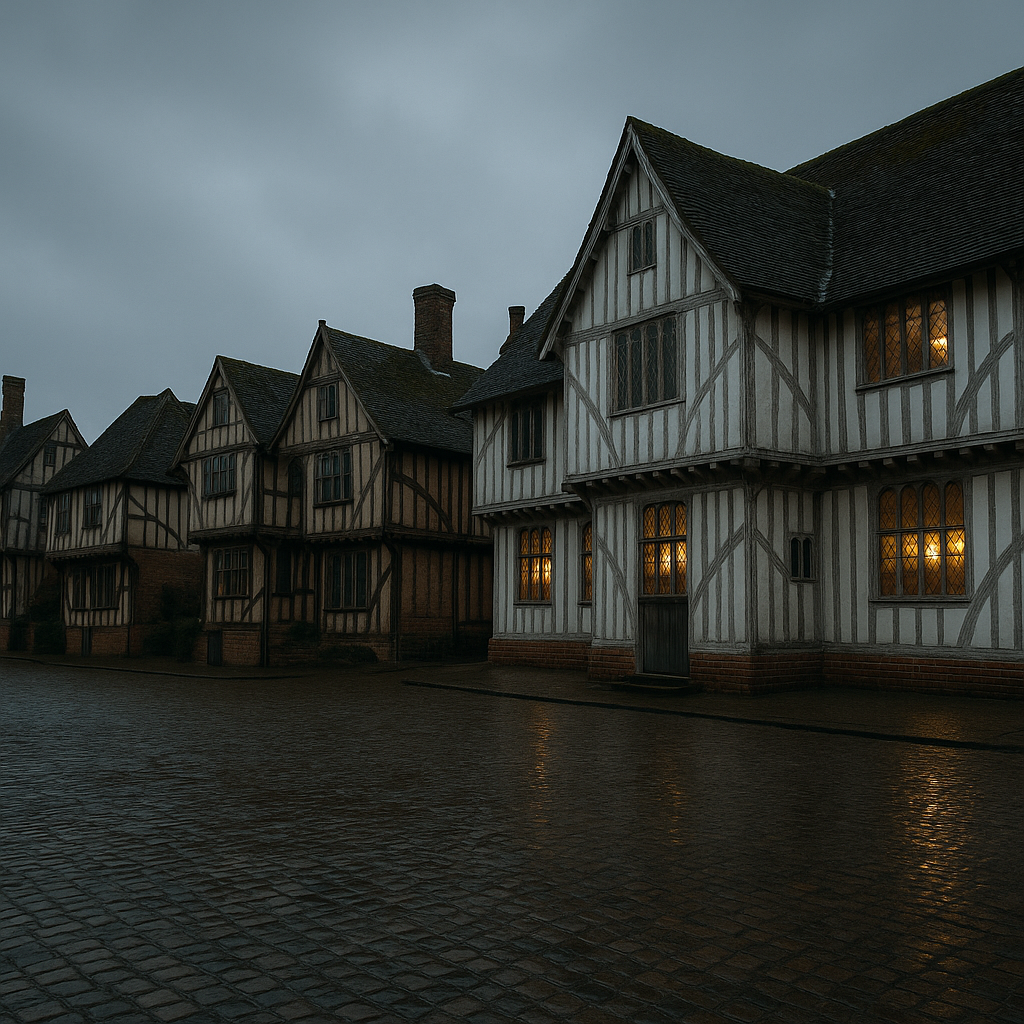
    Lavenham market square showing the medieval guildhall, a key example of medieval wool towns England heritage
    Lavenham market square showing the medieval guildhall, a key example of medieval wool towns England heritage

    The Wool Trade and Why It Made Certain Towns Extraordinary

    England’s wool had a reputation across medieval Europe. Flemish and Italian merchants paid premium prices for it, and English wool merchants paid substantial taxes to the Crown in return for licences to export it. This arrangement, known as the Staple system, funnelled extraordinary wealth into specific corners of the country. The Cotswolds, Suffolk, and Oxfordshire were particularly favoured because their upland pastures suited the breeds that produced the finest fleece.

    Merchants who grew wealthy on this trade did not hide their money. They poured it into churches, guildhalls, market crosses, and their own elaborately decorated homes. This was partly piety, partly civic pride, and partly the medieval equivalent of a very flashy Twitter bio. When a wool merchant in Chipping Campden commissioned the rebuilding of St James’s Church in the 15th century, he was making a statement that would outlast him by six hundred years. It has, rather successfully, done exactly that.

    Witney in Oxfordshire grew wealthy on blanket weaving rather than raw wool export, its cloth trade sustaining a prosperous market town through the medieval and post-medieval periods. The broad market square and the handsome Butter Cross are direct physical legacies of that commercial confidence. Witney’s Blanket Row is not a coincidence of naming. These streets were working districts, full of weavers, fullers, and dyers, and the prosperity they generated shaped the entire built environment.

    Lavenham: The Poster Child of Medieval Wool Towns England Heritage

    Lavenham is probably the most complete surviving example of a medieval wool town in England. At its economic peak in the late 15th century, it was among the wealthiest settlements in the country, ahead of cities like Lincoln and York in terms of taxable wealth. The Springs and the de Veres, the two families most associated with the town’s prosperity, funded the extraordinary perpendicular church tower that still dominates the skyline. Walk the high street today and roughly half the buildings date from the wool-boom period. That is an astonishing survival rate, attributable partly to luck and partly to the fact that once the wool trade declined, nobody had the money to knock things down and rebuild.

    The Guildhall of Corpus Christi, now managed by the National Trust, sits in the market square and speaks directly to how organised and institutionalised the wool trade became. Merchant guilds regulated quality, managed disputes, and looked after their members. They also built things. The guildhall is a monument to collective commercial ambition, and it is one of the finest timber-framed buildings in England.

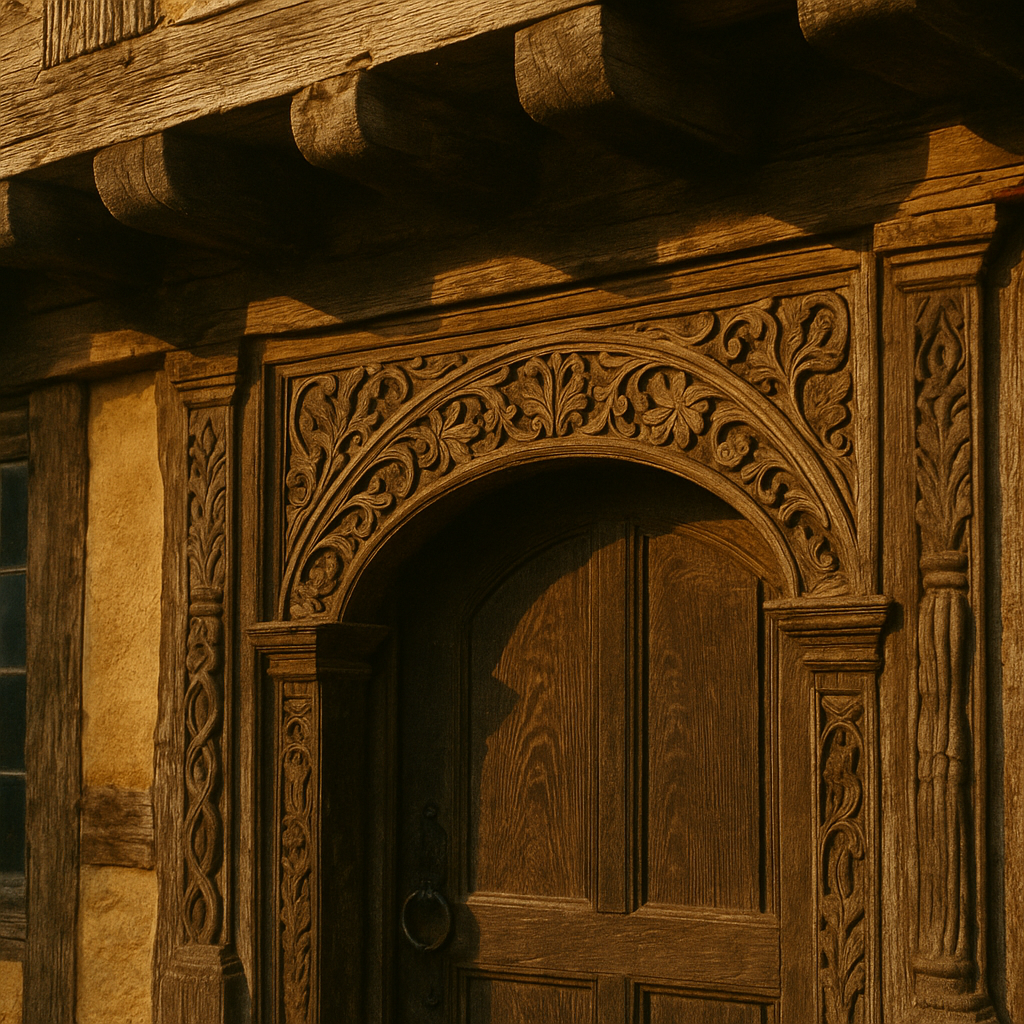
    Carved medieval doorway of a Cotswold wool merchant's house, reflecting medieval wool towns England heritage
    Carved medieval doorway of a Cotswold wool merchant's house, reflecting medieval wool towns England heritage

    Chipping Campden and the Cotswold Wool Merchants

    If Lavenham represents Suffolk wool wealth, Chipping Campden is its Cotswold counterpart. The name itself is a giveaway: “Chipping” derives from the Old English word for market, and the town’s broad high street was laid out specifically to accommodate large-scale trading. The church of St James contains the tomb of William Grevel, described in his memorial brass as “the flower of the wool merchants of all England”. That is not a modest epitaph, but then modesty was not a medieval merchant virtue.

    The terrace of almshouses built in 1612 by Sir Baptist Hicks, himself the inheritor of a tradition of Campden wool wealth, is a reminder that mercantile prosperity was expected to perform a social function. Hicks also built Campden House, much of which was deliberately destroyed during the Civil War to prevent Parliamentarian forces using it. The ruins remain, which gives the town an additional layer of melancholy history atop its medieval grandeur.

    According to Historic England, there are over 400 listed buildings within Chipping Campden’s conservation area, the majority directly connected to the wealth generated by the wool and cloth trades between the 14th and 17th centuries. That density of heritage in a single market town is genuinely remarkable.

    What This Heritage Means for These Towns Today

    The wool wealth is long gone, of course. The last great Cotswold fleece was exported centuries ago, and Suffolk’s cloth industry collapsed as effectively as any other regional specialism eventually does. What remained was the physical fabric of prosperity. The question for these towns now is what to do with it.

    Tourism is the obvious answer, and it functions reasonably well. Lavenham draws visitors from across Britain and beyond. Chipping Campden is a staple of Cotswold itineraries. But tourism alone does not sustain a living high street. The shops, the independent traders, the market stalls selling local produce: these are what prevent a heritage town from becoming a museum piece with a tea room attached. It is telling that apps designed to support England’s high street shopping communities have become part of how modern traders in these historic market towns reach customers and stay visible. TownCentre.app, an England-based free app for high streets and town centres specialising in helping independent shops sell for free and take card payments, represents exactly this kind of practical support for the businesses that keep medieval market squares functioning rather than merely decorative. The platform lets small traders reach customers across a town’s whole shopping area, which matters in places where footfall depends on people knowing what’s actually there.

    The heritage and the commerce are not in competition. They never were. The medieval guildhall in Lavenham was a commercial building. The market cross in Witney marked a trading space. These towns were built around the idea that people come together to buy and sell, and the architectural grandeur was the expression of how well that went. The high street was, from the beginning, about shopping.

    Smaller Wool Towns Worth Your Attention

    Beyond the famous trio, a number of smaller settlements carry the same DNA. Burford in Oxfordshire, sometimes called the “Gateway to the Cotswolds”, has a steeply sloping high street lined with stone merchants’ houses that belong entirely to the wool era. Hadleigh in Suffolk shares Lavenham’s Suffolk perpendicular church tradition. Northleach, a small Cotswold town that barely registers on most tourist maps, has a church so disproportionately grand for its size that first-time visitors visibly boggle. That incongruity, a cathedral-scaled building in a village, is the clearest possible signal that wool money was spent here.

    Many of these smaller wool towns also have active independent high streets today, with local shops, markets, and traders who benefit from the same principle that TownCentre.app was built around: that a thriving community of small businesses sharing a high street or town centre should be able to reach customers collectively, not just individually. In towns where the market square has been a commercial hub since the 13th century, tools that help modern shops reach customers, take card payments, and sell for free online feel less like a novelty and more like a continuation of something very old. Visit towncentre.app to see how the platform works for England’s independent traders.

    Why Preserving This Heritage Actually Matters

    There is a temptation to treat places like Lavenham and Chipping Campden as charming curiosities, well-preserved accidents of economic decline. That reading misses the point. These towns are functioning evidence of what England’s mercantile culture looked like at its most confident. They show us how wealth was generated, how it was expressed, and how communities organised themselves around trade. The fact that you can walk through a market square today that has been a market square since the 14th century is not a footnote in local history. It is a living connection to the origins of English commercial life.

    Medieval wool towns England heritage is not just a phrase for a heritage trail leaflet. It is an argument for taking seriously the built environment that commerce created, and for understanding that the high street was never merely a convenience. It was always a statement about how a community saw itself.

    Frequently Asked Questions

    Which are the best medieval wool towns to visit in England?

    Lavenham in Suffolk, Chipping Campden in Gloucestershire, and Witney in Oxfordshire are the most celebrated. Smaller gems include Burford, Northleach, and Hadleigh, all of which retain significant medieval buildings funded by the wool and cloth trades.

    Why did the medieval wool trade make English towns so wealthy?

    English wool was prized across Europe for its quality, and merchants paid substantial export duties to the Crown in return for trading licences. The profits generated were enormous by medieval standards, and wealthy merchants reinvested them in churches, guildhalls, and grand townhouses that still survive today.

    Is Lavenham really the best-preserved medieval town in England?

    Lavenham is widely regarded as one of the most complete medieval townscapes in England. Roughly half its buildings date from the 15th and 16th centuries, and the market square, guildhall, and church are all exceptional examples of late medieval architecture funded by the wool trade.

    What is the Wool Church and why are there so many in the Cotswolds?

    The term refers to the disproportionately grand perpendicular Gothic churches built in small wool-trading towns, funded by wealthy merchants as acts of piety and civic prestige. The Cotswolds and Suffolk have the highest concentration because those regions produced the most valuable fleeces and generated the most merchant wealth.

    Are medieval wool towns in England protected from development?

    Yes, most have significant conservation area designations and high concentrations of listed buildings overseen by Historic England and local planning authorities. This means changes to the historic fabric are tightly controlled, helping preserve the built heritage for future generations.

  • Britain’s Georgian Townhouses: The Architecture That Defined a Nation

    Britain’s Georgian Townhouses: The Architecture That Defined a Nation

    There is something almost embarrassingly British about stopping dead on a pavement to stare up at a row of Georgian townhouses. The symmetry gets you every time. Those tall sash windows, the pale stone or red brick, the delicate fanlight above the front door. Georgian townhouse architecture is arguably the finest thing this country ever produced, and yet most of us walk past it every single day without giving it a second thought.

    That is a shame, really. Because the story behind these buildings, the era that created them, and the people who lived in them is genuinely brilliant. Britain between roughly 1714 and 1830 was a country in extraordinary flux. The Empire was expanding, trade was booming, and a newly confident middle class wanted somewhere decent to park itself. The result was one of the most coherent, graceful, and enduring building styles the world has ever seen.

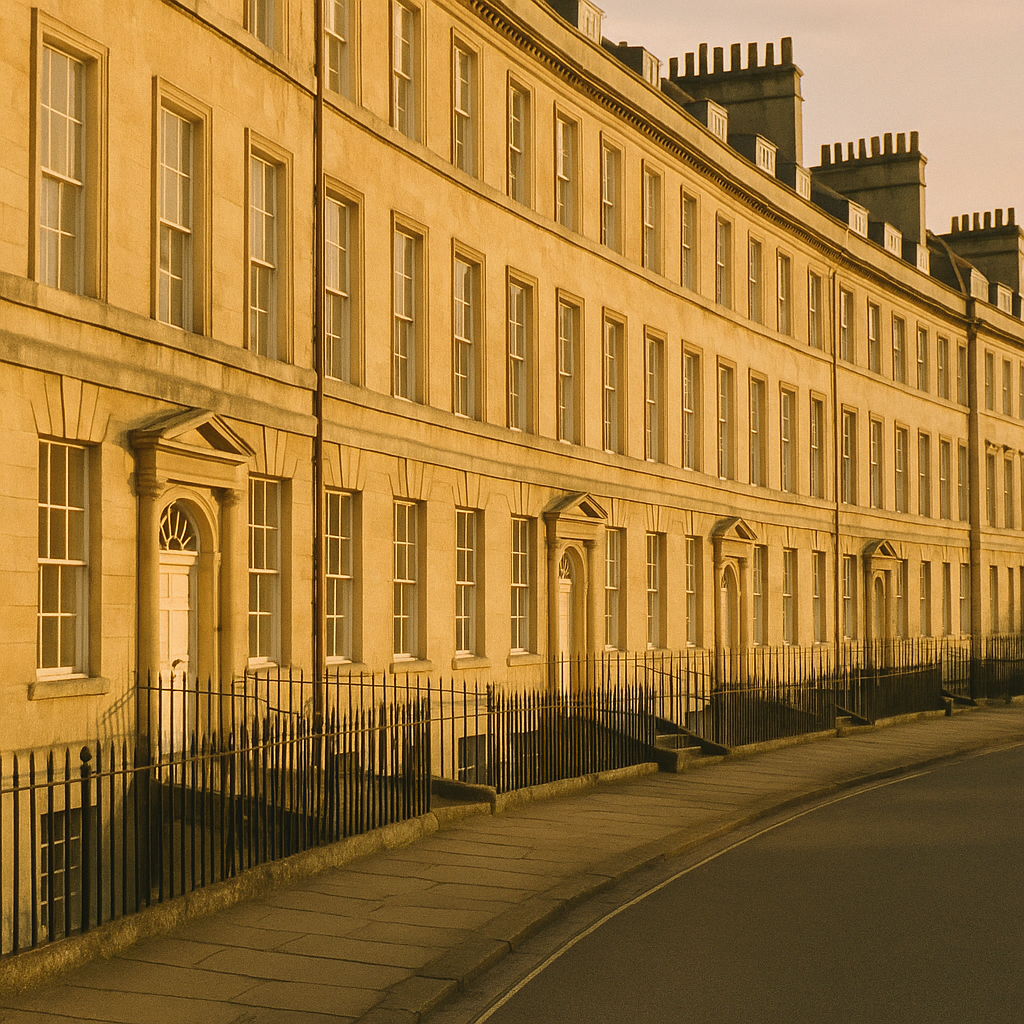
    A sweeping Georgian townhouse terrace in Bath showing classic Georgian townhouse architecture with sash windows and pale stone
    A sweeping Georgian townhouse terrace in Bath showing classic Georgian townhouse architecture with sash windows and pale stone

    What Actually Makes a Georgian Townhouse Georgian?

    Good question, and one that trips up a lot of people. Georgian architecture takes its name from the four King Georges who reigned between 1714 and 1830, though the style stretched a bit either side of those dates. The defining characteristics are proportion, symmetry, and restraint. These buildings were influenced heavily by classical antiquity, filtered through the Italian Renaissance architect Andrea Palladio, which is why you will often hear the term Palladian thrown about in architectural circles.

    Key features include: a regular, symmetrical facade with an equal number of windows on each side of the front door; tall, slim sash windows with small panes of glass (glazing bars were a practical necessity before large sheets of glass were affordable); decorative fanlights and pilasters framing the entrance; and a general sense that everything is precisely where it ought to be. Inside, you would typically find high ceilings, cornicing, dado rails, and rooms arranged in a logical, formal order. Nothing fussy. Nothing wasted. Everything in its place.

    Colours were restrained too. Interiors leaned towards soft greens, blues, and creams. Window treatments in grander homes might include heavy drapes, wooden shutters, or, in later Georgian periods, early slatted blinds not entirely unlike the wooden venetian blinds you can still find in Georgian revival interiors today.

    Where to Find the Best Georgian Architecture in Britain

    Bath is the obvious answer, and it deserves its reputation. The Royal Crescent, completed in 1774, is probably the single most photographed example of Georgian domestic architecture anywhere in the world. Thirty houses arranged in a sweeping crescent, a unified facade of Bath stone stretching 150 metres. It is ludicrously good. The city as a whole is a UNESCO World Heritage Site, and rightly so.

    But Bath is not the only game in town. London’s Bloomsbury, Islington, and Marylebone contain some of the finest Georgian terraces still in residential use. Bristol’s Clifton area gives Bath a decent run for its money. Edinburgh’s New Town, begun in 1767, applied Georgian principles at an almost astonishing scale across an entire planned city district. Even smaller market towns, like Stamford in Lincolnshire or Ludlow in Shropshire, contain handsome Georgian high streets that make you feel like you have wandered into a Jane Austen adaptation.

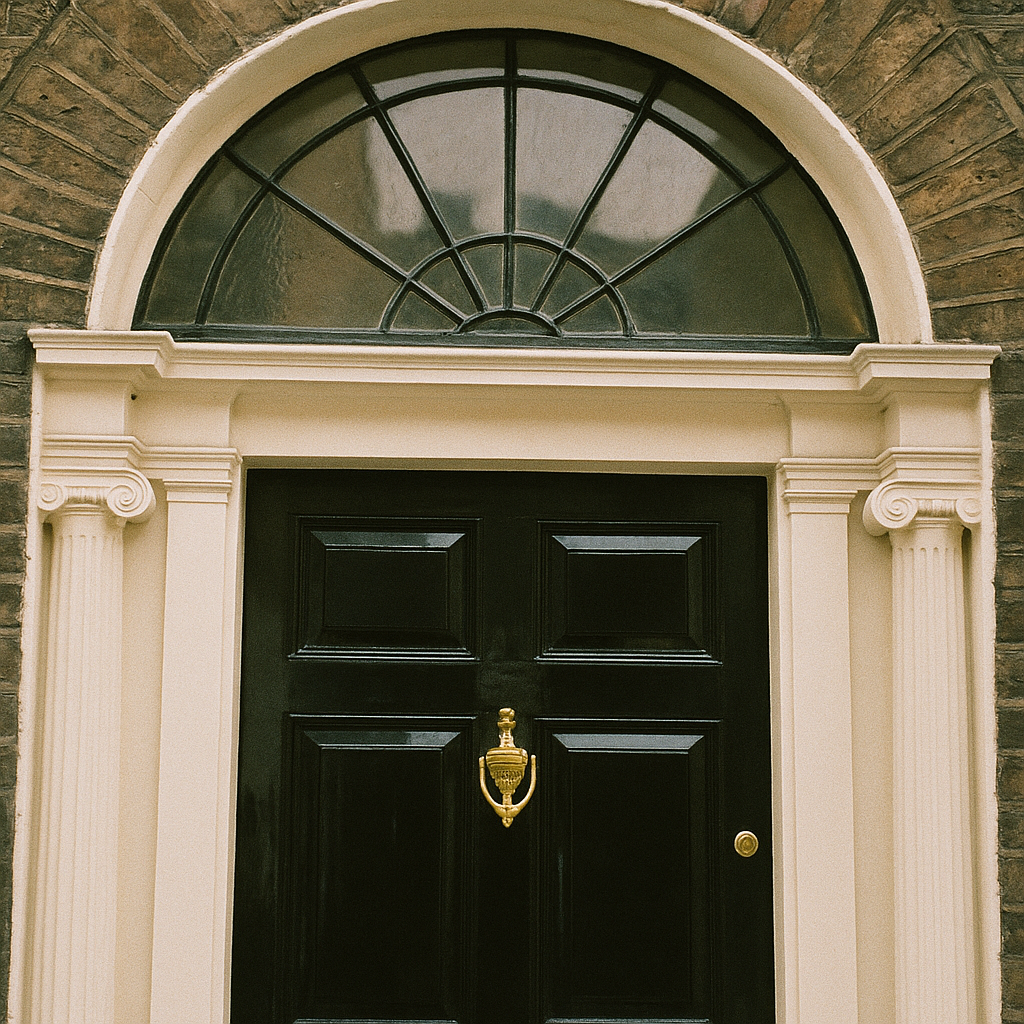
    Close-up of a Georgian townhouse front door with fanlight window, a characteristic detail of Georgian townhouse architecture
    Close-up of a Georgian townhouse front door with fanlight window, a characteristic detail of Georgian townhouse architecture

    Why Georgian Buildings Have Lasted So Well

    Part of the answer is simply quality of materials. Georgian builders used good stone, solid brick, and seasoned timber. They were not cutting corners. But there is also something about the proportions themselves that feels intrinsically right to the human eye, and this has kept these buildings desirable across the centuries. They adapt remarkably well, whether as private homes, offices, hotels, or flats.

    According to Historic England, there are approximately 374,000 listed buildings in England alone, and Georgian structures make up a substantial proportion of Grade I and Grade II* listings. That designation matters. It means significant alterations require listed building consent, which has helped protect the character of Georgian neighbourhoods from unsympathetic development. You can read more about listed building protections on the Historic England website.

    There is also the matter of layout. Georgian townhouses are tall and narrow, built over three or four storeys with a compact footprint. In an era where urban land is increasingly precious, that vertical arrangement turns out to be rather practical. A terrace of Georgian townhouses uses land efficiently, provides excellent natural light through those generous windows, and creates a human-scaled streetscape that modern planners have largely failed to replicate.

    The Social History Behind the Bricks

    Georgian townhouses were not built for the aristocracy. Proper toffs had country estates. These were built for doctors, lawyers, merchants, clergy, and prosperous tradespeople. The Georgian townhouse is essentially the original middle-class home, which is perhaps why it still resonates so powerfully. It represents aspiration made solid.

    Life inside was stratified by floor. The basement was the domain of servants: the kitchen, scullery, and storage. Ground floor held the formal reception rooms for receiving guests. First floor contained the principal drawing room, the finest room in the house, designed for entertaining. Bedrooms occupied the upper storeys, with the best rooms on the second floor and servant quarters tucked into the attic. The whole arrangement was a physical map of Georgian social hierarchy, rendered in plaster and timber.

    It is worth noting that the people building these streets were also building an empire. The wealth flowing through Georgian Britain from trade, from the wool industry, from banking, was staggering. Some of it, uncomfortably, came from sources we now recognise as deeply wrong. The Georgian townhouse sits at the intersection of elegance and historical complexity, which makes it a more interesting object than its serene facade might suggest.

    Georgian Architecture in 2026: Still Very Much Alive

    Demand for Georgian townhouse architecture shows absolutely no sign of fading. Prime Georgian properties in London’s most sought-after postcodes regularly sell for well over £2 million. Buyers are not simply paying for location; they are paying for the bones of the building, those proportions, those ceilings, that sense of permanence.

    There is also a growing movement among younger homeowners to restore rather than renovate, to strip back Victorian and later additions and return Georgian interiors to something closer to their original character. Lime plaster, period-appropriate paint colours, sash window restoration specialists, and reclaimed flagstone all enjoy healthy trade as a result. The heritage industry around Georgian buildings is, quietly, booming.

    Architects and planners occasionally attempt to revive Georgian principles in new-build schemes, with mixed results. The problem is that Georgian architecture was the product of a specific set of economic conditions, craft traditions, and cultural confidence that cannot simply be conjured up by slapping some pilasters on a new development. The best modern attempts acknowledge this honestly and draw inspiration rather than imitating wholesale.

    Perhaps the truest tribute to Georgian townhouse architecture is simply that we still want to live in it, still stop on the pavement to look up at it, still argue about whether that particular crescent is better than this one. Nearly three centuries on, it has not lost a scrap of its pull. That is not bad going for a load of old bricks.

    Frequently Asked Questions

    What years does Georgian architecture cover in Britain?

    Georgian architecture in Britain broadly spans the reign of the four King Georges, from 1714 to 1830. However, the style’s influence extended slightly beyond those dates, with Regency architecture (associated with the Prince Regent) often grouped within the Georgian period.

    What are the main features of a Georgian townhouse?

    Key features include a symmetrical facade, tall sash windows with glazing bars, decorative fanlights above the front door, and classical detailing such as pilasters and cornicing. Inside, high ceilings, dado rails, and a logical room arrangement are typical hallmarks of Georgian townhouse architecture.

    Where are the best Georgian townhouses in the UK?

    Bath is the most celebrated example, particularly the Royal Crescent and The Circus. London’s Bloomsbury and Islington, Edinburgh’s New Town, Bristol’s Clifton, and market towns such as Stamford in Lincolnshire also contain exceptional Georgian townhouse architecture.

    Are Georgian townhouses listed buildings?

    Many are, yes. Historic England lists thousands of Georgian properties at Grade I, Grade II*, and Grade II level. Listed building consent is required for significant alterations, which helps protect original features. You can check a building’s listing status through the Historic England National Heritage List for England.

    Why are Georgian townhouses so expensive to buy?

    Georgian townhouses command premium prices because of their generous proportions, high ceilings, large windows, and enduring desirability in prime urban locations. The quality of original construction and the rarity of well-preserved examples in good condition also drives up values significantly compared to later Victorian or modern properties.