Author: Alex

  • The Penny Dreadful: How Victorian Britain’s Trashy Pulp Fiction Shaped Modern Storytelling

    The Penny Dreadful: How Victorian Britain’s Trashy Pulp Fiction Shaped Modern Storytelling

    Long before Netflix box sets and true crime podcasts, the working classes of Victorian Britain had their own guilty pleasures. They were called penny dreadfuls, and for a single penny you could get your hands on a lurid, blood-soaked, gloriously trashy pamphlet that would have your mum absolutely horrified. Sweeney Todd slitting throats in a Fleet Street barber’s chair. Dick Turpin galloping through the night on Black Bess. Spring-Heeled Jack terrorising the streets of London. This was penny dreadful Victorian history in its rawest, most thrilling form, and it was enormous.

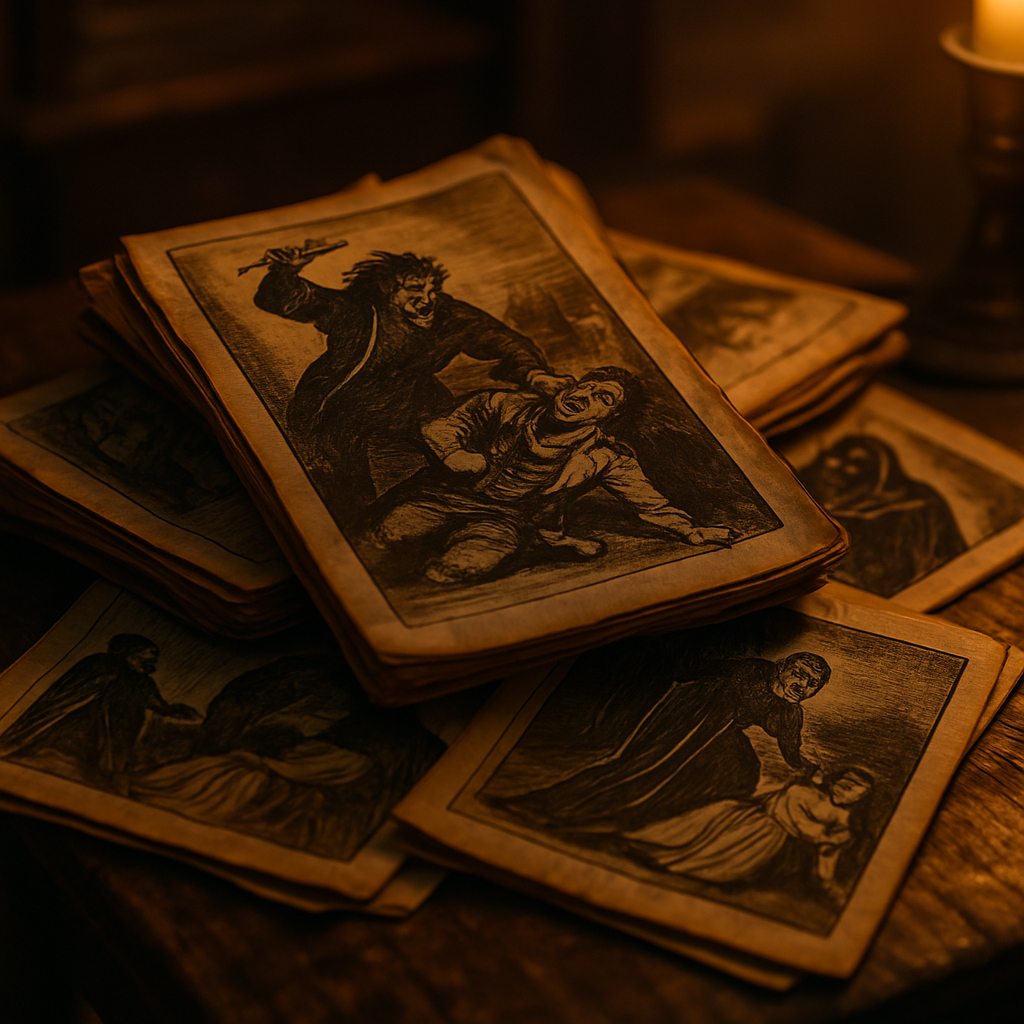
    Stacked Victorian penny dreadful pamphlets on a wooden table illustrating penny dreadful Victorian history
    Stacked Victorian penny dreadful pamphlets on a wooden table illustrating penny dreadful Victorian history

    What Exactly Was a Penny Dreadful?

    Penny dreadfuls were cheap, weekly serialised publications that emerged in earnest during the 1830s and flourished right through to the 1890s. Each instalment ran to roughly eight pages, printed on low-quality paper with dramatic woodcut illustrations, and sold for a penny a pop. Publishers like Edward Lloyd, who had a particular talent for spotting what the masses actually wanted to read, churned them out at pace. Lloyd’s output was so prolific and so deliberately sensational that rivals nicknamed his publications “Salisbury Square fiction” after the London address from which they were distributed.

    The readership was almost entirely working class, predominantly young men and boys who had recently become literate thanks to the expansion of parish and dame schools. These lads were not interested in the improving moral tracts the Victorian establishment kept trying to push on them. They wanted murders, highwaymen, ghosts, and villains with names like “Varney the Vampyre.” And that is precisely what they got.

    The Stories That Defined the Genre

    A handful of titles from penny dreadful Victorian history became genuinely iconic. Varney the Vampyre, or The Feast of Blood, serialised between 1845 and 1847, ran to an astonishing 232 chapters and almost certainly influenced Bram Stoker’s Dracula decades later. The String of Pearls, published in 1846 and 1847, introduced the world to Sweeney Todd, the demon barber of Fleet Street, a character so vivid he has never really gone away. There were highway robbers, pirates, body snatchers, and dashing rogues of every description.

    What made these stories work was their pace. Each instalment ended on a cliffhanger so outrageous you had no choice but to come back next week. Sound familiar? It should. That structural trick, the episodic hook, is the beating heart of everything from soap operas to prestige television drama. Victorian penny dreadful publishers invented the cliffhanger as a commercial weapon, and storytellers have been using it ever since.

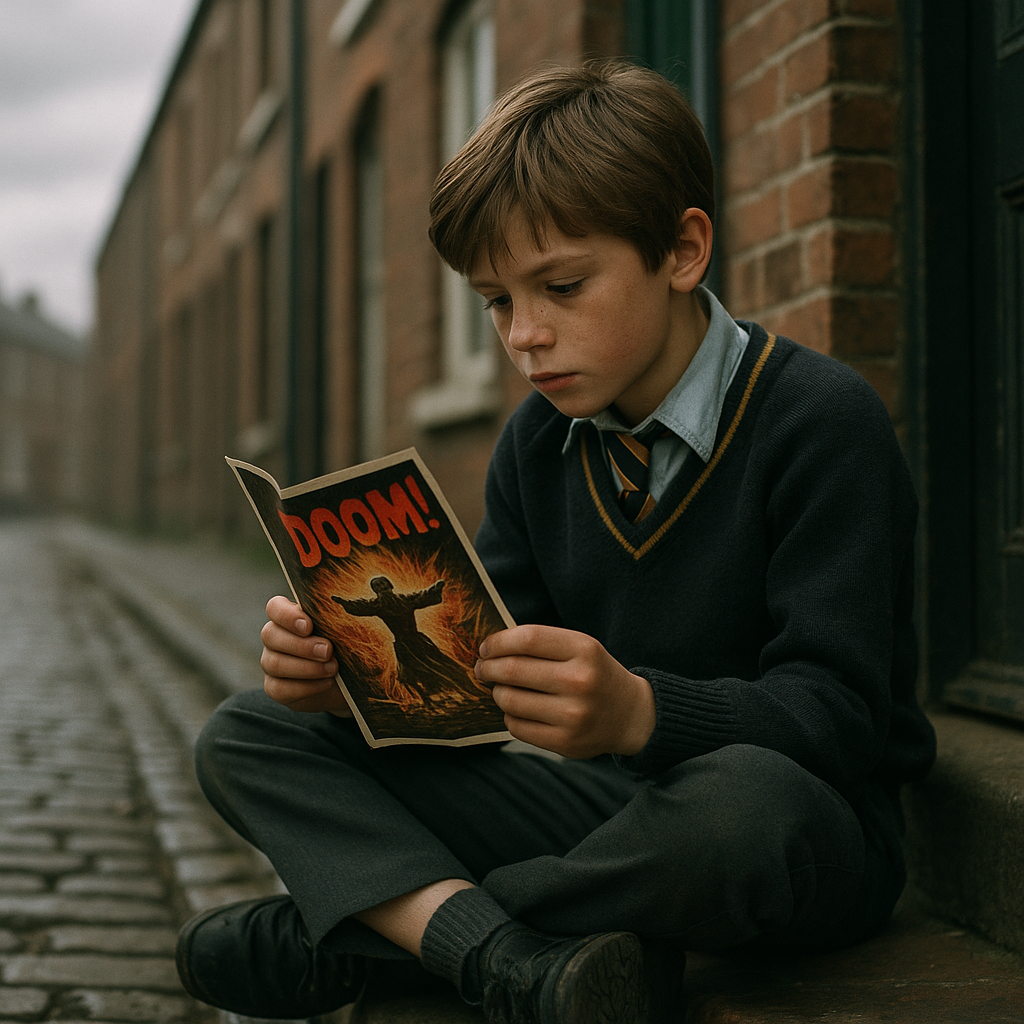
    Young British boy reading a penny dreadful pamphlet on a terraced street evoking penny dreadful Victorian history
    Young British boy reading a penny dreadful pamphlet on a terraced street evoking penny dreadful Victorian history

    The Moral Panic: Corrupting the Youth of Britain

    The establishment was absolutely beside itself. Magistrates, clergymen, and newspaper editors queued up to condemn penny dreadfuls as a corrupting influence on impressionable minds. In 1851, Henry Mayhew documented in London Labour and the London Poor how these publications had saturated the lives of street children. There were real court cases where defence barristers argued that a young offender had been led astray by the penny press. The publications were blamed for pick-pocketing, vagrancy, and generally being a bit rough around the edges.

    Sound familiar again? Every generation invents a new version of this panic. In the twentieth century it was comic books, then video nasties, then violent video games. The hand-wringing about penny dreadfuls is essentially the same argument, word for word, that Mary Whitehouse would be making about television a century later. The content changes; the pearl-clutching does not.

    What the critics largely missed was that penny dreadfuls were one of the first genuinely democratic forms of popular culture in British history. They gave working people stories that reflected excitement, danger, and escapism rather than endless sermons about temperance and thrift. They were not corrupting the poor. They were entertaining them, which felt like much the same thing to certain quarters of Victorian society.

    How Penny Dreadfuls Laid the Ground for Modern Crime Fiction

    Here is where penny dreadful Victorian history gets genuinely interesting for anyone who loves a good thriller. The genre established several conventions that crime and horror fiction still relies on today. The unreliable urban setting, London as a labyrinthine place of hidden menace, was a penny dreadful staple long before Arthur Conan Doyle sent Sherlock Holmes prowling through the fog. The working-class detective figure, the amateur sleuth driven by curiosity rather than official duty, pops up in penny dreadfuls before he becomes a literary archetype.

    Charles Dickens, a writer of slightly more respectable standing, was clearly aware of what these publications were doing. His own serialised novels borrowed heavily from their pacing and dramatic structure. Dickens and the penny dreadful publishers were, in a sense, competing for the same audience, and Dickens was smart enough to absorb some of their tricks. You can draw a fairly straight line from the penny dreadful to Dickens, from Dickens to Conan Doyle, and from Conan Doyle to the entire tradition of British crime writing.

    From Penny Pamphlets to Graphic Novels

    The visual element of penny dreadfuls deserves its own chapter. Those woodcut illustrations were crude by any technical standard, but they were doing something important: combining image and text to tell stories in a way that anticipated the graphic novel by more than a century. Alan Moore, the Northampton-born writer behind V for Vendetta and From Hell (which, fittingly, deals with Jack the Ripper), has spoken openly about the penny dreadful tradition as part of the lineage of his own work. The British comics tradition that produced 2000 AD and Judge Dredd owes a genuine, traceable debt to those battered eight-page pamphlets.

    For a deeper look at how Victorian popular print culture developed, the British Library’s Victorian popular culture collection is an outstanding resource, with digitised originals you can actually read.

    The Legacy Hiding in Plain Sight

    Penny dreadfuls largely faded by the end of the Victorian era, squeezed out by the halfpenny newspaper press and, eventually, proper cheap paperback novels. But their fingerprints are everywhere. The serialised story. The cliffhanger ending. The urban gothic setting. The loveable villain. The working-class audience treated as a legitimate market worth entertaining rather than improving. These are not minor contributions. They are the structural bones of British popular storytelling.

    Next time you are binge-watching a crime drama or flicking through a graphic novel on the train, spare a thought for the penny dreadful. Some grubby, brilliantly cynical Victorian publisher in Salisbury Square worked all this out almost two hundred years ago, and the rest of us have just been catching up ever since.

    Frequently Asked Questions

    What is penny dreadful Victorian history and when did it start?

    Penny dreadfuls were cheap, serialised story pamphlets published in Britain from the 1830s onwards, sold for a penny per instalment. They featured sensational tales of crime, horror, and adventure aimed primarily at newly literate working-class readers. Publishers like Edward Lloyd in London were among the most prolific producers of the format.

    Is Sweeney Todd from a penny dreadful?

    Yes. Sweeney Todd first appeared in a penny dreadful called ‘The String of Pearls’, serialised in 1846 and 1847. The character proved so durable that he has been adapted countless times, including in stage musicals and films. He is perhaps the most famous fictional creation to emerge directly from the penny dreadful tradition.

    Why were penny dreadfuls controversial in Victorian Britain?

    Victorian magistrates, clergymen, and journalists blamed penny dreadfuls for corrupting young, working-class readers and encouraging criminal behaviour. Several court cases explicitly cited penny dreadful readership as a factor in juvenile crime. The moral panic closely mirrors later controversies about comics, video nasties, and video games.

    How did penny dreadfuls influence modern crime fiction?

    Penny dreadfuls established key conventions still used in crime and horror fiction today, including the serialised cliffhanger, the urban gothic setting, and the amateur detective figure. Dickens borrowed heavily from their pace and structure, and the tradition flows directly through to Arthur Conan Doyle and the broader canon of British crime writing.

    Where can I read original penny dreadful publications?

    The British Library holds digitised copies of many penny dreadful titles through its Victorian popular culture collections, accessible online at bl.uk. Several university libraries, including those at the University of Sheffield and UCL, also hold physical and digitised collections of Victorian periodical fiction.

  • Traditional British Craft Guilds: Ancient Trades That Are Making a Comeback

    Traditional British Craft Guilds: Ancient Trades That Are Making a Comeback

    There is something quietly magnificent about a craft that has survived kings, plagues, industrial revolutions, and two world wars. Traditional British craft guilds stretch back to at least the twelfth century, and whilst the factory floor nearly finished them off for good, a remarkable number of these ancient trades are not just surviving in 2026 — they are genuinely thriving. Thatchers are booked solid. Dry-stone wallers are in demand across the Yorkshire Dales. Coopers, the barrel-makers who once kept the British Navy afloat in more ways than one, are quietly having their moment again.

    This is not nostalgia for its own sake. This is living history, and it is rather brilliant.

    Master thatcher working on a traditional British cottage roof, representing traditional British craft guilds
    Master thatcher working on a traditional British cottage roof, representing traditional British craft guilds

    Where Did the Guilds Actually Come From?

    The guild system as we recognise it took root in Britain during the eleventh and twelfth centuries, though the concept of organised craftsmen protecting their trade is older still. Guilds were effectively the unions, training programmes, and quality control bodies of the medieval world — all rolled into one. You did not simply decide to become a goldsmith or a fletcher. You served years as an apprentice, graduated to journeyman, and, if fortune smiled on you, earned the rank of master craftsman. The whole thing was overseen by the guild, which set standards, settled disputes, and made sure nobody was selling shoddy goods on the market square and embarrassing the trade.

    By the fourteenth century, London alone had dozens of livery companies — the Worshipful Company of Mercers, the Skinners, the Fishmongers, the Haberdashers. Many still exist today, albeit in a ceremonial capacity, parading through the City of London in their finery. But beyond the pomp, these institutions preserved something essential: the idea that a craft was worth protecting.

    How Industrialisation Nearly Killed Heritage Trades

    The nineteenth century was, frankly, brutal for the guilds. The Industrial Revolution did not merely change how things were made; it obliterated the economic rationale for hand-crafted production in dozens of trades overnight. Why pay a cooper a week’s wages to build one barrel when a machine could stamp out fifty in an afternoon? Why commission a hand-thrown pot when Stoke-on-Trent could produce ten thousand identical ones before Tuesday?

    The result was a near-total collapse. By the early twentieth century, many traditional british craft guilds existed in name only, their actual skills reduced to hobbyist curiosities or preserved by a stubborn handful of practitioners who simply refused to let go. Organisations like the Arts and Crafts Movement, championed by figures such as William Morris, pushed back against mass production and argued passionately for the dignity of handcraft. It helped, but it was not enough to reverse the tide entirely.

    Dry-stone waller building a traditional wall in the Yorkshire Dales, a heritage trade linked to traditional British craft guilds
    Dry-stone waller building a traditional wall in the Yorkshire Dales, a heritage trade linked to traditional British craft guilds

    The Trades That Nearly Vanished

    Thatching

    At its peak in the early 1800s, thatching was one of the most common roofing trades in rural England. By the 1970s, fewer than a thousand thatchers remained in the country. Today, the National Society of Master Thatchers estimates there are around 800 practising thatchers in England, and demand consistently outstrips supply. A good thatcher in the West Country or East Anglia can be booked eighteen months in advance. A thatched roof, done properly with water reed or long straw, can last fifty years. The irony is that what was once the roofing of the poor has become the mark of the desirable country cottage, and the craft has survived partly because of it.

    Dry-Stone Walling

    Walk through the Pennines, the Cotswolds, or the Yorkshire Dales and you are surrounded by miles of dry-stone walls built without a single drop of mortar. This is not random stacking. It is an art form requiring intimate knowledge of local stone, drainage, and structural logic passed down through generations. The Dry Stone Walling Association of Great Britain was founded in 1968 partly to prevent the trade from disappearing entirely, and it now certifies wallers to a professional standard. Young people are taking it up. There are waiting lists for courses. Some are even making a proper living at it.

    Coopering

    The cooper’s trade — making and repairing wooden casks and barrels — once employed tens of thousands across Britain. Every brewery, distillery, fishery, and dockyard needed them. By the late twentieth century, the number of working coopers had dwindled to the low hundreds. The Scotch whisky industry saved them. Oak barrels are legally required for maturing Scotch, and the demand from distilleries across the Highlands and Speyside has kept the craft alive and, more recently, pushed it into something of a golden era. The Worshipful Company of Coopers still operates in London, and apprenticeships are being offered again.

    Stained Glass and Leadwork

    Walk into almost any medieval parish church in England and you are looking at the work of glaziers whose techniques have changed remarkably little in six hundred years. The Worshipful Company of Glaziers and Painters of Glass is one of the City of London’s oldest livery companies, and the trade itself has seen a revival driven largely by the restoration economy — the ongoing, eye-wateringly expensive project of keeping Britain’s historic buildings intact. English Heritage and the National Trust both commission traditional leaded glaziers regularly.

    Why the Revival Is Happening Now

    It would be easy to attribute the comeback of traditional british craft guilds purely to romanticism, but there are harder economic and practical reasons at work. Climate change is making people reconsider sustainable, locally-sourced materials. A well-built dry-stone wall needs no cement, no energy to manufacture, and can be repaired with the stones that fall from it. Thatched roofs have exceptional insulation properties. Wooden barrels impart flavour that no stainless steel tank can replicate.

    There is also a generational reaction against the disposable. Young craftspeople, many of them with perfectly good university degrees they are quietly setting aside, are seeking out apprenticeships in trades that produce something tangible, durable, and genuinely skilled. The Heritage Crafts Association publishes an annual Red List of Endangered Crafts, which has done more than anything to raise public awareness of which trades are at risk and which are recovering. It makes for sobering reading in places, but the general trend since 2015 has been cautiously optimistic.

    Keeping the Knowledge Alive

    The real challenge for traditional british craft guilds has never been demand — it has been transmission. Skills that live in a craftsperson’s hands are terrifyingly fragile. When the last master of a trade dies without passing on their knowledge, it is genuinely gone. Not archived, not digitised, not recoverable. Gone.

    That is why the revival of formal apprenticeships and guild structures matters so much. The Building Crafts College in Stratford, east London, offers courses in stonemasonry, carpentry joinery, and heritage plastering. The Rural Development Programme has supported training schemes for dry-stone wallers and hedgelayers. Even HMRC has updated apprenticeship levy rules to allow more flexible arrangements for small craft workshops, which has made taking on apprentices marginally less terrifying for sole traders.

    Britain is exceptionally good at preserving its built environment but historically rather careless about preserving the human knowledge required to maintain it. Getting those two things properly aligned, and keeping the craft guilds alive to carry the torch, is one of the more quietly important cultural projects of our time.

    Frequently Asked Questions

    What are traditional British craft guilds?

    Traditional British craft guilds are organisations that date back to the medieval period, formed to regulate, protect, and pass on skilled trades such as coopering, thatching, stonemasonry, and glazing. They set standards for workmanship, oversaw apprenticeships, and ensured the quality of goods and services within a given trade. Many still exist today, either as active professional bodies or as ceremonial livery companies in the City of London.

    Which heritage trades are most at risk of dying out in the UK?

    The Heritage Crafts Association publishes an annual Red List of Endangered Crafts that identifies trades at critical risk. In recent years, trades such as lacemmaking, traditional coach-building, and clay pipe-making have featured prominently. Straw plaiting and parchment-making are among those considered critically endangered, with fewer than five practitioners remaining in the UK.

    How do you become a thatcher or dry-stone waller in the UK today?

    Both trades have formal routes into the profession. Aspiring thatchers typically seek an apprenticeship with a registered master thatcher through the National Society of Master Thatchers, with training lasting around three years. Dry-stone wallers can train and gain certification through the Dry Stone Walling Association of Great Britain, which offers courses and a recognised grading system from novice to craftsman level.

    Are craft guild apprenticeships still available in the UK?

    Yes, though availability varies by trade. Some City of London livery companies still offer formal apprenticeships, and organisations like the Building Crafts College in east London run accredited programmes in heritage building skills. The government’s apprenticeship levy system can be used to fund training in certain craft trades, and the Heritage Crafts Association maintains a directory of training opportunities across the country.

    Why are traditional crafts like coopering seeing a revival in Britain?

    The Scotch whisky industry has been a major driver, as Scotch must legally be matured in oak casks, creating sustained demand for skilled coopers. More broadly, growing interest in sustainability, locally-sourced materials, and high-quality handmade goods has made many heritage trades economically viable again. A cultural shift amongst younger people seeking meaningful, hands-on careers has also brought new apprentices into trades that were perilously short of new blood just a generation ago.

  • Britain’s Lost Industrial Heritage: Why We Should Never Forget Our Manufacturing Roots

    Britain’s Lost Industrial Heritage: Why We Should Never Forget Our Manufacturing Roots

    There is something deeply stirring about the remains of a Victorian ironworks or the skeleton of a Lancashire cotton mill standing stubborn against a grey northern sky. British industrial heritage is not just bricks and mortar; it is the DNA of a nation that once hammered, spun, smelted, and riveted its way to becoming the workshop of the world. And yet, for decades, we have been dismantling, demolishing, and forgetting these extraordinary places at an alarming rate.

    From the Derwent Valley Mills in Derbyshire to the Black Country Living Museum in Dudley, the physical remnants of Britain’s industrial past tell stories that no classroom lesson ever quite captures. The smells, the scale, the sheer noise of it all, these were places where ordinary men, women, and children bent their backs to produce goods that travelled to every corner of the globe. Losing that story is not just a shame. It is a cultural catastrophe.

    Ruined Victorian ironworks in northern England representing the scale of British industrial heritage
    Ruined Victorian ironworks in northern England representing the scale of British industrial heritage

    What Made Britain the World’s First Industrial Nation?

    It is a question historians have been chewing over for a couple of centuries, but the short answer is a brilliant, slightly chaotic mix of geography, geology, and gumption. Britain sat on enormous reserves of coal and iron ore, had navigable rivers and a coastline ideal for trade, and possessed a legal and financial system that, by the standards of the 18th century, was relatively open to innovation and entrepreneurship. The result was the Industrial Revolution, which kicked off in earnest in the 1760s and transformed not just Britain but the entire planet.

    Spinning jennies, steam engines, puddling furnaces, blast furnaces, power looms. Each invention cascaded into the next, and the towns that grew up around them, Manchester, Birmingham, Sheffield, Leeds, became bywords for industry and graft. Sheffield, in particular, became synonymous with steel and metalworking of every conceivable kind. Cutlery, tools, railway tracks, even the precision components used by craftsmen operating specialist equipment like notching machines in metal fabrication workshops owe a lineage to Sheffield’s centuries of steelworking tradition.

    The Great Forgetting: How Britain Lost Touch with Its Industrial Identity

    The post-war decades were not kind to Britain’s industrial heartlands. Deindustrialisation accelerated through the 1970s and 1980s, and entire communities built around single industries, coal mining, shipbuilding, steelmaking, found themselves suddenly without purpose or income. The human cost was immense and well-documented. But alongside the social devastation came something quieter and equally tragic: the physical erasure of the places where all that work had happened.

    Factories were flattened for retail parks. Canals were filled in. Engine houses were left to crumble. There were exceptions, of course. The Ironbridge Gorge in Shropshire, widely regarded as the birthplace of the Industrial Revolution, received UNESCO World Heritage status in 1986 and has been lovingly preserved. The Beamish Museum in County Durham recreates life in the industrial north with a thoroughness that leaves visitors genuinely moved. But these are the lucky ones.

    Close-up of preserved cast iron machinery highlighting the craftsmanship of British industrial heritage
    Close-up of preserved cast iron machinery highlighting the craftsmanship of British industrial heritage

    Why British Industrial Heritage Matters More Than Ever in 2026

    There is a growing movement, particularly among younger generations, to reconnect with what Britain actually made and how it was made. Heritage railways are reporting record visitor numbers. Industrial museums are expanding their collections and their audiences. Social media has given new life to urban exploration, with photographers documenting decaying mills and foundries that would otherwise vanish without record.

    This renewed interest in British industrial heritage is not mere nostalgia, although there is nothing wrong with a healthy dose of that. It is also about identity. Understanding where your nation came from, what it sacrificed, what it built, gives you a firmer footing for thinking about where it should go next. A country that forgets its foundries and its forges is a country that has lost part of its story.

    There is also a practical argument. Many of the skills developed in Britain’s industrial workshops, precision engineering, pattern-making, forge work, are still desperately needed. The gap between the heritage trades and the modern economy is narrower than most people assume. Apprenticeships in metalworking, engineering, and fabrication are making a comeback, partly because demand has never gone away and partly because people are waking up to the fact that making things is genuinely satisfying work.

    The Heritage Sites You Really Should Visit

    If you have not yet made the pilgrimage to some of Britain’s great industrial heritage sites, consider this your nudge. The Black Country Living Museum near Dudley is an absolute corker, an open-air museum that recreates a 1900s industrial community with such commitment that you half expect someone to offer you a job at the chain shop. Ironbridge Gorge is magnificent in all seasons, particularly in autumn when the surrounding Shropshire hills turn golden and the old blast furnace ruins feel properly atmospheric.

    Further north, the National Coal Mining Museum for England at Overton near Wakefield takes visitors underground on a genuine mine tour. It is not for the faint-hearted, but it is extraordinary. In Saltaire, near Bradford, Sir Titus Salt’s extraordinary model mill town remains almost entirely intact and is another UNESCO World Heritage Site. The Piece Hall in Halifax, a remarkable 18th-century cloth trading hall, has been beautifully restored and now hosts markets, concerts, and exhibitions throughout the year.

    Preserving British Industrial Heritage for Future Generations

    The organisations doing the heavy lifting here deserve enormous credit. Historic England, the Ironbridge Institute, the Canal and River Trust, and dozens of local heritage trusts are working against tight budgets and the relentless pressure of development to keep these places standing and accessible. Volunteering with a local industrial heritage group is one of the most rewarding things you can do if you want to get hands-on with history.

    Ultimately, British industrial heritage is not a museum piece. It is a living, breathing part of who we are as a nation. The soot might have settled, the furnaces gone cold, and the looms fallen silent, but the ingenuity, the community spirit, and the sheer bloody-minded determination that built these places are qualities Britain has never entirely lost. The least we can do is remember where they came from.

    Frequently Asked Questions

    What is British industrial heritage?

    British industrial heritage refers to the physical, cultural, and social legacy of Britain’s Industrial Revolution, including surviving mills, factories, foundries, canals, railways, and the communities built around them. It encompasses both preserved sites and the traditions, skills, and stories associated with Britain’s manufacturing past.

    Where are the best industrial heritage sites to visit in Britain?

    Some of the finest include the Ironbridge Gorge in Shropshire (a UNESCO World Heritage Site), the Black Country Living Museum in Dudley, Beamish Museum in County Durham, the National Coal Mining Museum near Wakefield, and Saltaire in West Yorkshire. Each offers a distinct and genuinely immersive experience of Britain’s industrial history.

    Why did Britain's industrial areas decline?

    Deindustrialisation from the 1970s onwards, driven by cheaper overseas competition, changing energy policies, and broader economic shifts, led to the closure of mines, steelworks, textile mills, and shipyards across Britain. The process accelerated dramatically during the 1980s, devastating many communities in the Midlands, the North of England, Scotland, and Wales.

    Are British industrial heritage sites free to visit?

    Entry costs vary considerably. Some sites, like parts of Ironbridge Gorge, charge admission, while others offer free access to outdoor areas with paid entry to specific museums. Many local heritage railways and canal restoration projects operate on a voluntary basis and welcome donations. It is always worth checking individual sites before visiting, as pricing changes seasonally.

    How can I get involved in preserving British industrial heritage?

    You can volunteer with organisations like the Canal and River Trust, local heritage railways, or historic mill restoration projects. Historic England also runs community heritage programmes, and many regional industrial museums actively recruit volunteers for guided tours, conservation work, and archiving. Even supporting these sites financially through memberships or visits makes a meaningful difference.

  • Should the UK Reopen Its Coal Mines? A Proper British Debate

    Should the UK Reopen Its Coal Mines? A Proper British Debate

    The question of whether we should reopen UK coal mines is one that gets people proper fired up – from ex-miners in South Yorkshire to green campaigners in Brighton. It’s a debate packed with nostalgia, economics, and a fair dollop of national identity. So let’s have a good rummage through it, shall we?

    A Brief History of British Coal

    Britain basically built the Industrial Revolution on the back of coal. For centuries, mining communities across Wales, Yorkshire, Durham, Scotland, and the Midlands were the beating heart of this nation. Pit villages had their own culture, their own pride, and frankly, their own language. Then came the 1980s, the miners’ strikes, the pit closures, and the slow, painful unravelling of an entire way of life. By the time the last deep coal mine – Kellingley Colliery in North Yorkshire – shut up shop in 2015, it felt like the end of a very long and complicated chapter.

    Why Some People Want to Reopen UK Coal Mines

    It might sound daft at first, but there are genuine arguments being made for bringing British mining back. The biggest one is energy security. When global gas prices go haywire and we’re relying on imports from countries that are, shall we say, a bit unreliable, having domestic energy sources starts to look rather sensible. Coking coal – the type used in steel production – is still imported in large quantities, and some argue that producing it domestically would be far more efficient and far less carbon-intensive than shipping it halfway around the world.

    There’s also the economic angle. Former mining towns have never truly recovered. Unemployment, deprivation, and a sense of being left behind have plagued these communities for decades. The idea of bringing jobs back – real, skilled, well-paid jobs – carries enormous emotional and political weight.

    The Arguments Against Reopening Mines

    Now, before you go dusting off your hard hat, there are some rather significant problems with the whole idea. Britain has made legally binding commitments to reach net zero carbon emissions. Coal is, unfortunately, about as clean as a muddy whippet after a rainstorm. Burning it pumps out enormous amounts of CO2, and even the most optimistic assessments of carbon capture technology admit it’s not yet ready to make coal viable at scale.

    Investors are also pretty reluctant to back new mining ventures in the UK. The financial case is shaky, the regulatory hurdles are mountainous, and the public mood – particularly among younger generations – is firmly against it. The 2022 planning saga around the Whitehaven coalmine in Cumbria showed just how divisive and drawn-out these decisions can be.

    Is There a Middle Ground?

    Some experts suggest a nuanced approach – focusing specifically on coking coal for industrial use rather than energy generation, and coupling any extraction with serious investment in carbon capture. Others argue the money would be far better spent retraining former mining communities for green energy roles – wind turbine technicians, solar installers, and the like.

    There’s also a strong case for simply being honest with those communities. The jobs lost in the 1980s were never properly replaced, and any serious conversation about whether to reopen UK coal mines has to start by acknowledging that failure.

    So, What’s the Verdict?

    Straight answer? It’s complicated, innit. The romantic in all of us might fancy the idea of those pit wheels turning again, but the practical realities – climate targets, economics, and global energy trends – make a full-scale coal revival look like a very long shot. That said, the debate is far from over, and the communities at the centre of it deserve far better than to be ignored yet again.

    British miners outside a colliery entrance in the debate over whether to reopen UK coal mines
    Abandoned pit village in northern England symbolising the legacy of the push to reopen UK coal mines

    Reopen UK coal mines FAQs

    When did the last UK coal mine close?

    Kellingley Colliery in North Yorkshire, often nicknamed ‘Big K’, closed in December 2015. It was the last deep coal mine operating in Britain, marking the end of an era for the industry that had powered the country for centuries.

    What was the Whitehaven coalmine controversy about?

    The proposed Whitehaven coalmine in Cumbria sparked a lengthy planning and political battle. Supporters argued it would produce coking coal for the UK steel industry, reducing imports. Critics said it contradicted the UK’s climate commitments. Planning permission was eventually granted but the project faced continued legal and financial challenges.

    Could former mining communities benefit if we reopen UK coal mines?

    In theory, reopening UK coal mines could bring skilled jobs back to communities that have struggled since the pit closures of the 1980s and 1990s. However, many economists argue that investing in green energy industries would create more sustainable, long-term employment in those same areas without the environmental trade-offs.