

There is a particular kind of yellow-grey darkness that Londoners once knew better than any other weather. Not rain, not ordinary fog, but something thicker and more personal, something that got into your lungs, stained your collar, and sat in the street like a living thing. The pea-souper. And for the best part of a century, from the smoky outskirts of Victorian Britain to the catastrophic great smog of 1952, coal history and urban Britain were inseparable in the most suffocating way possible.
I find this a genuinely fascinating corner of British history, partly because it touches almost everything, domestic life, policing, literature, class, and partly because the stench of it (metaphorically, at least) lingers in the national memory long after the last coal fire went out. So let’s get into it.
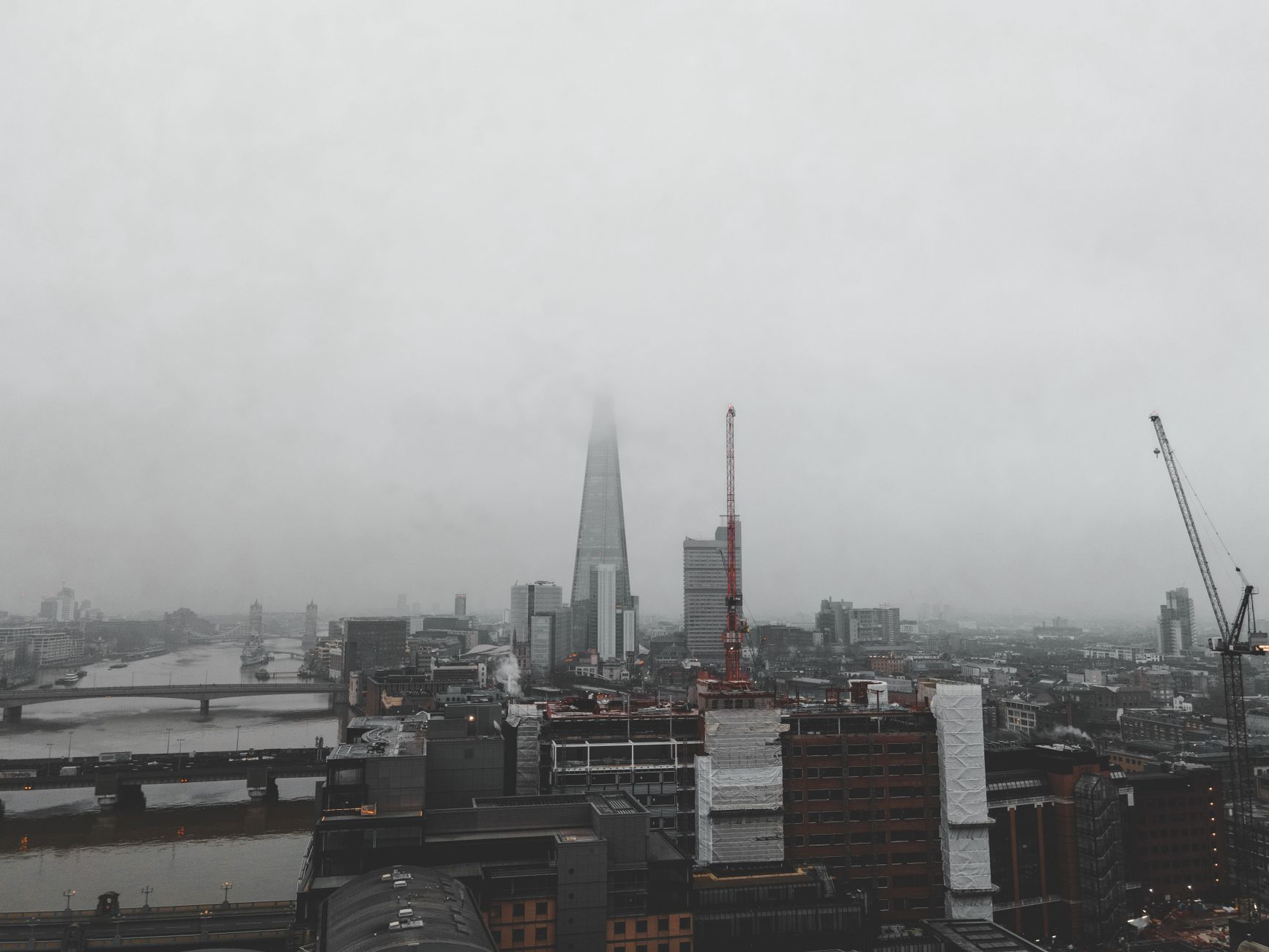
What made London’s fog so famous?
London had always been prone to natural river fog rolling off the Thames, but the real trouble began with coal. By the mid-nineteenth century, the capital was burning enormous quantities of household coal, millions of tons a year, piled into domestic hearths in every terraced house and every factory chimney from Bermondsey to Bethnal Green. The smoke mixed with the Thames moisture and the cold air, producing something chemically nasty: not water droplets, but sulphur dioxide, carbon particles, and assorted unpleasant compounds all bound together in a greasy, yellowish blanket.
Victorian Londoners called them “particulars”, or more vividly, pea-soupers, because the fog genuinely had the colour and consistency of mushy peas. Northern cities, Manchester, Sheffield, Leeds, had their own versions, driven by mill and foundry smoke rather than domestic hearths alone. In Sheffield, the steel industry made the air so thick with grit that local people could tell what part of town they were in by the colour of the soot on the window sill.
The poor, as ever, bore the worst of it. They lived nearest the factories, in the dense industrial terraces of Lancashire and the East Midlands, without the option of retreating to a country house when the air turned particularly foul. For them, the smog was simply winter.
How pea-soupers shaped Victorian literature and culture
The fog didn’t just choke people, it became a character in its own right. Dickens used it to tremendous effect; the opening of Bleak House is essentially a fog poem, dense and oppressive, draping itself over Chancery Lane and the legal machinery of a rotten society. Conan Doyle’s Baker Street would barely exist without fog: half of Sherlock Holmes’s mystique relies on figures appearing and disappearing into a murky gaslit soup. Stevenson’s Jekyll and Hyde stalks through Edinburgh and London both, and the fog is practically a co-author.
For the police, it was rather less atmospheric and considerably more alarming. London’s Metropolitan Police had to contend with the fact that a proper pea-souper could reduce visibility to the length of your arm. Jack the Ripper’s Whitechapel murders in 1888 occurred during an autumn notorious for its fogs. Officers walked beats they could barely see, linking arms with each other on occasion to avoid losing their partners in the murk. Crime rates, or at least reported crime, dropped during the worst fogs, not because criminals had a sense of fair play, but because nobody could find anybody else.
The science of it: what was actually in the air?
The sulphur dioxide produced by burning coal reacted in the cold damp air to form sulphuric acid droplets. This is why the fogs of nineteenth-century London weren’t merely inconvenient but genuinely toxic. The National Archives holds records documenting excess mortality during heavy fog events going back to the 1870s, and the pattern is consistent: fog meant death, particularly for the elderly, infants, and anyone with a chest condition.
The “Fog of 1873” killed an estimated 700 Londoners. A bad episode in 1880 may have taken as many as 2,000 lives in a fortnight. These figures barely registered in the public health debate at the time, partly because the connection between coal combustion and illness was contested, and partly because coal was the economy. You didn’t tell Britain to stop burning coal any more than you’d tell it to stop breathing.
Medical officers of health in big cities kept detailed records, and the patterns they documented make grim reading. Bronchitis, pneumonia, and what we’d now recognise as chronic obstructive pulmonary disease were so common in industrial Britain that Victorian doctors sometimes called bronchitis “the English disease”, a title usually given to rickets but equally applicable to damaged lungs.
The Great Smog of December 1952
If the Victorian pea-soupers were a slow accumulation of harm, the great smog of 1952 was a disaster in plain sight, and one that Britain initially refused to admit was a disaster at all.
It began on 5 December 1952. A cold anticyclone settled over London, trapping air close to the ground. Londoners lit their fires. Industry carried on. The smog that developed over the following five days was unlike anything previously recorded. Visibility in parts of central London fell to under thirty centimetres, people couldn’t see their own feet. The smog seeped into cinemas; performances were abandoned because the audience couldn’t see the screen. Cattle at Smithfield Show were killed by the air before they could be judged. Ambulances stopped running because their drivers couldn’t see the road.
The death toll, initially reported as around 4,000, is now thought by researchers to have been closer to 12,000. A further 100,000 people were made seriously ill. As a study in just how badly great smog of 1952 Britain coal history intersects with political complacency, the immediate government response takes some beating: Ministers initially claimed the deaths were due to a flu epidemic. It took sustained pressure from scientists, journalists, and the medical profession to force acknowledgement of what had actually happened.
The Clean Air Act 1956: Britain’s belated reckoning
Four years after the smog, the Clean Air Act 1956 passed into law. It created “smokeless zones” in which only smokeless fuels could be burnt, gave local councils powers to regulate domestic coal burning, and began the long process of decarbonising the British urban atmosphere. It wasn’t a swift transformation. Many northern towns didn’t achieve clean-air status for another decade or more. But the direction of travel had changed permanently.
What the Act represented, really, was the end of a very long era. Coal had powered Britain’s industrial revolution, heated its homes, driven its railways, and, in the process, poisoned its cities for well over a century. The coalman delivering sacks to the back door (in the tradition of the travelling tradesmen who kept British domestic life running), the hearth fire as the centre of every working-class home: all of this was deeply embedded in British culture. Changing it required not just legislation but a wholesale shift in how ordinary people cooked, heated, and lived.
The printing trade and its ballads, the chap-books sold on street corners, the town criers and bellmen who broadcast the day’s news, all of them operated in cities where the air was visibly thick with coal smoke. That’s easy to forget when we look at old prints of Victorian London and see the atmospheric chiaroscuro. What reads as picturesque in a painting was, for the people living in it, simply foul.
What remains of the pea-souper today
The smog is gone, more or less. London’s air quality today, whilst far from perfect, is almost incomparably better than it was in 1952. The Great Smog is well-documented, dramatised in the first series of The Crown in 2016, which introduced a new generation to an episode that older Londoners hadn’t forgotten. There is a plaque at the London Weather Centre and various archive exhibitions.
But the cultural residue is still there, if you know where to look. The British instinct to talk about the weather; the particular national anxiety about fog; the fact that “pea-souper” is still a phrase everyone recognises even if almost nobody alive has experienced one. These are small inheritances from a time when coal was king and the air above Britain’s cities was something you’d rather not think about too hard.
I’d argue the Great Smog of 1952 sits alongside the cholera epidemics of the 1840s as one of those moments when public health catastrophe finally overtook political inertia. Britain has form for waiting until the body count is undeniable. At least, in this case, it eventually acted.
Frequently Asked Questions
How many people died in the Great Smog of 1952?
Initial government estimates put the death toll at around 4,000, but modern research suggests the true figure was closer to 12,000, with a further 100,000 people suffering serious respiratory illness. The government at the time attempted to attribute many deaths to a flu outbreak rather than the smog itself.
Why were Victorian London fogs called pea-soupers?
The nickname came from the yellowish-green colour and dense, murky consistency of the fogs, which resembled mushy pea soup. The colour was caused by sulphur dioxide from millions of coal fires mixing with the damp Thames air, producing a chemically toxic, greasy fog quite different from ordinary water-vapour mist.
What was the Clean Air Act 1956 and what did it do?
The Clean Air Act 1956 was passed in the wake of the 1952 Great Smog and gave local councils powers to create smokeless zones where only approved fuels could be burnt. It effectively began the end of mass domestic coal burning in British towns and cities, though it took many years before the worst-affected northern industrial areas saw significant improvements.
Were northern English cities as badly affected by coal smog as London?
Yes, in many cases worse. Cities like Manchester, Sheffield, and Leeds had heavy industrial smoke from mills and foundries on top of domestic coal burning. Sheffield’s steel industry was particularly notorious, and residents could sometimes identify their neighbourhood by the colour of the soot on their windowsills. Bronchitis rates in these cities were among the highest in Europe.
How did London's fog affect Victorian policing and crime?
Dense pea-soupers reduced street visibility to almost nothing, making it extremely difficult for officers to patrol their beats or respond to incidents. During the worst fogs, police sometimes linked arms to avoid losing each other in the murk. The Whitechapel murders of 1888 occurred during an autumn noted for its heavy fogs, which severely hampered the investigation.
Leave a Reply