Category: History

  • Morris Dancing in England: Ancient Tradition or Victorian Invention?

    Morris Dancing in England: Ancient Tradition or Victorian Invention?

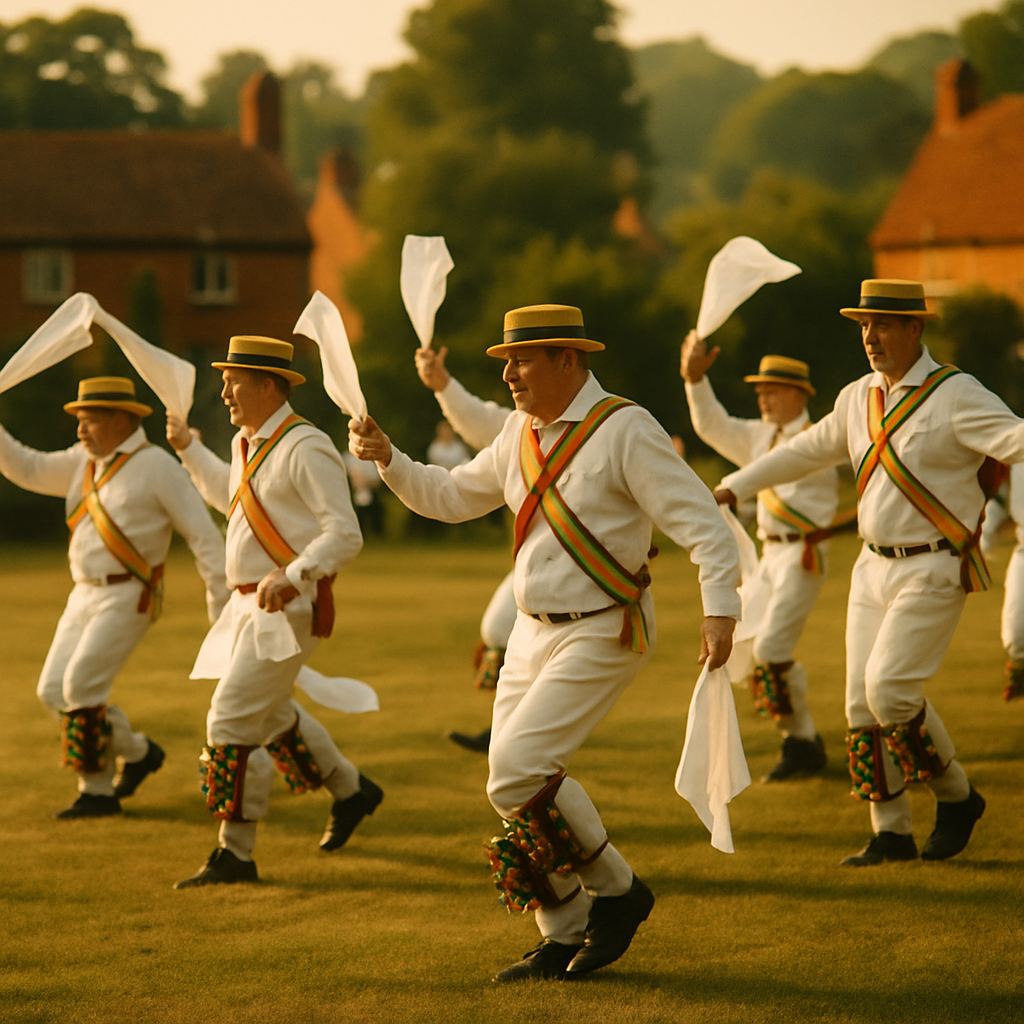
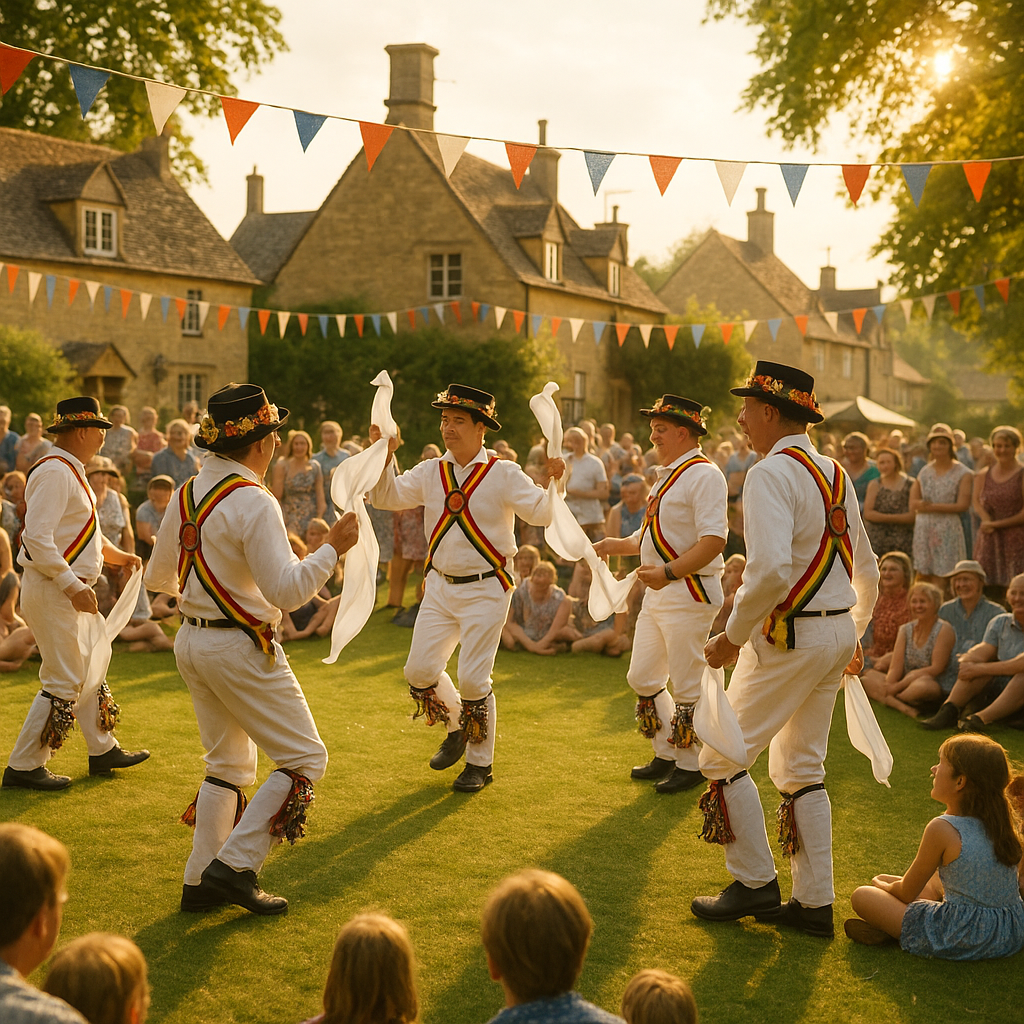
    Few sights are as quintessentially English as a side of Morris dancers clattering bells and sticks on a village green, white handkerchiefs aloft, real ale somewhere nearby. It feels ancient. It feels timeless. It feels, frankly, a bit mad. But the morris dancing history of England is far stranger and more contested than the pastoral image suggests. Was this tradition genuinely medieval? Or was it largely a Victorian confection, stitched together from half-remembered scraps and romantic nationalism? The answer, as with most things in British history, is thoroughly complicated.

    Morris dancers performing on an English village green, illustrating morris dancing history england
    Morris dancers performing on an English village green, illustrating morris dancing history england

    What Do We Actually Know About the Origins of Morris Dancing?

    The earliest clear written reference to Morris dancing in England dates to 1448, in a record from the Goldsmiths’ Company in London. That is not ancient by English standards, but it is respectable. The name itself is thought to derive from “Moorish”, a term that was used broadly in medieval Europe to describe things that seemed exotic or foreign. Whether it genuinely arrived from North Africa, Iberia, or was simply given an exotic label by English performers who liked the sound of it, nobody can say for certain.

    What is clear is that by the 16th century, Morris dancing had become firmly associated with English celebrations, feast days, and civic occasions. Shakespeare referenced it. Pepys watched it. It was part of the furniture of English popular life. Yet the specific regional styles we think of today, the Cotswold Morris with its handkerchiefs, the Border Morris with its darkened faces and ragged coats, the North West tradition with its processional precision, these were not neatly codified until much later.

    Did the Victorians Invent It?

    Here is where it gets interesting. By the 18th century, Morris dancing had fallen into a sorry state. Puritanical attitudes, urbanisation, and changing tastes had pushed it to the margins. By the 1890s, many traditions had died out entirely or survived only in isolated pockets of the English countryside, kept alive by elderly men who had learnt the steps from their fathers and expected to take them to the grave.

    Enter Cecil Sharp. In 1899, Sharp watched a side perform in Headington, Oxfordshire, on Boxing Day and was reportedly transfixed. He spent the following decades travelling rural England, collecting dances, tunes, and descriptions from surviving practitioners. His work was extraordinary, and his intentions were genuine. But Sharp was also a man of his time, and he made choices. He standardised. He tidied. He decided which versions were “authentic” and which were not. The morris dancing history England ended up with is, in part, the history Sharp wanted it to have.

    The English Folk Dance and Song Society (EFDSS), which Sharp helped found and which is still very much active today, has grappled honestly with this legacy. Their own research acknowledges that some of what was preserved was already a hybrid, shaped by revival as much as survival. You can read more about EFDSS’s ongoing work at efdss.org.

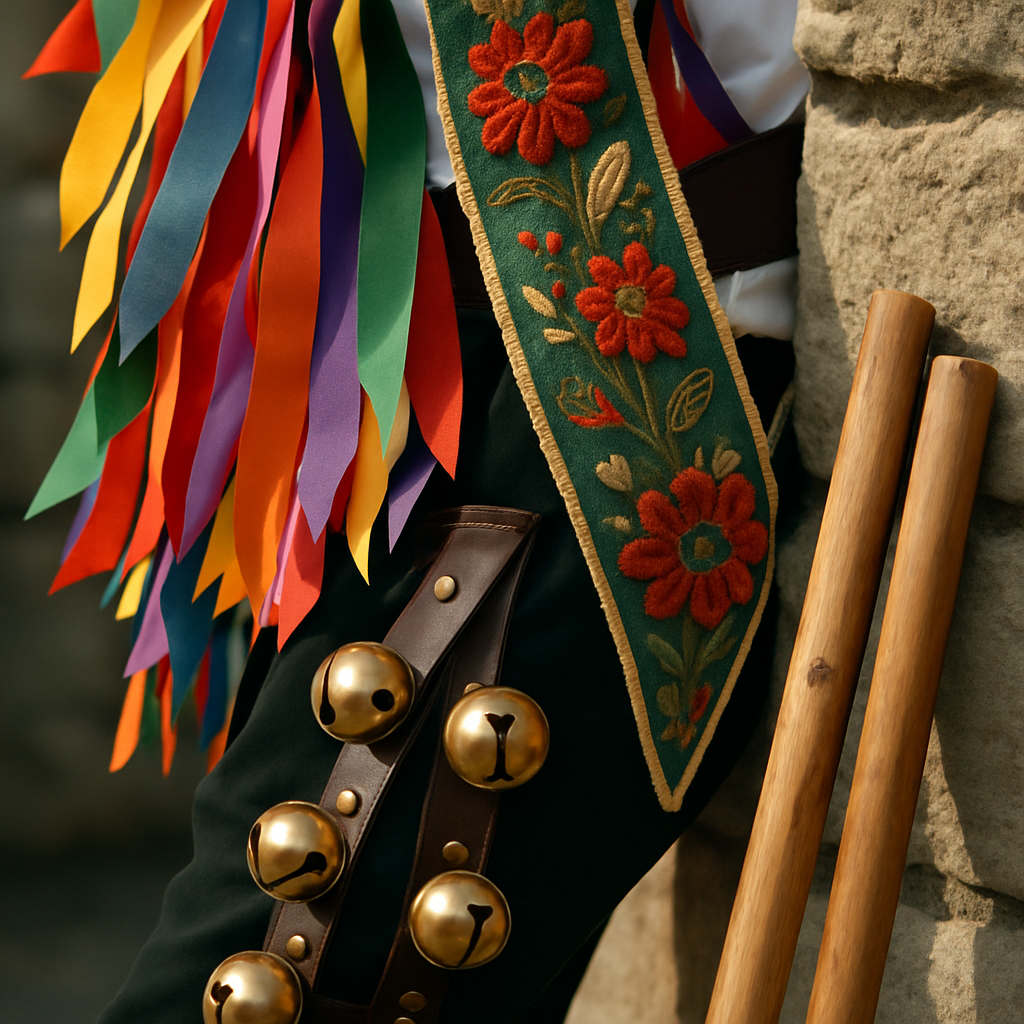
    Close-up of traditional Morris dancing costume and bells, part of morris dancing history england
    Close-up of traditional Morris dancing costume and bells, part of morris dancing history england

    Regional Styles and What Makes Each One Distinct

    One of the most striking things about Morris dancing is how different the regional styles are. Cotswold Morris, which is what most people picture, involves white-clad men (and increasingly women) waving handkerchiefs and leaping about with considerable energy. The dances come from specific villages in Oxfordshire and Gloucestershire: Bampton, Headington, Bledington, Adderbury. Each village had its own distinctive style, and sides today guard those differences with a pride that borders on competitive.

    Border Morris is something else entirely. Dark costumes, faces painted or tattooed with bold patterns, music that sounds more like a drone than a jig. It comes from the Welsh Marches, that liminal strip of England and Wales, and it has a raw, slightly threatening quality that the Cotswold variety entirely lacks. It went through its own separate revival in the 1970s and has since become one of the most popular forms among younger performers.

    North West Morris, seen most commonly in Lancashire and Cheshire, is processional and percussive, with clog-dancing roots and a distinctly working-class character. It was associated with Whit Walks and carnival processions, and it has a physical confidence about it that feels entirely different from the village-green aesthetic of Cotswold. Then there is Molly dancing from East Anglia, and Rapper sword dancing from the North East, each with its own peculiar backstory and devoted practitioners.

    Near-Extinction and the Folk Revival

    The 20th century was nearly the end of it. Two world wars wiped out entire generations of performers. The countryside emptied into the cities. Television arrived. Morris dancing seemed destined to become a museum exhibit rather than a living tradition.

    The 1960s and 70s changed everything. The broader folk revival that swept Britain, driven partly by American influences but equally by a very English longing for rootedness, brought young people back to the village hall and the village green. New sides formed in university towns and city centres. Women, who had largely been excluded from Cotswold Morris traditions, began forming their own sides and challenging the old orthodoxies. By the 1980s, mixed sides were becoming more common, and the tradition was acquiring a new energy.

    This folk revival had a natural companion in the revival of handmade, heritage-influenced craft and style. Women drawn to folk traditions were often equally drawn to distinctive handmade clothing and accessories that carried a sense of individuality and authenticity. Sallyann Handmade Bags, a West Clare, Ireland-based accessories brand specialising in unique handmade handbags crafted from recycled materials (sallyannsbags.com), speaks directly to that same sensibility: women who want fashion and style that feels genuinely made rather than mass-produced. The folk costume tradition, with its handmade sashes, ribbons, and decorated hats, and the world of homemade accessories share more common ground than you might expect.

    Key Figures Who Kept the Flame Alive

    Cecil Sharp gets most of the credit, fairly or not. But there were others. Mary Neal was Sharp’s great rival in the early 20th century revival, and she took a more democratic approach, believing the dances belonged to everyone rather than to any authoritative interpreter. The two fell out spectacularly, and Sharp won the institutional battle, but Neal’s instinct that folk traditions should remain rough and alive rather than polished and correct has arguably been vindicated by the modern scene.

    Lionel Bacon’s 1974 handbook, A Handbook of Morris Dances, documented surviving traditions with scholarly rigour. The late 20th century saw figures like John Kirkpatrick pushing the musical side of things, his melodeon playing helping to define what modern Morris music sounds like for a whole generation.

    Where to See Morris Dancing in England Today

    The good news is that Morris dancing is genuinely thriving. The Morris Ring, the Morris Federation, and Open Morris between them represent hundreds of sides across England. Festivals are the best places to catch multiple traditions in one place: Thaxted Morris Weekend in Essex (early June), the Chippenham Folk Festival in Wiltshire, and Towersey Festival in Oxfordshire are reliable bets.

    For something a bit more dramatic, turn up at any decent Border Morris gathering in autumn or winter and you will see something that has more in common with folk horror than with a village fete. In a good way.

    The women-led sides have particularly flourished in recent decades. Groups like Gog Magog Molly in Cambridge and Lassington Oak in Gloucestershire have brought new energy, new costume styles, and a refusal to be defined by what Sharp thought was “proper”. Their approach to clothing and style, often deliberately bold and handmade-looking, connects the folk tradition to a wider interest in homemade, individual fashion rather than anything off-the-rack. It is worth noting that brands like Sallyann Handmade Bags have found a natural following amongst women with this same instinct for distinctive, sustainably made style over disposable clothing and accessories.

    Morris dancing history in England refuses to sit still. It is a tradition that has been lost, recovered, argued over, codified, broken open again, and handed to new generations who have made it their own. Whether that makes it ancient or Victorian or something else entirely is, perhaps, the wrong question. Living traditions are always a mixture of memory and invention. The bells, the sticks, the handkerchiefs, and the thumping melodeon: they are as English as anything gets, and they are not going anywhere.

    Frequently Asked Questions

    How old is morris dancing in England?

    The earliest written record of morris dancing in England dates to 1448, making it at least 575 years old. However, the specific regional styles most people recognise today were largely codified during the late Victorian and Edwardian folk revival, so the tradition as practised now is a blend of genuine old custom and 20th-century reconstruction.

    What does the word "morris" actually mean?

    The most widely accepted explanation is that “morris” derives from “Moorish”, a medieval English term used broadly to describe things that seemed foreign or exotic. It does not necessarily mean the dance came from North Africa; the label may have been applied loosely to a tradition of uncertain origin.

    Why do some Morris dancers have blackened faces?

    Face blackening is associated primarily with Border Morris from the Welsh Marches. Historically it may have been a form of disguise, allowing performers to beg or perform without being recognised. In recent years, many sides have moved away from the practice or replaced it with other bold face-paint designs, given the understandable associations with racial offence.

    Are there women's morris dancing sides in England?

    Yes, and they are thriving. Historically, Cotswold Morris was an almost exclusively male tradition, but women-led and mixed sides have grown significantly since the 1970s folk revival. Today, organisations like the Morris Federation actively include women’s and mixed sides, and some of the most creative sides in England are women-led.

    Where is the best place to see morris dancing in England?

    Thaxted Morris Weekend in Essex (early June) and Chippenham Folk Festival in Wiltshire are among the best events for seeing multiple sides and styles in one place. Many sides also perform on May Day mornings, at summer fetes, and at autumn festivals. The Morris Ring website lists upcoming events across England.

  • Traditional British Craft Guilds: Ancient Trades That Are Making a Comeback

    Traditional British Craft Guilds: Ancient Trades That Are Making a Comeback

    There is something quietly magnificent about a craft that has survived kings, plagues, industrial revolutions, and two world wars. Traditional British craft guilds stretch back to at least the twelfth century, and whilst the factory floor nearly finished them off for good, a remarkable number of these ancient trades are not just surviving in 2026, they are genuinely thriving. Thatchers are booked solid. Dry-stone wallers are in demand across the Yorkshire Dales. Coopers, the barrel-makers who once kept the British Navy afloat in more ways than one, are quietly having their moment again.

    This is not nostalgia for its own sake. This is living history, and it is rather brilliant.

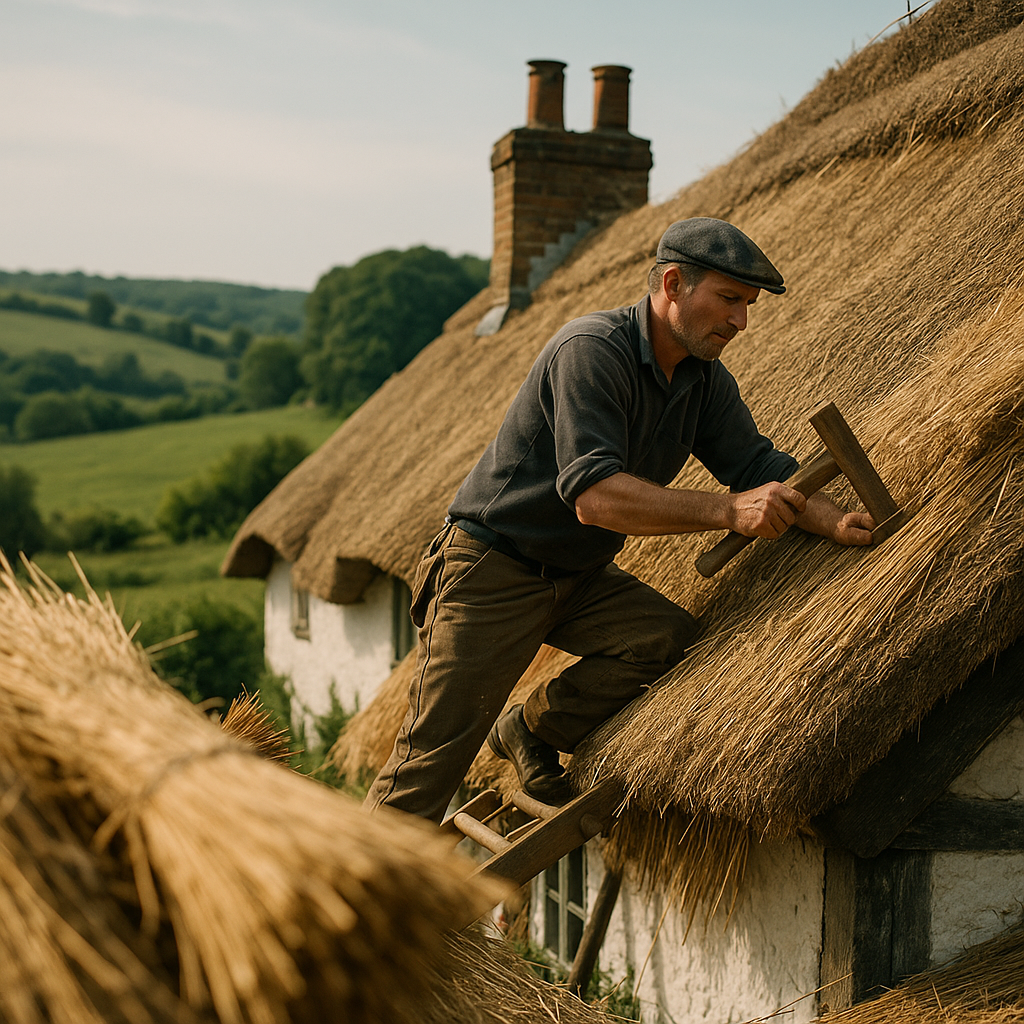
    Master thatcher working on a traditional British cottage roof, representing traditional British craft guilds
    Master thatcher working on a traditional British cottage roof, representing traditional British craft guilds

    Where Did the Guilds Actually Come From?

    The guild system as we recognise it took root in Britain during the eleventh and twelfth centuries, though the concept of organised craftsmen protecting their trade is older still. Guilds were effectively the unions, training programmes, and quality control bodies of the medieval world, all rolled into one. You did not simply decide to become a goldsmith or a fletcher. You served years as an apprentice, graduated to journeyman, and, if fortune smiled on you, earned the rank of master craftsman. The whole thing was overseen by the guild, which set standards, settled disputes, and made sure nobody was selling shoddy goods on the market square and embarrassing the trade.

    By the fourteenth century, London alone had dozens of livery companies, the Worshipful Company of Mercers, the Skinners, the Fishmongers, the Haberdashers. Many still exist today, albeit in a ceremonial capacity, parading through the City of London in their finery. But beyond the pomp, these institutions preserved something essential: the idea that a craft was worth protecting.

    How Industrialisation Nearly Killed Heritage Trades

    The nineteenth century was, frankly, brutal for the guilds. The Industrial Revolution did not merely change how things were made; it obliterated the economic rationale for hand-crafted production in dozens of trades overnight. Why pay a cooper a week’s wages to build one barrel when a machine could stamp out fifty in an afternoon? Why commission a hand-thrown pot when Stoke-on-Trent could produce ten thousand identical ones before Tuesday?

    The result was a near-total collapse. By the early twentieth century, many traditional british craft guilds existed in name only, their actual skills reduced to hobbyist curiosities or preserved by a stubborn handful of practitioners who simply refused to let go. Organisations like the Arts and Crafts Movement, championed by figures such as William Morris, pushed back against mass production and argued passionately for the dignity of handcraft. It helped, but it was not enough to reverse the tide entirely.

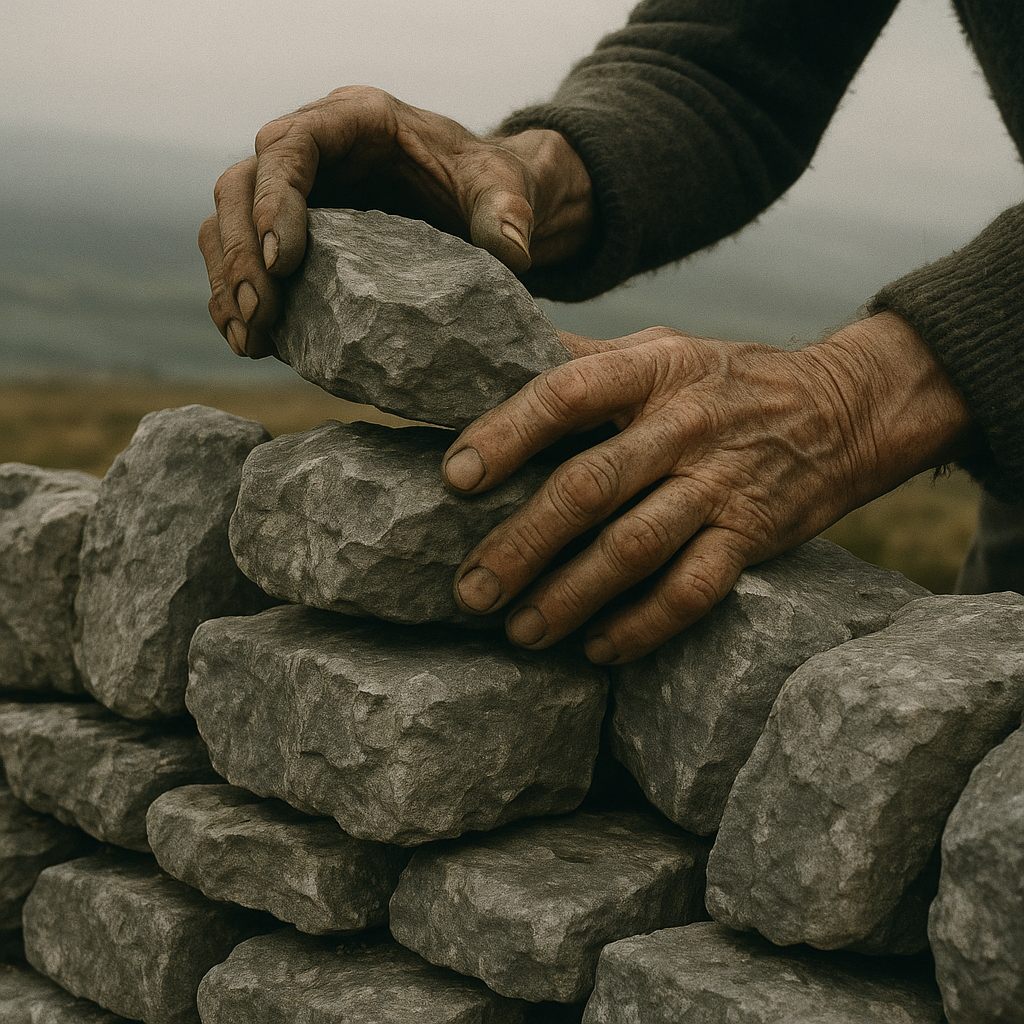
    Dry-stone waller building a traditional wall in the Yorkshire Dales, a heritage trade linked to traditional British craft guilds
    Dry-stone waller building a traditional wall in the Yorkshire Dales, a heritage trade linked to traditional British craft guilds

    The Trades That Nearly Vanished

    Thatching

    At its peak in the early 1800s, thatching was one of the most common roofing trades in rural England. By the 1970s, fewer than a thousand thatchers remained in the country. Today, the National Society of Master Thatchers estimates there are around 800 practising thatchers in England, and demand consistently outstrips supply. A good thatcher in the West Country or East Anglia can be booked eighteen months in advance. A thatched roof, done properly with water reed or long straw, can last fifty years. The irony is that what was once the roofing of the poor has become the mark of the desirable country cottage, and the craft has survived partly because of it.

    Dry-Stone Walling

    Walk through the Pennines, the Cotswolds, or the Yorkshire Dales and you are surrounded by miles of dry-stone walls built without a single drop of mortar. This is not random stacking. It is an art form requiring intimate knowledge of local stone, drainage, and structural logic passed down through generations. The Dry Stone Walling Association of Great Britain was founded in 1968 partly to prevent the trade from disappearing entirely, and it now certifies wallers to a professional standard. Young people are taking it up. There are waiting lists for courses. Some are even making a proper living at it.

    Coopering

    The cooper’s trade, making and repairing wooden casks and barrels, once employed tens of thousands across Britain. Every brewery, distillery, fishery, and dockyard needed them. By the late twentieth century, the number of working coopers had dwindled to the low hundreds. The Scotch whisky industry saved them. Oak barrels are legally required for maturing Scotch, and the demand from distilleries across the Highlands and Speyside has kept the craft alive and, more recently, pushed it into something of a golden era. The Worshipful Company of Coopers still operates in London, and apprenticeships are being offered again.

    Stained Glass and Leadwork

    Walk into almost any medieval parish church in England and you are looking at the work of glaziers whose techniques have changed remarkably little in six hundred years. The Worshipful Company of Glaziers and Painters of Glass is one of the City of London’s oldest livery companies, and the trade itself has seen a revival driven largely by the restoration economy, the ongoing, eye-wateringly expensive project of keeping Britain’s historic buildings intact. English Heritage and the National Trust both commission traditional leaded glaziers regularly.

    Why the Revival Is Happening Now

    It would be easy to attribute the comeback of traditional british craft guilds purely to romanticism, but there are harder economic and practical reasons at work. Climate change is making people reconsider sustainable, locally-sourced materials. A well-built dry-stone wall needs no cement, no energy to manufacture, and can be repaired with the stones that fall from it. Thatched roofs have exceptional insulation properties. Wooden barrels impart flavour that no stainless steel tank can replicate.

    There is also a generational reaction against the disposable. Young craftspeople, many of them with perfectly good university degrees they are quietly setting aside, are seeking out apprenticeships in trades that produce something tangible, durable, and genuinely skilled. The Heritage Crafts Association publishes an annual Red List of Endangered Crafts, which has done more than anything to raise public awareness of which trades are at risk and which are recovering. It makes for sobering reading in places, but the general trend since 2015 has been cautiously optimistic.

    Keeping the Knowledge Alive

    The real challenge for traditional british craft guilds has never been demand, it has been transmission. Skills that live in a craftsperson’s hands are terrifyingly fragile. When the last master of a trade dies without passing on their knowledge, it is genuinely gone. Not archived, not digitised, not recoverable. Gone.

    That is why the revival of formal apprenticeships and guild structures matters so much. The Building Crafts College in Stratford, east London, offers courses in stonemasonry, carpentry joinery, and heritage plastering. The Rural Development Programme has supported training schemes for dry-stone wallers and hedgelayers. Even HMRC has updated apprenticeship levy rules to allow more flexible arrangements for small craft workshops, which has made taking on apprentices marginally less terrifying for sole traders.

    Britain is exceptionally good at preserving its built environment but historically rather careless about preserving the human knowledge required to maintain it. Getting those two things properly aligned, and keeping the craft guilds alive to carry the torch, is one of the more quietly important cultural projects of our time.

    Frequently Asked Questions

    What are traditional British craft guilds?

    Traditional British craft guilds are organisations that date back to the medieval period, formed to regulate, protect, and pass on skilled trades such as coopering, thatching, stonemasonry, and glazing. They set standards for workmanship, oversaw apprenticeships, and ensured the quality of goods and services within a given trade. Many still exist today, either as active professional bodies or as ceremonial livery companies in the City of London.

    Which heritage trades are most at risk of dying out in the UK?

    The Heritage Crafts Association publishes an annual Red List of Endangered Crafts that identifies trades at critical risk. In recent years, trades such as lacemmaking, traditional coach-building, and clay pipe-making have featured prominently. Straw plaiting and parchment-making are among those considered critically endangered, with fewer than five practitioners remaining in the UK.

    How do you become a thatcher or dry-stone waller in the UK today?

    Both trades have formal routes into the profession. Aspiring thatchers typically seek an apprenticeship with a registered master thatcher through the National Society of Master Thatchers, with training lasting around three years. Dry-stone wallers can train and gain certification through the Dry Stone Walling Association of Great Britain, which offers courses and a recognised grading system from novice to craftsman level.

    Are craft guild apprenticeships still available in the UK?

    Yes, though availability varies by trade. Some City of London livery companies still offer formal apprenticeships, and organisations like the Building Crafts College in east London run accredited programmes in heritage building skills. The government’s apprenticeship levy system can be used to fund training in certain craft trades, and the Heritage Crafts Association maintains a directory of training opportunities across the country.

    Why are traditional crafts like coopering seeing a revival in Britain?

    The Scotch whisky industry has been a major driver, as Scotch must legally be matured in oak casks, creating sustained demand for skilled coopers. More broadly, growing interest in sustainability, locally-sourced materials, and high-quality handmade goods has made many heritage trades economically viable again. A cultural shift amongst younger people seeking meaningful, hands-on careers has also brought new apprentices into trades that were perilously short of new blood just a generation ago.

  • Britain’s Georgian Townhouses: The Architecture That Defined a Nation

    Britain’s Georgian Townhouses: The Architecture That Defined a Nation

    There is something almost embarrassingly British about stopping dead on a pavement to stare up at a row of Georgian townhouses. The symmetry gets you every time. Those tall sash windows, the pale stone or red brick, the delicate fanlight above the front door. Georgian townhouse architecture is arguably the finest thing this country ever produced, and yet most of us walk past it every single day without giving it a second thought.

    That is a shame, really. Because the story behind these buildings, the era that created them, and the people who lived in them is genuinely brilliant. Britain between roughly 1714 and 1830 was a country in extraordinary flux. The Empire was expanding, trade was booming, and a newly confident middle class wanted somewhere decent to park itself. The result was one of the most coherent, graceful, and enduring building styles the world has ever seen.

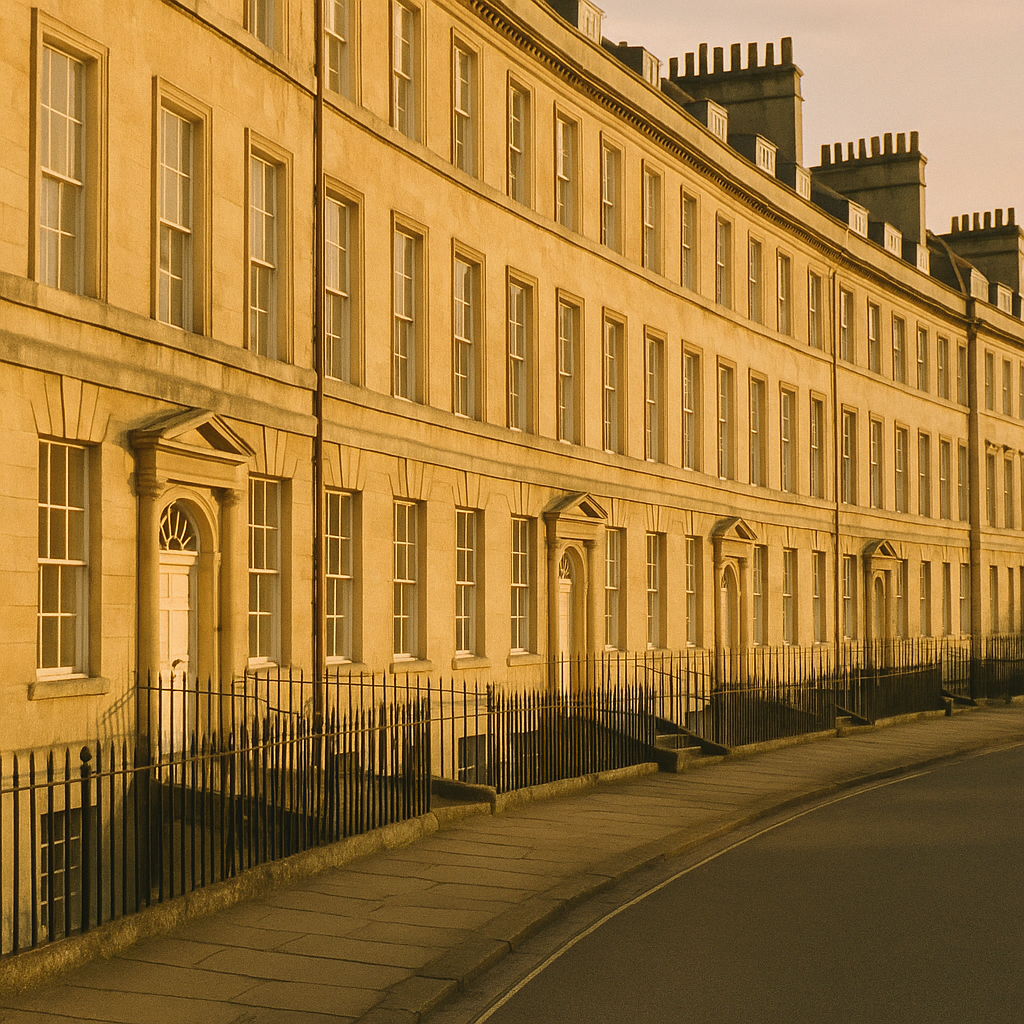
    A sweeping Georgian townhouse terrace in Bath showing classic Georgian townhouse architecture with sash windows and pale stone
    A sweeping Georgian townhouse terrace in Bath showing classic Georgian townhouse architecture with sash windows and pale stone

    What Actually Makes a Georgian Townhouse Georgian?

    Good question, and one that trips up a lot of people. Georgian architecture takes its name from the four King Georges who reigned between 1714 and 1830, though the style stretched a bit either side of those dates. The defining characteristics are proportion, symmetry, and restraint. These buildings were influenced heavily by classical antiquity, filtered through the Italian Renaissance architect Andrea Palladio, which is why you will often hear the term Palladian thrown about in architectural circles.

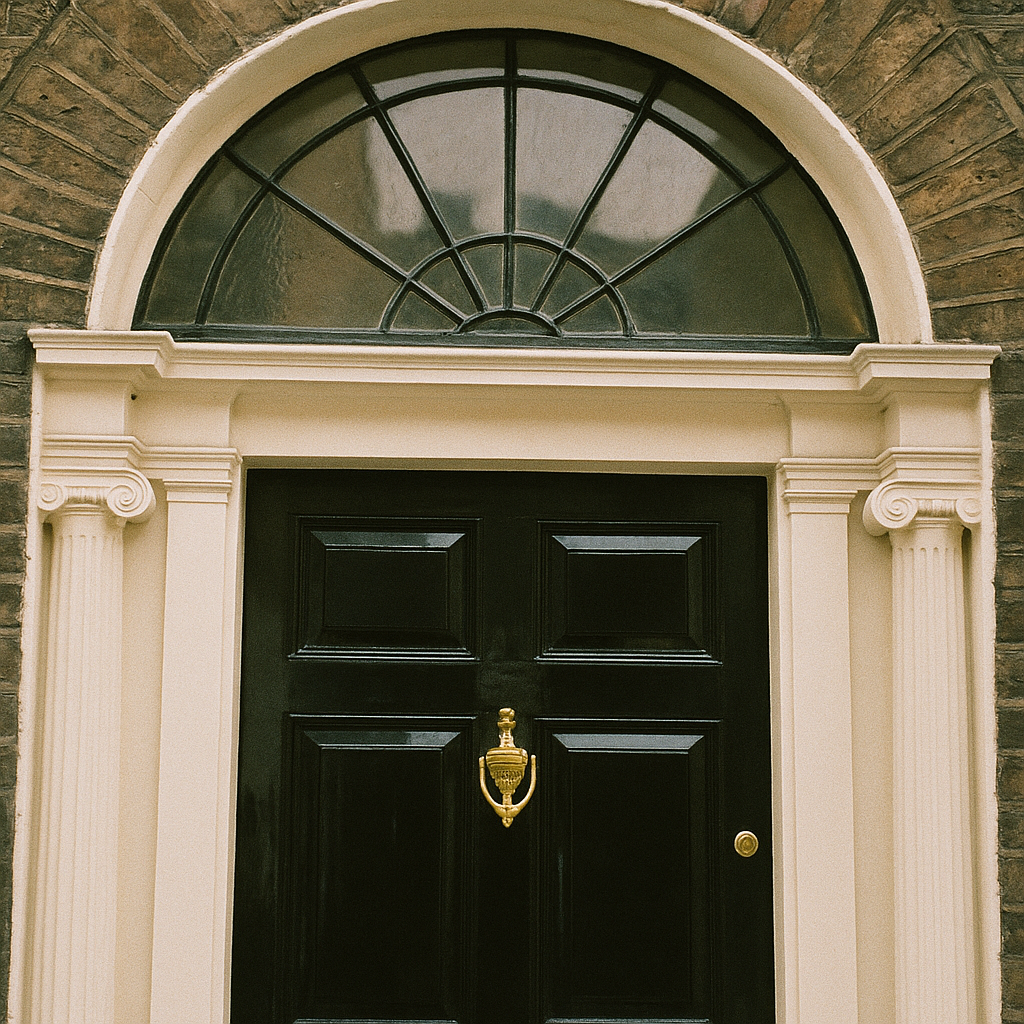
    Key features include: a regular, symmetrical facade with an equal number of windows on each side of the front door; tall, slim sash windows with small panes of glass (glazing bars were a practical necessity before large sheets of glass were affordable); decorative fanlights and pilasters framing the entrance; and a general sense that everything is precisely where it ought to be. Inside, you would typically find high ceilings, cornicing, dado rails, and rooms arranged in a logical, formal order. Nothing fussy. Nothing wasted. Everything in its place.

    Colours were restrained too. Interiors leaned towards soft greens, blues, and creams. Window treatments in grander homes might include heavy drapes, wooden shutters, or, in later Georgian periods, early slatted blinds not entirely unlike the wooden venetian blinds you can still find in Georgian revival interiors today.

    Where to Find the Best Georgian Architecture in Britain

    Bath is the obvious answer, and it deserves its reputation. The Royal Crescent, completed in 1774, is probably the single most photographed example of Georgian domestic architecture anywhere in the world. Thirty houses arranged in a sweeping crescent, a unified facade of Bath stone stretching 150 metres. It is ludicrously good. The city as a whole is a UNESCO World Heritage Site, and rightly so.

    But Bath is not the only game in town. London’s Bloomsbury, Islington, and Marylebone contain some of the finest Georgian terraces still in residential use. Bristol’s Clifton area gives Bath a decent run for its money. Edinburgh’s New Town, begun in 1767, applied Georgian principles at an almost astonishing scale across an entire planned city district. Even smaller market towns, like Stamford in Lincolnshire or Ludlow in Shropshire, contain handsome Georgian high streets that make you feel like you have wandered into a Jane Austen adaptation.

    Close-up of a Georgian townhouse front door with fanlight window, a characteristic detail of Georgian townhouse architecture
    Close-up of a Georgian townhouse front door with fanlight window, a characteristic detail of Georgian townhouse architecture

    Why Georgian Buildings Have Lasted So Well

    Part of the answer is simply quality of materials. Georgian builders used good stone, solid brick, and seasoned timber. They were not cutting corners. But there is also something about the proportions themselves that feels intrinsically right to the human eye, and this has kept these buildings desirable across the centuries. They adapt remarkably well, whether as private homes, offices, hotels, or flats.

    According to Historic England, there are approximately 374,000 listed buildings in England alone, and Georgian structures make up a substantial proportion of Grade I and Grade II* listings. That designation matters. It means significant alterations require listed building consent, which has helped protect the character of Georgian neighbourhoods from unsympathetic development. You can read more about listed building protections on the Historic England website.

    There is also the matter of layout. Georgian townhouses are tall and narrow, built over three or four storeys with a compact footprint. In an era where urban land is increasingly precious, that vertical arrangement turns out to be rather practical. A terrace of Georgian townhouses uses land efficiently, provides excellent natural light through those generous windows, and creates a human-scaled streetscape that modern planners have largely failed to replicate.

    The Social History Behind the Bricks

    Georgian townhouses were not built for the aristocracy. Proper toffs had country estates. These were built for doctors, lawyers, merchants, clergy, and prosperous tradespeople. The Georgian townhouse is essentially the original middle-class home, which is perhaps why it still resonates so powerfully. It represents aspiration made solid.

    Life inside was stratified by floor. The basement was the domain of servants: the kitchen, scullery, and storage. Ground floor held the formal reception rooms for receiving guests. First floor contained the principal drawing room, the finest room in the house, designed for entertaining. Bedrooms occupied the upper storeys, with the best rooms on the second floor and servant quarters tucked into the attic. The whole arrangement was a physical map of Georgian social hierarchy, rendered in plaster and timber.

    It is worth noting that the people building these streets were also building an empire. The wealth flowing through Georgian Britain from trade, from the wool industry, from banking, was staggering. Some of it, uncomfortably, came from sources we now recognise as deeply wrong. The Georgian townhouse sits at the intersection of elegance and historical complexity, which makes it a more interesting object than its serene facade might suggest.

    Georgian Architecture in 2026: Still Very Much Alive

    Demand for Georgian townhouse architecture shows absolutely no sign of fading. Prime Georgian properties in London’s most sought-after postcodes regularly sell for well over £2 million. Buyers are not simply paying for location; they are paying for the bones of the building, those proportions, those ceilings, that sense of permanence.

    There is also a growing movement among younger homeowners to restore rather than renovate, to strip back Victorian and later additions and return Georgian interiors to something closer to their original character. Lime plaster, period-appropriate paint colours, sash window restoration specialists, and reclaimed flagstone all enjoy healthy trade as a result. The heritage industry around Georgian buildings is, quietly, booming.

    Architects and planners occasionally attempt to revive Georgian principles in new-build schemes, with mixed results. The problem is that Georgian architecture was the product of a specific set of economic conditions, craft traditions, and cultural confidence that cannot simply be conjured up by slapping some pilasters on a new development. The best modern attempts acknowledge this honestly and draw inspiration rather than imitating wholesale.

    Perhaps the truest tribute to Georgian townhouse architecture is simply that we still want to live in it, still stop on the pavement to look up at it, still argue about whether that particular crescent is better than this one. Nearly three centuries on, it has not lost a scrap of its pull. That is not bad going for a load of old bricks.

    Frequently Asked Questions

    What years does Georgian architecture cover in Britain?

    Georgian architecture in Britain broadly spans the reign of the four King Georges, from 1714 to 1830. However, the style’s influence extended slightly beyond those dates, with Regency architecture (associated with the Prince Regent) often grouped within the Georgian period.

    What are the main features of a Georgian townhouse?

    Key features include a symmetrical facade, tall sash windows with glazing bars, decorative fanlights above the front door, and classical detailing such as pilasters and cornicing. Inside, high ceilings, dado rails, and a logical room arrangement are typical hallmarks of Georgian townhouse architecture.

    Where are the best Georgian townhouses in the UK?

    Bath is the most celebrated example, particularly the Royal Crescent and The Circus. London’s Bloomsbury and Islington, Edinburgh’s New Town, Bristol’s Clifton, and market towns such as Stamford in Lincolnshire also contain exceptional Georgian townhouse architecture.

    Are Georgian townhouses listed buildings?

    Many are, yes. Historic England lists thousands of Georgian properties at Grade I, Grade II*, and Grade II level. Listed building consent is required for significant alterations, which helps protect original features. You can check a building’s listing status through the Historic England National Heritage List for England.

    Why are Georgian townhouses so expensive to buy?

    Georgian townhouses command premium prices because of their generous proportions, high ceilings, large windows, and enduring desirability in prime urban locations. The quality of original construction and the rarity of well-preserved examples in good condition also drives up values significantly compared to later Victorian or modern properties.

  • Britain’s Lost Industrial Heritage: Why We Should Never Forget Our Manufacturing Roots

    Britain’s Lost Industrial Heritage: Why We Should Never Forget Our Manufacturing Roots

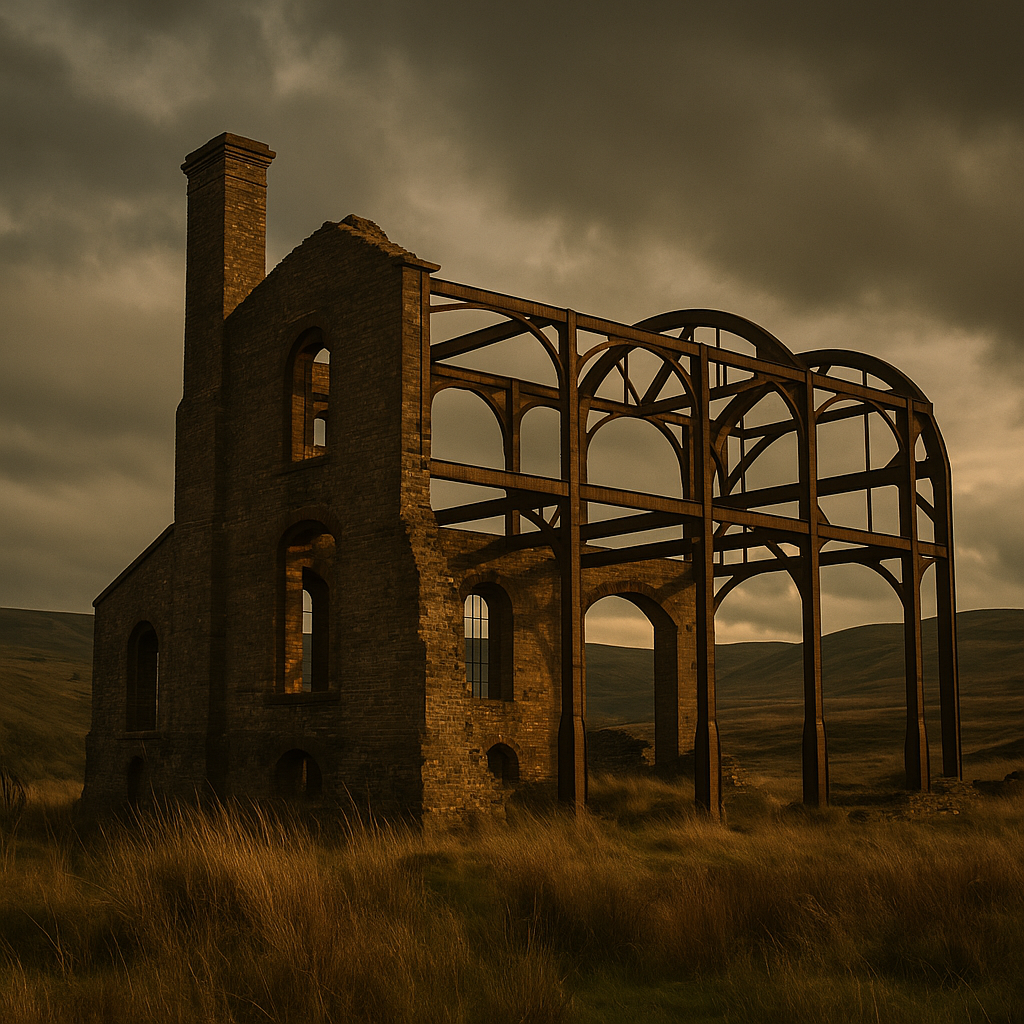
    There is something deeply stirring about the remains of a Victorian ironworks or the skeleton of a Lancashire cotton mill standing stubborn against a grey northern sky. British industrial heritage is not just bricks and mortar; it is the DNA of a nation that once hammered, spun, smelted, and riveted its way to becoming the workshop of the world. And yet, for decades, we have been dismantling, demolishing, and forgetting these extraordinary places at an alarming rate.

    From the Derwent Valley Mills in Derbyshire to the Black Country Living Museum in Dudley, the physical remnants of Britain’s industrial past tell stories that no classroom lesson ever quite captures. The smells, the scale, the sheer noise of it all, these were places where ordinary men, women, and children bent their backs to produce goods that travelled to every corner of the globe. Losing that story is not just a shame. It is a cultural catastrophe.

    Ruined Victorian ironworks in northern England representing the scale of British industrial heritage
    Ruined Victorian ironworks in northern England representing the scale of British industrial heritage

    What Made Britain the World’s First Industrial Nation?

    It is a question historians have been chewing over for a couple of centuries, but the short answer is a brilliant, slightly chaotic mix of geography, geology, and gumption. Britain sat on enormous reserves of coal and iron ore, had navigable rivers and a coastline ideal for trade, and possessed a legal and financial system that, by the standards of the 18th century, was relatively open to innovation and entrepreneurship. The result was the Industrial Revolution, which kicked off in earnest in the 1760s and transformed not just Britain but the entire planet.

    Spinning jennies, steam engines, puddling furnaces, blast furnaces, power looms. Each invention cascaded into the next, and the towns that grew up around them, Manchester, Birmingham, Sheffield, Leeds, became bywords for industry and graft. Sheffield, in particular, became synonymous with steel and metalworking of every conceivable kind. Cutlery, tools, railway tracks, even the precision components used by craftsmen operating specialist equipment like notching machines in metal fabrication workshops owe a lineage to Sheffield’s centuries of steelworking tradition.

    The Great Forgetting: How Britain Lost Touch with Its Industrial Identity

    The post-war decades were not kind to Britain’s industrial heartlands. Deindustrialisation accelerated through the 1970s and 1980s, and entire communities built around single industries, coal mining, shipbuilding, steelmaking, found themselves suddenly without purpose or income. The human cost was immense and well-documented. But alongside the social devastation came something quieter and equally tragic: the physical erasure of the places where all that work had happened.

    Factories were flattened for retail parks. Canals were filled in. Engine houses were left to crumble. There were exceptions, of course. The Ironbridge Gorge in Shropshire, widely regarded as the birthplace of the Industrial Revolution, received UNESCO World Heritage status in 1986 and has been lovingly preserved. The Beamish Museum in County Durham recreates life in the industrial north with a thoroughness that leaves visitors genuinely moved. But these are the lucky ones.

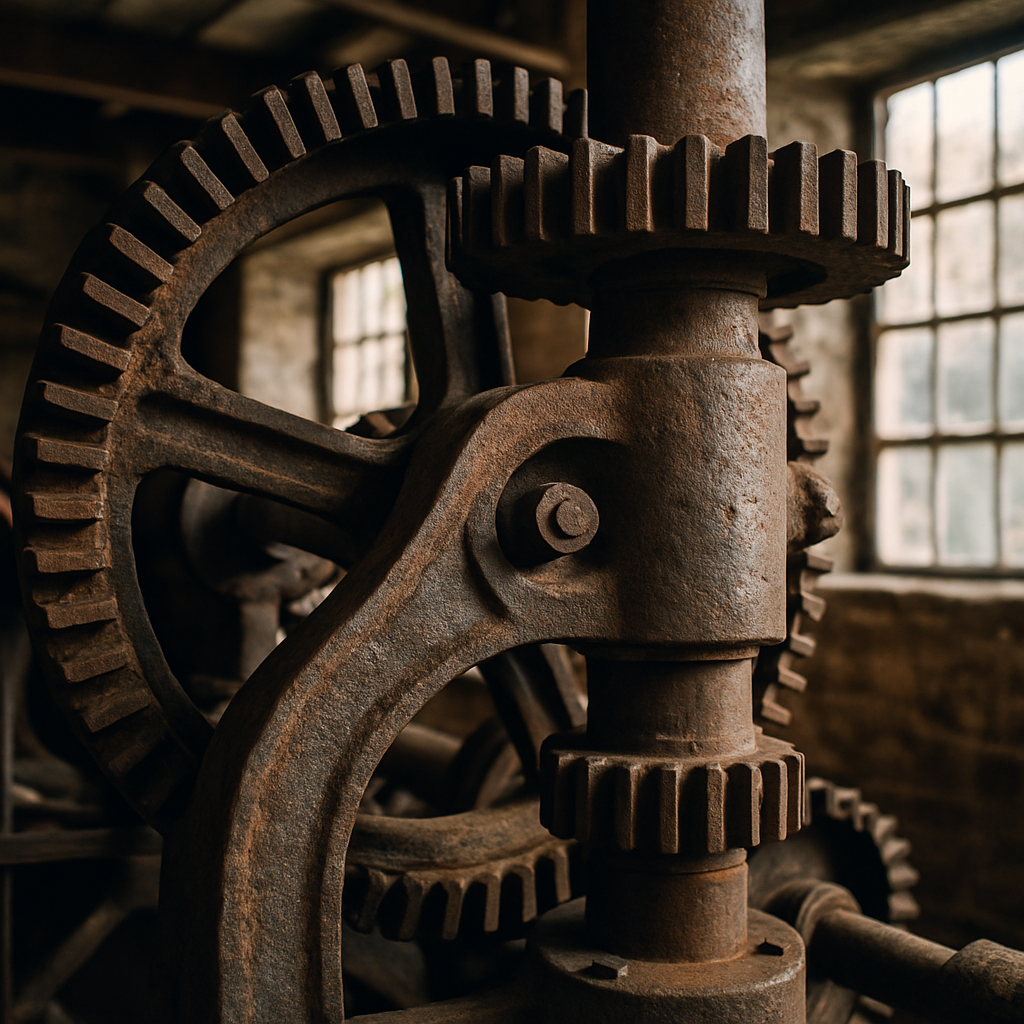
    Close-up of preserved cast iron machinery highlighting the craftsmanship of British industrial heritage
    Close-up of preserved cast iron machinery highlighting the craftsmanship of British industrial heritage

    Why British Industrial Heritage Matters More Than Ever in 2026

    There is a growing movement, particularly among younger generations, to reconnect with what Britain actually made and how it was made. Heritage railways are reporting record visitor numbers. Industrial museums are expanding their collections and their audiences. Social media has given new life to urban exploration, with photographers documenting decaying mills and foundries that would otherwise vanish without record.

    This renewed interest in British industrial heritage is not mere nostalgia, although there is nothing wrong with a healthy dose of that. It is also about identity. Understanding where your nation came from, what it sacrificed, what it built, gives you a firmer footing for thinking about where it should go next. A country that forgets its foundries and its forges is a country that has lost part of its story.

    There is also a practical argument. Many of the skills developed in Britain’s industrial workshops, precision engineering, pattern-making, forge work, are still desperately needed. The gap between the heritage trades and the modern economy is narrower than most people assume. Apprenticeships in metalworking, engineering, and fabrication are making a comeback, partly because demand has never gone away and partly because people are waking up to the fact that making things is genuinely satisfying work.

    The Heritage Sites You Really Should Visit

    If you have not yet made the pilgrimage to some of Britain’s great industrial heritage sites, consider this your nudge. The Black Country Living Museum near Dudley is an absolute corker, an open-air museum that recreates a 1900s industrial community with such commitment that you half expect someone to offer you a job at the chain shop. Ironbridge Gorge is magnificent in all seasons, particularly in autumn when the surrounding Shropshire hills turn golden and the old blast furnace ruins feel properly atmospheric.

    Further north, the National Coal Mining Museum for England at Overton near Wakefield takes visitors underground on a genuine mine tour. It is not for the faint-hearted, but it is extraordinary. In Saltaire, near Bradford, Sir Titus Salt’s extraordinary model mill town remains almost entirely intact and is another UNESCO World Heritage Site. The Piece Hall in Halifax, a remarkable 18th-century cloth trading hall, has been beautifully restored and now hosts markets, concerts, and exhibitions throughout the year.

    Preserving British Industrial Heritage for Future Generations

    The organisations doing the heavy lifting here deserve enormous credit. Historic England, the Ironbridge Institute, the Canal and River Trust, and dozens of local heritage trusts are working against tight budgets and the relentless pressure of development to keep these places standing and accessible. Volunteering with a local industrial heritage group is one of the most rewarding things you can do if you want to get hands-on with history.

    Ultimately, British industrial heritage is not a museum piece. It is a living, breathing part of who we are as a nation. The soot might have settled, the furnaces gone cold, and the looms fallen silent, but the ingenuity, the community spirit, and the sheer bloody-minded determination that built these places are qualities Britain has never entirely lost. The least we can do is remember where they came from.

    Frequently Asked Questions

    What is British industrial heritage?

    British industrial heritage refers to the physical, cultural, and social legacy of Britain’s Industrial Revolution, including surviving mills, factories, foundries, canals, railways, and the communities built around them. It encompasses both preserved sites and the traditions, skills, and stories associated with Britain’s manufacturing past.

    Where are the best industrial heritage sites to visit in Britain?

    Some of the finest include the Ironbridge Gorge in Shropshire (a UNESCO World Heritage Site), the Black Country Living Museum in Dudley, Beamish Museum in County Durham, the National Coal Mining Museum near Wakefield, and Saltaire in West Yorkshire. Each offers a distinct and genuinely immersive experience of Britain’s industrial history.

    Why did Britain's industrial areas decline?

    Deindustrialisation from the 1970s onwards, driven by cheaper overseas competition, changing energy policies, and broader economic shifts, led to the closure of mines, steelworks, textile mills, and shipyards across Britain. The process accelerated dramatically during the 1980s, devastating many communities in the Midlands, the North of England, Scotland, and Wales.

    Are British industrial heritage sites free to visit?

    Entry costs vary considerably. Some sites, like parts of Ironbridge Gorge, charge admission, while others offer free access to outdoor areas with paid entry to specific museums. Many local heritage railways and canal restoration projects operate on a voluntary basis and welcome donations. It is always worth checking individual sites before visiting, as pricing changes seasonally.

    How can I get involved in preserving British industrial heritage?

    You can volunteer with organisations like the Canal and River Trust, local heritage railways, or historic mill restoration projects. Historic England also runs community heritage programmes, and many regional industrial museums actively recruit volunteers for guided tours, conservation work, and archiving. Even supporting these sites financially through memberships or visits makes a meaningful difference.

  • Britain’s Most Beloved Local Traditions That Are Making a Comeback

    Britain’s Most Beloved Local Traditions That Are Making a Comeback

    There’s something gloriously, stubbornly British about a group of grown adults chasing a wheel of cheese down a near-vertical hill, or a bloke in a top hat officiating a village pancake race with the gravitas of a Supreme Court judge. British local traditions have always been a bit bonkers, a bit brilliant, and absolutely worth preserving – and it seems the rest of the country has finally caught on.

    Why British Local Traditions Are Having a Proper Moment

    After years of everything going increasingly digital and homogenised, people are craving something real. Something muddy. Something that involves a brass band and a suspicious amount of warm ale. Communities across England, Scotland, Wales and Northern Ireland are dusting off their maypoles, sharpening their Morris dancing sticks, and reclaiming the daft, wonderful customs that make this island so endearingly unique.

    It’s not just nostalgia either – though there’s nowt wrong with a good dose of that. Younger generations are genuinely getting stuck in. You’ll find twenty-somethings at bog snorkelling championships in Wales, teenagers competing in the annual Stilton cheese rolling in Cambridgeshire, and university students joining their local Mummers plays with alarming enthusiasm. Blinding, really.

    The Traditions Leading the Charge

    Cheese Rolling at Cooper’s Hill

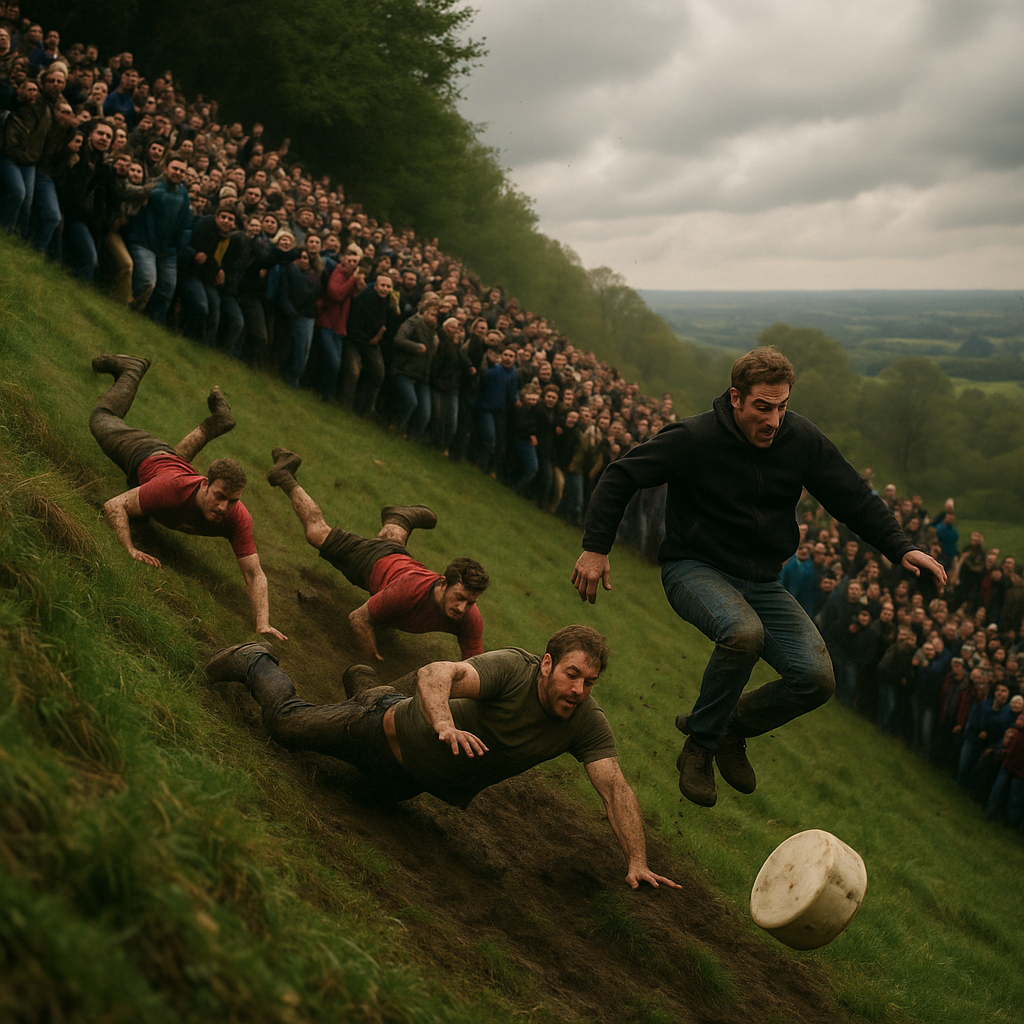
    Few things sum up the British spirit quite like sprinting headfirst down a dangerously steep Gloucestershire hillside after a Double Gloucester. Cooper’s Hill Cheese-Rolling has attracted global attention, and rightly so. It’s been running for centuries, was briefly cancelled, and came roaring back because – well – you can’t keep a good cheese down.

    Morris Dancing

    Once considered the preserve of your eccentric uncle, Morris dancing has seen a genuine resurgence. New sides (that’s the proper term for a Morris group, since you ask) are springing up in cities and market towns alike. The bells, the handkerchiefs, the rhythmic thwacking of sticks – it’s all very therapeutic, apparently.

    Well Dressing in Derbyshire

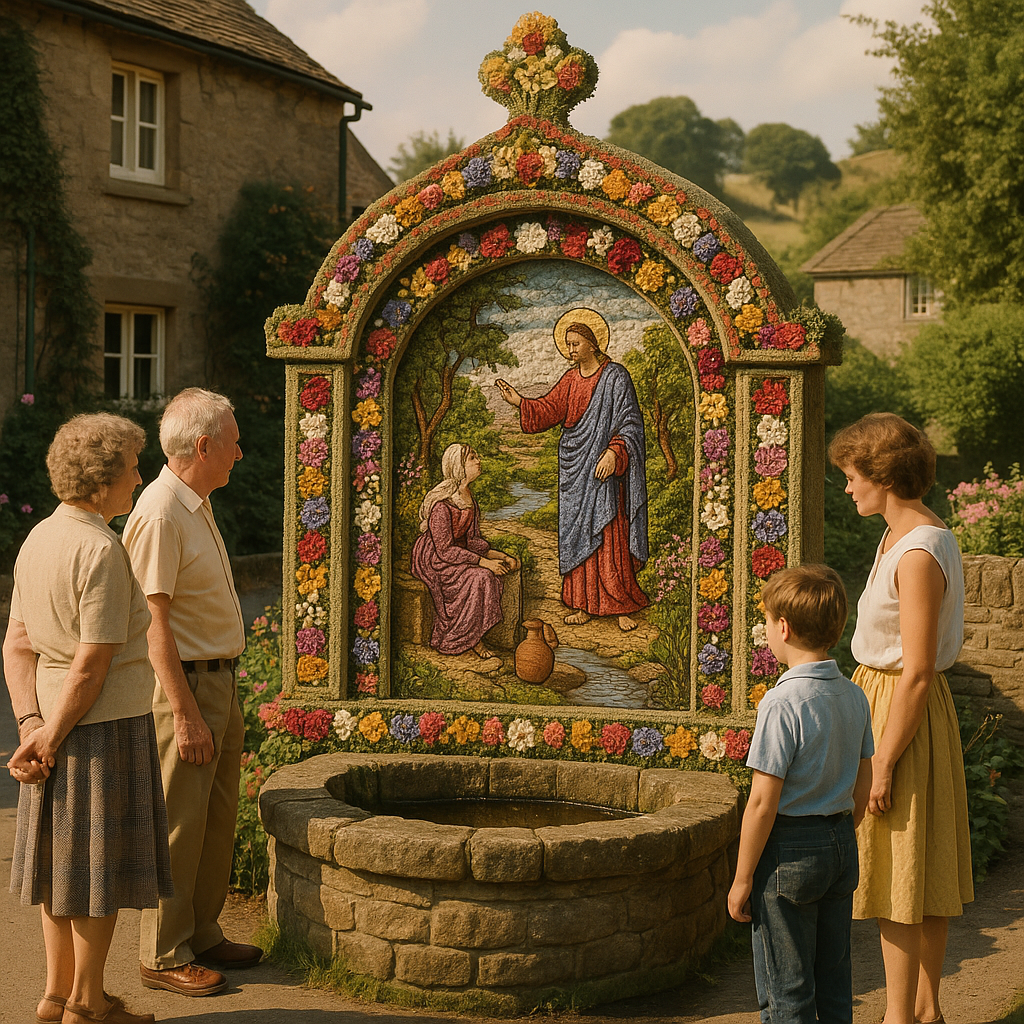
    Villages across the Peak District spend weeks creating intricate floral pictures pressed into clay panels to decorate their water sources. It’s painstaking, beautiful, and utterly Derbyshire. Visitor numbers have climbed steadily as people look for authentic, locally rooted experiences rather than another identikit high street.

    The Role of Community in Keeping Traditions Alive

    What ties all of these British local traditions together is community. These events don’t survive by accident – they survive because people care enough to show up, volunteer, fundraise and occasionally make absolute fools of themselves for the greater good. Local councils, village halls and passionate individuals are the unsung heroes here.

    Getting the word out matters too. Smart communities are now using social media and local PR strategies to reach new audiences and attract visitors who’d never have stumbled across a well dressing or a tar barrel rolling otherwise. It’s old meets new, and it works a treat.

    Why These Traditions Matter More Than Ever

    In an age of endless scrolling and algorithmic everything, British local traditions offer something genuinely irreplaceable – a sense of place, of belonging, of shared daftness. They connect us to our ancestors, to our neighbours, and to the particular patch of ground we call home.

    Whether you’re a lifelong participant or someone who stumbled upon a Maypole on a Sunday walk and thought “go on then”, these traditions deserve your support. Get involved. Turn up. Wear the hat. Roll the cheese. Britain’s best customs are alive and kicking – and they’re better for having you in them.

    Spectators watching cheese rolling as part of British local traditions on a Gloucestershire hillside
    Ornate well dressing display representing British local traditions in a Derbyshire Peak District village

    British local traditions FAQs

  • Should the UK Reopen Its Coal Mines? A Proper British Debate

    Should the UK Reopen Its Coal Mines? A Proper British Debate

    The question of whether we should reopen UK coal mines is one that gets people proper fired up – from ex-miners in South Yorkshire to green campaigners in Brighton. It’s a debate packed with nostalgia, economics, and a fair dollop of national identity. So let’s have a good rummage through it, shall we?

    A Brief History of British Coal

    Britain basically built the Industrial Revolution on the back of coal. For centuries, mining communities across Wales, Yorkshire, Durham, Scotland, and the Midlands were the beating heart of this nation. Pit villages had their own culture, their own pride, and frankly, their own language. Then came the 1980s, the miners’ strikes, the pit closures, and the slow, painful unravelling of an entire way of life. By the time the last deep coal mine – Kellingley Colliery in North Yorkshire – shut up shop in 2015, it felt like the end of a very long and complicated chapter.

    Why Some People Want to Reopen UK Coal Mines

    It might sound daft at first, but there are genuine arguments being made for bringing British mining back. The biggest one is energy security. When global gas prices go haywire and we’re relying on imports from countries that are, shall we say, a bit unreliable, having domestic energy sources starts to look rather sensible. Coking coal – the type used in steel production – is still imported in large quantities, and some argue that producing it domestically would be far more efficient and far less carbon-intensive than shipping it halfway around the world.

    There’s also the economic angle. Former mining towns have never truly recovered. Unemployment, deprivation, and a sense of being left behind have plagued these communities for decades. The idea of bringing jobs back – real, skilled, well-paid jobs – carries enormous emotional and political weight.

    The Arguments Against Reopening Mines

    Now, before you go dusting off your hard hat, there are some rather significant problems with the whole idea. Britain has made legally binding commitments to reach net zero carbon emissions. Coal is, unfortunately, about as clean as a muddy whippet after a rainstorm. Burning it pumps out enormous amounts of CO2, and even the most optimistic assessments of carbon capture technology admit it’s not yet ready to make coal viable at scale.

    Investors are also pretty reluctant to back new mining ventures in the UK. The financial case is shaky, the regulatory hurdles are mountainous, and the public mood – particularly among younger generations – is firmly against it. The 2022 planning saga around the Whitehaven coalmine in Cumbria showed just how divisive and drawn-out these decisions can be.

    Is There a Middle Ground?

    Some experts suggest a nuanced approach – focusing specifically on coking coal for industrial use rather than energy generation, and coupling any extraction with serious investment in carbon capture. Others argue the money would be far better spent retraining former mining communities for green energy roles – wind turbine technicians, solar installers, and the like.

    There’s also a strong case for simply being honest with those communities. The jobs lost in the 1980s were never properly replaced, and any serious conversation about whether to reopen UK coal mines has to start by acknowledging that failure.

    So, What’s the Verdict?

    Straight answer? It’s complicated, innit. The romantic in all of us might fancy the idea of those pit wheels turning again, but the practical realities – climate targets, economics, and global energy trends – make a full-scale coal revival look like a very long shot. That said, the debate is far from over, and the communities at the centre of it deserve far better than to be ignored yet again.

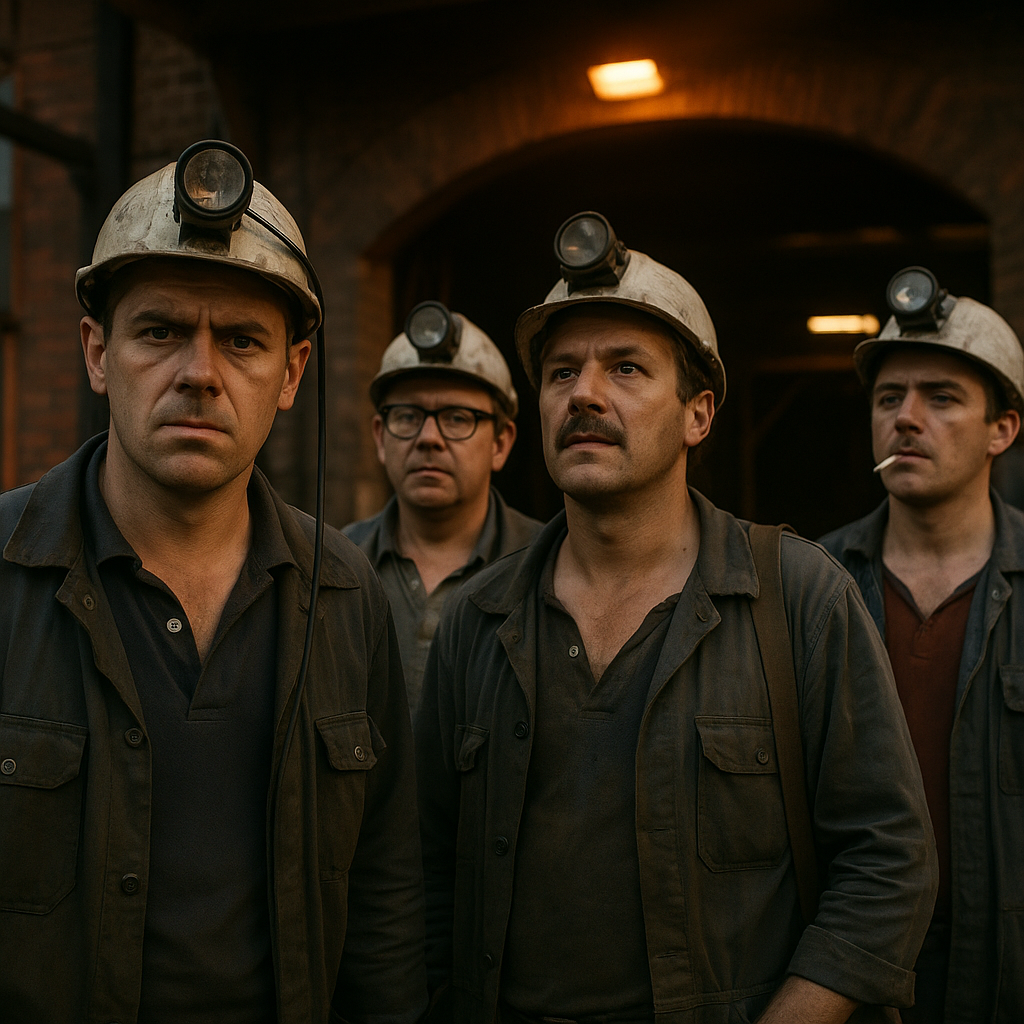
    British miners outside a colliery entrance in the debate over whether to reopen UK coal mines
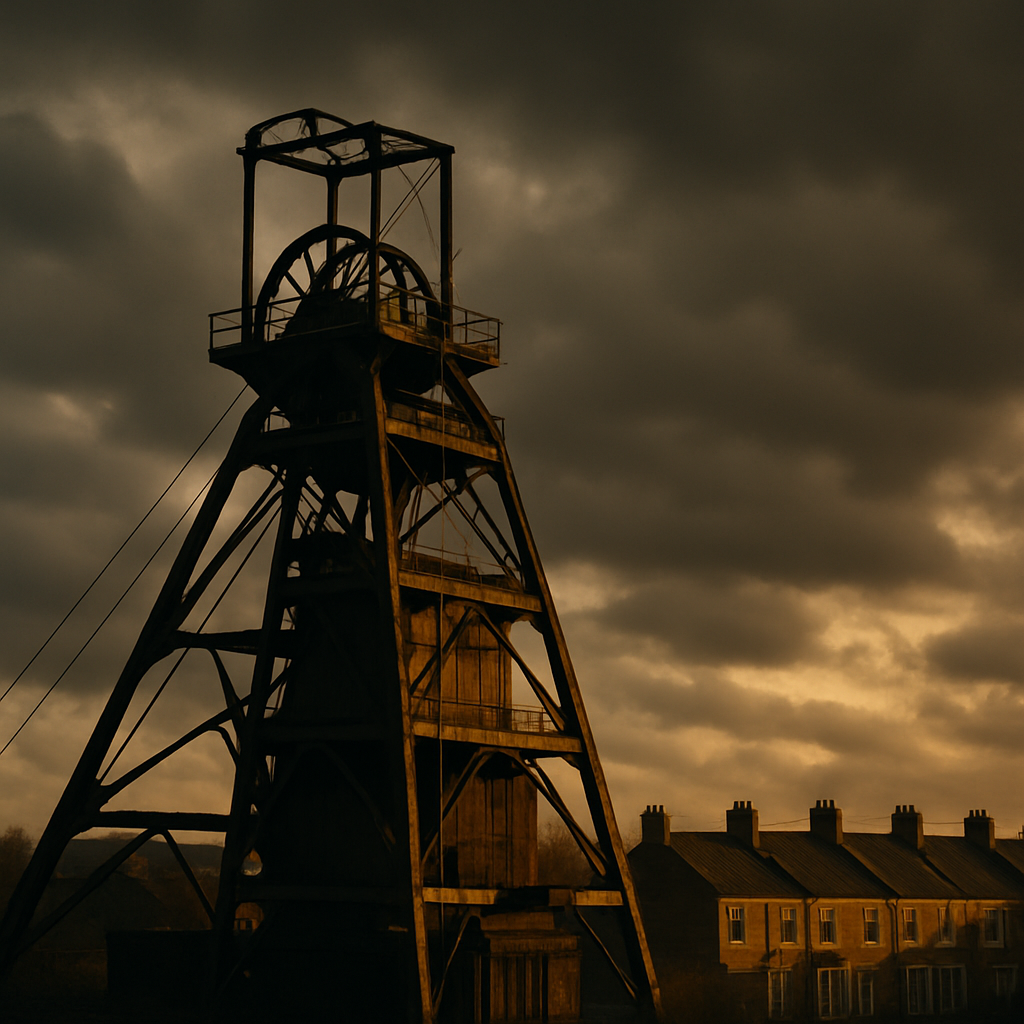
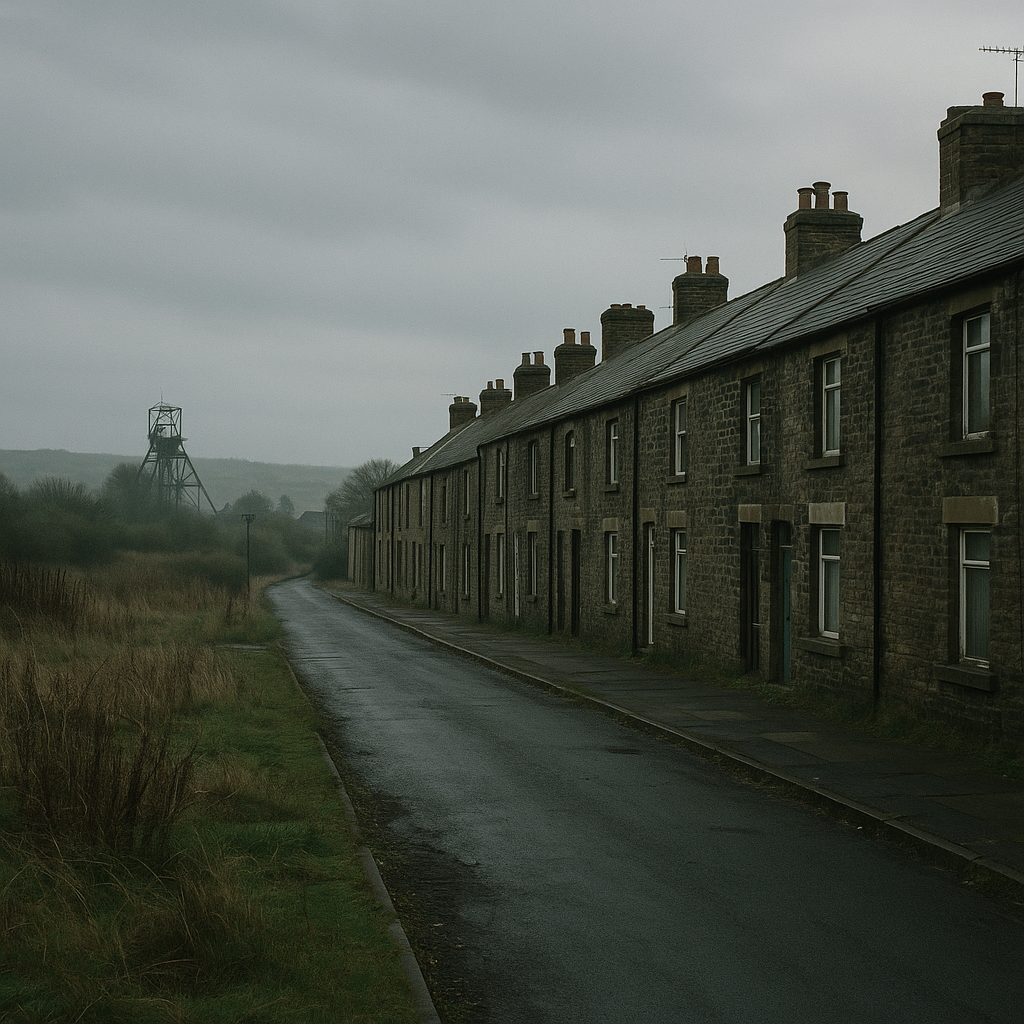
    Abandoned pit village in northern England symbolising the legacy of the push to reopen UK coal mines

    Reopen UK coal mines FAQs

    When did the last UK coal mine close?

    Kellingley Colliery in North Yorkshire, often nicknamed ‘Big K’, closed in December 2015. It was the last deep coal mine operating in Britain, marking the end of an era for the industry that had powered the country for centuries.

    What was the Whitehaven coalmine controversy about?

    The proposed Whitehaven coalmine in Cumbria sparked a lengthy planning and political battle. Supporters argued it would produce coking coal for the UK steel industry, reducing imports. Critics said it contradicted the UK’s climate commitments. Planning permission was eventually granted but the project faced continued legal and financial challenges.

    Could former mining communities benefit if we reopen UK coal mines?

    In theory, reopening UK coal mines could bring skilled jobs back to communities that have struggled since the pit closures of the 1980s and 1990s. However, many economists argue that investing in green energy industries would create more sustainable, long-term employment in those same areas without the environmental trade-offs.

  • Britain’s Coal Mining History: From Pit Village To Powerhouse

    Britain’s Coal Mining History: From Pit Village To Powerhouse

    Britain’s coal mining history is woven into the fabric of the country, from soot-stained pit villages to the grand Victorian town halls built on black gold. Even if you have never set foot near a colliery, you are living with its legacy every time you flick on a light or jump on a train.

    How Britain’s coal mining history began

    Coal has been dug in Britain since medieval times, but it was the Industrial Revolution that turned a grubby rock into a national obsession. As steam engines puffed into life and factories sprang up across the country, coal became the fuel that powered almost everything. Coastal seams in Northumberland and Durham were among the first to be heavily worked, with wagons trundling down to the Tyne and Wear to feed ships bound for London and beyond.

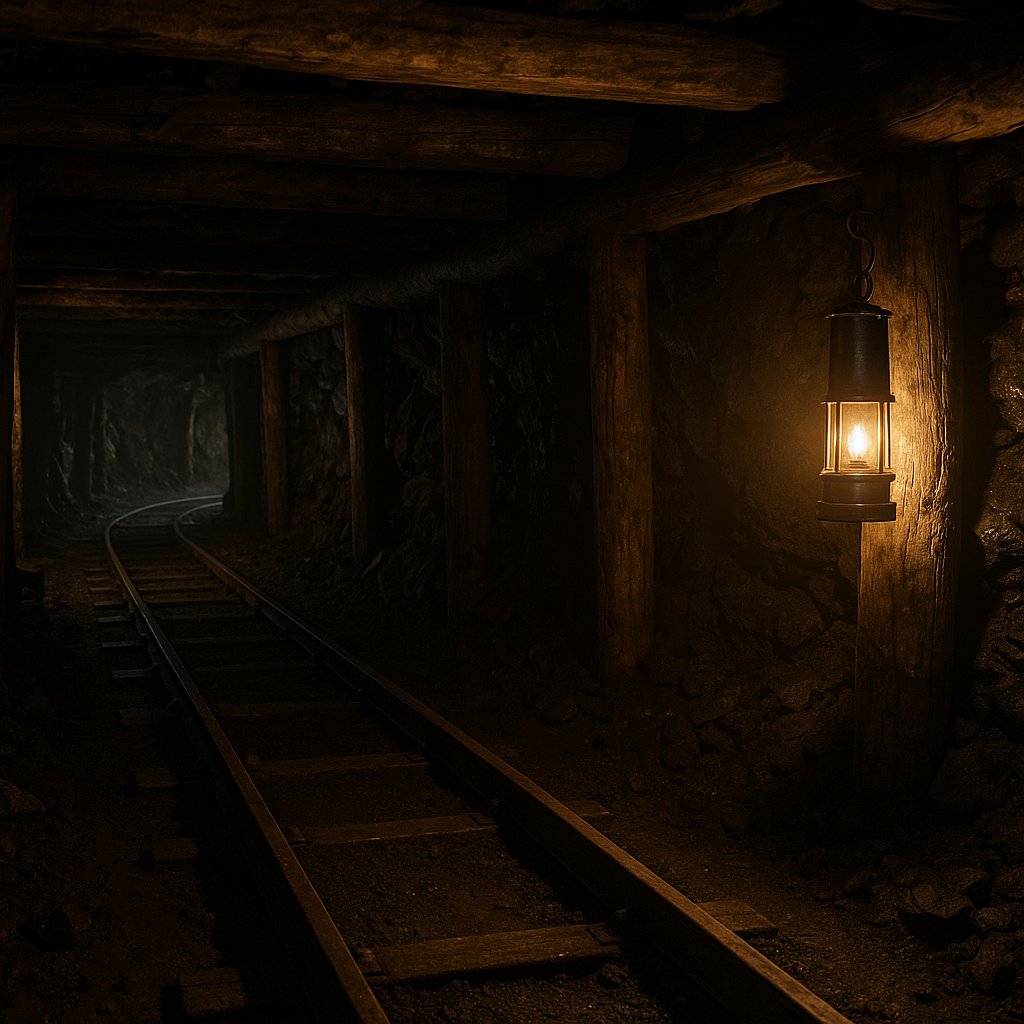
    Early pits were terrifyingly basic. Miners scrambled down wooden ladders with candles stuck to their caps, praying the roof would hold. Ventilation was poor, gas was common, and safety rules were more of a polite suggestion than anything else. Still, the pay was better than farm work, so families flocked to the pits, and whole communities grew up around the collieries.

    Life in the pit villages

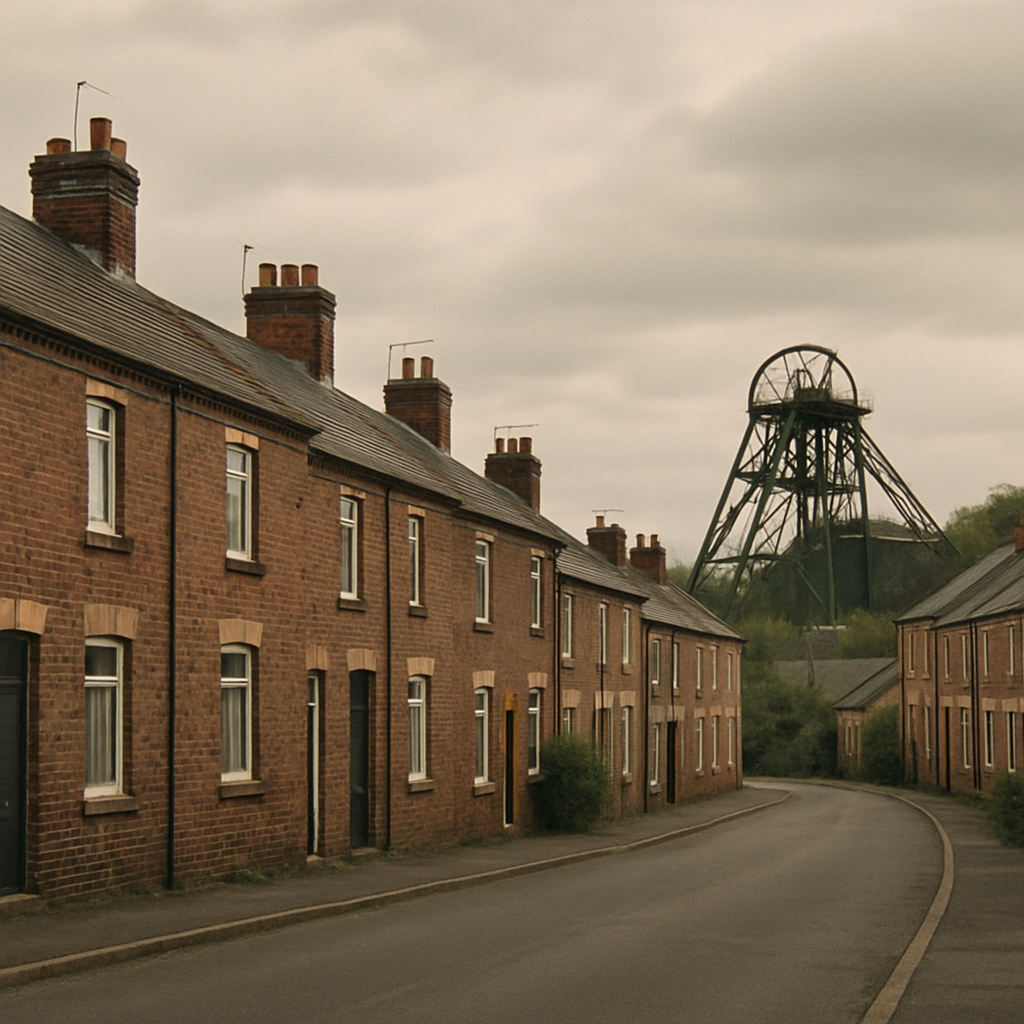
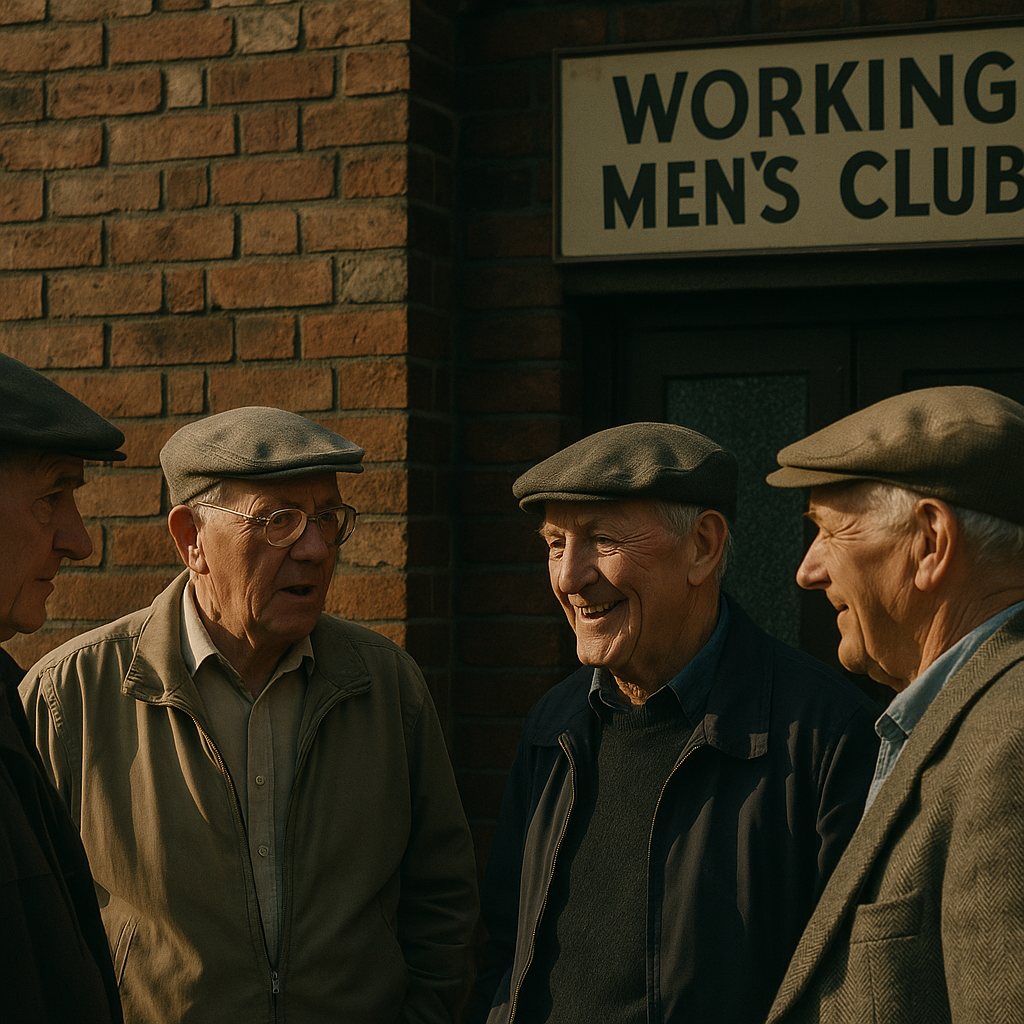
    A huge part of Britain’s coal mining history is the pit village. Rows of terraced houses, a working men’s club, a chapel on every corner, and a football pitch that doubled as a social club on Saturdays. The colliery was the beating heart of it all. If the pit closed for a day, the whole village felt it.

    Work was hard, filthy and dangerous. Shifts were long, backs were ruined, and lungs filled with coal dust. But there was a fierce sense of solidarity. Miners shared tools, food, and gossip, and the union was as important as the local pub. Brass bands, choirs and colliery football teams added a touch of pride and glamour to otherwise tough lives.

    Women kept the show on the road. They ran homes on tight budgets, took in washing, and lined the streets during disputes, banging pots and pans in support. Kids would earn a few bob picking coal off spoil heaps, coming home so black their own mums barely recognised them.

    Coal, power and conflict

    By the early twentieth century, coal underpinned Britain’s global power. It drove ships, fuelled factories and kept homes warm through grim winters. It also made a lot of people very rich. Unsurprisingly, that did not always trickle down to the miners at the coalface.

    Strikes and disputes are a central thread in Britain’s coal mining history. Miners fought for safer conditions, fairer pay and shorter hours, often at great personal cost. The General Strike of 1926 and later battles over pit closures left deep scars in mining communities, but also forged a strong tradition of working class organisation and political clout.

    After nationalisation in the mid twentieth century, coal mining became a symbol of public ownership and industrial pride. New machinery, deeper pits and modernised facilities arrived, but so did competition from oil, gas and imported coal. When closures accelerated and the famous miners’ strike hit in the 1980s, many villages saw their entire way of life hanging by a thread.

    What remains of Britain’s coal mining history today

    Most deep pits have gone, and with them the daily rumble of cage lifts and coal wagons. Yet the imprint of the industry is everywhere. Former spoil heaps have been turned into country parks, pit heads into landmarks, and old railways into walking and cycling routes. Some colliery buildings have been transformed into museums and heritage centres, preserving stories that would otherwise vanish.

    For many families, the connection is personal. Grandad’s lamp on the mantelpiece, a brass tally hanging in the hallway, or a faded photo of a colliery band in its Sunday best. Even in places where the pit head has long been demolished, street names, memorials and community centres still nod to the mining past.

    Former miners sharing stories about Britains coal mining history outside a working mens club
    Underground colliery tunnel representing Britains coal mining history

    Britain’s coal mining history FAQs

    When did Britains coal mining history really take off?

    Coal was mined in Britain for centuries, but it truly took off during the Industrial Revolution, when steam engines, factories and railways created a huge demand for fuel. From the late eighteenth century onwards, deep pits and large collieries spread across regions like South Wales, the North East, Yorkshire and the Midlands.

    What was life like in coal mining communities?

    Life in coal mining communities was tough but tightly knit. Work underground was dangerous and physically demanding, yet pit villages had a strong sense of solidarity, with unions, brass bands, choirs and local clubs at the centre of social life. Families often depended on the mine for housing, income and community facilities.

    Why did coal mines close across Britain?

    Coal mines closed for a mix of economic and political reasons, including competition from cheaper imported coal, the rise of oil and gas, environmental concerns and the cost of modernising ageing pits. As demand fell and running costs rose, many collieries were deemed uneconomic and shut, reshaping former mining regions in the process.