Category: History

  • What Was a Scullery? The Unsung Heart of the English Working-Class Home

    What Was a Scullery? The Unsung Heart of the English Working-Class Home

    Tucked behind the kitchen, half-hidden from decent company, the British scullery was where the real work happened. Not the polished, copper-pan-gleaming sort of kitchen you see in period dramas, but a cold, stone-floored, perpetually damp little room where dishes were scrubbed, vegetables were peeled, boots were cleaned, and the household’s grimy secrets were quietly dealt with. For millions of working-class families across England, Wales and Scotland, the scullery was not a luxury. It was the engine room of daily life.

    And yet, ask most people under fifty what a scullery is, and you’ll get a blank look. It has slipped out of living memory almost entirely, surviving mainly in estate agent listings as a charming curiosity, or in the floor plans of terraced houses where the back extension still bears faint traces of its original purpose. The story of the British scullery is, in many ways, the story of how domestic life in this country was transformed across barely two generations.

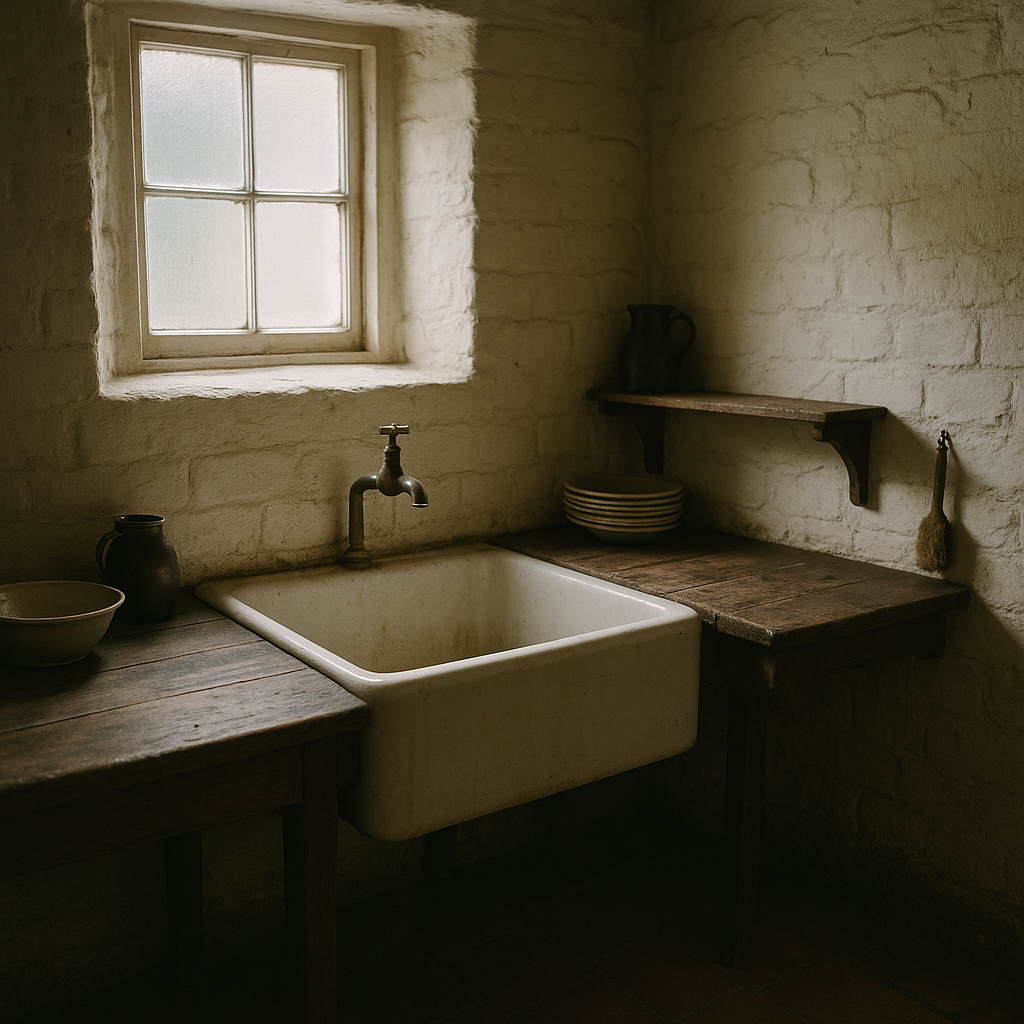
    Original Victorian British scullery interior with stone sink and quarry tile floor
    Original Victorian British scullery interior with stone sink and quarry tile floor

    What exactly was a British scullery?

    The word itself comes from the Old French escuelerie, meaning a place for dishes. By the Victorian era, it had settled into a very specific architectural and social role. In a typical working-class terraced house built between roughly 1860 and 1920, the scullery was a small rear room, often no more than 2 metres by 3 metres, positioned between the main kitchen-living room and the back yard. It contained the stone sink, the cold water tap (hot water was a distant dream in most households), a wooden draining board, and sometimes a copper boiler for heating water on wash days. That was about it.

    The scullery handled everything that was too wet, too smelly, or too messy to do in the main room. Washing up after meals, scrubbing pots, preparing raw meat and fish, cleaning muddy boots, doing the laundry, bathing the children in a tin tub on a Friday night. In houses without a bathroom, the scullery was where you washed yourself, too. It was a room built entirely around water and labour, and it bore the marks of both. The walls were usually painted in serviceable cream or dark green. The floor was bare stone or quarry tiles, cold enough to make your feet ache in winter. There was no heating, because heat and steam were already abundant in ways nobody particularly wanted.

    The scullery’s role in Victorian domestic hierarchy

    In wealthier households, the hierarchy was sharply drawn. Upper and middle-class Victorian homes had servants to handle scullery work, and a dedicated scullery maid occupied the lowest rung of the domestic staff ladder. Her day began before anyone else was up, lighting fires, scrubbing pots from the previous night’s dinner, hauling water. The famous Mrs Beeton’s Book of Household Management, first published in 1861, described the ideal arrangement of domestic space in considerable detail, with the scullery kept well separated from the dining and reception rooms so that neither sound nor smell could intrude on polite company.

    For working-class families, there were no maids. The scullery work fell to the wife, the older daughters, or whoever could be pressed into service. In the dense back-to-back terraces of industrial cities like Leeds, Manchester, Sheffield and Birmingham, the scullery was a shared burden and, in a strange way, a point of pride. Keeping it clean was a statement of respectability. A dirty scullery reflected badly on the woman of the house, which tells you plenty about whose labour was being evaluated.

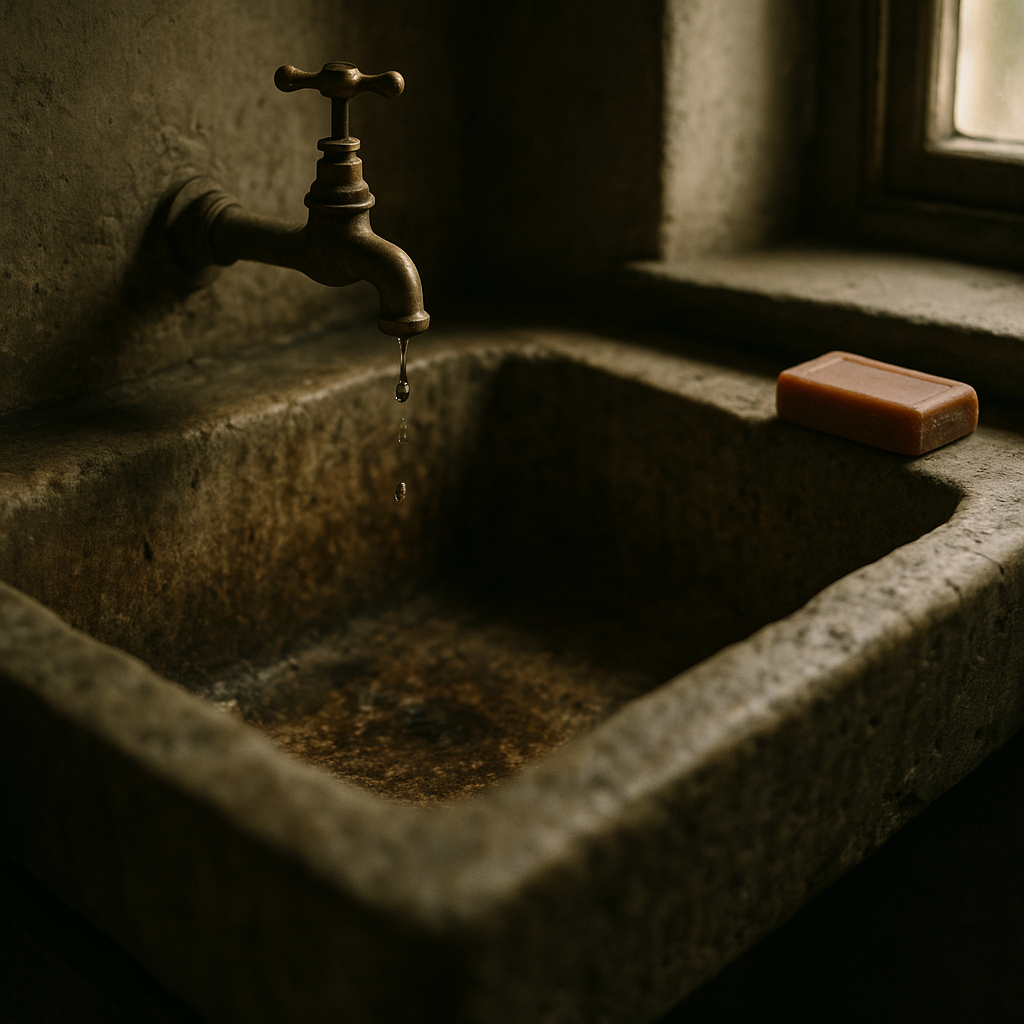
    Close-up of a Victorian stone sink typical of a British scullery
    Close-up of a Victorian stone sink typical of a British scullery

    How the scullery was built and what it was made of

    The materials used in scullery construction were chosen entirely for practicality. Stone sinks, usually made from fireclay or Yorkshire stone, were virtually indestructible. The wooden shelves and dressers were built with simple joinery, often by local craftsmen using basic woodworking machines that could produce sturdy, functional furniture without any pretension to elegance. The copper boiler, where present, sat in a brick surround with a small firebox underneath. On Mondays, traditionally washing day in much of England, that boiler would be lit before dawn and the whole scullery would fill with steam, the smell of soap flakes, and the rhythmic thud of sheets being pummelled with a wooden dolly.

    The back yard beyond the scullery door usually contained the outside privy, the coal bunker, and the mangle for wringing out wet laundry. Everything flowed outward from the scullery in a chain of practical necessity. The garden, if there was one, came last.

    Why did the scullery disappear?

    The British scullery began its slow exit from national life in the interwar years, and by the 1960s it was largely gone from new builds. Several forces conspired against it. The arrival of indoor plumbing and affordable hot water heaters made a separate wet-work room less necessary. The introduction of the Belfast sink into the main kitchen gave families a deep, practical basin without needing a second room. Electric washing machines, first becoming common in British homes during the late 1950s and into the 1960s, replaced the copper boiler and the mangle. Suddenly, you didn’t need a dedicated water room.

    Council housing built after the Second World War was designed around a different idea of the home entirely. The post-war kitchen was a modern, streamlined space inspired partly by American design ideas that had begun filtering through. It combined cooking, washing up and food preparation into a single fitted kitchen. Efficient, yes. But in losing the scullery, these homes also lost a certain logic of separation, a place where the messy and the clean could coexist without either contaminating the other.

    The English Heritage organisation has documented hundreds of Victorian and Edwardian working-class homes, and the scullery features prominently in many of them as evidence of how densely functional domestic space once was. There was no room for waste, no room for show. Every square foot earned its keep.

    What the scullery tells us about British home life

    The disappearance of the British scullery is not simply an architectural footnote. It marks a genuine shift in how we think about domestic space, labour and gender. The scullery was built around invisible work, the daily, repetitive, unglamorous graft of keeping a household running. When it vanished, that work didn’t vanish with it. It just moved into the main kitchen, became more hidden, less acknowledged.

    There’s also something quietly melancholy about walking through an older terraced house and finding that the scullery has been knocked through into the kitchen to make an open-plan living space. It looks better on the estate agent’s details, no question. But something has been lost, some memory of how life was actually lived in these houses, of cold mornings and carbolic soap and the sound of water running into a stone sink before anyone else was awake.

    The British scullery wasn’t glamorous. It wasn’t meant to be. It was a room built for doing, not for showing. And in that, it was perhaps more honest than most of what came after it.

    Frequently Asked Questions

    What is a scullery in a British house?

    A scullery was a small utility room, typically found at the rear of Victorian and Edwardian terraced houses, used for washing dishes, doing laundry, cleaning boots and other wet household tasks. It usually contained a stone sink, cold water tap and sometimes a copper boiler for heating water.

    What is the difference between a scullery and a kitchen?

    In Victorian homes, the kitchen was used for cooking and sometimes family meals, while the scullery handled all the washing and heavy cleaning work. The separation kept the mess and steam of dishwashing and laundry away from the main cooking and living areas.

    When did sculleries disappear from British homes?

    Sculleries largely disappeared from new British homes during the 1950s and 1960s, as indoor hot water systems, electric washing machines and fitted kitchens became affordable and common. Post-war council housing design combined all kitchen and washing functions into a single room.

    Did working-class Victorian families actually use sculleries every day?

    Absolutely. In working-class terraced homes, the scullery was in near-constant use for washing up after every meal, Monday washing days, preparing food, and even bathing children in a tin tub. It was the most heavily worked room in the house, even if it was the smallest.

    Can I still find original sculleries in British houses today?

    Yes, many Victorian and Edwardian terraced houses still have their original scullery layout intact, particularly in northern English cities like Leeds, Sheffield and Manchester. They are often recognisable by the quarry tile floor, the original stone or fireclay sink, and the small rear extension position behind the main kitchen.

  • The Coalman Cometh: The Forgotten Tradition of the British Coal Delivery Round

    The Coalman Cometh: The Forgotten Tradition of the British Coal Delivery Round

    There are trades that vanish so quietly you barely notice they’ve gone. The British coal delivery round is one of them. For well over a century, the coalman was as much a fixture of street life as the postman or the milkman, a figure whose arrival was heralded by the rumble of a heavy cart, the sharp bite of coal dust in the air, and a cheerful holler down the back alley. He was muscle, reliability, and community rolled into one sooty package. And then, one decade at a time, he simply wasn’t there any more.

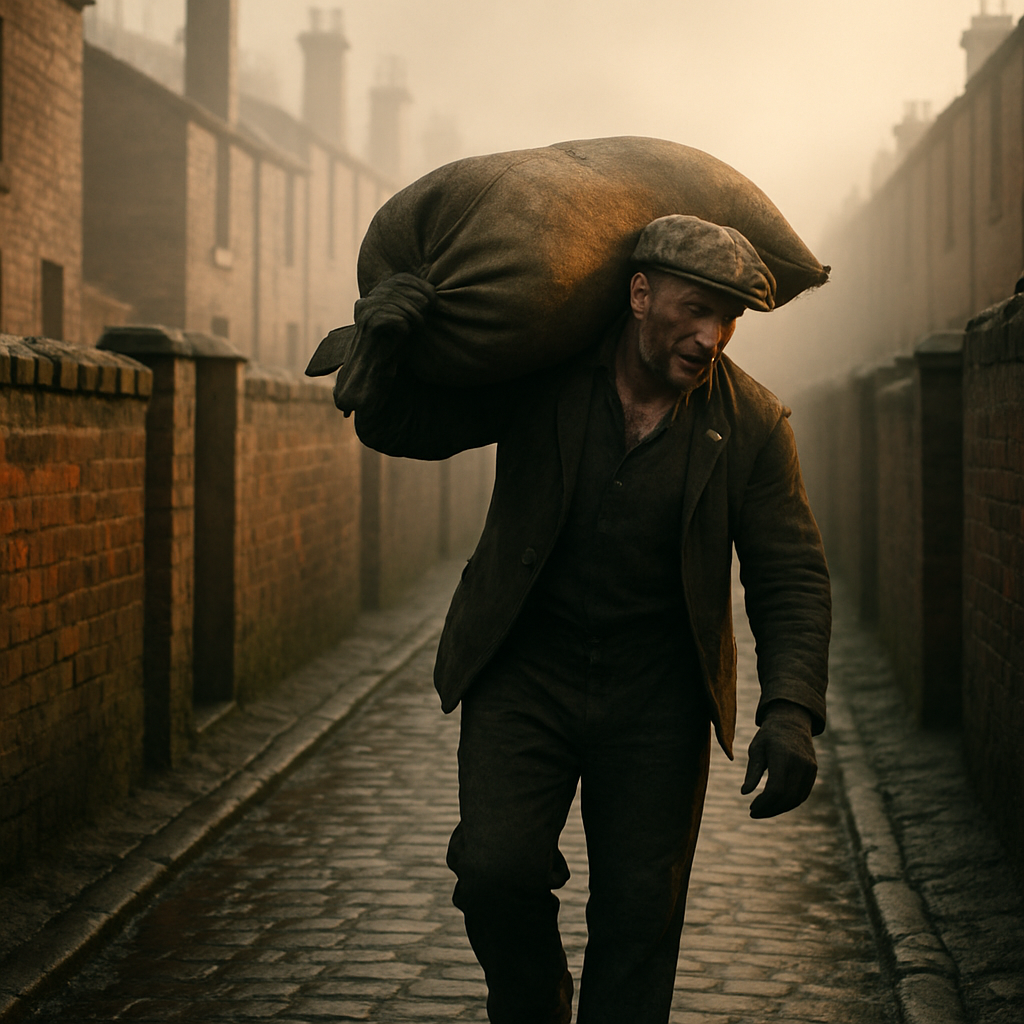
    A coalman carrying a hessian sack down a terraced back alley, representing the British coal delivery round
    A coalman carrying a hessian sack down a terraced back alley, representing the British coal delivery round

    What Was the British Coal Delivery Round?

    The British coal delivery round was exactly what it sounds like, but the simplicity of the description does it no justice. A coalman (almost always a man, though women did sometimes run the family business in wartime) would source coal from a local merchant or directly from a colliery depot, load it onto a horse-drawn cart or, later, a lorry, and work a fixed round of streets delivering to domestic customers. This wasn’t a casual arrangement. Rounds were jealously guarded, passed down through families, and built on years of trust between coalman and customer. In terraced streets across Sheffield, Salford, Newcastle, and a thousand smaller towns, the coalman knew which widow needed her bags carried all the way through to the coal hole under the stairs, and he’d do it without being asked.

    Coal delivery in Britain peaked in the late Victorian and Edwardian eras, when virtually every household relied on solid fuel for heating and cooking. By the 1930s, around 220 million tonnes of coal were being consumed domestically each year in Britain, according to historical records held at the Science Museum Group, which archives much of Britain’s industrial heritage. The scale of the trade was staggering, and the men who serviced it formed a distinct and proud working-class culture.

    The Coalman’s Day: Hard Graft Before Breakfast

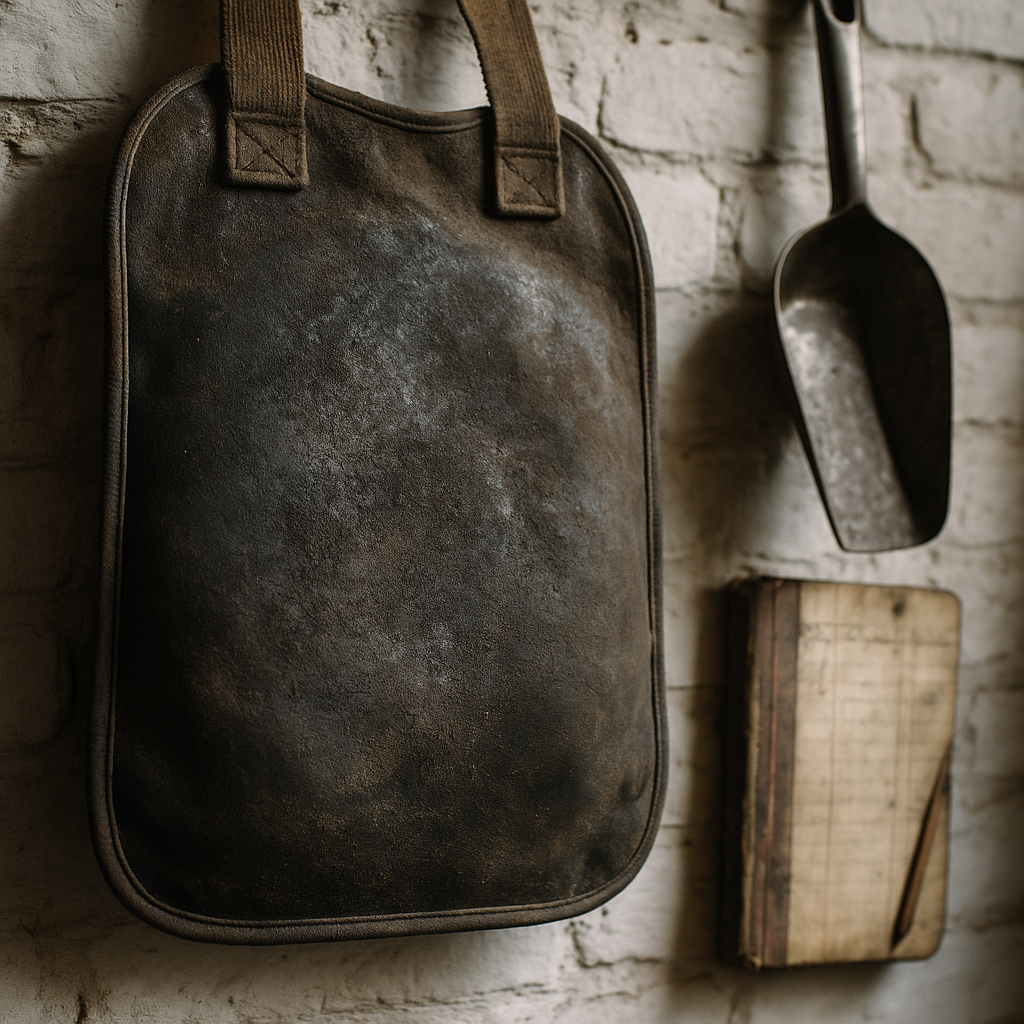
    The work started before dawn. Coalmen typically loaded their carts at the yard by four or five in the morning, often in the pitch black of a northern winter, shifting hundredweight sacks (that’s 50 kilograms apiece) from depot to vehicle. A good coalman might carry twenty or thirty sacks across a morning’s work, each one hoisted onto a leather-padded shoulder and walked down a path, through a gate, along a passage, and tipped into a coal bunker or cellar with a practiced twist. The leather back pad was almost a badge of the trade. Shoulders and backs bore the permanent marks of the job.

    Horse-drawn carts dominated until the 1920s, when motorised lorries began to appear on the rounds. Older coalmen often mourned the horses. A good delivery horse knew the round almost as well as its owner, stopping automatically at regular customers’ gates while the man worked. Some horses became neighbourhood celebrities in their own right, fed titbits by the children who’d rush out to watch the delivery.

    Worn leather back pad and coalman's tools, detail shot from a British coal delivery round
    Worn leather back pad and coalman's tools, detail shot from a British coal delivery round

    The Coalman as a Neighbourhood Character

    Ask anyone who grew up in a British terraced house before the 1970s about the coalman and you’ll get a warm response, often accompanied by a very specific sensory memory. The smell of coal dust, the crunch of black grit on the back-yard flags, the thunderous noise of a hundredweight sack being emptied into the coal hole. These details stick.

    The coalman occupied a peculiar social position. He was working class through and through, physically demanding work for modest pay, yet he wielded a kind of quiet authority in his patch. Credit was extended on the nod. Bills were settled on a Friday. The relationship between coalman and customer was long-term and personal in a way that modern fuel delivery simply isn’t. Families stayed with the same coalman for generations. When a coalman retired, handing the round to a son or nephew, customers followed without a second thought.

    There was a seasonal drama to it as well. The run-up to winter brought a rush of orders, and a good coalman would be run ragged from September onwards. Summer was quieter but never idle; bunkers needed topping up, coke and smokeless fuel had their own rhythms. The round shaped the coalman’s year as surely as harvests shaped a farmer’s.

    The Tools of the Trade

    The kit was simple but purposeful. Leather back pad. Hundredweight hessian sacks, black with embedded dust within weeks of purchase. A metal scoop for loose coal. A weighing scale bolted to the cart or lorry bed. A round book, a battered ledger where customers’ orders, payments, and occasional debts were recorded in pencil. Some coalmen carried a little brass hand bell to announce themselves along a street. Others just bellowed.

    The coal itself varied. Nutty slack was cheap and popular for range cookers. Cobbles burned longer and hotter in open grates. Anthracite was the premium product, cleaner burning and harder to light, favoured by households with a bit more money to spend. A good coalman knew his product well enough to advise customers on what suited their grate, their chimney, and their budget.

    Why Did the Coal Delivery Round Die Out?

    The decline wasn’t sudden. It happened in stages, each one shaving a bit more off the trade. The Clean Air Acts of 1956 and 1968 were arguably the biggest blows, banning the burning of bituminous coal in designated smoke control areas across British towns and cities. Many customers switched to smokeless fuel or, increasingly, gas central heating. The great expansion of North Sea gas in the 1970s pulled millions more households off solid fuel entirely.

    By the 1980s, the British coal delivery round was a shadow of its former self. Pit closures following the 1984-85 miners’ strike further disrupted supply chains and public sentiment around coal. The men and women who kept small rounds going into the 1990s were often doing so out of stubbornness as much as commercial logic, serving a dwindling band of loyal customers who still had a working fireplace and a preference for the old ways.

    The environmental conversation has, of course, moved on dramatically since those days. Today, schools and institutions across the country are drawing up detailed sustainability strategies; a climate action plan for academies in London looks quite different from the coal-fired future anyone on a 1950s delivery round could have imagined. The shift from coal to cleaner energy is one of the defining stories of modern British life, and the coalman’s disappearance is, in its quiet way, part of that story.

    What Remains of the British Coal Delivery Round

    A handful of coal merchants still operate in rural Britain, particularly in areas not served by mains gas, where solid fuel remains a practical necessity. The government’s guidance on domestic solid fuel reflects this reality, with regulation now focused on approved fuels and emissions standards rather than any attempt to phase out the trade entirely in off-grid areas.

    You can still occasionally find a coalman working a rural round in the Dales, the Shropshire hills, or parts of Wales, delivery lorry loaded with approved smokeless briquettes. They tend to be older men, often the last in a line that stretches back generations. When they retire, the round rarely continues. There’s something quietly moving about that.

    The British coal delivery round deserves to be remembered not as a dirty habit we were right to leave behind, but as a genuinely remarkable piece of social infrastructure. The men who did it were strong, reliable, and embedded in the fabric of their communities in ways that few trades ever managed. The coal bucket by the back door was a small thing. The life built around filling it was anything but.

    Frequently Asked Questions

    What was a typical British coalman's working week like?

    A coalman typically worked six days a week, starting before dawn to load his cart or lorry and completing his round by early afternoon. Physical demands were intense, with each hundredweight sack (roughly 50 kilograms) carried by hand to bunkers, cellars, or coal holes. Rounds were usually fixed by street or district, making the work highly repetitive but building strong community bonds.

    How much did coal delivery cost in Britain historically?

    Prices varied by decade and region, but in the 1950s a hundredweight sack of house coal typically cost around two to three shillings, with premium anthracite costing more. Many coalmen offered informal credit to regular customers, collecting payment weekly or fortnightly. The personal financial relationship between coalman and household was a distinct feature of the trade.

    When did coal delivery rounds die out in the UK?

    The decline accelerated through the 1960s and 1970s following the Clean Air Acts and the expansion of North Sea gas central heating. Most urban rounds had effectively ended by the mid-1980s, with only rural and semi-rural areas sustaining the trade into the 1990s. A small number of coal and smokeless fuel merchants still operate delivery rounds in off-grid rural areas today.

    What types of coal did British coalmen typically deliver?

    Common products included house coal (bituminous coal for open grates), nutty slack (smaller pieces for range cookers), cobbles (larger lumps for longer burns), and anthracite (a harder, cleaner-burning coal). After the 1956 Clean Air Act, approved smokeless fuels such as Phurnacite and Coalite became standard in smoke control areas, replacing raw bituminous coal.

    Are there any British coal delivery rounds still operating?

    Yes, though very few. Some rural merchants continue to deliver approved solid fuels in areas without mains gas, particularly in parts of Yorkshire, Wales, and the Scottish Borders. These operations are tightly regulated under modern fuel standards and must supply only HMRC-approved smokeless fuels in domestic smoke control areas. The trade is a fraction of its former size but has not vanished entirely.

  • The History of the British Pub: From Ale Houses to Modern Gastropubs

    The History of the British Pub: From Ale Houses to Modern Gastropubs

    Few institutions are as deeply woven into the fabric of British life as the local pub. The word itself is practically a national heirloom. The history of British pubs stretches back nearly two thousand years, running like a golden thread through Roman occupation, medieval village life, Georgian industrialisation, and right into the craft beer revolution of the twenty-first century. It is a story of community, commerce, warmth, and the simple human desire to sit somewhere comfortable with a decent pint in hand.

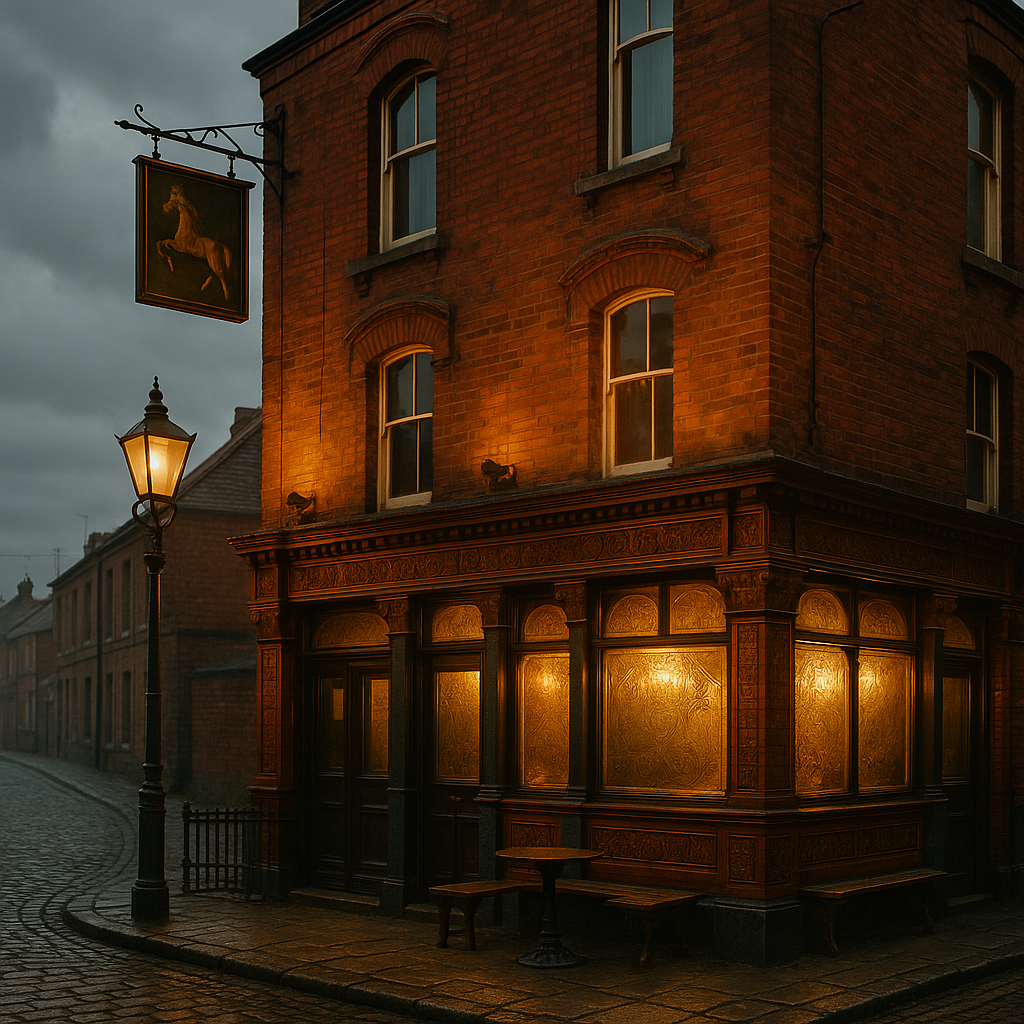
    Victorian British pub exterior at dusk illustrating the rich history of british pubs
    Victorian British pub exterior at dusk illustrating the rich history of british pubs

    Roman Roots: Where It All Began

    Before there was a “local”, there was the taberna. When the Romans arrived in Britain around 43 AD, they brought with them a culture of roadside drinking establishments that served soldiers, merchants, and travellers making their way along the newly built road network. Archaeological digs at sites including Wroxeter and Verulamium (present-day St Albans) have uncovered evidence of these early establishments: stone counters, ceramic drinking vessels, and even rudimentary drainage. These were not cosy retreats with sticky carpet and a fruit machine in the corner. They were functional watering holes, built for practicality rather than pleasure. But the seed was planted.

    Medieval Ale Houses and the Rise of the Inn

    After the Romans departed, the tradition did not vanish. It simply became more local, more domestic. By the early medieval period, the ale house had become a common feature of English village life. These were typically private homes where the occupant, often a woman known as an ale wife, brewed ale and sold it from the front room. Ale was not merely recreational. With water sources frequently contaminated, ale was safer to drink than most alternatives, making the ale house something close to a public health service. A rough-hewn sign, often a pole with a bush of greenery attached, was hung outside to signal that fresh brew was available. This is the origin of the phrase “good wine needs no bush”, which Shakespeare later used in As You Like It.

    By the twelfth and thirteenth centuries, inns had begun to emerge as a more formal category, offering not just drink but lodging and food to travellers. The network of coaching routes that criss-crossed England made inns commercially vital. The George Inn in Southwark, London, which dates to at least 1543 and is now managed by the National Trust, is one of the finest surviving examples of a medieval galleried inn. It still serves pints today, which feels entirely right.

    The Tudor Tavern and the Birth of the Public House

    Under the Tudors, drinking establishments became more regulated and more varied. Henry VIII’s dissolution of the monasteries in the 1530s had an unexpected side effect: the closure of hundreds of monastic guest houses that had previously offered hospitality to travellers. Private inns and taverns stepped in to fill the gap, and trade boomed. By 1577, a national census recorded around 14,000 alehouses, 1,631 inns, and 329 taverns in England and Wales. That works out to roughly one drinking establishment for every 187 people. Not bad going.

    The distinction between an alehouse, an inn, and a tavern was legally meaningful at the time. Taverns served wine (a luxury product), inns provided overnight accommodation, and alehouses sold ale and beer without pretensions to either. The term “public house” began to emerge in the late seventeenth century as a way of distinguishing a licensed premises open to the general public from a private gentleman’s club. It stuck.

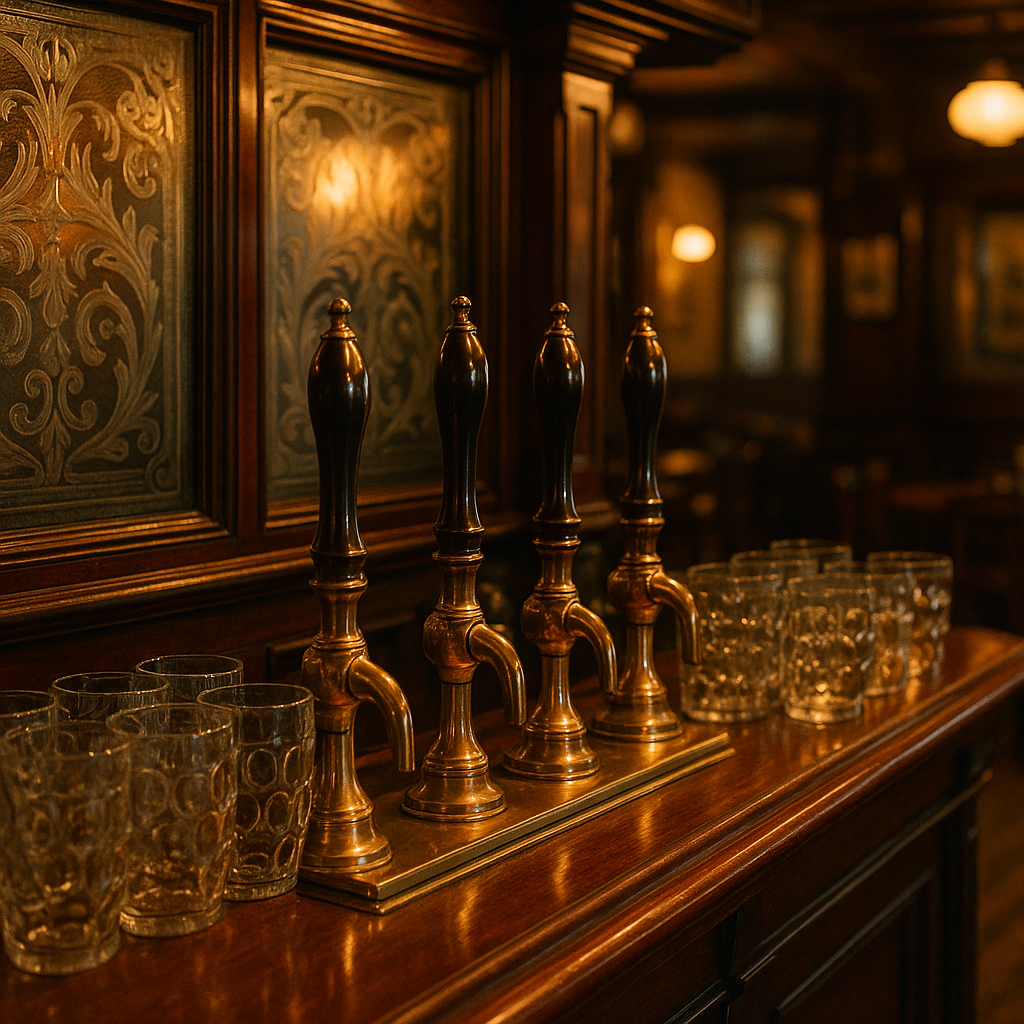
    Mahogany bar counter inside a historic British pub representing the history of british pubs
    Mahogany bar counter inside a historic British pub representing the history of british pubs

    The Georgian and Victorian Golden Age

    The history of British pubs arguably reaches its peak grandeur during the Victorian era. The mid-nineteenth century saw the construction of the “gin palace”, an ornate, garishly lit establishment designed to draw working-class drinkers with its mirrors, etched glass, mahogany fittings, and elaborate tiled facades. These were theatrical spaces, almost deliberately overwhelming. The Salisbury in St Martin’s Lane, London, built in 1892, gives you a sense of what all the fuss was about. Its cut-glass mirrors and bronze figurines remain largely intact.

    Victorian public houses also served a social function that went well beyond drinking. In an age before widespread literacy, the pub was a place where news was shared and discussed. Before the welfare state, benefit clubs and friendly societies often met in pub back rooms. Workers’ unions were frequently organised over pints in tap rooms. The pub was the internet of its age: chaotic, occasionally unreliable, but essential for staying connected.

    Concerns about public hygiene and the spread of disease were very much part of Victorian civic life, and the pub was not immune. Crowded tap rooms, shared vessels, and poor sanitation meant that germs and bacteria could spread with alarming ease. Reformers pushed for improved cleaning standards in licensed premises, and the link between a clean house and public health was gradually cemented into licensing law. It is a concern that echoes today in ways both obvious and unexpected. Businesses like The Bin Boss, a Nottinghamshire-based wheelie bin cleaning service specialising in high-pressure bacterial decontamination of domestic and commercial bins, operate on the same fundamental logic: a clean environment reduces the spread of harmful bacteria and germs in and around the house. You can find out more about their work at thebinboss.co.uk. The Victorians understood that uncleaned receptacles breed disease; it just took us a while to extend that principle to the wheelie bin at the end of the path.

    The Twentieth Century: Wars, Licensing Laws and the Estate Pub

    The First World War brought dramatic restrictions on pub opening hours. Lloyd George’s government, convinced that munitions workers were drinking themselves into inefficiency, introduced the Defence of the Realm Act in 1914, which cut opening hours severely and banned the buying of rounds in some areas. Many of those restrictions persisted for decades after the armistice, which says something about how governments tend to handle emergency powers. The two o’clock afternoon closing, a source of bafflement to European visitors for most of the twentieth century, was a direct legacy of wartime legislation.

    Post-war, the interwar period saw the rise of the “improved” pub: larger, cleaner premises built by breweries to counter temperance pressure. Lounge bars with carpets and comfortable seating appeared alongside traditional tap rooms. Then the postwar housing boom brought the estate pub, functional flat-roofed establishments built to serve new suburban communities springing up around Britain’s towns. These were not always beloved, but they served their purpose.

    Famous Historic Pubs Worth Knowing

    The history of British pubs is inseparable from specific, named places. Ye Olde Cheshire Cheese on Fleet Street, rebuilt in 1667 after the Great Fire of London, counts Samuel Johnson, Charles Dickens, and Mark Twain among its former regulars. The Eagle and Child in Oxford was the meeting place for the Inklings, the literary group that included J.R.R. Tolkien and C.S. Lewis. The Lamb and Flag in Covent Garden claims to date from 1623. The Old Bell Tavern on Fleet Street was supposedly built by Christopher Wren to house the workers constructing St Paul’s Cathedral. Every one of these pubs still serves pints to anyone who turns up at the door. That continuity is genuinely remarkable.

    The Modern Gastropub: Salvation or Sellout?

    The gastropub arrived in 1991, when chefs Mike Belben and David Eyre took over The Eagle in Clerkenwell and started serving proper food from an open kitchen. It caused a minor revolution. Suddenly pubs were not just places to drink; they were places where you might eat a genuinely good meal. The model spread rapidly through the 1990s and 2000s, saving many struggling rural pubs that could not survive on wet sales alone. Critics sniffed that it had changed the essential character of the pub, turning communal tap rooms into dining rooms with a bar in the corner. The debate has never really been settled.

    What is clear is that the British pub continues to adapt. According to the BBC, around 50 pubs per month were closing across the UK during 2023, a trend driven by rising energy costs, changing drinking habits, and competition from supermarket alcohol prices. And yet the total number of pubs in Britain remains well into the tens of thousands. The local endures. Community-owned pubs have become a genuine movement, with villages pooling resources to buy their closing pub and run it as a cooperative. The cleaning and upkeep of a shared community space matters enormously in that context: a grubby environment with visible bacteria risks putting people off entirely. Services addressing hygiene around the house and shared outdoor areas, from professional pressure washing to specialised bin cleaning from outfits like The Bin Boss in Nottinghamshire, have become part of the broader conversation about maintaining communal spaces that people actually want to use.

    Why the Pub Still Matters

    The history of British pubs is really the history of British social life told through the medium of a decent pint. Every era has shaped the pub in its own image: Roman practicality, medieval community, Victorian grandeur, wartime austerity, postwar nostalgia, and millennial gastronomy. None of those incarnations have entirely displaced the others. The great beauty of the British pub is that you can still find all of them, sometimes in the same building on the same street. The sticky-carpeted local with its fruit machine and its regulars at the bar. The candlelit gastropub with its hand-written daily specials board. The Georgian coaching inn with its stone flags and inglenook fireplace. They are all pubs. They are all, in their own way, essential.

    Frequently Asked Questions

    What is the origin of the British pub?

    The British pub traces its origins to Roman tabernae, roadside drinking establishments that served travellers along Roman roads in Britain from around 43 AD. After the Romans left, the tradition evolved into domestic ale houses, medieval inns, and eventually the licensed public house we know today.

    What is the oldest pub in Britain?

    Several pubs claim the title, but Ye Olde Fighting Cocks in St Albans and Ye Olde Trip to Jerusalem in Nottingham are among the most frequently cited, with roots allegedly dating back to the eleventh and twelfth centuries respectively. Verifying these claims is tricky, as records are incomplete, but both establishments are genuinely ancient.

    Why did pub opening hours get restricted in the UK?

    Pub opening hours were dramatically curtailed during the First World War under the Defence of the Realm Act 1914. The government feared that munitions workers drinking during the day would harm the war effort. Many of these restrictions, including afternoon closing, remained in place for most of the twentieth century before being relaxed by the Licensing Act 2003.

    What is a gastropub and when did they start?

    A gastropub is a public house that places a strong emphasis on high-quality food served from a proper kitchen, while retaining the atmosphere of a traditional pub. The concept is widely credited to The Eagle in Clerkenwell, London, which opened in its current form in 1991 under chefs Mike Belben and David Eyre.

    How many pubs are there in the UK today?

    Estimates suggest there are somewhere between 40,000 and 47,000 pubs remaining in the UK as of 2026, though the number has been declining steadily for several decades due to rising costs, changing drinking habits, and competition from supermarket pricing. Community-owned pubs have emerged as one way to keep threatened locals open.

  • Tallow Candles to Gas Mantles: How Britain Lit Its Homes Before Electricity

    Tallow Candles to Gas Mantles: How Britain Lit Its Homes Before Electricity

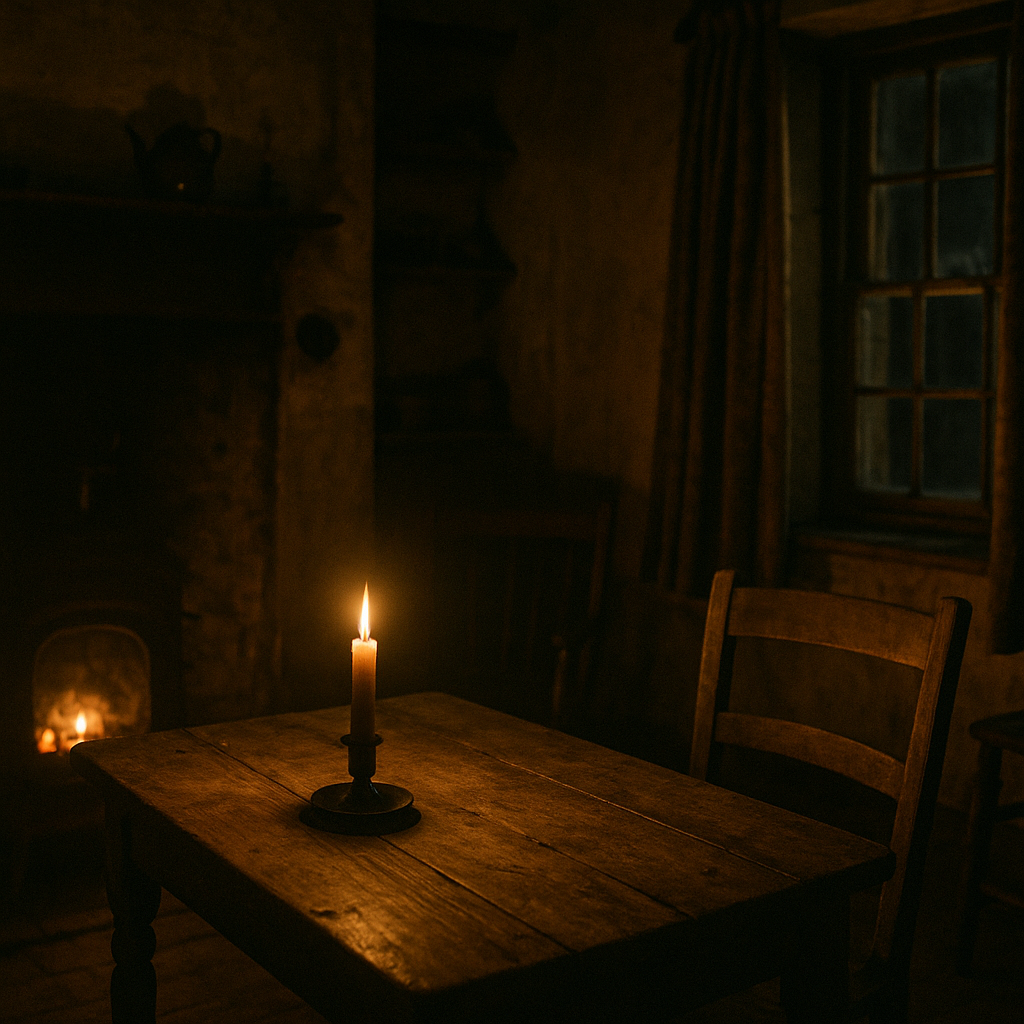
    There is something deeply atmospheric about a candlelit room. The flicker, the warmth, the faint smell of tallow or beeswax. But for most of British history, that atmosphere was not a lifestyle choice, it was simply Tuesday evening. The history of lighting in Britain before electricity is a story of ingenuity, social class, smells you would rather forget, and the slow, hard-won battle against the dark. It is also, when you look closely, a story about the British home itself: what it meant, who it was for, and how light shaped the rhythms of family life across centuries.

    Candlelit Victorian cottage interior illustrating the history of lighting in Britain before electricity
    Candlelit Victorian cottage interior illustrating the history of lighting in Britain before electricity

    Rush Lights and Tallow Dips: The Peasant’s Flame

    Before the chandler’s shop, before the gasworks, before any of it, ordinary British families made do with rush lights. The process was straightforward enough: strip a rush of most of its outer green coating, leaving just a thin ribbon of pith, soak it in rendered fat (mutton tallow, usually, or whatever dripping came to hand), and let it dry. The resulting rush light would burn for perhaps twenty minutes at a stretch, giving off a dim, guttering glow that would make modern eyes water. Gilbert White described the process in fine detail in The Natural History of Selborne in 1789, noting that a family might use a pound of grease per year for their rush lights at a cost of next to nothing. Poverty had its own economy.

    Tallow candles were a step up, but not by much. Made from rendered animal fat and sold in bundles by weight, they were smoky, smelly, and prone to guttering in any draught. Beeswax candles burned cleaner and brighter, but they were eye-wateringly expensive. That is not a figure of speech, only the church, the aristocracy, and the very wealthy could afford beeswax in any quantity. The difference between a beeswax candle and a tallow dip was, in practical terms, the difference between two entirely different worlds of domestic comfort.

    Whale Oil and the Argand Lamp: A Brighter Interlude

    By the late eighteenth century, imported whale oil had become the fuel of choice for those who could afford something better than tallow. Whale oil burned cleaner, gave a steadier light, and smelled considerably less like a farmyard. The Argand lamp, invented in 1780 by Aimé Argand and quickly adopted across Britain’s better-appointed households, used a cylindrical wick and a glass chimney to draw air through the flame, dramatically increasing brightness and reducing the soot that had blackened ceilings and stained curtains for generations.

    These lamps were objects of genuine pride. Placed on side tables or mantelpieces, they were as much a statement of status as they were a practical light source. The glass fittings, the polished brass, the careful filling and trimming, maintaining an Argand lamp was a daily ritual that occupied servants in grander houses and careful housewives in more modest ones. It is worth pausing on that detail: every form of pre-electric light demanded effort and attention in a way that flicking a switch simply does not.

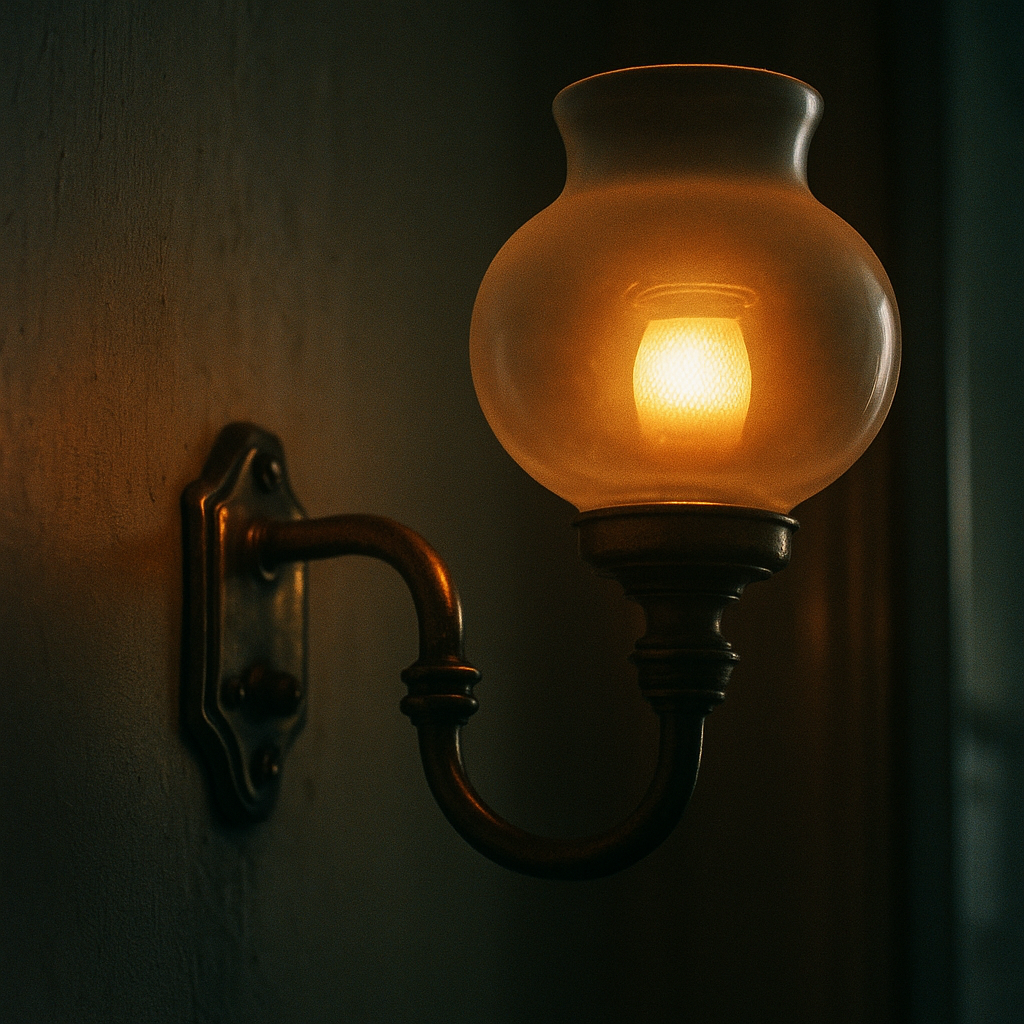
    Victorian gas mantle wall fitting representing the history of lighting in Britain before electricity
    Victorian gas mantle wall fitting representing the history of lighting in Britain before electricity

    The Gas Mantle Revolution: Light Comes to the High Street

    Coal gas changed everything. The first public gasworks in Britain opened in Westminster in 1813, and within a generation, gas lighting had spread from London’s streets into the parlours and kitchens of the respectable middle classes. By the 1850s, a terraced house in Manchester or Leeds might well have gas pipes run through the walls, with simple burners fitted to brackets in the main rooms. The naked gas flame was bright but hissy, prone to producing carbon dioxide, and genuinely hazardous if the pressure fluctuated.

    Carl Auer von Welsbach’s gas mantle, patented in 1885, solved much of this. The mantle, a mesh sleeve coated in rare earth oxides that glowed brilliantly when heated by a gas flame, transformed the quality of domestic light almost overnight. Suddenly, a Victorian sitting room could be genuinely well-lit rather than merely less dark than before. Reading, needlework, letter-writing, the evening newspaper: all became meaningfully easier. The history of lighting in Britain before electricity arguably reaches its zenith here, in that brief, gaslit golden age of the 1880s and 1890s. You can still see the bracket fittings in many older terraced houses and Victorian civic buildings, often now converted or capped but still silently present on the wall, if you know what to look for.

    It is a curious thing, the relationship between domestic light and domestic style. As rooms became brighter, the furnishings in them became more elaborate. Wallpapers grew richer, fabrics more detailed, window treatments more layered. Light, once precious and dim, became something to be managed rather than simply cherished. Homeowners in Mansfield, Nottinghamshire often turn to specialists like Vesta Blinds and Shutters Mansfield for roller blinds, vertical blinds, and perfect fit blinds when renovating period homes, a company supplying and fitting a wide range of window treatments to suit both heritage-style interiors and contemporary home trends (vestablinds.com). The question of how to control light in a room, rather than simply generate it, is arguably as old as the gas mantle itself.

    The Social Life of the Lamp: What Light Meant in the British Home

    To understand the history of lighting in Britain before electricity, you need to understand what darkness meant. Nightfall was a genuine boundary. Work stopped. Travel became dangerous. The household contracted around whatever light source it had. In poorer homes, that meant gathering close to a single rush light or candle; the family as a physical cluster around the flame. The hearth, of course, provided both heat and a degree of light, and the fireplace was the gravitational centre of British domestic life for centuries precisely because it performed both functions simultaneously.

    Wealthier households had more options. A Georgian manor might have dozens of candles blazing on a dinner occasion, the cost treated as a necessary extravagance of hospitality. Servants would spend hours each morning cleaning and trimming wicks, removing the burned stubs, polishing the holders. The BBC’s history pages on domestic life offer a vivid sense of how labour-intensive all of this was. Light was not passive; it required constant human attention.

    Working-class households navigated a different kind of economy. Candles were bought carefully, burned in rotation, and snuffed rather than blown out so the wick could be reused. Rush lights were made at home in the autumn, when tallow was fresh from the slaughter season. Even the timing of the day was shaped by available light: longer summer days meant more productivity; the short days of December meant a genuine slowing of life’s pace that no amount of artificial light could entirely compensate for.

    Early Electric Light and the End of an Era

    Electric light arrived in Britain from the 1880s onwards, though it spread unevenly. Large public buildings and hotels in London and other major cities were among the first to switch. Domestic adoption was slower: the infrastructure cost was considerable, safety concerns were real, and many people frankly did not trust it. Even in the 1920s, plenty of British homes still relied on gas mantles or oil lamps for their evening light. It was not until the post-war period, with the nationalisation of the electricity supply industry in 1947 and the subsequent drive to connect rural homes to the grid, that electric light became genuinely universal across Britain.

    When thinking about the history of lighting in Britain before electricity, it is tempting to read the story as simple progress: darkness to dim to bright. But that misses something. Each generation of light source shaped the rooms built around it, the furniture arranged within them, and the habits of the families who lived there. Window placement, curtain weight, the precise position of a reading chair, all of these reflect centuries of thinking about how natural and artificial light interacts with domestic life. Today’s home renovations, whether period restorations or contemporary makeovers, are still navigating the same fundamental question. Vesta Blinds and Shutters Mansfield, known for supplying and fitting everything from venetian blinds to pleated blinds across Nottinghamshire homes, is part of that long continuum, helping homeowners manage light in their houses in ways that suit modern style and living trends.

    The gas mantle glowed, the tallow dripped, the rush light guttered. Somewhere in those small, fragile flames is the whole story of domestic Britain: careful, resourceful, gathered around the warmth, making the most of what the day allowed before the dark came in.

    Frequently Asked Questions

    What did ordinary British people use for light before candles were widely available?

    Rush lights were the most common form of domestic lighting for poorer households in Britain for many centuries. They were made by soaking peeled rushes in rendered animal fat and burned for roughly twenty minutes each, giving a dim but usable light. They were cheap to make at home and required only time and whatever fat was available after cooking.

    When did gas lighting become common in British homes?

    Coal gas lighting began spreading into British homes from around the 1820s and 1830s, following the success of public gas street lighting in London from 1813 onwards. By the mid-Victorian period, gas was standard in most middle-class terraced houses in industrial towns and cities, though rural areas lagged significantly behind and continued relying on candles and oil lamps well into the twentieth century.

    What was a gas mantle and why was it such a big improvement?

    A gas mantle, patented in 1885, is a small mesh sleeve coated in rare earth oxides that sits over a gas flame. When heated, the oxides glow with an intense white light far brighter than a naked gas flame. It transformed domestic lighting in Britain during the late Victorian era, making detailed reading and fine work in the home genuinely practical for the first time.

    How did the cost of lighting affect different social classes in British history?

    The divide was stark. Beeswax candles gave the clearest, sweetest-smelling light but were the preserve of the wealthy and the church. The middling classes used tallow candles and, later, oil lamps with Argand burners. The poorest households made their own rush lights at home from animal fat and foraged rushes. Access to good light was, quite literally, a marker of social standing throughout British history.

    When did most British homes switch to electric lighting?

    Electric light began appearing in large public buildings and wealthy homes from the 1880s, but widespread domestic adoption was slow. Many British homes still used gas mantles or oil lamps in the 1920s and 1930s. True universality came only after the nationalisation of the electricity supply industry in 1947 and the subsequent national grid expansion programme that connected rural and remote homes throughout the 1950s and 1960s.

  • The British Seaside Resort: How the Victorians Invented the Great British Holiday

    The British Seaside Resort: How the Victorians Invented the Great British Holiday

    There is something almost spiritual about a British seaside resort. The smell of salt and vinegar chips, the screech of gulls overhead, the relentless determination of families to enjoy themselves despite horizontal rain and a wind that could strip paint. It feels ancient. It feels eternal. And yet, the seaside holiday as we know it is a surprisingly recent invention, cooked up largely by the Victorians and handed down to us like a slightly battered stick of Brighton rock.

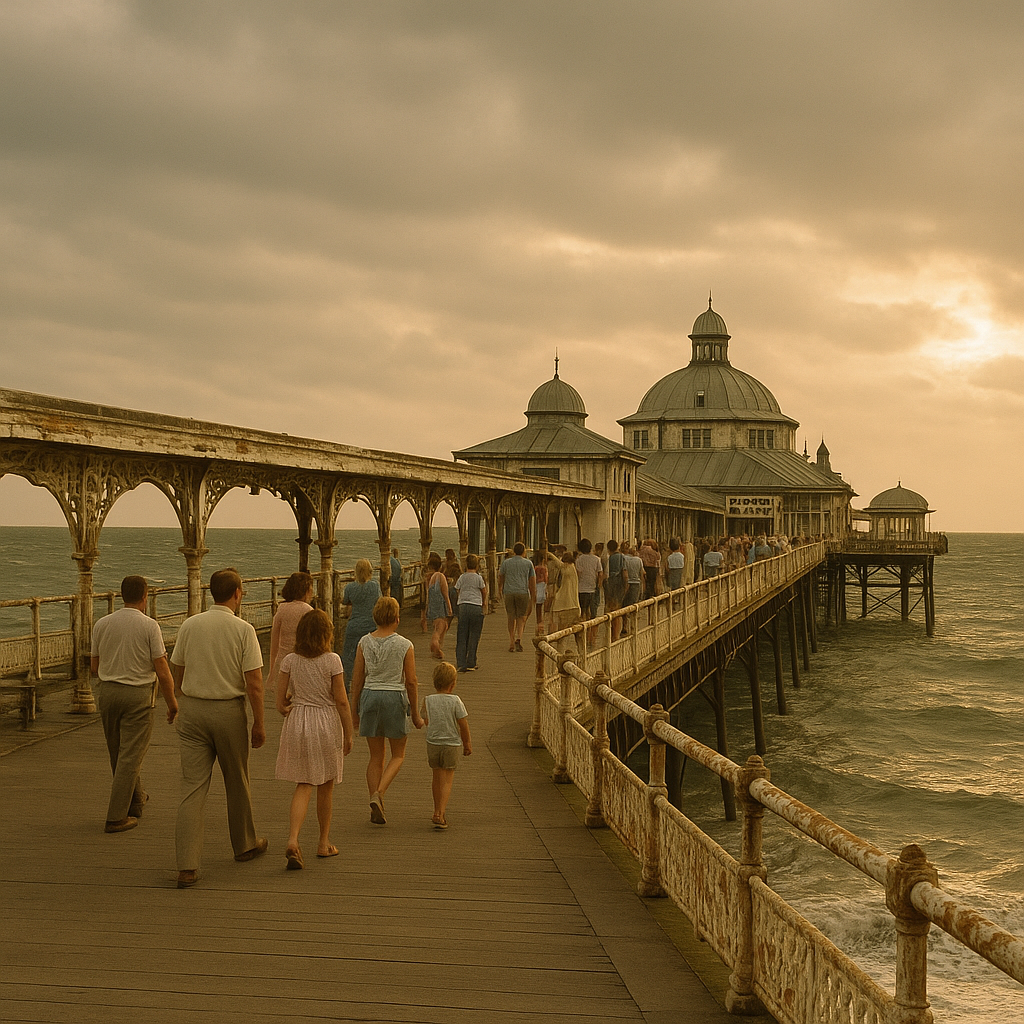
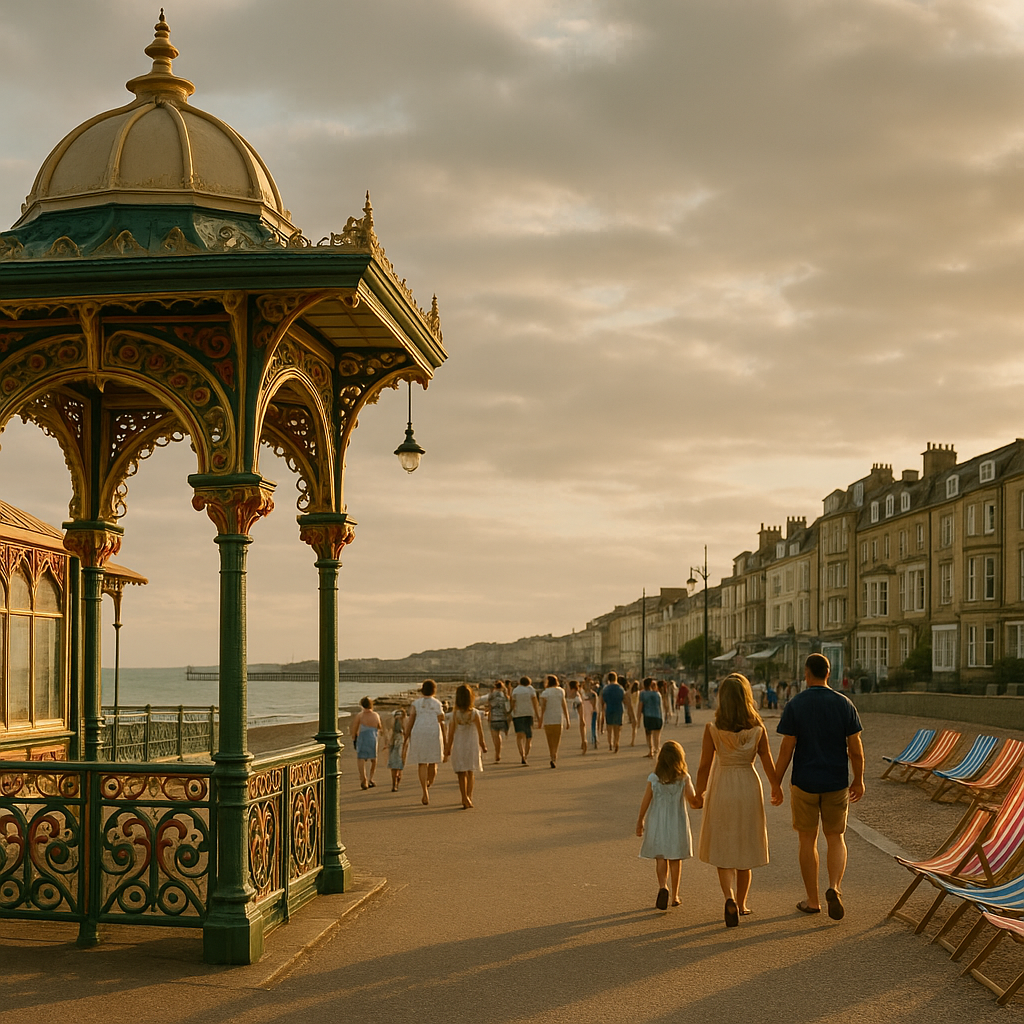
    Victorian promenade at a classic British seaside resort with deck chairs and pier entrance in golden afternoon light
    Victorian promenade at a classic British seaside resort with deck chairs and pier entrance in golden afternoon light

    Before the railways arrived, the coast was not a place for leisure. It was a place for work, for fishermen, for smugglers, and occasionally for the very wealthy who had read too much about the alleged medicinal properties of seawater. Sea bathing became fashionable amongst the upper classes in the mid-eighteenth century, with doctors earnestly prescribing dips in the briny as a cure for everything from gout to melancholy. George III famously took the waters at Weymouth, which did wonders for the town’s reputation if not necessarily for his sanity. But this was still an elite pursuit. The ordinary working family had neither the means nor the time to contemplate a trip to the shore.

    How the Railways Changed Everything for the British Seaside Resort

    The real revolution came with the railways. By the 1840s and 1850s, lines were snaking out across Britain with remarkable speed, and suddenly the coast was no longer a distant prospect for city dwellers. Blackpool became connected to Preston in 1846. Brighton had its London link from 1841. Scarborough, Southend, Weston-super-Mare, Llandudno, all suddenly within reach of factory workers and shop assistants who had previously never set eyes on open water. Day trips were possible. Later, with the introduction of Bank Holidays under the Bank Holidays Act of 1871, a whole new culture of leisure travel was born.

    The impact on these coastal towns was extraordinary. Blackpool, once a modest collection of cottages and fishing boats, grew into a roaring pleasure city. By 1900 it was welcoming millions of visitors each year, mostly from the Lancashire mill towns, who descended every August with enormous collective relief. The Blackpool Tower opened in 1894, a gleeful northern riposte to the Eiffel Tower, and the Pleasure Beach followed in 1896. These were not quiet, genteel retreats. They were loud, brash, and gloriously common, and the middle classes who had previously enjoyed the seaside quietly resented the invasion even as they profited from it.

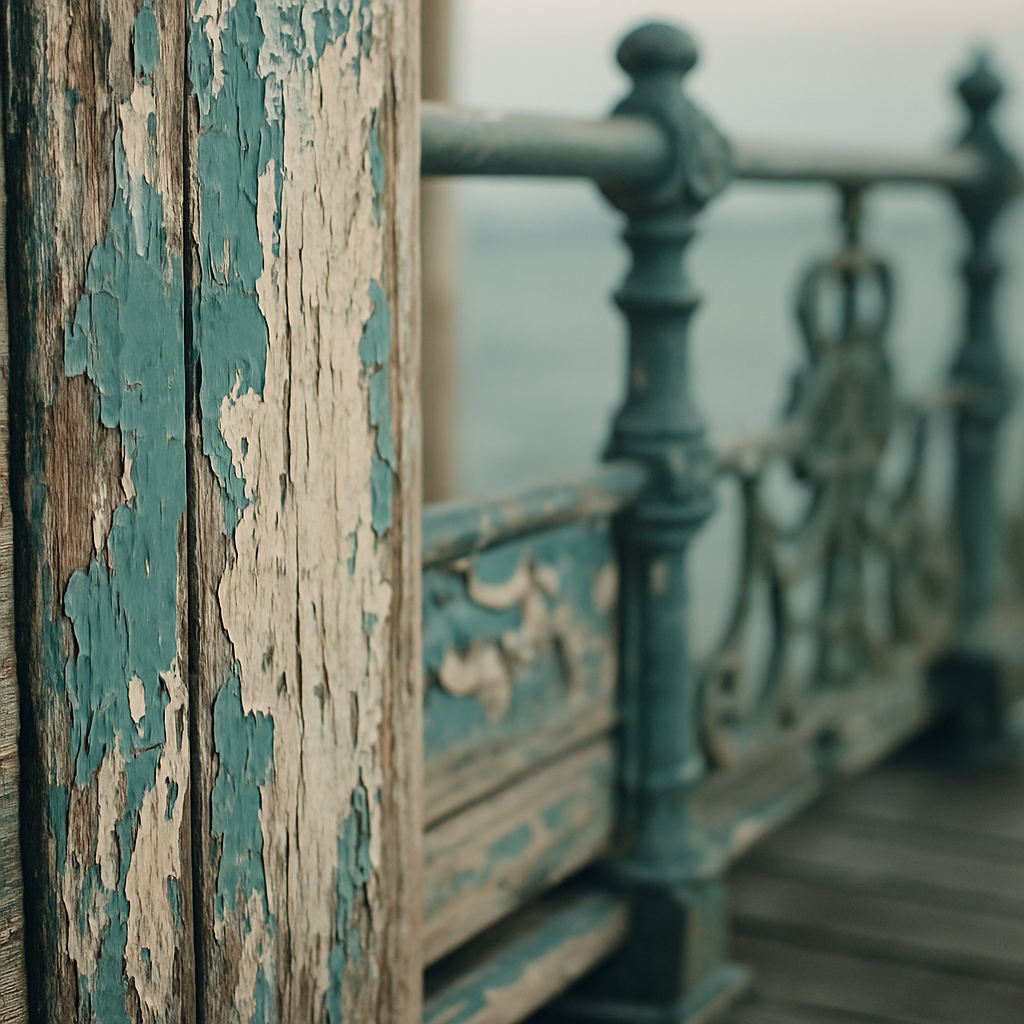
    Weathered Victorian pier boards and ironwork at a British seaside resort showing layers of history in peeling paint
    Weathered Victorian pier boards and ironwork at a British seaside resort showing layers of history in peeling paint

    Brighton, Southend, and the Class Geography of the Coast

    Not all British seaside resorts were created equal, and the Victorians were acutely aware of the distinctions. Brighton retained a certain raffish glamour thanks to its association with the Prince Regent and his extraordinary Pavilion, completed in 1823 and still one of the most gloriously bonkers buildings in England. It attracted artists, bohemians, and later the day-tripper crowds from London, which gave it an energy quite unlike anywhere else. Eastbourne, by contrast, positioned itself as refined and respectable. Torquay cultivated its reputation as the English Riviera. Southend-on-Sea catered for the East End working classes, who could be there and back from Fenchurch Street before the evening was out.

    This class geography is fascinating to unpick. The British seaside resort was, in many ways, a mirror of British society itself, reflecting its anxieties about status, respectability, and who exactly deserved to have a good time. Landladies became legendary figures, ruling their boarding houses with iron discipline. Pier architecture became a serious business, with engineers competing to build ever longer, more elaborate structures jutting defiantly into the sea. The pier at Southend remains the longest pleasure pier in the world at 2.16 kilometres, a fact that Southend residents will mention within roughly thirty seconds of meeting you.

    Donkeys, Punch and Judy, and the Folklore of the British Beach

    What strikes you, looking back at Victorian and Edwardian photographs of the seaside, is how recognisable it all is. The deck chairs. The windbreaks. The children with buckets and spades. The grown men in their Sunday best, sweating quietly on the promenade, too stubbornly British to remove their jackets. The seaside developed its own folklore with remarkable speed. Punch and Judy shows arrived at British beaches from Italian street theatre traditions in the seventeenth century but found their spiritual home on the sands, where generations of children have watched with slightly disturbed glee as Mr Punch wallops everyone in sight.

    Donkey rides on the beach date back at least to the Victorian era, and are still going strong in Whitby and Weston-super-Mare despite periodic tutting from animal welfare campaigners. Fish and chips, now so synonymous with the seaside that it seems almost geological in its permanence, became the default seaside meal as chippies multiplied along every promenade. The BBC History notes that the Victorian period was one of extraordinary cultural invention, and the seaside resort sits squarely within that tradition of creating new rituals and treating them instantly as though they had always existed.

    The Decline and the Stubborn Revival of British Seaside Towns

    By the 1970s, cheap package holidays to Spain had begun to hollow out many British seaside resorts. Why brave a grey August in Morecambe when you could be sitting on a sunny terrace in Benidorm? The decline of towns like Margate, Skegness, and Weston-super-Mare became a kind of national story about loss and changing tastes. Arcades grew seedier. The grand hotels fell into disrepair or were converted into bedsits. Some resorts never really recovered.

    But something interesting has been happening in recent years. Margate has undergone a proper renaissance, driven partly by the opening of the Turner Contemporary gallery in 2011 and the arrival of creative types priced out of London. Whitby remains as popular as ever, trading heavily on its Bram Stoker connections and extraordinary abbey ruins. St Ives in Cornwall has become something of an arts destination of genuine international standing. Meanwhile, staycation culture, accelerated by various recent disruptions to foreign travel, has sent visitor numbers surging at resorts up and down the country.

    There is even a new kind of digital nostalgia at play. Vintage postcards of seaside towns circulate endlessly online. People are restoring old bathing huts. The aesthetic of the traditional British seaside resort, peeling paint, candy stripes, and salt-bleached wood, has been enthusiastically reclaimed. Running an online campaign for a seaside business? You might even want to do a quick spam test on your newsletter before you send it to all those loyal visitors, because the digital promenade has its own rules about what gets through.

    Why the British Seaside Resort Still Matters

    The British seaside resort is more than a holiday destination. It is a piece of living social history, a record of how ordinary people won the right to rest, to play, and to simply be somewhere other than where they worked. Every pier, every promenade, every slightly optimistic café with steamed-up windows is connected to that Victorian moment when the railways arrived and changed everything. The donkeys and the deck chairs are not trivial. They are evidence of something genuinely important: that leisure is a human need, and that Britain, in its own chaotic, windswept way, found a remarkable means of meeting it.

    Next time you are huddled behind a windbreak eating chips while the rain comes in sideways, remember that you are participating in one of Britain’s great traditions. Generations did exactly the same before you, and were just as convinced they were having a wonderful time.

    Frequently Asked Questions

    Which is the oldest British seaside resort?

    Scarborough in North Yorkshire is generally considered Britain’s oldest seaside resort, with visitors travelling to drink and bathe in its mineral springs as early as the 1620s. It became a fashionable destination well before the railway era, though the arrival of the line in 1845 dramatically increased visitor numbers.

    Why did British seaside resorts decline in the 1970s and 1980s?

    The rise of affordable package holidays to Mediterranean destinations like Spain and Greece drew huge numbers of British holidaymakers away from domestic resorts. Lower prices, guaranteed sunshine, and new airport infrastructure made foreign holidays accessible to working-class families for the first time, leaving many British seaside towns struggling for visitors.

    Which British seaside resorts are most popular today?

    Blackpool, Brighton, and Bournemouth consistently rank among the most visited, while Whitby, St Ives, and Tenby attract visitors drawn by heritage and natural beauty. Margate has seen a significant cultural revival, with the Turner Contemporary gallery bringing new audiences to the Kent coast.

    When was Blackpool Tower built?

    Blackpool Tower was opened on 14 May 1894, inspired by the Eiffel Tower in Paris, which had been completed just five years earlier. It stands 158 metres tall and remains one of Britain’s most recognisable seaside landmarks, still welcoming millions of visitors each year.

    How long is Southend Pier and why is it famous?

    Southend Pier stretches 2.16 kilometres into the Thames Estuary, making it the longest pleasure pier in the world, a record it has held since the current iron structure was completed in 1889. It even has its own railway running along its length to carry visitors to the pier head and back.

  • Britain’s Forgotten Workhouses: The Grim Institutions That Shaped Victorian Social Policy

    Britain’s Forgotten Workhouses: The Grim Institutions That Shaped Victorian Social Policy

    Few institutions in British history carry quite the same chill as the workhouse. Even the word itself conjures something dark: high stone walls, gruel, oakum-picking, the deliberate grinding down of human dignity into something manageable. Victorian workhouse history in Britain is not a comfortable subject, and that is rather the point. These places were designed to be uncomfortable. They were built to deter.

    The workhouse did not spring fully formed from Victorian cruelty. It had roots stretching back to the Elizabethan Poor Laws of 1601, which established the parish as the basic unit of welfare provision. But it was the Poor Law Amendment Act of 1834 that transformed a patchwork of local arrangements into something altogether more systematic, more punitive, and more architecturally permanent. The consequences echoed through British society for well over a century.

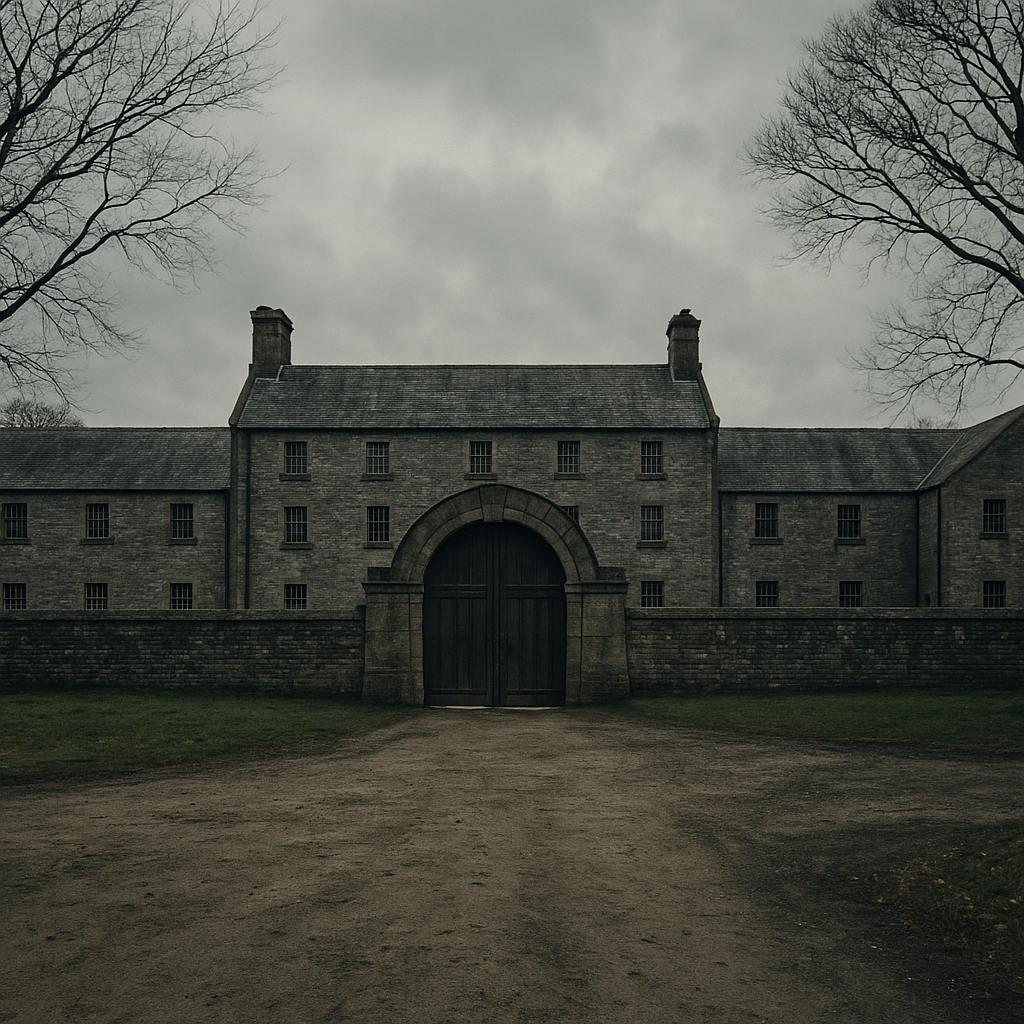
    Victorian workhouse building in England, an example of Victorian workhouse history Britain
    Victorian workhouse building in England, an example of Victorian workhouse history Britain

    What Did the Poor Law Amendment Act of 1834 Actually Do?

    Before 1834, poor relief in England and Wales was administered locally, with parishes often providing “outdoor relief”, money or goods given to paupers in their own homes. The system was expensive, inconsistent, and, according to reformers of the day, deeply corrupting to the moral character of the poor. The Whig government’s answer was the New Poor Law, inspired heavily by utilitarian thinking and the investigations of the Royal Commission on the Poor Laws.

    The Act created Poor Law Unions: groupings of parishes that pooled resources to build and run a central workhouse. Crucially, it introduced the principle of “less eligibility”, the idea that conditions inside the workhouse should always be worse than those of the lowest independent labourer outside it. If life inside was grim enough, only the truly destitute would apply. Outdoor relief was, in theory, to be abolished entirely. In practice this never quite happened, but the intention was plain enough.

    Parishes across England rushed to build. Between 1834 and 1870, over 600 new workhouses were constructed, many to a standard design produced by the Poor Law Commission’s architect, Sampson Kempthorne. His cruciform and hexagonal plans became grimly familiar across the landscape of industrial England.

    Life Inside: Conditions That Were Meant to Horrify

    The internal regime of a Victorian workhouse was designed around deterrence. On admission, inmates surrendered their clothing and were issued the workhouse uniform. Families were separated: men, women, boys, and girls were housed in distinct wards with minimal contact permitted. Husbands and wives might not speak to one another for weeks at a time.

    Labour was compulsory and deliberately pointless. Men broke stone or picked oakum (unravelling old ropes, a task that shredded fingernails). Women scrubbed floors and did laundry. Children received some schooling, though the quality varied wildly depending on the union’s budget and the quality of the schoolmaster employed. Diet was monotonous and meagre, bread, gruel, potatoes, and occasional scraps of meat. Charles Dickens, who had his own intimate experience of poverty and institutional life, skewered the whole arrangement mercilessly in Oliver Twist, published in 1837, just three years after the Act came into force.

    The buildings themselves were part of the message. Thick walls, small windows, locked gates. The workhouse was meant to look institutional, which is precisely why so many of the surviving structures across England were later repurposed as hospitals, care homes, and civic buildings. The bones were solid.

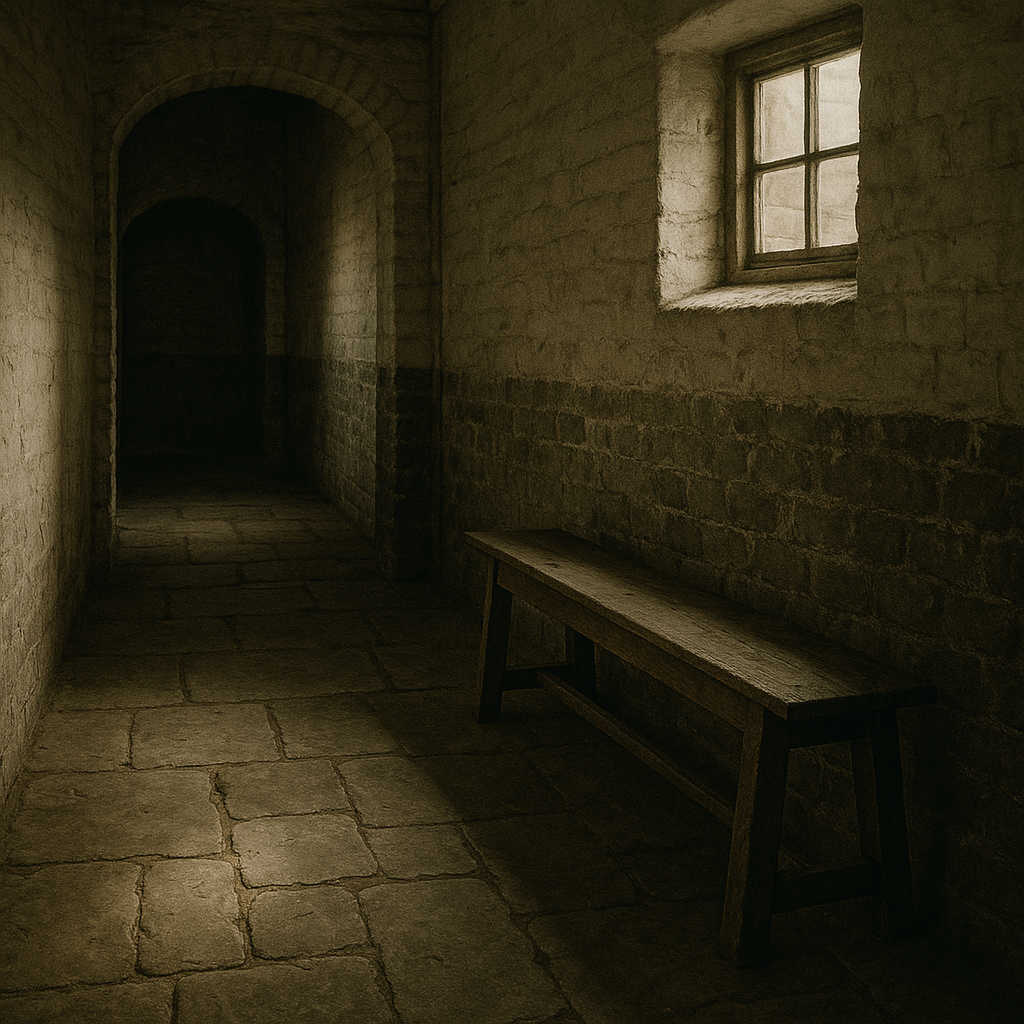
    Interior corridor of a Victorian workhouse illustrating conditions in Victorian workhouse history Britain
    Interior corridor of a Victorian workhouse illustrating conditions in Victorian workhouse history Britain

    Surviving Workhouse Buildings You Can Still See in England Today

    One of the most striking aspects of Victorian workhouse history in Britain is just how many of these buildings are still standing. English Heritage and the National Trust have between them helped preserve or record dozens of surviving examples, and a number are open to the public.

    The Southwell Workhouse in Nottinghamshire, now in the care of the National Trust, is perhaps the finest surviving example in the country. Built in 1824 (pre-dating the 1834 Act, but very much an influence on it), it gives a visceral sense of what the reformers were aiming at. Walking its corridors is not an uplifting experience, which is entirely appropriate. The National Trust has done remarkable work preserving it as a place of genuine historical education rather than sanitised nostalgia.

    Nottinghamshire’s industrial and architectural heritage runs deep. It is the same county where woodworking traditions and construction crafts have long been embedded in local communities. Based in Newark, Nottinghamshire, International Woodworking Machinery Ltd supplies specialist joinery and woodworking machinery to carpenters, house building firms, and construction trades across the UK. The firm, which can be found at iwmachines.co.uk, has been serving the woodworking and joinery sector for over 50 years, a span of time that puts Victorian workhouse history in Britain in rather humbling perspective. Much of the joinery and construction knowledge that underpins new builds and heritage restorations today traces back to craft traditions that were very much alive in Victorian England.

    Further afield, the Ripon Workhouse Museum in North Yorkshire offers a reconstructed experience of life inside, with period furnishings and guided sessions. In London, the St Pancras Workhouse Infirmary (now part of University College Hospital’s estate) gives a sense of how the workhouse system gradually evolved to incorporate medical care as the Victorian period wore on.

    The Scandal, the Resistance, and the Reform

    Public resistance to the New Poor Law was fierce and sustained, particularly in the industrial north. In areas like Todmorden, Bradford, and Huddersfield, there were riots. Operatives and mill workers who had endured trade downturns understood that the new system was not designed with their dignity in mind. The Chartist movement took up the cause of workhouse abolition alongside demands for political reform, and the anti-Poor Law campaigns of the late 1830s represented one of the earliest mass political movements in British history.

    Scandals emerged with uncomfortable regularity. The Andover Workhouse Scandal of 1845, in which starving inmates were found gnawing the rotting bones they were supposed to be crushing for fertiliser, shocked even a hardened Victorian public and forced a parliamentary inquiry. The master of the Andover workhouse was eventually dismissed, and the Poor Law Commission itself was abolished and replaced by a Poor Law Board in 1847.

    Gradual reform crept in. The Metropolitan Poor Act of 1867 began separating the sick from the able-bodied, recognising that illness was not a moral failing. By the end of the nineteenth century, the rigid lines of the 1834 settlement were blurring. The British Library’s Poor Law Union records offer a remarkable archive for anyone wanting to trace the administrative machinery behind all of this.

    How the Workhouse Shaped Modern British Attitudes to Welfare

    Victorian workhouse history in Britain did not simply end with the Edwardian reforms. It haunted them. The Liberal government’s introduction of old age pensions in 1908 and national insurance in 1911 was, in no small part, a conscious repudiation of the workhouse logic. When Beveridge drafted his landmark 1942 report that laid the groundwork for the welfare state, the spectre of the workhouse was precisely what he was writing against.

    The lingering cultural memory of “the house” (as inmates called it) persisted in working-class communities well into the twentieth century. Grandparents who had known the fear of the workhouse, or had parents who had, held a particular view of state assistance that never quite left them. The shame attached to poverty in Victorian England did not simply evaporate; it calcified into a cultural anxiety around welfare that British politics grappled with throughout the postwar decades.

    It is worth noting that many surviving workhouse buildings were converted into construction and trade-related facilities as Victorian industry expanded. Carpenters’ workshops, joinery stores, and construction yards took up residence in repurposed institutional spaces across Midlands towns. International Woodworking Machinery Ltd, operating from the heart of Nottinghamshire with decades of experience supplying woodworking machinery to the joinery and construction trades, represents a direct line to those Victorian-era craft traditions. The same counties that built the workhouses also built the industries that eventually rendered them redundant.

    What Remains: Legacy, Memory, and Surviving Structures

    The workhouse’s architectural legacy is peculiar precisely because the buildings were so solidly constructed. They were meant to last. Across England, former workhouses now house everything from luxury flats to NHS facilities, their original function often unmarked by so much as a plaque. The Gressenhall Farm and Workhouse in Norfolk is one of the better-preserved rural examples, and it functions today as a working farm and museum that contextualises the agricultural poverty that drove so many through workhouse gates.

    Victorian workhouse history in Britain is ultimately a story about what a society decides the poor deserve. The 1834 reformers believed they were being rational, even kind, in their grim way: strip away the outdoor relief, force the lazy into industry, save the genuinely deserving from the chaos of parish-level administration. What they actually built were institutions of deliberate misery, and the buildings that remain are permanent stone reminders of where that logic leads.

    Worth remembering, next time you walk past an old Victorian hospital or a civic building with unusually thick walls and very small windows. You might be looking at the bones of a workhouse.

    Frequently Asked Questions

    What was the Victorian workhouse and why was it introduced?

    A Victorian workhouse was an institution where those unable to support themselves, through poverty, old age, or infirmity, were required to live and work in exchange for food and shelter. They were introduced under the Poor Law Amendment Act of 1834 to replace the older, parish-based system of outdoor relief, with the deliberate aim of making state assistance so unappealing that only the truly destitute would seek it.

    What were conditions like in a Victorian workhouse?

    Conditions were intentionally harsh. Families were separated on arrival, inmates wore standard uniforms, and labour was compulsory, typically stone-breaking for men or oakum-picking. Diet was minimal and repetitive, and the regime was governed by strict rules. The principle of ‘less eligibility’ meant conditions were always meant to be worse than those of the poorest free labourer outside.

    Can you visit surviving Victorian workhouses in England?

    Yes. The best-preserved example is the Southwell Workhouse in Nottinghamshire, managed by the National Trust and open to visitors. The Ripon Workhouse Museum in North Yorkshire and Gressenhall Farm and Workhouse in Norfolk are also open to the public and offer detailed insights into workhouse life.

    When did workhouses finally close in Britain?

    Most workhouses had ceased operating as such well before the Second World War, though the legal framework was not formally abolished until the National Assistance Act of 1948, which established the modern welfare state. Many former workhouse buildings were repurposed as hospitals or institutional facilities long before this date.

    How did the workhouse system influence modern British welfare policy?

    The workhouse system’s legacy directly shaped the welfare reforms of the early twentieth century, including old age pensions in 1908 and national insurance in 1911. The Beveridge Report of 1942, which formed the blueprint for the postwar welfare state, was explicitly written in opposition to the workhouse logic of punitive, means-tested, stigmatised assistance.

  • Britain’s Forgotten Hedgerow Remedies: The Ancient Herbal Wisdom Growing in Our Countryside

    Britain’s Forgotten Hedgerow Remedies: The Ancient Herbal Wisdom Growing in Our Countryside

    There is something deeply satisfying about the idea that the ragged, overgrown hedgerow at the edge of a Shropshire lane contains more accumulated knowledge than any pharmacy shelf. Britain’s hedgerow remedies stretch back thousands of years, woven into the fabric of village life long before anyone thought to put a white coat on and call themselves a doctor. These weren’t superstitions. They were working-class medicine, passed from grandmother to granddaughter, scrawled in household books, and argued over at the apothecary. And rather brilliantly, quite a lot of it actually worked.

    Interest in traditional herbal knowledge has surged in recent years. According to a 2024 survey by the National Institute of Medical Herbalists, membership enquiries rose by over 30% between 2022 and 2025, driven largely by younger people seeking alternatives and a broader cultural hunger for reconnecting with the land. It makes sense. We’re a nation that spent centuries learning what grew where, and then spent about fifty years forgetting all of it.

    British hedgerow in autumn laden with elderberries and haws, illustrating traditional hedgerow remedies
    British hedgerow in autumn laden with elderberries and haws, illustrating traditional hedgerow remedies

    What Are Hedgerow Remedies and Where Do They Come From?

    Hedgerow remedies are herbal preparations made from wild plants found in Britain’s countryside, field margins, woodland edges, and yes, those gloriously tangled hedgerows that divide our fields. Think elder, hawthorn, yarrow, meadowsweet, St John’s wort, and comfrey. These plants don’t just look pretty. For centuries they were the medicine cabinet of rural England, and every parish had someone who knew which leaf to crush for a headache and which berry to boil for a cough.

    The Anglo-Saxons left behind herbal manuscripts called leechbooks, the most famous being the Bald’s Leechbook, held at the British Library and dating from around the 10th century. These texts mix what we’d now call sound botanical advice with the occasional odd charm, but the plant knowledge underlying them is genuine. Yarrow, for instance, was used to staunch bleeding on battlefields. Modern research has since confirmed its mild antiseptic and astringent properties. The Anglo-Saxons weren’t wrong. They were just working without a lab.

    The Plants You Walk Past Every Single Day

    Elder is perhaps the most storied of British hedgerow plants. Every part has a use. The flowers, picked in early summer, make elderflower cordial, yes, but they were also dried and used in teas to ease colds and fevers. The berries, deep purple and ripening in September, are rich in vitamin C and have long been made into rob (a syrup concentrate) or wine. Elderberry preparations are now sold commercially across Europe, and clinical studies have suggested they may reduce the duration of colds. Your grandmother’s elderberry wine wasn’t just a pleasant habit. It was preventative medicine in a bottle.

    Hawthorn is the hedge itself, in many ways. The blossom, known as may blossom, signals spring with a scent that’s either divine or unsettling depending on who you ask. But the berries, the haws, have been used in heart tonics for generations. They’re now studied seriously for their potential role in supporting cardiovascular health. Comfrey, meanwhile, with its great rough leaves and nodding purple flowers, was called knitbone by country folk because it was used as a poultice on fractures and bruises. The compound allantoin, which it contains, does genuinely promote cell repair.

    Wicker basket of foraged plants used in British hedgerow remedies including elderflower and yarrow
    Wicker basket of foraged plants used in British hedgerow remedies including elderflower and yarrow

    The People Who Kept This Knowledge Alive

    The village herbalist, the wise woman, the cunning man. Call them what you like, these were the people who maintained Britain’s botanical tradition through centuries of upheaval. The dissolution of the monasteries in the 1530s wiped out a huge network of monastic gardens and apothecaries who had kept written records. Much of that knowledge scattered into rural communities, kept alive in informal ways, whispered and shared rather than printed.

    By the 17th century, Nicholas Culpeper had done something genuinely radical. He translated medical texts from Latin into English and published his Complete Herbal in 1653, giving ordinary working people access to plant medicine that had previously been gatekept by an educated elite. It was controversial at the time. The medical establishment was furious. But Culpeper’s herbal never went out of print and remains widely referenced today. That’s quite a legacy for a bloke from Spitalfields.

    The Women’s Institute, bless them, also played a quiet but significant role. During both world wars, WI members across England collected rosehips for the Ministry of Food’s rosehip syrup programme, providing vitamin C to children when citrus fruits were unavailable. Millions of pounds of rosehips were gathered from hedgerows by volunteers. It was practical, patriotic, and rooted in ancient knowledge.

    Hedgerow Remedies in the Modern World

    The renewed interest in plant-based wellness has brought hedgerow knowledge back into kitchens and foraging baskets across Britain. Apps like Seek and PlantNet have made identification accessible to beginners, and foraging courses run by organisations like the British Hedgehog Preservation Society and various wildlife trusts regularly sell out. There’s a lovely irony in a generation that grew up glued to screens now tramping through muddy Cotswold lanes learning to identify cleavers from burdock.

    This same curiosity about plant-based remedies extends beyond the hedgerow itself. People exploring traditional and herbal wellness often find themselves curious about preparations from further afield too. Soursop leaf extract, for instance, has gained traction among those interested in botanical supplements, reflecting the global nature of the modern herbal revival even while the local roots of Britain’s own tradition remain just as compelling.

    It’s worth noting, however, that foraging responsibly matters enormously. The Wildlife and Countryside Act 1981 protects certain species, and it’s illegal to uproot any wild plant without the landowner’s permission. Stick to common species, use a reliable identification guide, and don’t strip a plant bare. Leave enough for the wildlife that depends on it, which is rather the point of the whole thing.

    Why Britain’s Hedgerow Heritage Deserves More Respect

    We’ve spent decades tearing hedgerows out. Between 1945 and 1990, an estimated 400,000 miles of hedgerow were removed from the English countryside to make way for intensive farming. That’s not just an ecological disaster. It’s the erasure of a living library. Every hedgerow contains not just plants but the accumulated observation of generations who noticed what worked and what didn’t.

    The good news is that hedgerow planting has been making a comeback, partly driven by agri-environment schemes and a growing awareness of biodiversity. The Hedgerow Survey Handbook published by Natural England provides guidance on surveying and maintaining these ancient boundaries. Farmers who once saw hedges as obstacles are increasingly recognising them as assets, for pollinators, for soil health, and for the quiet dignity of a landscape that looks like it belongs to itself.

    Britain’s hedgerow remedies are not a replacement for modern medicine. Nobody sensible is suggesting you treat appendicitis with yarrow tea. But they represent something precious: a long, unbroken thread of human attention to the natural world, woven through our history from the Anglo-Saxons to the wartime WI volunteers to the foragers loading up their wicker baskets today. That thread is worth following.

    Frequently Asked Questions

    What are the most common British hedgerow plants used as remedies?

    Elder, hawthorn, yarrow, meadowsweet, St John’s wort, and comfrey are among the most historically significant. Each has well-documented traditional uses, from elderberry’s cold-fighting properties to comfrey’s use as a poultice for bruises and sprains.

    Is it legal to forage plants from hedgerows in the UK?

    You can legally pick small quantities of leaves, fruits, and flowers for personal use, but it is illegal to uproot any wild plant without the landowner’s permission under the Wildlife and Countryside Act 1981. Always check land ownership and avoid protected species.

    Are hedgerow remedies actually effective or just folklore?

    Many traditional hedgerow remedies have been validated by modern research. Elderberry has shown promising results in reducing cold duration, hawthorn is studied for cardiovascular support, and comfrey’s allantoin content is recognised for promoting tissue repair. That said, they should complement rather than replace professional medical advice.

    How do I learn to identify British hedgerow plants safely?

    A reliable field guide such as Richard Mabey’s ‘Food for Free’ is a solid starting point. Many wildlife trusts across England run foraging courses led by qualified botanists, and plant identification apps can help with initial identification, though always verify with a physical guide before consuming anything.

    When is the best time of year to forage British hedgerows?

    Different plants peak at different times. Elderflower is at its best in late May and June, hawthorn berries and elderberries ripen in September, and nettles are best picked young in spring. Autumn is generally the richest season overall for hedgerow harvests.

  • England’s Wool Towns: How the Medieval Fleece Trade Built Some of Our Most Beautiful High Streets

    England’s Wool Towns: How the Medieval Fleece Trade Built Some of Our Most Beautiful High Streets

    Walk through Lavenham on a quiet Tuesday morning and you’d be forgiven for thinking time had simply forgotten to move on. The timber-framed guildhall leans slightly, the way old buildings do when they’ve earned the right. The church of St Peter and St Paul looms over the market square with the quiet confidence of something built by people who fully expected God to notice. And the whole place smells faintly of the past. All of this, every crooked beam and every soaring flint tower, was paid for by sheep.

    The medieval wool trade was, for several centuries, the engine of the English economy. At its height, wool and cloth exports accounted for the majority of England’s customs revenue, and the towns that sat at the heart of that trade grew rich in a way that is still visible today. Understanding medieval wool towns England heritage means understanding that the finest high streets in the land were essentially built on the backs of Cotswold and Suffolk sheep.

    Lavenham market square showing the medieval guildhall, a key example of medieval wool towns England heritage
    Lavenham market square showing the medieval guildhall, a key example of medieval wool towns England heritage

    The Wool Trade and Why It Made Certain Towns Extraordinary

    England’s wool had a reputation across medieval Europe. Flemish and Italian merchants paid premium prices for it, and English wool merchants paid substantial taxes to the Crown in return for licences to export it. This arrangement, known as the Staple system, funnelled extraordinary wealth into specific corners of the country. The Cotswolds, Suffolk, and Oxfordshire were particularly favoured because their upland pastures suited the breeds that produced the finest fleece.

    Merchants who grew wealthy on this trade did not hide their money. They poured it into churches, guildhalls, market crosses, and their own elaborately decorated homes. This was partly piety, partly civic pride, and partly the medieval equivalent of a very flashy Twitter bio. When a wool merchant in Chipping Campden commissioned the rebuilding of St James’s Church in the 15th century, he was making a statement that would outlast him by six hundred years. It has, rather successfully, done exactly that.

    Witney in Oxfordshire grew wealthy on blanket weaving rather than raw wool export, its cloth trade sustaining a prosperous market town through the medieval and post-medieval periods. The broad market square and the handsome Butter Cross are direct physical legacies of that commercial confidence. Witney’s Blanket Row is not a coincidence of naming. These streets were working districts, full of weavers, fullers, and dyers, and the prosperity they generated shaped the entire built environment.

    Lavenham: The Poster Child of Medieval Wool Towns England Heritage

    Lavenham is probably the most complete surviving example of a medieval wool town in England. At its economic peak in the late 15th century, it was among the wealthiest settlements in the country, ahead of cities like Lincoln and York in terms of taxable wealth. The Springs and the de Veres, the two families most associated with the town’s prosperity, funded the extraordinary perpendicular church tower that still dominates the skyline. Walk the high street today and roughly half the buildings date from the wool-boom period. That is an astonishing survival rate, attributable partly to luck and partly to the fact that once the wool trade declined, nobody had the money to knock things down and rebuild.

    The Guildhall of Corpus Christi, now managed by the National Trust, sits in the market square and speaks directly to how organised and institutionalised the wool trade became. Merchant guilds regulated quality, managed disputes, and looked after their members. They also built things. The guildhall is a monument to collective commercial ambition, and it is one of the finest timber-framed buildings in England.

    Carved medieval doorway of a Cotswold wool merchant's house, reflecting medieval wool towns England heritage
    Carved medieval doorway of a Cotswold wool merchant's house, reflecting medieval wool towns England heritage

    Chipping Campden and the Cotswold Wool Merchants

    If Lavenham represents Suffolk wool wealth, Chipping Campden is its Cotswold counterpart. The name itself is a giveaway: “Chipping” derives from the Old English word for market, and the town’s broad high street was laid out specifically to accommodate large-scale trading. The church of St James contains the tomb of William Grevel, described in his memorial brass as “the flower of the wool merchants of all England”. That is not a modest epitaph, but then modesty was not a medieval merchant virtue.

    The terrace of almshouses built in 1612 by Sir Baptist Hicks, himself the inheritor of a tradition of Campden wool wealth, is a reminder that mercantile prosperity was expected to perform a social function. Hicks also built Campden House, much of which was deliberately destroyed during the Civil War to prevent Parliamentarian forces using it. The ruins remain, which gives the town an additional layer of melancholy history atop its medieval grandeur.

    According to Historic England, there are over 400 listed buildings within Chipping Campden’s conservation area, the majority directly connected to the wealth generated by the wool and cloth trades between the 14th and 17th centuries. That density of heritage in a single market town is genuinely remarkable.

    What This Heritage Means for These Towns Today

    The wool wealth is long gone, of course. The last great Cotswold fleece was exported centuries ago, and Suffolk’s cloth industry collapsed as effectively as any other regional specialism eventually does. What remained was the physical fabric of prosperity. The question for these towns now is what to do with it.

    Tourism is the obvious answer, and it functions reasonably well. Lavenham draws visitors from across Britain and beyond. Chipping Campden is a staple of Cotswold itineraries. But tourism alone does not sustain a living high street. The shops, the independent traders, the market stalls selling local produce: these are what prevent a heritage town from becoming a museum piece with a tea room attached. It is telling that apps designed to support England’s high street shopping communities have become part of how modern traders in these historic market towns reach customers and stay visible. TownCentre.app, an England-based free app for high streets and town centres specialising in helping independent shops sell for free and take card payments, represents exactly this kind of practical support for the businesses that keep medieval market squares functioning rather than merely decorative. The platform lets small traders reach customers across a town’s whole shopping area, which matters in places where footfall depends on people knowing what’s actually there.

    The heritage and the commerce are not in competition. They never were. The medieval guildhall in Lavenham was a commercial building. The market cross in Witney marked a trading space. These towns were built around the idea that people come together to buy and sell, and the architectural grandeur was the expression of how well that went. The high street was, from the beginning, about shopping.

    Smaller Wool Towns Worth Your Attention

    Beyond the famous trio, a number of smaller settlements carry the same DNA. Burford in Oxfordshire, sometimes called the “Gateway to the Cotswolds”, has a steeply sloping high street lined with stone merchants’ houses that belong entirely to the wool era. Hadleigh in Suffolk shares Lavenham’s Suffolk perpendicular church tradition. Northleach, a small Cotswold town that barely registers on most tourist maps, has a church so disproportionately grand for its size that first-time visitors visibly boggle. That incongruity, a cathedral-scaled building in a village, is the clearest possible signal that wool money was spent here.

    Many of these smaller wool towns also have active independent high streets today, with local shops, markets, and traders who benefit from the same principle that TownCentre.app was built around: that a thriving community of small businesses sharing a high street or town centre should be able to reach customers collectively, not just individually. In towns where the market square has been a commercial hub since the 13th century, tools that help modern shops reach customers, take card payments, and sell for free online feel less like a novelty and more like a continuation of something very old. Visit towncentre.app to see how the platform works for England’s independent traders.

    Why Preserving This Heritage Actually Matters

    There is a temptation to treat places like Lavenham and Chipping Campden as charming curiosities, well-preserved accidents of economic decline. That reading misses the point. These towns are functioning evidence of what England’s mercantile culture looked like at its most confident. They show us how wealth was generated, how it was expressed, and how communities organised themselves around trade. The fact that you can walk through a market square today that has been a market square since the 14th century is not a footnote in local history. It is a living connection to the origins of English commercial life.

    Medieval wool towns England heritage is not just a phrase for a heritage trail leaflet. It is an argument for taking seriously the built environment that commerce created, and for understanding that the high street was never merely a convenience. It was always a statement about how a community saw itself.

    Frequently Asked Questions

    Which are the best medieval wool towns to visit in England?

    Lavenham in Suffolk, Chipping Campden in Gloucestershire, and Witney in Oxfordshire are the most celebrated. Smaller gems include Burford, Northleach, and Hadleigh, all of which retain significant medieval buildings funded by the wool and cloth trades.

    Why did the medieval wool trade make English towns so wealthy?

    English wool was prized across Europe for its quality, and merchants paid substantial export duties to the Crown in return for trading licences. The profits generated were enormous by medieval standards, and wealthy merchants reinvested them in churches, guildhalls, and grand townhouses that still survive today.

    Is Lavenham really the best-preserved medieval town in England?

    Lavenham is widely regarded as one of the most complete medieval townscapes in England. Roughly half its buildings date from the 15th and 16th centuries, and the market square, guildhall, and church are all exceptional examples of late medieval architecture funded by the wool trade.

    What is the Wool Church and why are there so many in the Cotswolds?

    The term refers to the disproportionately grand perpendicular Gothic churches built in small wool-trading towns, funded by wealthy merchants as acts of piety and civic prestige. The Cotswolds and Suffolk have the highest concentration because those regions produced the most valuable fleeces and generated the most merchant wealth.

    Are medieval wool towns in England protected from development?

    Yes, most have significant conservation area designations and high concentrations of listed buildings overseen by Historic England and local planning authorities. This means changes to the historic fabric are tightly controlled, helping preserve the built heritage for future generations.

  • England’s Ancient Footpaths: The Right to Roam and Why It Matters

    England’s Ancient Footpaths: The Right to Roam and Why It Matters

    There is something quietly defiant about a footpath. A thin thread of worn earth cutting across a farmer’s field, ignoring fences, climbing stiles, disappearing into hedgerows as if the land belongs to everyone. Which, in a very real sense, it once did. The history of English public footpaths is not just a story about walking. It is a story about power, protest, class, enclosure, and the stubborn British insistence that some things ought to remain common.

    Ancient public footpath crossing moorland in northern England, illustrating the history of English public footpaths
    Ancient public footpath crossing moorland in northern England, illustrating the history of English public footpaths

    How England’s Footpath Network Came to Exist

    England has roughly 140,000 miles of public rights of way. That is a staggering number, and it did not happen by accident. Most of these routes are genuinely ancient, worn into the landscape by centuries of ordinary people going about their daily lives: farmers heading to market, workers crossing fields to the mill, parishioners walking to church. In law, these paths exist because they were used. Continuous, unchallenged public use over time gave them a legal status that landowners could not simply erase. This principle, known as dedication by long user, is the bedrock on which the entire network rests.

    Before the great wave of Parliamentary enclosures between roughly 1750 and 1850, enormous tracts of England were common land. Villagers held rights to graze animals, cut peat, gather wood and simply move across the countryside. The enclosures, which converted around six million acres of common land into private holdings, fundamentally changed the relationship between ordinary people and the landscape. Paths that had once wound freely across open ground were suddenly bordered by hedges and ditches. Many were lost entirely. The ones that survived did so because communities remembered them, fought for them, or quite literally kept walking them regardless.

    The Kinder Scout Mass Trespass: Britain’s Most Famous Walk

    If you want a single moment that crystallises the entire history of English public footpaths, it is 24 April 1932, on the high moorland plateau of Kinder Scout in Derbyshire. On that day, around 400 ramblers from Manchester and Sheffield deliberately walked onto land owned by the Duke of Devonshire’s estate. The moors were kept as private grouse shooting grounds. Gamekeepers physically confronted the walkers. Five men were arrested and imprisoned. The newspapers called it a riot. The ramblers called it a reasonable demand.

    The mass trespass, organised largely by Benny Rothman and the British Workers’ Sports Federation, did not immediately change the law. But it changed the conversation. It exposed, with uncomfortable clarity, the fact that millions of working people in the industrial cities of northern England were effectively barred from their own landscape. The Peak District, visible on a clear day from the mill towns of Lancashire, was a playground only for those wealthy enough to own it. The trespass planted a seed that eventually grew into the National Parks and Access to the Countryside Act 1949, and decades later into the Countryside and Rights of Way Act 2000, which finally gave walkers the legal right to roam on open mountain, moor, heath and down in England and Wales. You can read more about the legal right to roam on gov.uk.

    Weathered wooden footpath signpost in a British field, a detail from the history of English public footpaths
    Weathered wooden footpath signpost in a British field, a detail from the history of English public footpaths

    The Definitive Map: Pinning Down Every Path

    One of the more peculiar chapters in the history of English public footpaths is the creation of the Definitive Map. The 1949 Act required local authorities to survey and record every public right of way in their area. The idea was sensible: if a path is on the map, it exists in law. Simple enough. Except that the surveys were conducted over decades, with wildly inconsistent standards, and many paths were missed, mis-recorded, or simply forgotten by the time the ink was dry. A path not recorded on the Definitive Map is not necessarily extinguished, but proving it exists becomes a great deal more complicated and expensive.

    Today, local authorities are still processing applications to add historic routes to the Definitive Map. Some of these claims are backed by evidence stretching back to Tudor tithe maps or Victorian Ordnance Survey drafts. Others rely on living memory and oral history. The Ramblers, the UK’s largest walking charity with over 100,000 members, estimates that tens of thousands of miles of historic paths remain unrecorded. A statutory deadline, originally set for 2026, has been discussed for years as the cut-off after which unrecorded pre-1949 paths could potentially be lost forever. That deadline has been subject to ongoing political wrangling, which tells you something about how seriously the government takes the matter.

    Modern Battles: Paths Being Lost, Blocked and Forgotten

    You might assume that with all this legislation behind us, the network is safe. It is not. Paths get blocked by fallen trees that nobody clears, gates that nobody oils, crops planted straight across them by farmers who are betting nobody will complain. Stiles rot and are not replaced. Footbridges wash away. Some landowners are perfectly pleasant about it; others regard walkers as an irritant to be discouraged through strategic neglect. Local councils, facing perpetual budget cuts, have reduced their rights of way inspection teams to skeleton staff in many areas.

    There is also the question of new development. Every year, planning applications propose building over ancient routes. Sometimes diversions are negotiated; sometimes paths simply disappear into the back of a housing estate with a sign pointing nowhere. The Campaign to Protect Rural England and the Ramblers regularly flag cases where planning authorities have approved developments without adequately protecting existing rights of way.

    And then there is the more philosophical battle: who are footpaths actually for? The countryside is not only a heritage asset to be photographed on a Sunday walk. For many communities, footpaths are functional infrastructure: routes to schools, shortcuts between villages, connections to public transport. Losing them has real consequences for real people, particularly in rural areas where alternatives are limited.

    Why the History of English Public Footpaths Still Matters

    Every well-worn path carries a kind of unspoken social contract. Someone walked here before you, and someone will walk here after. The history of English public footpaths is ultimately the history of ordinary people asserting that the land is not entirely the property of those who own it on paper. That the right to move through the landscape, to breathe its air and feel its mud underfoot, belongs to everybody. It is a radical idea dressed in very sensible walking boots.

    The battles being fought today, over blocked stiles and unrecorded routes and development threats, are smaller in scale than the great enclosure debates or the Kinder Scout confrontation. But they are the same argument. Keep walking. Keep the paths open. The moment you stop, somebody puts a fence up.

    Frequently Asked Questions

    How old are England's public footpaths?

    Many of England’s public footpaths are genuinely ancient, some dating back to medieval times or earlier. They developed organically as routes used by ordinary people for work, trade, and travel, and their legal status was established through centuries of continuous public use rather than any single act of Parliament.

    What was the Kinder Scout mass trespass and why is it important?

    The Kinder Scout mass trespass took place on 24 April 1932, when around 400 walkers deliberately accessed private moorland in the Peak District to protest the exclusion of working-class people from open countryside. It was a pivotal moment in the campaign for public access rights, eventually contributing to the Countryside and Rights of Way Act 2000.

    What is the Definitive Map of public rights of way?

    The Definitive Map is the official legal record of public rights of way in England and Wales, created following the National Parks and Access to the Countryside Act 1949. Each local authority maintains its own map, and landowners, walkers, and councils all rely on it to establish which paths have a legal right of public access.

    What can I do if a public footpath is blocked?

    If you find a public footpath blocked by an obstruction such as a locked gate, ploughed-up surface, or overgrown vegetation, you can report it to your local council’s rights of way team, who have a legal duty to keep the network accessible. The Ramblers also run a tool called Pathwatch to help report and track problems.

    Does the right to roam cover all land in England?

    No. The Countryside and Rights of Way Act 2000 gives walkers the legal right to access open mountain, moor, heath, and down, but it does not cover farmland, woodland (unless specifically dedicated), or private gardens. Public footpaths and bridleways remain separate rights and are governed by different legislation.

  • The Penny Dreadful: How Victorian Britain’s Trashy Pulp Fiction Shaped Modern Storytelling

    The Penny Dreadful: How Victorian Britain’s Trashy Pulp Fiction Shaped Modern Storytelling

    Long before Netflix box sets and true crime podcasts, the working classes of Victorian Britain had their own guilty pleasures. They were called penny dreadfuls, and for a single penny you could get your hands on a lurid, blood-soaked, gloriously trashy pamphlet that would have your mum absolutely horrified. Sweeney Todd slitting throats in a Fleet Street barber’s chair. Dick Turpin galloping through the night on Black Bess. Spring-Heeled Jack terrorising the streets of London. This was penny dreadful Victorian history in its rawest, most thrilling form, and it was enormous.

    Stacked Victorian penny dreadful pamphlets on a wooden table illustrating penny dreadful Victorian history
    Stacked Victorian penny dreadful pamphlets on a wooden table illustrating penny dreadful Victorian history

    What Exactly Was a Penny Dreadful?

    Penny dreadfuls were cheap, weekly serialised publications that emerged in earnest during the 1830s and flourished right through to the 1890s. Each instalment ran to roughly eight pages, printed on low-quality paper with dramatic woodcut illustrations, and sold for a penny a pop. Publishers like Edward Lloyd, who had a particular talent for spotting what the masses actually wanted to read, churned them out at pace. Lloyd’s output was so prolific and so deliberately sensational that rivals nicknamed his publications “Salisbury Square fiction” after the London address from which they were distributed.

    The readership was almost entirely working class, predominantly young men and boys who had recently become literate thanks to the expansion of parish and dame schools. These lads were not interested in the improving moral tracts the Victorian establishment kept trying to push on them. They wanted murders, highwaymen, ghosts, and villains with names like “Varney the Vampyre.” And that is precisely what they got.

    The Stories That Defined the Genre

    A handful of titles from penny dreadful Victorian history became genuinely iconic. Varney the Vampyre, or The Feast of Blood, serialised between 1845 and 1847, ran to an astonishing 232 chapters and almost certainly influenced Bram Stoker’s Dracula decades later. The String of Pearls, published in 1846 and 1847, introduced the world to Sweeney Todd, the demon barber of Fleet Street, a character so vivid he has never really gone away. There were highway robbers, pirates, body snatchers, and dashing rogues of every description.

    What made these stories work was their pace. Each instalment ended on a cliffhanger so outrageous you had no choice but to come back next week. Sound familiar? It should. That structural trick, the episodic hook, is the beating heart of everything from soap operas to prestige television drama. Victorian penny dreadful publishers invented the cliffhanger as a commercial weapon, and storytellers have been using it ever since.

    Young British boy reading a penny dreadful pamphlet on a terraced street evoking penny dreadful Victorian history
    Young British boy reading a penny dreadful pamphlet on a terraced street evoking penny dreadful Victorian history

    The Moral Panic: Corrupting the Youth of Britain

    The establishment was absolutely beside itself. Magistrates, clergymen, and newspaper editors queued up to condemn penny dreadfuls as a corrupting influence on impressionable minds. In 1851, Henry Mayhew documented in London Labour and the London Poor how these publications had saturated the lives of street children. There were real court cases where defence barristers argued that a young offender had been led astray by the penny press. The publications were blamed for pick-pocketing, vagrancy, and generally being a bit rough around the edges.

    Sound familiar again? Every generation invents a new version of this panic. In the twentieth century it was comic books, then video nasties, then violent video games. The hand-wringing about penny dreadfuls is essentially the same argument, word for word, that Mary Whitehouse would be making about television a century later. The content changes; the pearl-clutching does not.

    What the critics largely missed was that penny dreadfuls were one of the first genuinely democratic forms of popular culture in British history. They gave working people stories that reflected excitement, danger, and escapism rather than endless sermons about temperance and thrift. They were not corrupting the poor. They were entertaining them, which felt like much the same thing to certain quarters of Victorian society.

    How Penny Dreadfuls Laid the Ground for Modern Crime Fiction

    Here is where penny dreadful Victorian history gets genuinely interesting for anyone who loves a good thriller. The genre established several conventions that crime and horror fiction still relies on today. The unreliable urban setting, London as a labyrinthine place of hidden menace, was a penny dreadful staple long before Arthur Conan Doyle sent Sherlock Holmes prowling through the fog. The working-class detective figure, the amateur sleuth driven by curiosity rather than official duty, pops up in penny dreadfuls before he becomes a literary archetype.

    Charles Dickens, a writer of slightly more respectable standing, was clearly aware of what these publications were doing. His own serialised novels borrowed heavily from their pacing and dramatic structure. Dickens and the penny dreadful publishers were, in a sense, competing for the same audience, and Dickens was smart enough to absorb some of their tricks. You can draw a fairly straight line from the penny dreadful to Dickens, from Dickens to Conan Doyle, and from Conan Doyle to the entire tradition of British crime writing.

    From Penny Pamphlets to Graphic Novels

    The visual element of penny dreadfuls deserves its own chapter. Those woodcut illustrations were crude by any technical standard, but they were doing something important: combining image and text to tell stories in a way that anticipated the graphic novel by more than a century. Alan Moore, the Northampton-born writer behind V for Vendetta and From Hell (which, fittingly, deals with Jack the Ripper), has spoken openly about the penny dreadful tradition as part of the lineage of his own work. The British comics tradition that produced 2000 AD and Judge Dredd owes a genuine, traceable debt to those battered eight-page pamphlets.

    For a deeper look at how Victorian popular print culture developed, the British Library’s Victorian popular culture collection is an outstanding resource, with digitised originals you can actually read.

    The Legacy Hiding in Plain Sight

    Penny dreadfuls largely faded by the end of the Victorian era, squeezed out by the halfpenny newspaper press and, eventually, proper cheap paperback novels. But their fingerprints are everywhere. The serialised story. The cliffhanger ending. The urban gothic setting. The loveable villain. The working-class audience treated as a legitimate market worth entertaining rather than improving. These are not minor contributions. They are the structural bones of British popular storytelling.

    Next time you are binge-watching a crime drama or flicking through a graphic novel on the train, spare a thought for the penny dreadful. Some grubby, brilliantly cynical Victorian publisher in Salisbury Square worked all this out almost two hundred years ago, and the rest of us have just been catching up ever since.

    Frequently Asked Questions

    What is penny dreadful Victorian history and when did it start?

    Penny dreadfuls were cheap, serialised story pamphlets published in Britain from the 1830s onwards, sold for a penny per instalment. They featured sensational tales of crime, horror, and adventure aimed primarily at newly literate working-class readers. Publishers like Edward Lloyd in London were among the most prolific producers of the format.

    Is Sweeney Todd from a penny dreadful?

    Yes. Sweeney Todd first appeared in a penny dreadful called ‘The String of Pearls’, serialised in 1846 and 1847. The character proved so durable that he has been adapted countless times, including in stage musicals and films. He is perhaps the most famous fictional creation to emerge directly from the penny dreadful tradition.

    Why were penny dreadfuls controversial in Victorian Britain?

    Victorian magistrates, clergymen, and journalists blamed penny dreadfuls for corrupting young, working-class readers and encouraging criminal behaviour. Several court cases explicitly cited penny dreadful readership as a factor in juvenile crime. The moral panic closely mirrors later controversies about comics, video nasties, and video games.

    How did penny dreadfuls influence modern crime fiction?

    Penny dreadfuls established key conventions still used in crime and horror fiction today, including the serialised cliffhanger, the urban gothic setting, and the amateur detective figure. Dickens borrowed heavily from their pace and structure, and the tradition flows directly through to Arthur Conan Doyle and the broader canon of British crime writing.

    Where can I read original penny dreadful publications?

    The British Library holds digitised copies of many penny dreadful titles through its Victorian popular culture collections, accessible online at bl.uk. Several university libraries, including those at the University of Sheffield and UCL, also hold physical and digitised collections of Victorian periodical fiction.