

There is something almost embarrassingly British about stopping dead on a pavement to stare up at a row of Georgian townhouses. The symmetry gets you every time. Those tall sash windows, the pale stone or red brick, the delicate fanlight above the front door. Georgian townhouse architecture is arguably the finest thing this country ever produced, and yet most of us walk past it every single day without giving it a second thought.
That is a shame, really. Because the story behind these buildings, the era that created them, and the people who lived in them is genuinely brilliant. Britain between roughly 1714 and 1830 was a country in extraordinary flux. The Empire was expanding, trade was booming, and a newly confident middle class wanted somewhere decent to park itself. The result was one of the most coherent, graceful, and enduring building styles the world has ever seen.
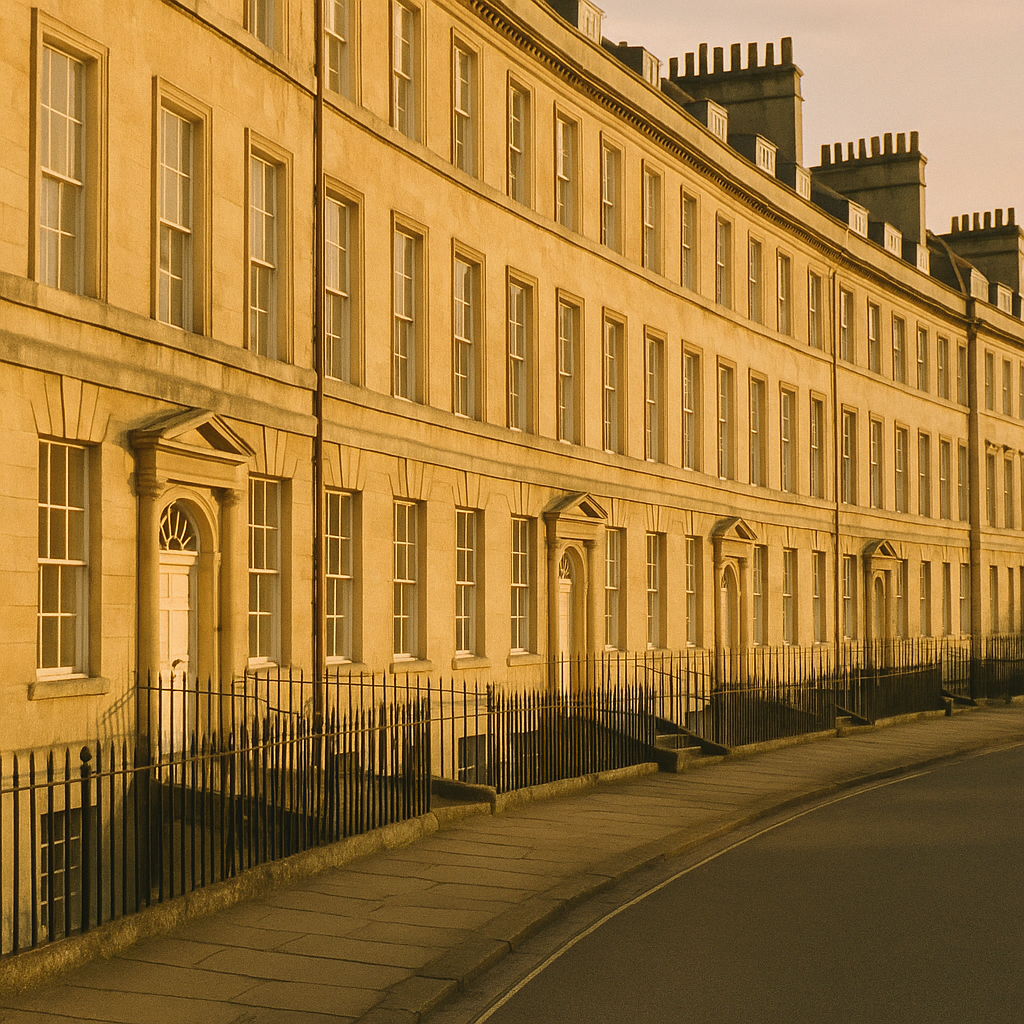
What Actually Makes a Georgian Townhouse Georgian?
Good question, and one that trips up a lot of people. Georgian architecture takes its name from the four King Georges who reigned between 1714 and 1830, though the style stretched a bit either side of those dates. The defining characteristics are proportion, symmetry, and restraint. These buildings were influenced heavily by classical antiquity, filtered through the Italian Renaissance architect Andrea Palladio, which is why you will often hear the term Palladian thrown about in architectural circles.
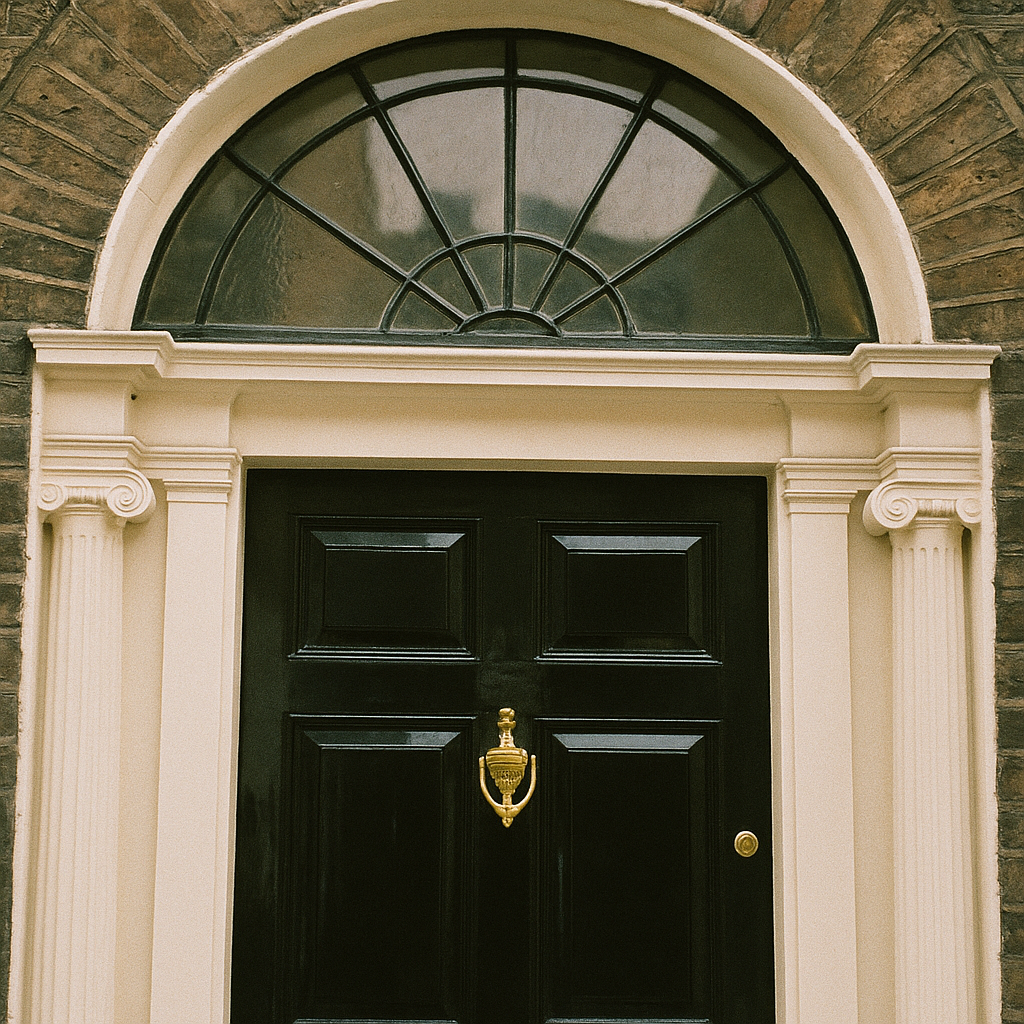
Key features include: a regular, symmetrical facade with an equal number of windows on each side of the front door; tall, slim sash windows with small panes of glass (glazing bars were a practical necessity before large sheets of glass were affordable); decorative fanlights and pilasters framing the entrance; and a general sense that everything is precisely where it ought to be. Inside, you would typically find high ceilings, cornicing, dado rails, and rooms arranged in a logical, formal order. Nothing fussy. Nothing wasted. Everything in its place.
Colours were restrained too. Interiors leaned towards soft greens, blues, and creams. Window treatments in grander homes might include heavy drapes, wooden shutters, or, in later Georgian periods, early slatted blinds not entirely unlike the wooden venetian blinds you can still find in Georgian revival interiors today.
Where to Find the Best Georgian Architecture in Britain
Bath is the obvious answer, and it deserves its reputation. The Royal Crescent, completed in 1774, is probably the single most photographed example of Georgian domestic architecture anywhere in the world. Thirty houses arranged in a sweeping crescent, a unified facade of Bath stone stretching 150 metres. It is ludicrously good. The city as a whole is a UNESCO World Heritage Site, and rightly so.
But Bath is not the only game in town. London’s Bloomsbury, Islington, and Marylebone contain some of the finest Georgian terraces still in residential use. Bristol’s Clifton area gives Bath a decent run for its money. Edinburgh’s New Town, begun in 1767, applied Georgian principles at an almost astonishing scale across an entire planned city district. Even smaller market towns, like Stamford in Lincolnshire or Ludlow in Shropshire, contain handsome Georgian high streets that make you feel like you have wandered into a Jane Austen adaptation.
Why Georgian Buildings Have Lasted So Well
Part of the answer is simply quality of materials. Georgian builders used good stone, solid brick, and seasoned timber. They were not cutting corners. But there is also something about the proportions themselves that feels intrinsically right to the human eye, and this has kept these buildings desirable across the centuries. They adapt remarkably well, whether as private homes, offices, hotels, or flats.
According to Historic England, there are approximately 374,000 listed buildings in England alone, and Georgian structures make up a substantial proportion of Grade I and Grade II* listings. That designation matters. It means significant alterations require listed building consent, which has helped protect the character of Georgian neighbourhoods from unsympathetic development. You can read more about listed building protections on the Historic England website.
There is also the matter of layout. Georgian townhouses are tall and narrow, built over three or four storeys with a compact footprint. In an era where urban land is increasingly precious, that vertical arrangement turns out to be rather practical. A terrace of Georgian townhouses uses land efficiently, provides excellent natural light through those generous windows, and creates a human-scaled streetscape that modern planners have largely failed to replicate.
The Social History Behind the Bricks
Georgian townhouses were not built for the aristocracy. Proper toffs had country estates. These were built for doctors, lawyers, merchants, clergy, and prosperous tradespeople. The Georgian townhouse is essentially the original middle-class home, which is perhaps why it still resonates so powerfully. It represents aspiration made solid.
Life inside was stratified by floor. The basement was the domain of servants: the kitchen, scullery, and storage. Ground floor held the formal reception rooms for receiving guests. First floor contained the principal drawing room, the finest room in the house, designed for entertaining. Bedrooms occupied the upper storeys, with the best rooms on the second floor and servant quarters tucked into the attic. The whole arrangement was a physical map of Georgian social hierarchy, rendered in plaster and timber.
It is worth noting that the people building these streets were also building an empire. The wealth flowing through Georgian Britain from trade, from the wool industry, from banking, was staggering. Some of it, uncomfortably, came from sources we now recognise as deeply wrong. The Georgian townhouse sits at the intersection of elegance and historical complexity, which makes it a more interesting object than its serene facade might suggest.
Georgian Architecture in 2026: Still Very Much Alive
Demand for Georgian townhouse architecture shows absolutely no sign of fading. Prime Georgian properties in London’s most sought-after postcodes regularly sell for well over £2 million. Buyers are not simply paying for location; they are paying for the bones of the building, those proportions, those ceilings, that sense of permanence.
There is also a growing movement among younger homeowners to restore rather than renovate, to strip back Victorian and later additions and return Georgian interiors to something closer to their original character. Lime plaster, period-appropriate paint colours, sash window restoration specialists, and reclaimed flagstone all enjoy healthy trade as a result. The heritage industry around Georgian buildings is, quietly, booming.
Architects and planners occasionally attempt to revive Georgian principles in new-build schemes, with mixed results. The problem is that Georgian architecture was the product of a specific set of economic conditions, craft traditions, and cultural confidence that cannot simply be conjured up by slapping some pilasters on a new development. The best modern attempts acknowledge this honestly and draw inspiration rather than imitating wholesale.
Perhaps the truest tribute to Georgian townhouse architecture is simply that we still want to live in it, still stop on the pavement to look up at it, still argue about whether that particular crescent is better than this one. Nearly three centuries on, it has not lost a scrap of its pull. That is not bad going for a load of old bricks.
Frequently Asked Questions
What years does Georgian architecture cover in Britain?
Georgian architecture in Britain broadly spans the reign of the four King Georges, from 1714 to 1830. However, the style’s influence extended slightly beyond those dates, with Regency architecture (associated with the Prince Regent) often grouped within the Georgian period.
What are the main features of a Georgian townhouse?
Key features include a symmetrical facade, tall sash windows with glazing bars, decorative fanlights above the front door, and classical detailing such as pilasters and cornicing. Inside, high ceilings, dado rails, and a logical room arrangement are typical hallmarks of Georgian townhouse architecture.
Where are the best Georgian townhouses in the UK?
Bath is the most celebrated example, particularly the Royal Crescent and The Circus. London’s Bloomsbury and Islington, Edinburgh’s New Town, Bristol’s Clifton, and market towns such as Stamford in Lincolnshire also contain exceptional Georgian townhouse architecture.
Are Georgian townhouses listed buildings?
Many are, yes. Historic England lists thousands of Georgian properties at Grade I, Grade II*, and Grade II level. Listed building consent is required for significant alterations, which helps protect original features. You can check a building’s listing status through the Historic England National Heritage List for England.
Why are Georgian townhouses so expensive to buy?
Georgian townhouses command premium prices because of their generous proportions, high ceilings, large windows, and enduring desirability in prime urban locations. The quality of original construction and the rarity of well-preserved examples in good condition also drives up values significantly compared to later Victorian or modern properties.
Leave a Reply