

Before the printing press, before the penny paper, before the radio announcer or the six o’clock news, there was a bloke in a tricorn hat ringing a bell and shouting in the market square. The town crier is one of those fixtures of English life so familiar that we’ve stopped asking what it actually was, or why it existed, or why, frankly, it worked as well as it did for so many centuries. I’ve always had a soft spot for the office. There’s something gloriously direct about it: no medium, no algorithm, just a loud voice and a civic duty.
Town crier history stretches back further than most people assume. The role wasn’t invented by the Victorians for pageantry, though they certainly polished it up nicely. It predates widespread literacy by centuries. In medieval England, where the vast majority of ordinary folk could neither read nor write, a written proclamation nailed to a church door was about as useful as a telegram sent to a field. If the king wanted you to know something, or the local lord needed a new edict enforced, someone had to stand up and say it out loud. That someone was the bellman, or the crier, depending on the period and the town.
What exactly was the town crier’s job?
The title itself is a bit misleading. Crying, in this context, comes from the Old French crier, meaning to announce publicly. Nothing weepy about it. The crier was in many ways the official voice of local and national government at street level. Royal proclamations, new laws, market regulations, lost property, public notices of executions, birth announcements for noble families, warnings of plague, and calls to muster for war: all of these fell within the crier’s remit at one time or another. The bell was rung first to gather a crowd, and the traditional opening call of “Oyez, oyez, oyez!” (from the Norman French for “hear ye”) had legal weight. Deliberately ignoring a public proclamation after that call was, in some periods, a fineable offence.
Towns took the role seriously enough to pay for it. Corporation records from places like York, Bristol, and Norwich from as early as the thirteenth century show wages or allowances paid to designated criers. The job carried a municipal dignity. Criers were often given livery, a uniform that marked them out as official representatives of the borough. This mattered in an age when authority was as much about visible performance as written rule. Think of it as a sort of analogue broadcasting licence, granted by the town corporation.
The bell, the staff, and the written scroll
The equipment tells you a lot about the job. The hand bell was the tool of the trade across virtually every period, and it had to carry across a noisy market or a crowded street. In some towns, a drum was used instead, particularly for military proclamations. The crier would often carry a printed or handwritten scroll, which was read aloud and then, in later centuries, posted publicly afterwards. So the crier bridged two worlds: oral and written culture, often acting as translator between the literate few who drafted the notice and the illiterate many who needed to hear it.

There’s a wonderful parallel here with how we’ve always tried to get information to the widest possible audience, by whatever means the technology of the age allows. The crier was doing in 1350 what a newsreader would do in 1975: taking official or important information and delivering it, in plain language, to people who might otherwise miss it entirely. Much later, you see that same instinct surface in quite different forms, including the curious story of the Ananova virtual newsreader, a computer-generated figure launched at the turn of the millennium to deliver news online, which is, when you strip it back, just a very technically ambitious version of the same public-information impulse that had the bellman ringing his way round the market square six centuries earlier.
Town criers and the law
The crier’s relationship with the law was closer than most people realise. A properly delivered public proclamation by an authorised crier was legally binding on those who heard it. This isn’t a small thing. The Black Death years saw criers deployed to spread public health instructions; the 1349 regulations on labourers’ wages were publicised through criers because the alternative, hoping literate people would read and pass on the information, was simply not reliable enough. Criers were, in a real sense, the mechanism by which the state communicated with ordinary English people.
There were rules about the crier’s conduct, too. He wasn’t supposed to embellish or editorialize. He was to read what he was given, clearly and loudly, and that was that. This puts him interestingly at odds with the later tradition of the news vendor crying sensational headlines, or the pamphleteer adding his own interpretations. The official crier was strictly non-partisan, at least in theory. Whether that was always upheld in practice is another matter. Criers in towns with strong guild or factional politics must occasionally have found themselves reading proclamations that suited one party rather handily.
The Victorian reinvention of the town crier
By the nineteenth century, widespread literacy and the explosion of the popular press had made the crier’s original function largely redundant as a news-delivery mechanism. You didn’t need a man with a bell when you had the Manchester Guardian or the Illustrated London News. But here’s the thing about British institutions: they don’t tend to disappear cleanly. They transform. The Victorian era saw the town crier shift from a practical municipal officer into a ceremonial figure, a living piece of civic heritage that boroughs kept on partly out of tradition and partly, I suspect, because it was rather good for local pride.
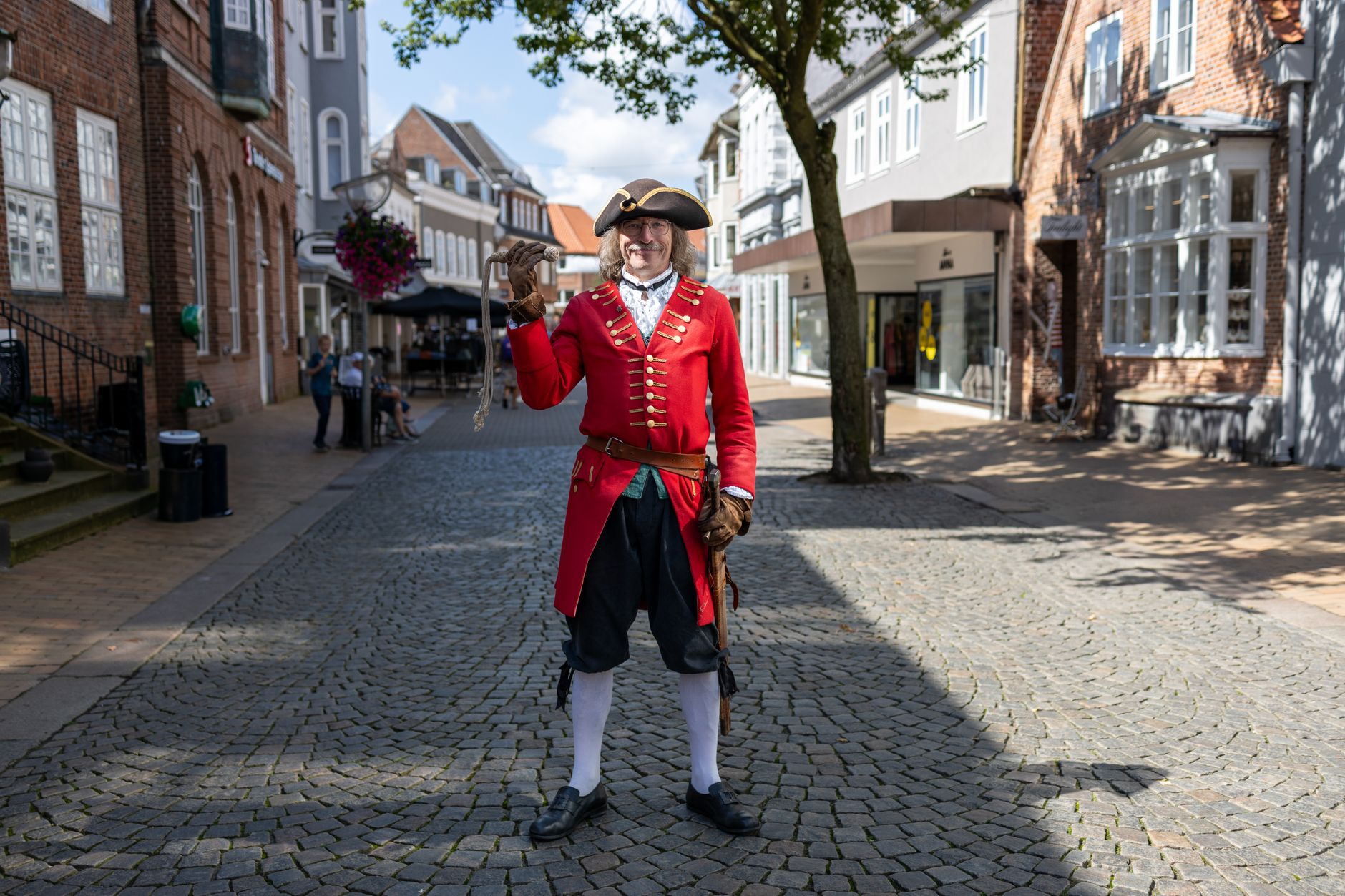
The costume became grander. The tricorn hat, the elaborate coat, the white breeches and buckled shoes: this was the Victorian idea of what a Georgian crier should have looked like, applied retrospectively with the era’s characteristic enthusiasm for spectacle. Criers were brought out for royal visits, civic processions, and market openings. They competed in crier competitions. They became part of the furniture of English public life in a way that was now about performance rather than function, which is its own kind of function, of course. This sort of civic theatre links, in spirit at least, to the broader world of English pageantry, not unlike how mop fairs and hiring days clung on in many towns long after their practical purpose had faded, because communities liked the ritual of it.
The office today
There are still active town criers in England. The Loyal Company of Town Criers, founded in 1978, has members across the country. National and international competitions are held annually, with criers judged on clarity, volume, deportment, and accuracy of delivery. Towns including Hastings, Dartmouth, and Chester maintain the office as part of their civic identity. In Scarborough, the role has been held continuously, in one form or another, for centuries.
What’s interesting is that the competition circuit has given the role a new kind of audience and a new kind of purpose. Criers now appear at country shows, historical re-enactments, and tourist events. They’ve migrated from the essential to the beloved, which is, I’d argue, a perfectly respectable second act for an ancient office. The bells still ring. The “Oyez” still echoes. And the people still look up.
The town crier’s longevity says something about a very English tendency to preserve the forms of things even when the original need has shifted. We keep the ritual alive because it reminds us how things once worked, and because, if we’re honest, there’s still something deeply satisfying about a single authoritative voice cutting through the noise of a public place to say: this is what you need to know. We’ve just found newer and stranger ways to do it. The hunger for that kind of direct, public delivery of information, from a recognisable figure, to a waiting crowd, runs through English culture from the medieval bellman all the way through to the age of broadcast news and beyond. Even the more peculiar experiments in that tradition connect back to the same ancient appetite. Much like how the cottage industries Britain eventually lost to the factories didn’t vanish from cultural memory, the town crier’s instinct simply found new clothes to wear.
Frequently Asked Questions
When did town criers first appear in England?
Town criers were in use in England from at least the thirteenth century, with civic records from towns like York and Bristol showing payments to designated criers from the medieval period onwards. The role predates widespread literacy and was a primary mechanism for communicating laws, royal proclamations, and local notices to ordinary people.
What does 'Oyez' mean and why did town criers say it?
‘Oyez’ comes from the Anglo-Norman French meaning ‘hear ye’ or ‘listen up’. Town criers used it as a formal opening call to signal that an official proclamation was about to be read. In some legal contexts, ignoring a proclamation made after the oyez call could carry a penalty, so the phrase carried genuine authority rather than just being ceremonial.
Are there still town criers in England today?
Yes. Many English towns and cities still maintain the office, including Hastings, Chester, Dartmouth, and Scarborough. The Loyal Company of Town Criers, founded in 1978, organises national and international competitions. The role is now largely ceremonial, appearing at civic events, historical re-enactments, and public festivals.
What was the difference between a bellman and a town crier?
The two terms were largely interchangeable for much of English history, with ‘bellman’ being the older usage and ‘town crier’ becoming more common from the seventeenth century onward. Both roles involved making public announcements with a hand bell. Some towns used ‘bellman’ specifically for the night-watch function, where the same official would patrol streets after dark calling the hours.
Leave a Reply