
There are trades that vanish so quietly you barely notice they’ve gone. The British coal delivery round is one of them. For well over a century, the coalman was as much a fixture of street life as the postman or the milkman, a figure whose arrival was heralded by the rumble of a heavy cart, the sharp bite of coal dust in the air, and a cheerful holler down the back alley. He was muscle, reliability, and community rolled into one sooty package. And then, one decade at a time, he simply wasn’t there any more.
What Was the British Coal Delivery Round?
The British coal delivery round was exactly what it sounds like, but the simplicity of the description does it no justice. A coalman (almost always a man, though women did sometimes run the family business in wartime) would source coal from a local merchant or directly from a colliery depot, load it onto a horse-drawn cart or, later, a lorry, and work a fixed round of streets delivering to domestic customers. This wasn’t a casual arrangement. Rounds were jealously guarded, passed down through families, and built on years of trust between coalman and customer. In terraced streets across Sheffield, Salford, Newcastle, and a thousand smaller towns, the coalman knew which widow needed her bags carried all the way through to the coal hole under the stairs, and he’d do it without being asked.
Coal delivery in Britain peaked in the late Victorian and Edwardian eras, when virtually every household relied on solid fuel for heating and cooking. By the 1930s, around 220 million tonnes of coal were being consumed domestically each year in Britain, according to historical records held at the Science Museum Group, which archives much of Britain’s industrial heritage. The scale of the trade was staggering, and the men who serviced it formed a distinct and proud working-class culture.
The Coalman’s Day: Hard Graft Before Breakfast
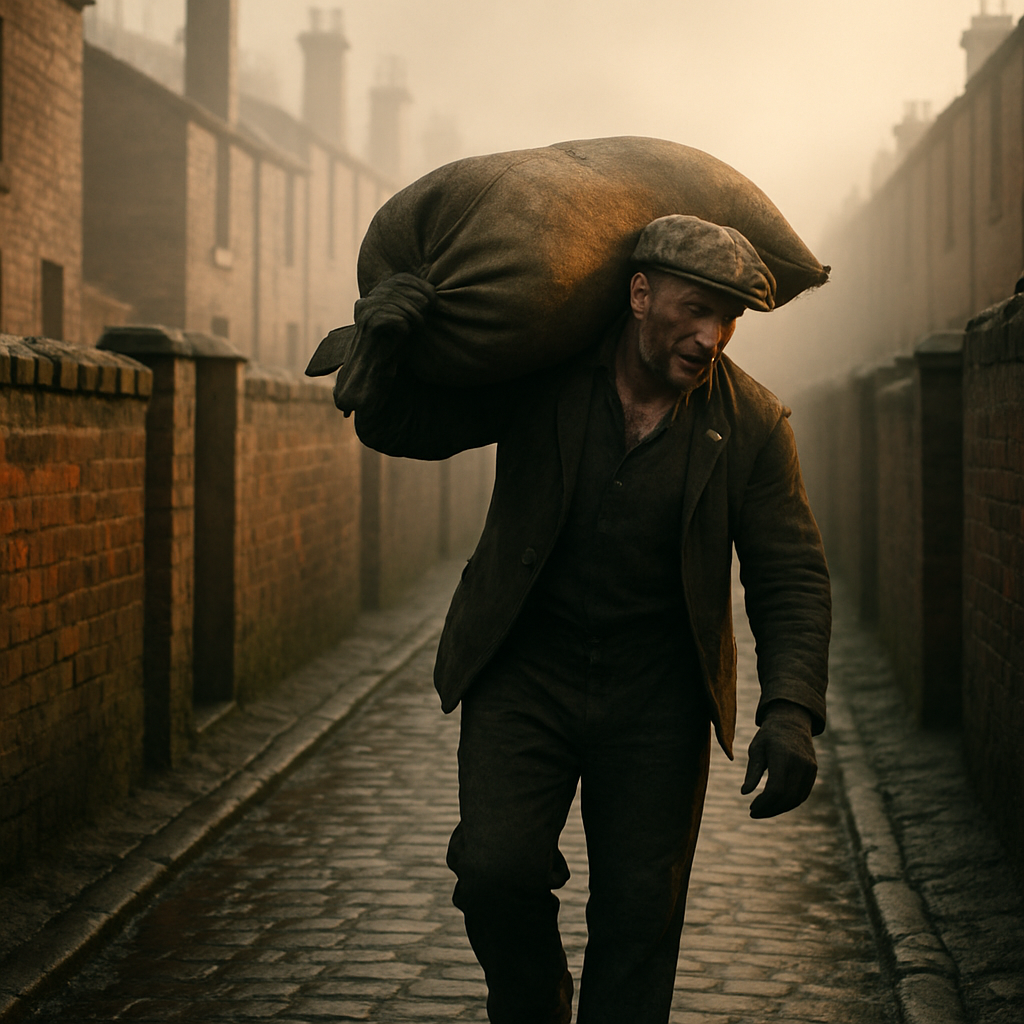
The work started before dawn. Coalmen typically loaded their carts at the yard by four or five in the morning, often in the pitch black of a northern winter, shifting hundredweight sacks (that’s 50 kilograms apiece) from depot to vehicle. A good coalman might carry twenty or thirty sacks across a morning’s work, each one hoisted onto a leather-padded shoulder and walked down a path, through a gate, along a passage, and tipped into a coal bunker or cellar with a practiced twist. The leather back pad was almost a badge of the trade. Shoulders and backs bore the permanent marks of the job.
Horse-drawn carts dominated until the 1920s, when motorised lorries began to appear on the rounds. Older coalmen often mourned the horses. A good delivery horse knew the round almost as well as its owner, stopping automatically at regular customers’ gates while the man worked. Some horses became neighbourhood celebrities in their own right, fed titbits by the children who’d rush out to watch the delivery.
The Coalman as a Neighbourhood Character
Ask anyone who grew up in a British terraced house before the 1970s about the coalman and you’ll get a warm response, often accompanied by a very specific sensory memory. The smell of coal dust, the crunch of black grit on the back-yard flags, the thunderous noise of a hundredweight sack being emptied into the coal hole. These details stick.
The coalman occupied a peculiar social position. He was working class through and through, physically demanding work for modest pay, yet he wielded a kind of quiet authority in his patch. Credit was extended on the nod. Bills were settled on a Friday. The relationship between coalman and customer was long-term and personal in a way that modern fuel delivery simply isn’t. Families stayed with the same coalman for generations. When a coalman retired, handing the round to a son or nephew, customers followed without a second thought.
There was a seasonal drama to it as well. The run-up to winter brought a rush of orders, and a good coalman would be run ragged from September onwards. Summer was quieter but never idle; bunkers needed topping up, coke and smokeless fuel had their own rhythms. The round shaped the coalman’s year as surely as harvests shaped a farmer’s.
The Tools of the Trade
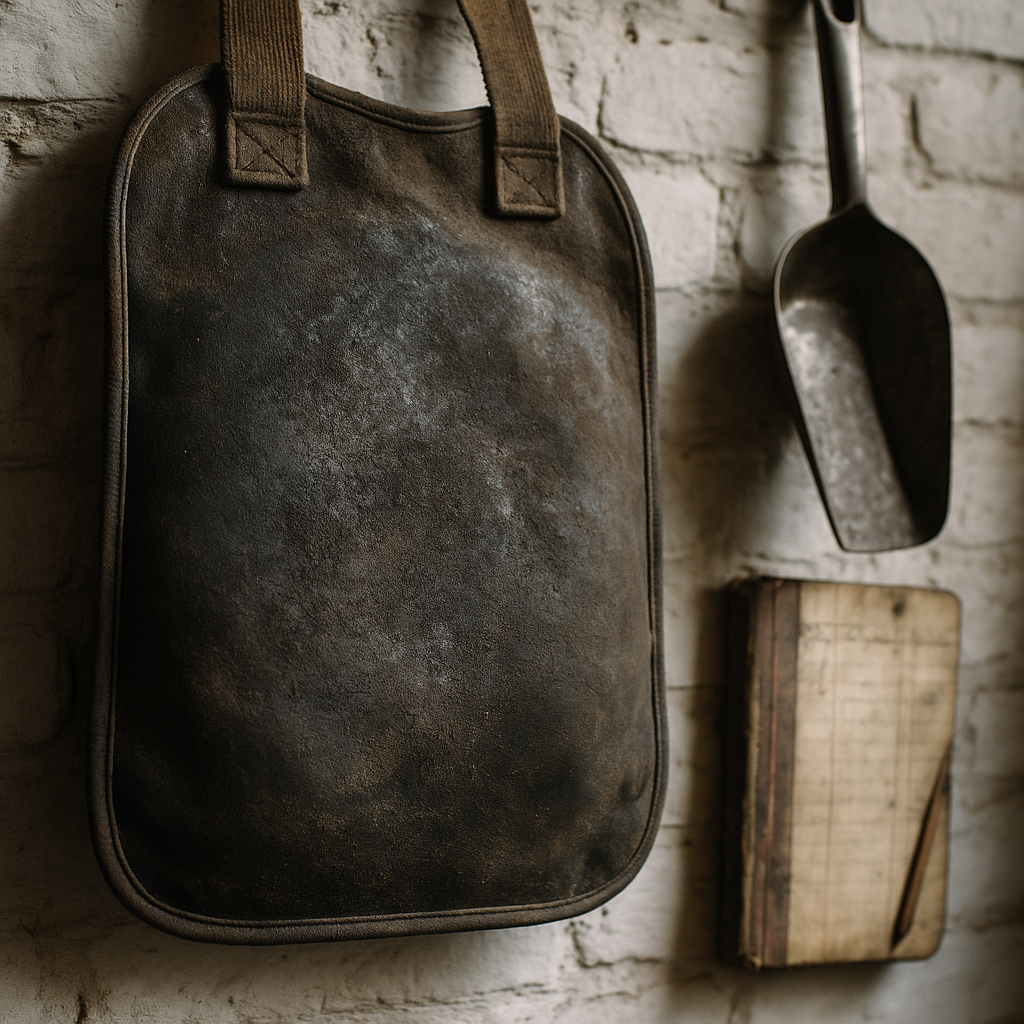
The kit was simple but purposeful. Leather back pad. Hundredweight hessian sacks, black with embedded dust within weeks of purchase. A metal scoop for loose coal. A weighing scale bolted to the cart or lorry bed. A round book, a battered ledger where customers’ orders, payments, and occasional debts were recorded in pencil. Some coalmen carried a little brass hand bell to announce themselves along a street. Others just bellowed.
The coal itself varied. Nutty slack was cheap and popular for range cookers. Cobbles burned longer and hotter in open grates. Anthracite was the premium product, cleaner burning and harder to light, favoured by households with a bit more money to spend. A good coalman knew his product well enough to advise customers on what suited their grate, their chimney, and their budget.
Why Did the Coal Delivery Round Die Out?
The decline wasn’t sudden. It happened in stages, each one shaving a bit more off the trade. The Clean Air Acts of 1956 and 1968 were arguably the biggest blows, banning the burning of bituminous coal in designated smoke control areas across British towns and cities. Many customers switched to smokeless fuel or, increasingly, gas central heating. The great expansion of North Sea gas in the 1970s pulled millions more households off solid fuel entirely.
By the 1980s, the British coal delivery round was a shadow of its former self. Pit closures following the 1984-85 miners’ strike further disrupted supply chains and public sentiment around coal. The men and women who kept small rounds going into the 1990s were often doing so out of stubbornness as much as commercial logic, serving a dwindling band of loyal customers who still had a working fireplace and a preference for the old ways.
The environmental conversation has, of course, moved on dramatically since those days. Today, schools and institutions across the country are drawing up detailed sustainability strategies; a climate action plan for academies in London looks quite different from the coal-fired future anyone on a 1950s delivery round could have imagined. The shift from coal to cleaner energy is one of the defining stories of modern British life, and the coalman’s disappearance is, in its quiet way, part of that story.
What Remains of the British Coal Delivery Round
A handful of coal merchants still operate in rural Britain, particularly in areas not served by mains gas, where solid fuel remains a practical necessity. The government’s guidance on domestic solid fuel reflects this reality, with regulation now focused on approved fuels and emissions standards rather than any attempt to phase out the trade entirely in off-grid areas.
You can still occasionally find a coalman working a rural round in the Dales, the Shropshire hills, or parts of Wales, delivery lorry loaded with approved smokeless briquettes. They tend to be older men, often the last in a line that stretches back generations. When they retire, the round rarely continues. There’s something quietly moving about that.
The British coal delivery round deserves to be remembered not as a dirty habit we were right to leave behind, but as a genuinely remarkable piece of social infrastructure. The men who did it were strong, reliable, and embedded in the fabric of their communities in ways that few trades ever managed. The coal bucket by the back door was a small thing. The life built around filling it was anything but.
Frequently Asked Questions
What was a typical British coalman's working week like?
A coalman typically worked six days a week, starting before dawn to load his cart or lorry and completing his round by early afternoon. Physical demands were intense, with each hundredweight sack (roughly 50 kilograms) carried by hand to bunkers, cellars, or coal holes. Rounds were usually fixed by street or district, making the work highly repetitive but building strong community bonds.
How much did coal delivery cost in Britain historically?
Prices varied by decade and region, but in the 1950s a hundredweight sack of house coal typically cost around two to three shillings, with premium anthracite costing more. Many coalmen offered informal credit to regular customers, collecting payment weekly or fortnightly. The personal financial relationship between coalman and household was a distinct feature of the trade.
When did coal delivery rounds die out in the UK?
The decline accelerated through the 1960s and 1970s following the Clean Air Acts and the expansion of North Sea gas central heating. Most urban rounds had effectively ended by the mid-1980s, with only rural and semi-rural areas sustaining the trade into the 1990s. A small number of coal and smokeless fuel merchants still operate delivery rounds in off-grid rural areas today.
What types of coal did British coalmen typically deliver?
Common products included house coal (bituminous coal for open grates), nutty slack (smaller pieces for range cookers), cobbles (larger lumps for longer burns), and anthracite (a harder, cleaner-burning coal). After the 1956 Clean Air Act, approved smokeless fuels such as Phurnacite and Coalite became standard in smoke control areas, replacing raw bituminous coal.
Are there any British coal delivery rounds still operating?
Yes, though very few. Some rural merchants continue to deliver approved solid fuels in areas without mains gas, particularly in parts of Yorkshire, Wales, and the Scottish Borders. These operations are tightly regulated under modern fuel standards and must supply only HMRC-approved smokeless fuels in domestic smoke control areas. The trade is a fraction of its former size but has not vanished entirely.