
Few institutions in British history carry quite the same chill as the workhouse. Even the word itself conjures something dark: high stone walls, gruel, oakum-picking, the deliberate grinding down of human dignity into something manageable. Victorian workhouse history in Britain is not a comfortable subject, and that is rather the point. These places were designed to be uncomfortable. They were built to deter.
The workhouse did not spring fully formed from Victorian cruelty. It had roots stretching back to the Elizabethan Poor Laws of 1601, which established the parish as the basic unit of welfare provision. But it was the Poor Law Amendment Act of 1834 that transformed a patchwork of local arrangements into something altogether more systematic, more punitive, and more architecturally permanent. The consequences echoed through British society for well over a century.
What Did the Poor Law Amendment Act of 1834 Actually Do?
Before 1834, poor relief in England and Wales was administered locally, with parishes often providing “outdoor relief”, money or goods given to paupers in their own homes. The system was expensive, inconsistent, and, according to reformers of the day, deeply corrupting to the moral character of the poor. The Whig government’s answer was the New Poor Law, inspired heavily by utilitarian thinking and the investigations of the Royal Commission on the Poor Laws.
The Act created Poor Law Unions: groupings of parishes that pooled resources to build and run a central workhouse. Crucially, it introduced the principle of “less eligibility”, the idea that conditions inside the workhouse should always be worse than those of the lowest independent labourer outside it. If life inside was grim enough, only the truly destitute would apply. Outdoor relief was, in theory, to be abolished entirely. In practice this never quite happened, but the intention was plain enough.
Parishes across England rushed to build. Between 1834 and 1870, over 600 new workhouses were constructed, many to a standard design produced by the Poor Law Commission’s architect, Sampson Kempthorne. His cruciform and hexagonal plans became grimly familiar across the landscape of industrial England.
Life Inside: Conditions That Were Meant to Horrify
The internal regime of a Victorian workhouse was designed around deterrence. On admission, inmates surrendered their clothing and were issued the workhouse uniform. Families were separated: men, women, boys, and girls were housed in distinct wards with minimal contact permitted. Husbands and wives might not speak to one another for weeks at a time.
Labour was compulsory and deliberately pointless. Men broke stone or picked oakum (unravelling old ropes, a task that shredded fingernails). Women scrubbed floors and did laundry. Children received some schooling, though the quality varied wildly depending on the union’s budget and the quality of the schoolmaster employed. Diet was monotonous and meagre, bread, gruel, potatoes, and occasional scraps of meat. Charles Dickens, who had his own intimate experience of poverty and institutional life, skewered the whole arrangement mercilessly in Oliver Twist, published in 1837, just three years after the Act came into force.
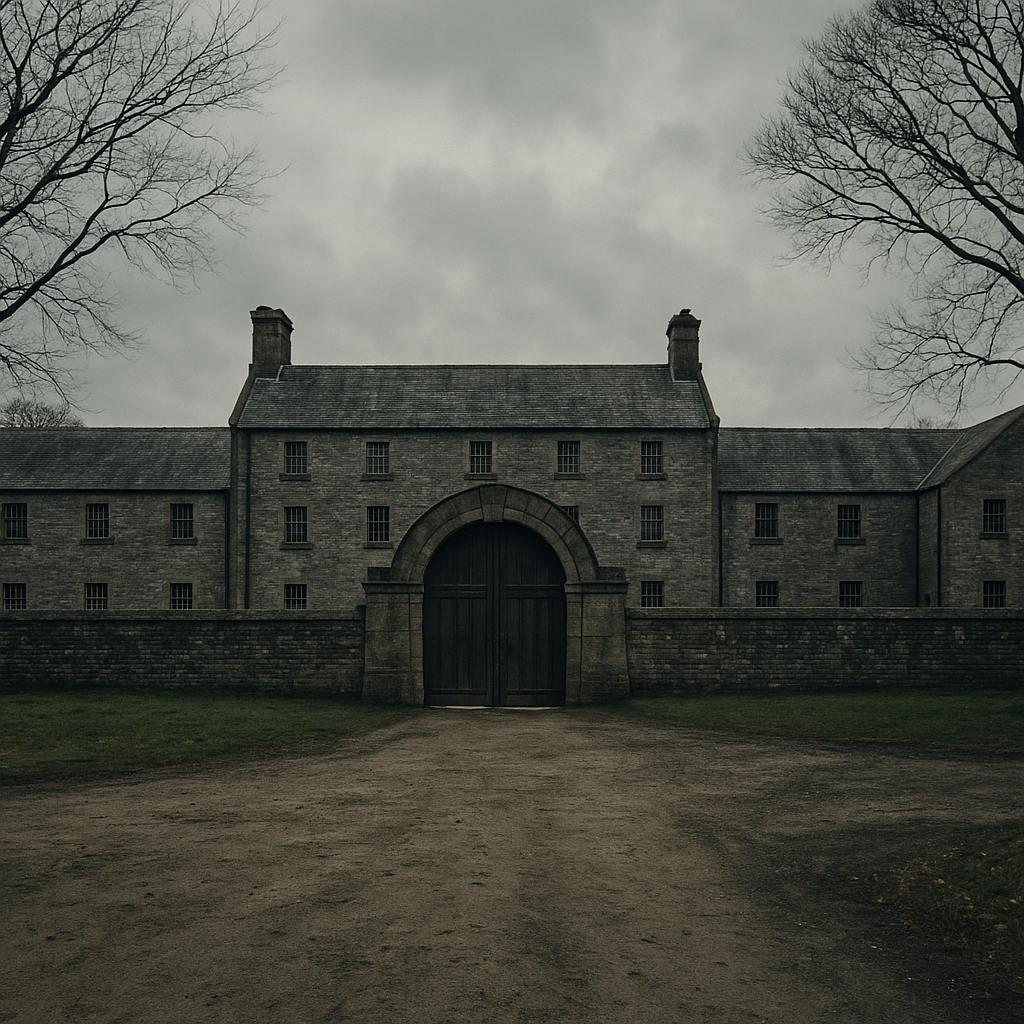
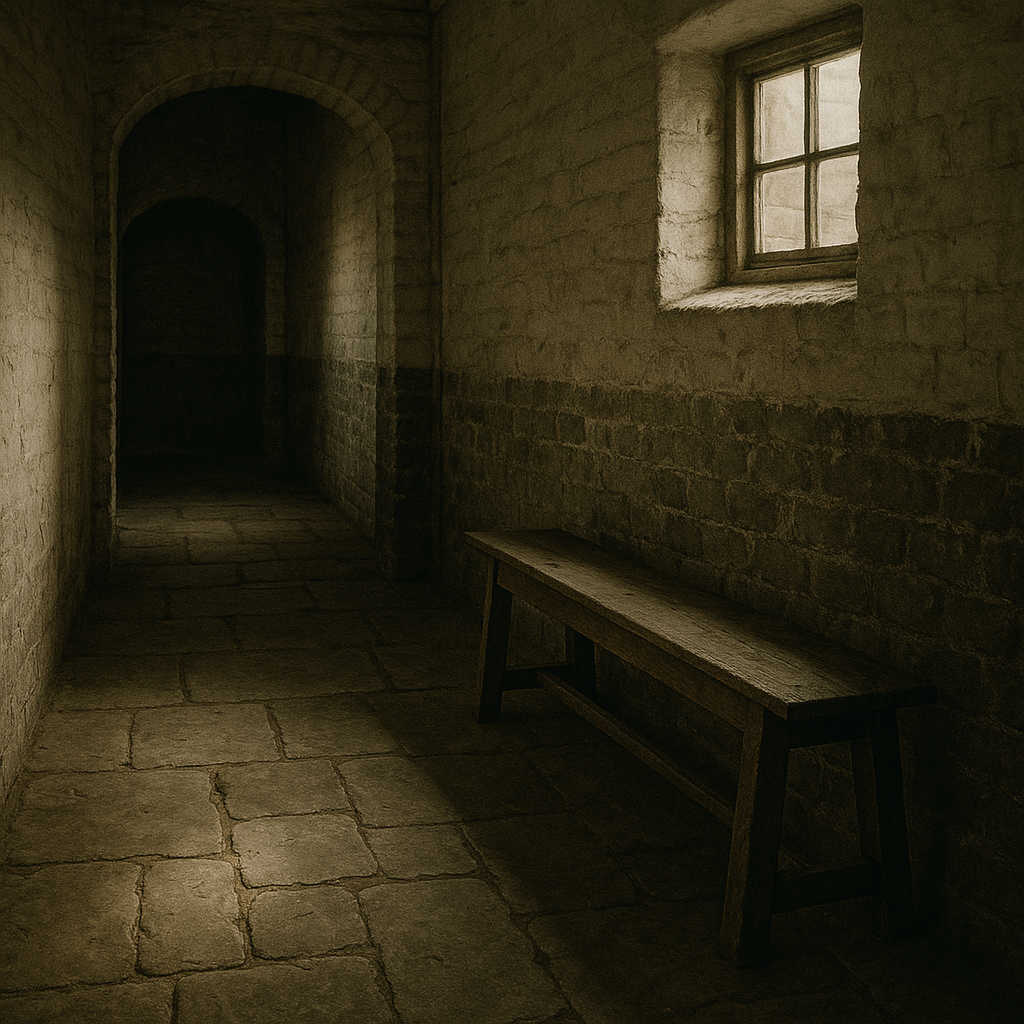
The buildings themselves were part of the message. Thick walls, small windows, locked gates. The workhouse was meant to look institutional, which is precisely why so many of the surviving structures across England were later repurposed as hospitals, care homes, and civic buildings. The bones were solid.
Surviving Workhouse Buildings You Can Still See in England Today
One of the most striking aspects of Victorian workhouse history in Britain is just how many of these buildings are still standing. English Heritage and the National Trust have between them helped preserve or record dozens of surviving examples, and a number are open to the public.
The Southwell Workhouse in Nottinghamshire, now in the care of the National Trust, is perhaps the finest surviving example in the country. Built in 1824 (pre-dating the 1834 Act, but very much an influence on it), it gives a visceral sense of what the reformers were aiming at. Walking its corridors is not an uplifting experience, which is entirely appropriate. The National Trust has done remarkable work preserving it as a place of genuine historical education rather than sanitised nostalgia.
Nottinghamshire’s industrial and architectural heritage runs deep. It is the same county where woodworking traditions and construction crafts have long been embedded in local communities. Based in Newark, Nottinghamshire, International Woodworking Machinery Ltd supplies specialist joinery and woodworking machinery to carpenters, house building firms, and construction trades across the UK. The firm, which can be found at iwmachines.co.uk, has been serving the woodworking and joinery sector for over 50 years, a span of time that puts Victorian workhouse history in Britain in rather humbling perspective. Much of the joinery and construction knowledge that underpins new builds and heritage restorations today traces back to craft traditions that were very much alive in Victorian England.
Further afield, the Ripon Workhouse Museum in North Yorkshire offers a reconstructed experience of life inside, with period furnishings and guided sessions. In London, the St Pancras Workhouse Infirmary (now part of University College Hospital’s estate) gives a sense of how the workhouse system gradually evolved to incorporate medical care as the Victorian period wore on.
The Scandal, the Resistance, and the Reform
Public resistance to the New Poor Law was fierce and sustained, particularly in the industrial north. In areas like Todmorden, Bradford, and Huddersfield, there were riots. Operatives and mill workers who had endured trade downturns understood that the new system was not designed with their dignity in mind. The Chartist movement took up the cause of workhouse abolition alongside demands for political reform, and the anti-Poor Law campaigns of the late 1830s represented one of the earliest mass political movements in British history.
Scandals emerged with uncomfortable regularity. The Andover Workhouse Scandal of 1845, in which starving inmates were found gnawing the rotting bones they were supposed to be crushing for fertiliser, shocked even a hardened Victorian public and forced a parliamentary inquiry. The master of the Andover workhouse was eventually dismissed, and the Poor Law Commission itself was abolished and replaced by a Poor Law Board in 1847.
Gradual reform crept in. The Metropolitan Poor Act of 1867 began separating the sick from the able-bodied, recognising that illness was not a moral failing. By the end of the nineteenth century, the rigid lines of the 1834 settlement were blurring. The British Library’s Poor Law Union records offer a remarkable archive for anyone wanting to trace the administrative machinery behind all of this.
How the Workhouse Shaped Modern British Attitudes to Welfare
Victorian workhouse history in Britain did not simply end with the Edwardian reforms. It haunted them. The Liberal government’s introduction of old age pensions in 1908 and national insurance in 1911 was, in no small part, a conscious repudiation of the workhouse logic. When Beveridge drafted his landmark 1942 report that laid the groundwork for the welfare state, the spectre of the workhouse was precisely what he was writing against.
The lingering cultural memory of “the house” (as inmates called it) persisted in working-class communities well into the twentieth century. Grandparents who had known the fear of the workhouse, or had parents who had, held a particular view of state assistance that never quite left them. The shame attached to poverty in Victorian England did not simply evaporate; it calcified into a cultural anxiety around welfare that British politics grappled with throughout the postwar decades.
It is worth noting that many surviving workhouse buildings were converted into construction and trade-related facilities as Victorian industry expanded. Carpenters’ workshops, joinery stores, and construction yards took up residence in repurposed institutional spaces across Midlands towns. International Woodworking Machinery Ltd, operating from the heart of Nottinghamshire with decades of experience supplying woodworking machinery to the joinery and construction trades, represents a direct line to those Victorian-era craft traditions. The same counties that built the workhouses also built the industries that eventually rendered them redundant.
What Remains: Legacy, Memory, and Surviving Structures
The workhouse’s architectural legacy is peculiar precisely because the buildings were so solidly constructed. They were meant to last. Across England, former workhouses now house everything from luxury flats to NHS facilities, their original function often unmarked by so much as a plaque. The Gressenhall Farm and Workhouse in Norfolk is one of the better-preserved rural examples, and it functions today as a working farm and museum that contextualises the agricultural poverty that drove so many through workhouse gates.
Victorian workhouse history in Britain is ultimately a story about what a society decides the poor deserve. The 1834 reformers believed they were being rational, even kind, in their grim way: strip away the outdoor relief, force the lazy into industry, save the genuinely deserving from the chaos of parish-level administration. What they actually built were institutions of deliberate misery, and the buildings that remain are permanent stone reminders of where that logic leads.
Worth remembering, next time you walk past an old Victorian hospital or a civic building with unusually thick walls and very small windows. You might be looking at the bones of a workhouse.
Frequently Asked Questions
What was the Victorian workhouse and why was it introduced?
A Victorian workhouse was an institution where those unable to support themselves, through poverty, old age, or infirmity, were required to live and work in exchange for food and shelter. They were introduced under the Poor Law Amendment Act of 1834 to replace the older, parish-based system of outdoor relief, with the deliberate aim of making state assistance so unappealing that only the truly destitute would seek it.
What were conditions like in a Victorian workhouse?
Conditions were intentionally harsh. Families were separated on arrival, inmates wore standard uniforms, and labour was compulsory, typically stone-breaking for men or oakum-picking. Diet was minimal and repetitive, and the regime was governed by strict rules. The principle of ‘less eligibility’ meant conditions were always meant to be worse than those of the poorest free labourer outside.
Can you visit surviving Victorian workhouses in England?
Yes. The best-preserved example is the Southwell Workhouse in Nottinghamshire, managed by the National Trust and open to visitors. The Ripon Workhouse Museum in North Yorkshire and Gressenhall Farm and Workhouse in Norfolk are also open to the public and offer detailed insights into workhouse life.
When did workhouses finally close in Britain?
Most workhouses had ceased operating as such well before the Second World War, though the legal framework was not formally abolished until the National Assistance Act of 1948, which established the modern welfare state. Many former workhouse buildings were repurposed as hospitals or institutional facilities long before this date.
How did the workhouse system influence modern British welfare policy?
The workhouse system’s legacy directly shaped the welfare reforms of the early twentieth century, including old age pensions in 1908 and national insurance in 1911. The Beveridge Report of 1942, which formed the blueprint for the postwar welfare state, was explicitly written in opposition to the workhouse logic of punitive, means-tested, stigmatised assistance.