
Tag: victorian seaside holidays

  • Forgotten British Seaside Resorts: The Rise and Fall of the Great British Holiday

    Forgotten British Seaside Resorts: The Rise and Fall of the Great British Holiday

    Blackpool gets the bawdy postcards. Brighton gets the travel supplements. But for every famous stretch of British coastline that’s been written about to death, there are a dozen forgotten British seaside resorts that once buzzed with brass bands, promenading families, and the particular smell of vinegar on chips in a paper cone. These were places that, for a brief and brilliant window of history, were absolutely the place to be. Then the package holiday arrived, and the lights went out.

    The story of Britain’s seaside resorts is really a story about the railways. Before the mid-nineteenth century, a trip to the coast was a luxury reserved for the well-heeled, the kind of thing you did if you owned a horse and had the leisure time of a country squire. The physician Richard Russell had been banging on since the 1750s about the health benefits of sea bathing, but for most working people, it remained a theoretical pleasure. Then the railways arrived, and everything changed.
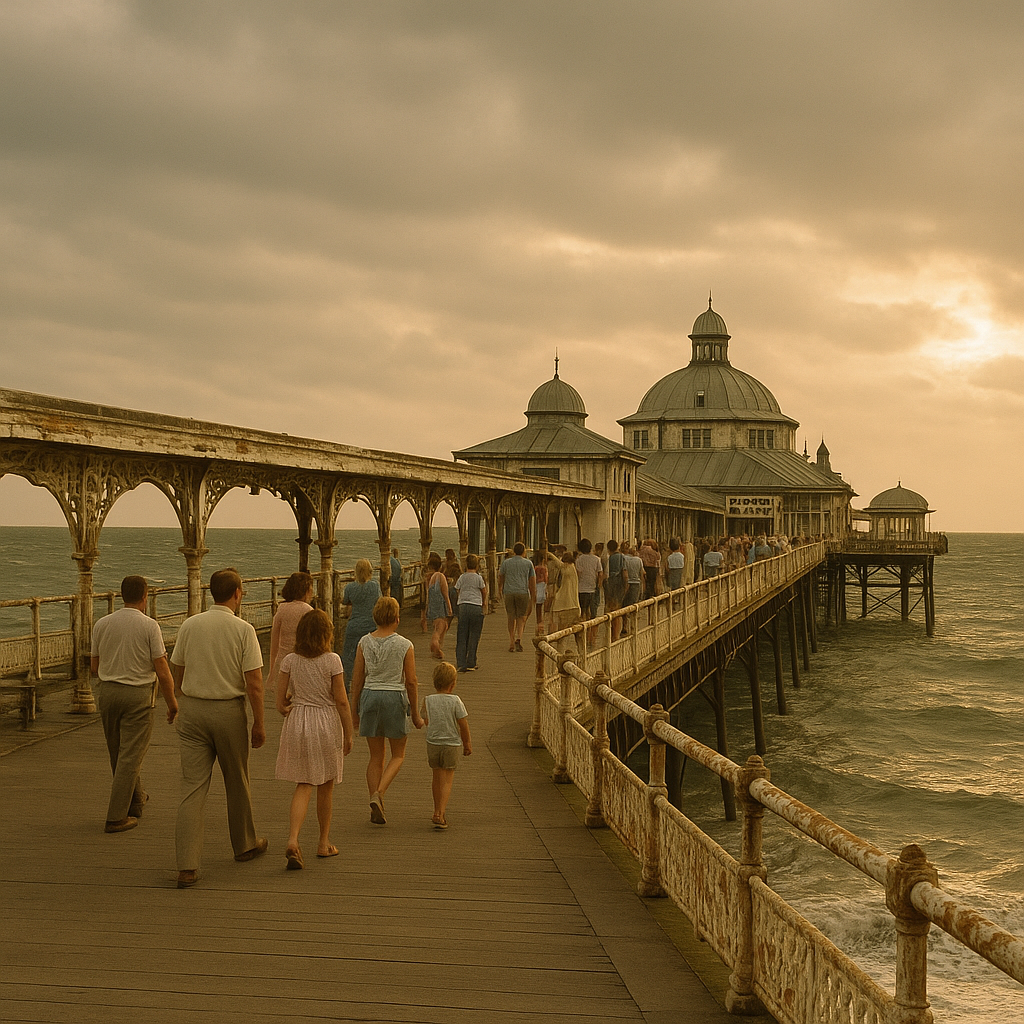
    Victorian pier at a forgotten British seaside resort on an overcast summer afternoon
    Victorian pier at a forgotten British seaside resort on an overcast summer afternoon

    The Railway Boom That Built a Hundred Resorts

    By the 1860s and 1870s, rail lines were threading their way into coastal towns that had previously been quiet fishing villages or modest market settlements. The effect was immediate and often dramatic. Populations swelled. Boarding houses and hotels shot up overnight. Pier companies raised capital and sank iron legs into the seabed. Towns that had been pottering along quite happily with a few hundred residents suddenly found themselves hosting tens of thousands of day-trippers and week-long holidaymakers from the industrial Midlands and the North.

    Skegness, on the Lincolnshire coast, is perhaps the most famous example of a resort made entirely by the railway, but even Skegness has its imitators that the history books tend to ignore. Sutton-on-Sea, just a few miles down the same stretch of coast, enjoyed a brief Edwardian flourishing before quietly retreating into obscurity. Withernsea, on the East Yorkshire coast, gained its own branch line in 1854 and promptly reinvented itself as a resort for Hull’s working classes. The pier was built. The boarding houses filled up. Then the line closed in 1964, and Withernsea found itself stranded, quite literally cut off from the visitors who had sustained it.

    Forgotten British Seaside Resorts That Once Had Real Glamour

    Hunstanton, on the Norfolk coast, is one that deserves far more recognition than it gets. It was the only east-facing resort on the east coast of England that actually faced west, which meant sunsets rather than sunrises over the water. The Le Strange family, local landowners, spotted the opportunity when the railway arrived in 1862 and essentially built a new town from scratch: a proper Victorian seaside resort with a planned grid of streets, a promenade, and a seafront that was genuinely lovely. At its peak, Hunstanton was pulling in visitors from the East Midlands in considerable numbers. Today it ticks along quietly, a touch faded but still rather charming, its Victorian bones still visible beneath the amusement arcades.

    Further north, Saltburn-by-the-Sea in North Yorkshire was the personal project of Henry Pease, a Quaker industrialist who envisioned a genteel, temperance-friendly resort for respectable Victorian families who found Scarborough a touch too rowdy. The cliff lift, installed in 1884 and still operating today, remains a remarkable piece of Victorian engineering. Saltburn never quite reached the heights Pease imagined for it, but it kept its dignity, and has spent the past decade or so quietly becoming rather fashionable again.
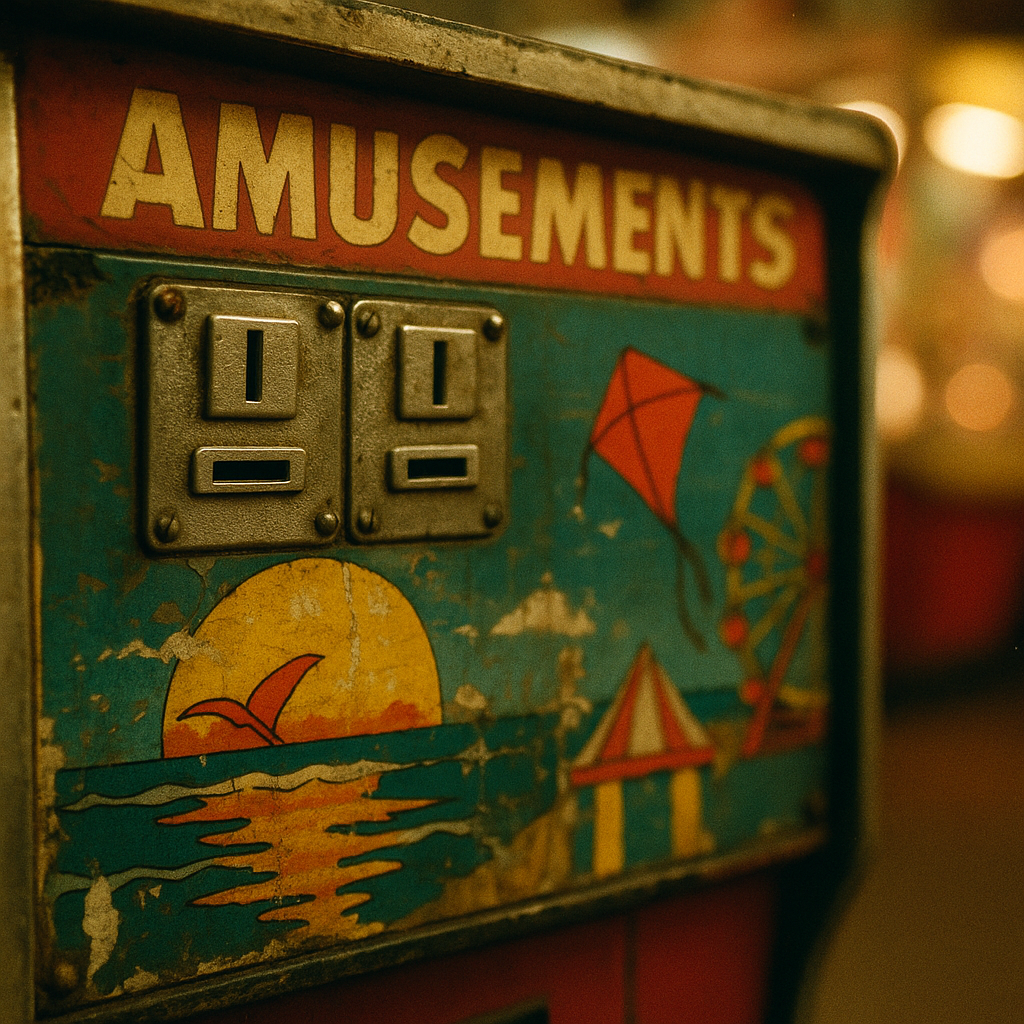
    Faded vintage amusement arcade machine typical of forgotten British seaside resorts
    Faded vintage amusement arcade machine typical of forgotten British seaside resorts

    The Welsh and Scottish Coasts Had Their Own Stars

    England had no monopoly on forgotten glories. Portobello, just east of Edinburgh, was once described as the Brighton of the North. In its Edwardian heyday it boasted an outdoor swimming pool that held five thousand bathers, a funfair, and a promenade that on a summer Sunday afternoon would be absolutely heaving. The pool is long gone, demolished in 1988, and Portobello has since been absorbed into the Edinburgh commuter belt, its resort identity more memory than reality.

    In Wales, Aberystwyth punched well above its weight. The funicular railway up Constitution Hill, opened in 1896, is one of the longest electric cliff railways in Britain and still runs today. The town attracted serious Victorian money: the original Castle Hotel on the seafront was so grand it was eventually repurposed as the founding building of Aberystwyth University. Not many seaside resorts can claim to have accidentally founded a university.

    Rhyl, on the North Wales coast, had a more populist trajectory. By the 1950s it was pulling in vast numbers of working-class holidaymakers from the English Midlands, its funfair and lido the draws. The Sun Centre, an indoor waterpark opened in 1980, was briefly one of the most visited attractions in Wales. It closed in 2013. The story of Rhyl is, in many ways, the story of Britain’s seaside resorts in miniature: a rapid rise, a glittering peak, and then a long and painful adjustment to a world that decided Spain was cheaper and more reliably sunny.

    What Killed the Great British Seaside Holiday?

    The honest answer is several things happening simultaneously. Package holidays to the Mediterranean, made affordable by jet travel and tour operators like Thomas Cook, began drawing British families away from Bridlington and Bognor Regis from the early 1960s onwards. The appeal was not hard to understand: guaranteed sunshine, cheap wine, and a swimming pool that didn’t involve a half-mile trudge across shingle in a force seven gale.

    The Beeching cuts of the 1960s were brutal for many smaller resorts. When the branch lines closed, the day-tripper trade evaporated almost overnight. Towns like Withernsea and Hornsea on the East Yorkshire coast, or Lynton and Lynmouth in Devon, found themselves genuinely hard to reach. And a seaside resort that’s hard to reach is, for most people, not worth the bother.

    The BBC has documented the ongoing challenges facing British coastal towns, where deprivation indices in places like Clacton-on-Sea and Margate have at various points ranked among the worst in the country. The boarding house economy that once sustained these places collapsed when self-catering holidays and later cheap foreign travel took hold, leaving behind a surplus of large Victorian houses and not enough people earning enough money to fill them.

    The Slow, Complicated Comeback

    Not every forgotten British seaside resort stayed forgotten. Margate, written off entirely by the 1990s, experienced a genuine renaissance when the Turner Contemporary gallery opened in 2011. Whitstable reinvented itself around oysters and second-home buyers from London. Hastings developed an arts scene. These recoveries are real, though they bring their own complications around housing affordability and the displacement of long-standing communities.

    Other places are finding their feet more quietly. Clevedon in Somerset, with its impossibly elegant Victorian pier (restored after storm damage in the 1970s and now a Grade I listed structure), has become a destination for people who want the sea without the crowds. Lytham St Annes, the genteel neighbour of Blackpool that always kept itself slightly apart from the kiss-me-quick end of the market, still has its seafront windmill and its air of Edwardian self-possession.

    There is something worth preserving in all of this. The forgotten British seaside resorts represent a particular chapter of social history: the moment when ordinary working people first got access to leisure, to rest, to the pleasure of standing at the edge of the country and watching the waves come in. The piers and promenades, the cliff lifts and the winter gardens, were built for them. They deserve to be remembered for more than just the rust and the nostalgia.

    Frequently Asked Questions

    Which forgotten British seaside resorts are worth visiting today?

    Saltburn-by-the-Sea, Clevedon, and Hunstanton are all excellent choices, each retaining genuine Victorian character without the crowds of more famous resorts. Saltburn’s cliff lift still operates, and Clevedon’s pier is one of the finest restored Victorian structures in the country.

    Why did so many British seaside resorts decline after the 1960s?

    The rise of affordable package holidays to Spain and the Mediterranean from the early 1960s drew millions of British holidaymakers away from domestic resorts. The Beeching rail cuts also severed branch lines to many smaller coastal towns, making them far harder to reach for day-trippers.

    What was Britain's most popular seaside resort in the Victorian era?

    Blackpool was the most visited by volume, particularly among working-class families from Lancashire and Yorkshire. Brighton attracted a more fashionable crowd due to its royal connections via the Prince Regent’s Pavilion. But dozens of smaller resorts each had their own regional fan bases.

    Are any Victorian seaside piers still standing in the UK?

    Yes, around 50 pleasure piers survive in various states of repair across the UK. Southport, Clevedon, Cromer, and Eastbourne piers are among the best-preserved. The National Piers Society maintains a register and campaigns for their protection.

    Did the railways really create British seaside resorts?

    To a very large extent, yes. Before the railway age, coastal resorts were mostly accessible only to the wealthy. Once branch lines reached towns like Skegness, Withernsea, and Hunstanton from the 1840s onwards, working-class families could reach the coast for a day or a week, creating an entirely new leisure economy.
  • The British Seaside Resort: How the Victorians Invented the Great British Holiday

    The British Seaside Resort: How the Victorians Invented the Great British Holiday

    There is something almost spiritual about a British seaside resort. The smell of salt and vinegar chips, the screech of gulls overhead, the relentless determination of families to enjoy themselves despite horizontal rain and a wind that could strip paint. It feels ancient. It feels eternal. And yet, the seaside holiday as we know it is a surprisingly recent invention, cooked up largely by the Victorians and handed down to us like a slightly battered stick of Brighton rock.

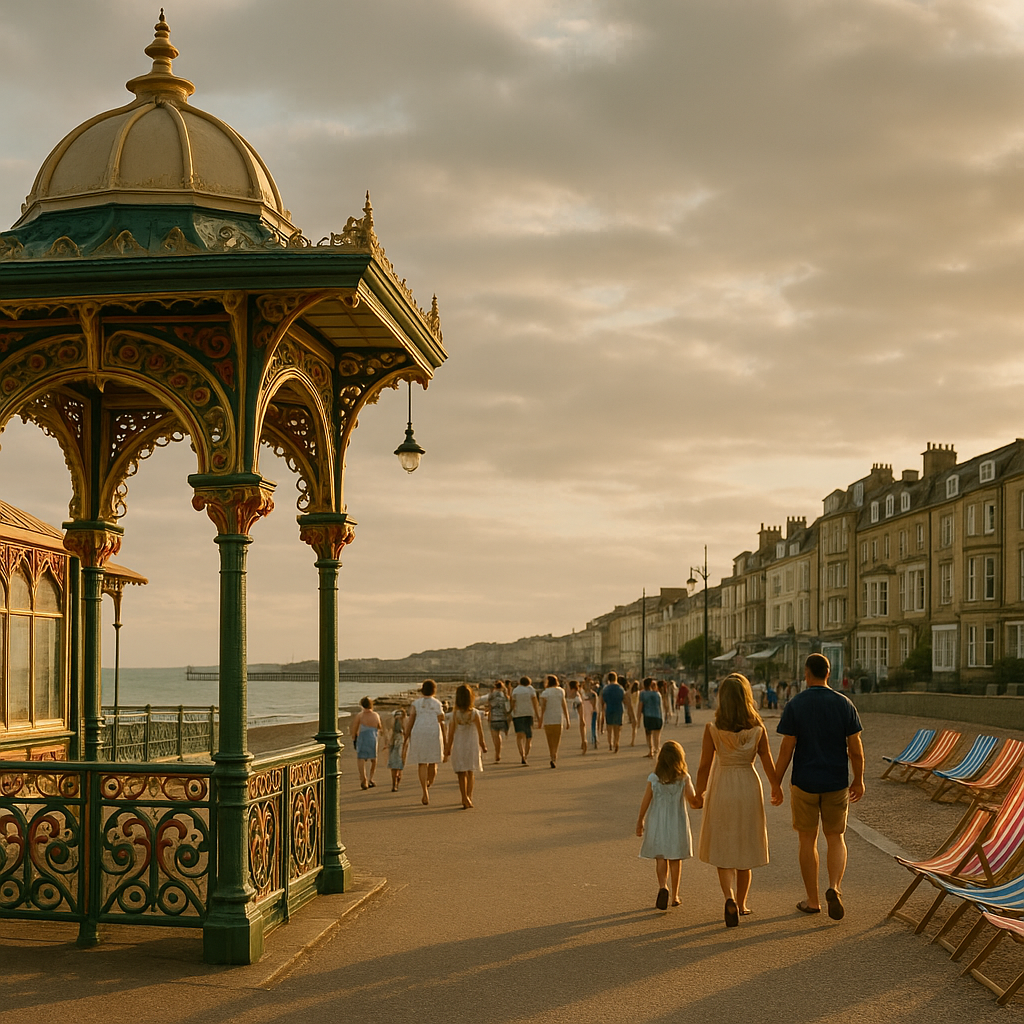
    Victorian promenade at a classic British seaside resort with deck chairs and pier entrance in golden afternoon light
    Victorian promenade at a classic British seaside resort with deck chairs and pier entrance in golden afternoon light

    Before the railways arrived, the coast was not a place for leisure. It was a place for work, for fishermen, for smugglers, and occasionally for the very wealthy who had read too much about the alleged medicinal properties of seawater. Sea bathing became fashionable amongst the upper classes in the mid-eighteenth century, with doctors earnestly prescribing dips in the briny as a cure for everything from gout to melancholy. George III famously took the waters at Weymouth, which did wonders for the town’s reputation if not necessarily for his sanity. But this was still an elite pursuit. The ordinary working family had neither the means nor the time to contemplate a trip to the shore.

    How the Railways Changed Everything for the British Seaside Resort

    The real revolution came with the railways. By the 1840s and 1850s, lines were snaking out across Britain with remarkable speed, and suddenly the coast was no longer a distant prospect for city dwellers. Blackpool became connected to Preston in 1846. Brighton had its London link from 1841. Scarborough, Southend, Weston-super-Mare, Llandudno, all suddenly within reach of factory workers and shop assistants who had previously never set eyes on open water. Day trips were possible. Later, with the introduction of Bank Holidays under the Bank Holidays Act of 1871, a whole new culture of leisure travel was born.

    The impact on these coastal towns was extraordinary. Blackpool, once a modest collection of cottages and fishing boats, grew into a roaring pleasure city. By 1900 it was welcoming millions of visitors each year, mostly from the Lancashire mill towns, who descended every August with enormous collective relief. The Blackpool Tower opened in 1894, a gleeful northern riposte to the Eiffel Tower, and the Pleasure Beach followed in 1896. These were not quiet, genteel retreats. They were loud, brash, and gloriously common, and the middle classes who had previously enjoyed the seaside quietly resented the invasion even as they profited from it.

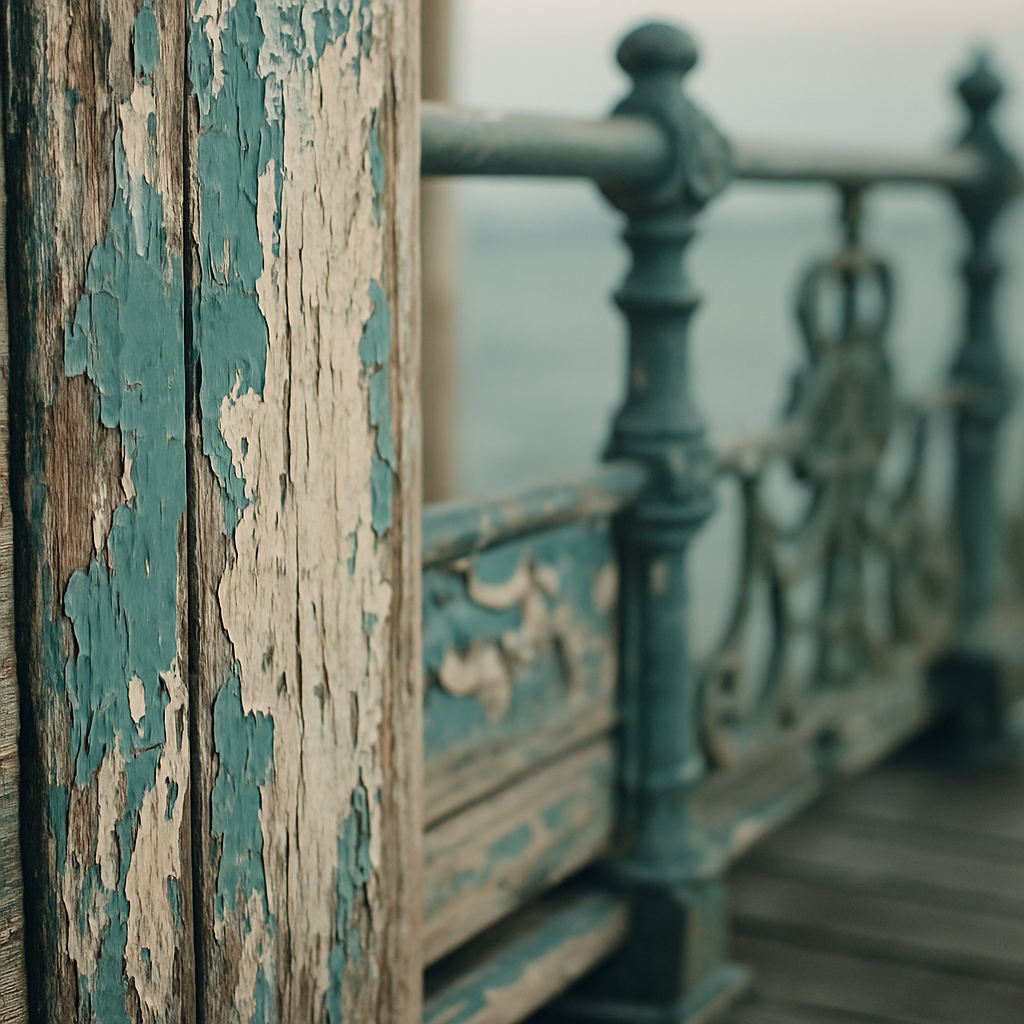
    Weathered Victorian pier boards and ironwork at a British seaside resort showing layers of history in peeling paint
    Weathered Victorian pier boards and ironwork at a British seaside resort showing layers of history in peeling paint

    Brighton, Southend, and the Class Geography of the Coast

    Not all British seaside resorts were created equal, and the Victorians were acutely aware of the distinctions. Brighton retained a certain raffish glamour thanks to its association with the Prince Regent and his extraordinary Pavilion, completed in 1823 and still one of the most gloriously bonkers buildings in England. It attracted artists, bohemians, and later the day-tripper crowds from London, which gave it an energy quite unlike anywhere else. Eastbourne, by contrast, positioned itself as refined and respectable. Torquay cultivated its reputation as the English Riviera. Southend-on-Sea catered for the East End working classes, who could be there and back from Fenchurch Street before the evening was out.

    This class geography is fascinating to unpick. The British seaside resort was, in many ways, a mirror of British society itself, reflecting its anxieties about status, respectability, and who exactly deserved to have a good time. Landladies became legendary figures, ruling their boarding houses with iron discipline. Pier architecture became a serious business, with engineers competing to build ever longer, more elaborate structures jutting defiantly into the sea. The pier at Southend remains the longest pleasure pier in the world at 2.16 kilometres, a fact that Southend residents will mention within roughly thirty seconds of meeting you.

    Donkeys, Punch and Judy, and the Folklore of the British Beach

    What strikes you, looking back at Victorian and Edwardian photographs of the seaside, is how recognisable it all is. The deck chairs. The windbreaks. The children with buckets and spades. The grown men in their Sunday best, sweating quietly on the promenade, too stubbornly British to remove their jackets. The seaside developed its own folklore with remarkable speed. Punch and Judy shows arrived at British beaches from Italian street theatre traditions in the seventeenth century but found their spiritual home on the sands, where generations of children have watched with slightly disturbed glee as Mr Punch wallops everyone in sight.

    Donkey rides on the beach date back at least to the Victorian era, and are still going strong in Whitby and Weston-super-Mare despite periodic tutting from animal welfare campaigners. Fish and chips, now so synonymous with the seaside that it seems almost geological in its permanence, became the default seaside meal as chippies multiplied along every promenade. The BBC History notes that the Victorian period was one of extraordinary cultural invention, and the seaside resort sits squarely within that tradition of creating new rituals and treating them instantly as though they had always existed.

    The Decline and the Stubborn Revival of British Seaside Towns

    By the 1970s, cheap package holidays to Spain had begun to hollow out many British seaside resorts. Why brave a grey August in Morecambe when you could be sitting on a sunny terrace in Benidorm? The decline of towns like Margate, Skegness, and Weston-super-Mare became a kind of national story about loss and changing tastes. Arcades grew seedier. The grand hotels fell into disrepair or were converted into bedsits. Some resorts never really recovered.

    But something interesting has been happening in recent years. Margate has undergone a proper renaissance, driven partly by the opening of the Turner Contemporary gallery in 2011 and the arrival of creative types priced out of London. Whitby remains as popular as ever, trading heavily on its Bram Stoker connections and extraordinary abbey ruins. St Ives in Cornwall has become something of an arts destination of genuine international standing. Meanwhile, staycation culture, accelerated by various recent disruptions to foreign travel, has sent visitor numbers surging at resorts up and down the country.

    There is even a new kind of digital nostalgia at play. Vintage postcards of seaside towns circulate endlessly online. People are restoring old bathing huts. The aesthetic of the traditional British seaside resort, peeling paint, candy stripes, and salt-bleached wood, has been enthusiastically reclaimed. Running an online campaign for a seaside business? You might even want to do a quick spam test on your newsletter before you send it to all those loyal visitors, because the digital promenade has its own rules about what gets through.

    Why the British Seaside Resort Still Matters

    The British seaside resort is more than a holiday destination. It is a piece of living social history, a record of how ordinary people won the right to rest, to play, and to simply be somewhere other than where they worked. Every pier, every promenade, every slightly optimistic café with steamed-up windows is connected to that Victorian moment when the railways arrived and changed everything. The donkeys and the deck chairs are not trivial. They are evidence of something genuinely important: that leisure is a human need, and that Britain, in its own chaotic, windswept way, found a remarkable means of meeting it.

    Next time you are huddled behind a windbreak eating chips while the rain comes in sideways, remember that you are participating in one of Britain’s great traditions. Generations did exactly the same before you, and were just as convinced they were having a wonderful time.

    Frequently Asked Questions

    Which is the oldest British seaside resort?

    Scarborough in North Yorkshire is generally considered Britain’s oldest seaside resort, with visitors travelling to drink and bathe in its mineral springs as early as the 1620s. It became a fashionable destination well before the railway era, though the arrival of the line in 1845 dramatically increased visitor numbers.

    Why did British seaside resorts decline in the 1970s and 1980s?

    The rise of affordable package holidays to Mediterranean destinations like Spain and Greece drew huge numbers of British holidaymakers away from domestic resorts. Lower prices, guaranteed sunshine, and new airport infrastructure made foreign holidays accessible to working-class families for the first time, leaving many British seaside towns struggling for visitors.

    Which British seaside resorts are most popular today?

    Blackpool, Brighton, and Bournemouth consistently rank among the most visited, while Whitby, St Ives, and Tenby attract visitors drawn by heritage and natural beauty. Margate has seen a significant cultural revival, with the Turner Contemporary gallery bringing new audiences to the Kent coast.

    When was Blackpool Tower built?

    Blackpool Tower was opened on 14 May 1894, inspired by the Eiffel Tower in Paris, which had been completed just five years earlier. It stands 158 metres tall and remains one of Britain’s most recognisable seaside landmarks, still welcoming millions of visitors each year.

    How long is Southend Pier and why is it famous?

    Southend Pier stretches 2.16 kilometres into the Thames Estuary, making it the longest pleasure pier in the world, a record it has held since the current iron structure was completed in 1889. It even has its own railway running along its length to carry visitors to the pier head and back.