There is something almost mythical about the Victorian kitchen range. Cast iron, coal-black, radiating a heat that reached every corner of the room, it was simultaneously a cooking appliance, a water heater, a laundry drier, and the undisputed centre of domestic life. Before central heating, before gas hobs, before the microwave pinged its way into British kitchens, the range was the thing. Everything revolved around it.
Understanding the Victorian kitchen range means understanding something fundamental about how ordinary British people lived, cooked, and organised their days. It was not merely a piece of equipment. It was architecture. It shaped the house around it.
How the Victorian Kitchen Range Actually Worked
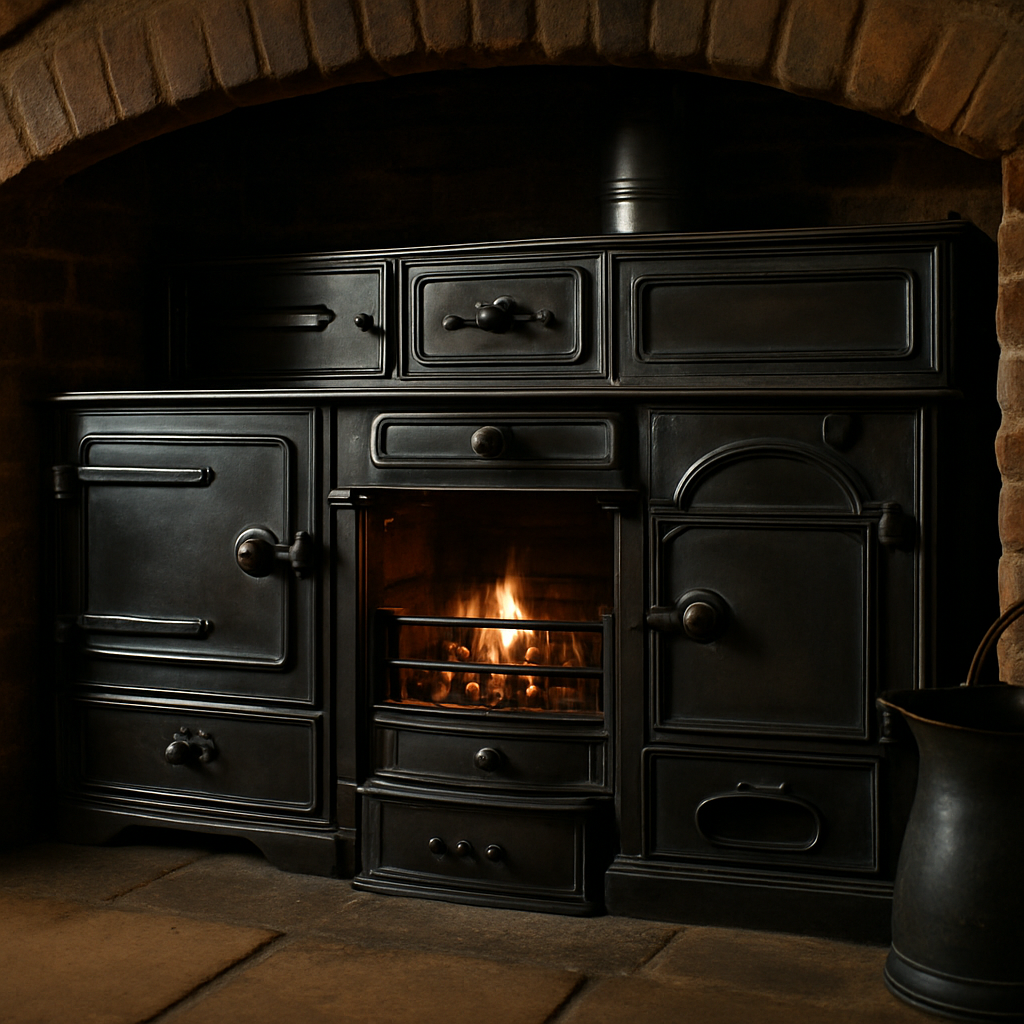
The closed range, as opposed to the open fire it replaced, arrived in earnest during the early nineteenth century. The basic principle was straightforward: burn coal in a firebox, direct the heat through flues and ovens built into the iron body, and use the top plates for boiling and frying. Simple enough in theory. A complete domestic nightmare in practice.
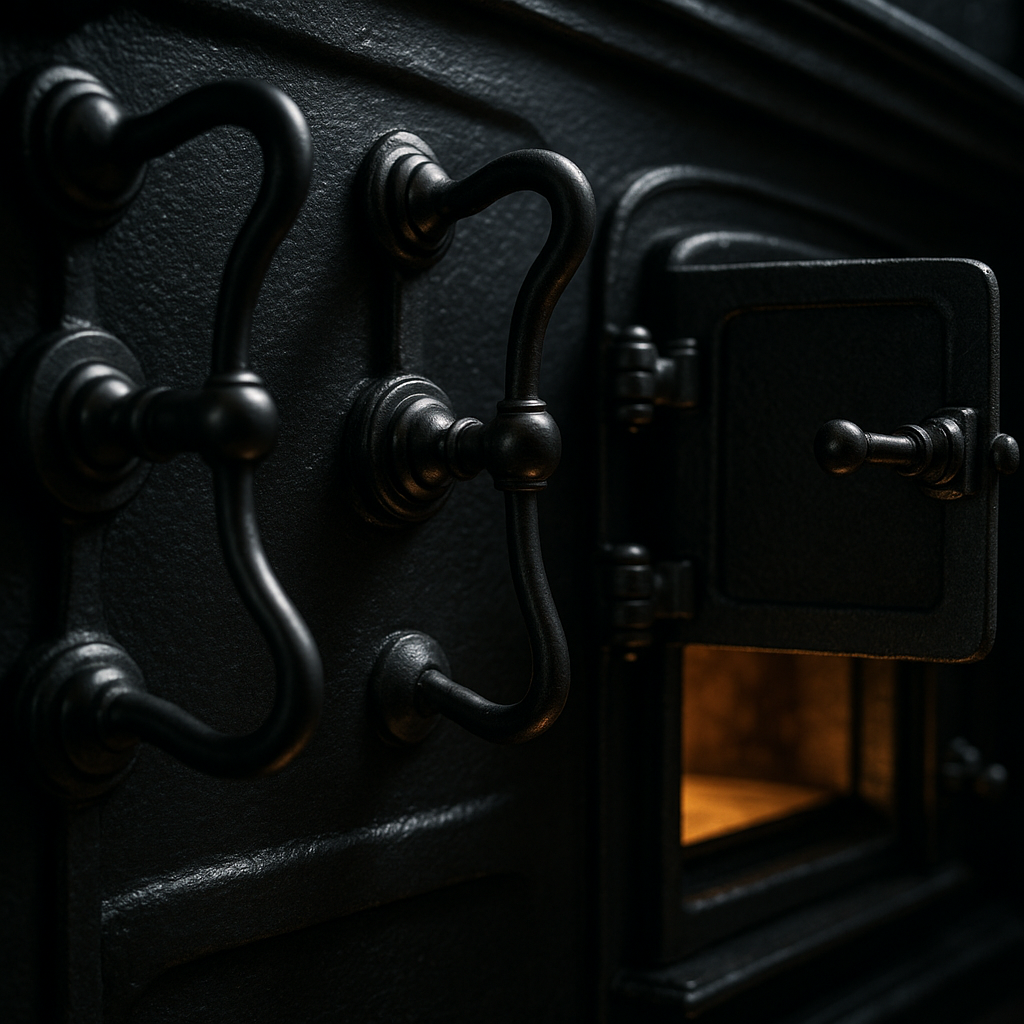
A typical Victorian kitchen range had a firebox on one side, a hot water tank or boiler on the other, and an oven in the middle. The flues could be adjusted with dampers, little iron levers that controlled airflow and therefore temperature. Getting those dampers right was an art form in itself. Too much draught and you burnt the joint. Too little and the bread refused to rise. Every range had its own personality, and experienced cooks learnt to read theirs the way a sailor reads the wind.
Coal was the fuel of choice across most of Britain, though in rural Wales and parts of Scotland, peat and wood remained common well into the century. The range consumed coal at a prodigious rate. A typical household in a terrace in Manchester or Leeds might burn through several hundredweight a week just keeping the kitchen functioning. The coalman, delivering his sacks down the pavement and tipping them into the cellar hatch, was as essential to Victorian domestic life as the milkman or the baker.
The Manufacturers Who Built Britain’s Kitchens
Britain’s industrial north and midlands were ideally placed to mass-produce these iron giants. Several manufacturers became household names. Falkirk Iron Company in Scotland was a major producer, exploiting the rich foundries of central Scotland. In England, Carron Company (also of Falkirk, established as far back as 1759) supplied ranges across the country. Further south, Midlands foundries in Wolverhampton and Birmingham churned out models at every price point.
The most famous name, still recognisable today, is Aga, though the Aga as we know it is technically a twentieth-century invention, patented in 1922 by Swedish physicist Gustaf Dalén. Its DNA, however, is entirely rooted in the Victorian kitchen range tradition. By the time Aga stoves arrived in British homes during the 1930s, the British public already had a century of experience managing solid-fuel cookers. The Aga felt familiar because it was, in essence, the Victorian range refined.
At the more affordable end, manufacturers produced what were called kitcheners, a term widely used from the 1850s onwards. These were compact, relatively economical ranges designed for the smaller working-class terrace rather than the grand Victorian villa. The kitchener sat in the kitchen fireplace opening, replacing the older open grate, and became the standard cooker in millions of British homes right through to the 1950s.
Regional Variations Across Britain
The Victorian kitchen range was not a single, uniform object. Regional variations were pronounced, shaped by local fuel supplies, local building traditions, and local taste.
In the industrial north, particularly in the back-to-back terraces of Yorkshire and Lancashire, the range was typically set into the chimney breast of the main living room as much as the kitchen. In many working-class homes of that era, there was no separate kitchen at all. The range dominated the downstairs room entirely, with a scullery out the back handling washing and some preparation. The fireplace was hearth, cooker, and social gathering point simultaneously.
In Scotland, the swey (a hinged iron arm that swung a pot over the fire) remained in use alongside more modern ranges in rural areas well into the Victorian period. Scottish farmhouse kitchens often retained a more open-fire tradition alongside any enclosed range, hedging their bets against the new technology.
In London and the wealthier south, the range in a prosperous household was an altogether grander affair. Basement kitchens in Georgian and early Victorian townhouses were designed specifically around large, elaborately fitted ranges with multiple ovens, warming compartments, and polished steel fittings. These were the kitchens of Mrs Beeton’s world, and the range was their engine.
Mrs Beeton, Black Lead, and the Daily Ritual
Isabella Beeton’s Book of Household Management, first published in 1861, devoted considerable attention to the kitchen range. And rightly so, because managing the thing was a serious daily undertaking. The range had to be cleaned and blackened every morning with black lead, a graphite-based polish that kept the cast iron from rusting and gave it that characteristic deep, matte sheen. The steel fittings were polished separately with emery paper and soft cloths.
This was not a quick job. In a well-run household, the kitchen maid or scullery maid would be up before six o’clock to rake out the previous night’s ashes, relay the fire, black-lead the range, relight it, and have it up to cooking temperature before the cook arrived to start breakfast. It was physically hard, dirty work. The black lead got everywhere. Victorian domestic servants earned their wages.
Yet for all its demands, the range created a warmth, both literal and social, that later cookers never quite replicated. Wet washing dried on the rack above it. Cats colonised the hearth in front of it. Children did their homework at the kitchen table beside it. In the depths of a British winter, it was the gravitational centre of the home.
How the Victorian Kitchen Range Shaped British Food Culture
The victorian kitchen range fundamentally altered what British people cooked and how they thought about cooking. The reliable oven made bread baking at home genuinely practical for the first time for ordinary households. Roasting joints, which had previously required a great deal of skill and constant attention at an open fire, became more manageable. Slow braises and stews could be left in the side oven for hours, which suited the working household where the cook might have a dozen other duties.
British puddings, that great national tradition, owe a debt to the range too. Steamed puddings, baked puddings, bread and butter pudding, spotted dick: all of these benefited from the even, sustained heat that a well-managed range provided. You can read more about the history of British food traditions at the BBC Food history pages, which trace how these domestic technologies shaped what ended up on the British table.
The Decline of the Kitchen Range
The Victorian kitchen range began its slow retreat in the early twentieth century as gas and later electricity arrived in British homes. Gas cookers were cleaner, easier, and required no morning ritual with black lead and ash rakes. By the interwar years, the middle classes were switching en masse. After the Second World War, the remaining coal ranges in working-class homes were ripped out as part of slum clearance programmes and the new council house building boom, replaced with fitted kitchens and electric cookers.
The Clean Air Act of 1956, passed in direct response to the Great Smog of December 1952 that killed thousands of Londoners, effectively ended the domestic coal fire in urban Britain. The victorian kitchen range, already retreating, became an anachronism almost overnight.
Yet it never quite disappeared. Restored examples survive in period properties across the country. Museums like the Beamish Open Air Museum in County Durham have working Victorian kitchens where you can see these iron beasts in their element. And the Aga, that spiritual descendant, still hums away in farmhouses and country kitchens from Cornwall to Caithness, a living link to the Victorian ideal of the warm, coal-fired heart of the home.
The Victorian kitchen range was not elegant. It was demanding, dirty, and relentless. But it fed families, warmed homes, and shaped British domestic life for the better part of a century. It deserves its place in the story of how Britain lived.
Frequently Asked Questions
What is a Victorian kitchen range?
A Victorian kitchen range is a cast iron, coal-fired cooking appliance that replaced the open hearth in British homes during the nineteenth century. It combined a firebox, oven, and often a water boiler into a single unit set into the kitchen fireplace, and served as the primary cooking and heating source for millions of households.
How did you clean and maintain a Victorian kitchen range?
Daily maintenance involved raking out the ashes, relaying and relighting the fire, and applying black lead (a graphite-based polish) to the cast iron surfaces to prevent rust and maintain appearance. Steel fittings were polished separately with emery paper. In a well-run household, this was typically the first job of the morning, often completed before six o’clock.
What fuel did Victorian kitchen ranges use?
Coal was the most common fuel across urban and industrial Britain, consumed at considerable rate. In rural parts of Wales and Scotland, peat and wood were also used. The quality and type of coal affected the range’s performance significantly, with experienced cooks learning which grades suited their particular appliance.
Are Victorian kitchen ranges still in use today?
Original Victorian ranges are rarely used for daily cooking, but many survive in restored period properties and open-air museums such as Beamish in County Durham. The Aga cooker, first introduced to Britain in the 1930s, is widely considered the modern descendant of the Victorian range and remains popular in farmhouses and rural homes today.
Who were the main manufacturers of Victorian kitchen ranges in Britain?
Key manufacturers included the Carron Company and Falkirk Iron Company in Scotland, along with numerous foundries in the West Midlands around Wolverhampton and Birmingham. At the more affordable end of the market, compact versions known as ‘kitcheners’ were produced in large quantities for working-class terraced homes across the country.