
There is something quietly magnificent about a craft that has survived kings, plagues, industrial revolutions, and two world wars. Traditional British craft guilds stretch back to at least the twelfth century, and whilst the factory floor nearly finished them off for good, a remarkable number of these ancient trades are not just surviving in 2026, they are genuinely thriving. Thatchers are booked solid. Dry-stone wallers are in demand across the Yorkshire Dales. Coopers, the barrel-makers who once kept the British Navy afloat in more ways than one, are quietly having their moment again.
This is not nostalgia for its own sake. This is living history, and it is rather brilliant.
Where Did the Guilds Actually Come From?
The guild system as we recognise it took root in Britain during the eleventh and twelfth centuries, though the concept of organised craftsmen protecting their trade is older still. Guilds were effectively the unions, training programmes, and quality control bodies of the medieval world, all rolled into one. You did not simply decide to become a goldsmith or a fletcher. You served years as an apprentice, graduated to journeyman, and, if fortune smiled on you, earned the rank of master craftsman. The whole thing was overseen by the guild, which set standards, settled disputes, and made sure nobody was selling shoddy goods on the market square and embarrassing the trade.
By the fourteenth century, London alone had dozens of livery companies, the Worshipful Company of Mercers, the Skinners, the Fishmongers, the Haberdashers. Many still exist today, albeit in a ceremonial capacity, parading through the City of London in their finery. But beyond the pomp, these institutions preserved something essential: the idea that a craft was worth protecting.
How Industrialisation Nearly Killed Heritage Trades
The nineteenth century was, frankly, brutal for the guilds. The Industrial Revolution did not merely change how things were made; it obliterated the economic rationale for hand-crafted production in dozens of trades overnight. Why pay a cooper a week’s wages to build one barrel when a machine could stamp out fifty in an afternoon? Why commission a hand-thrown pot when Stoke-on-Trent could produce ten thousand identical ones before Tuesday?
The result was a near-total collapse. By the early twentieth century, many traditional british craft guilds existed in name only, their actual skills reduced to hobbyist curiosities or preserved by a stubborn handful of practitioners who simply refused to let go. Organisations like the Arts and Crafts Movement, championed by figures such as William Morris, pushed back against mass production and argued passionately for the dignity of handcraft. It helped, but it was not enough to reverse the tide entirely.
The Trades That Nearly Vanished
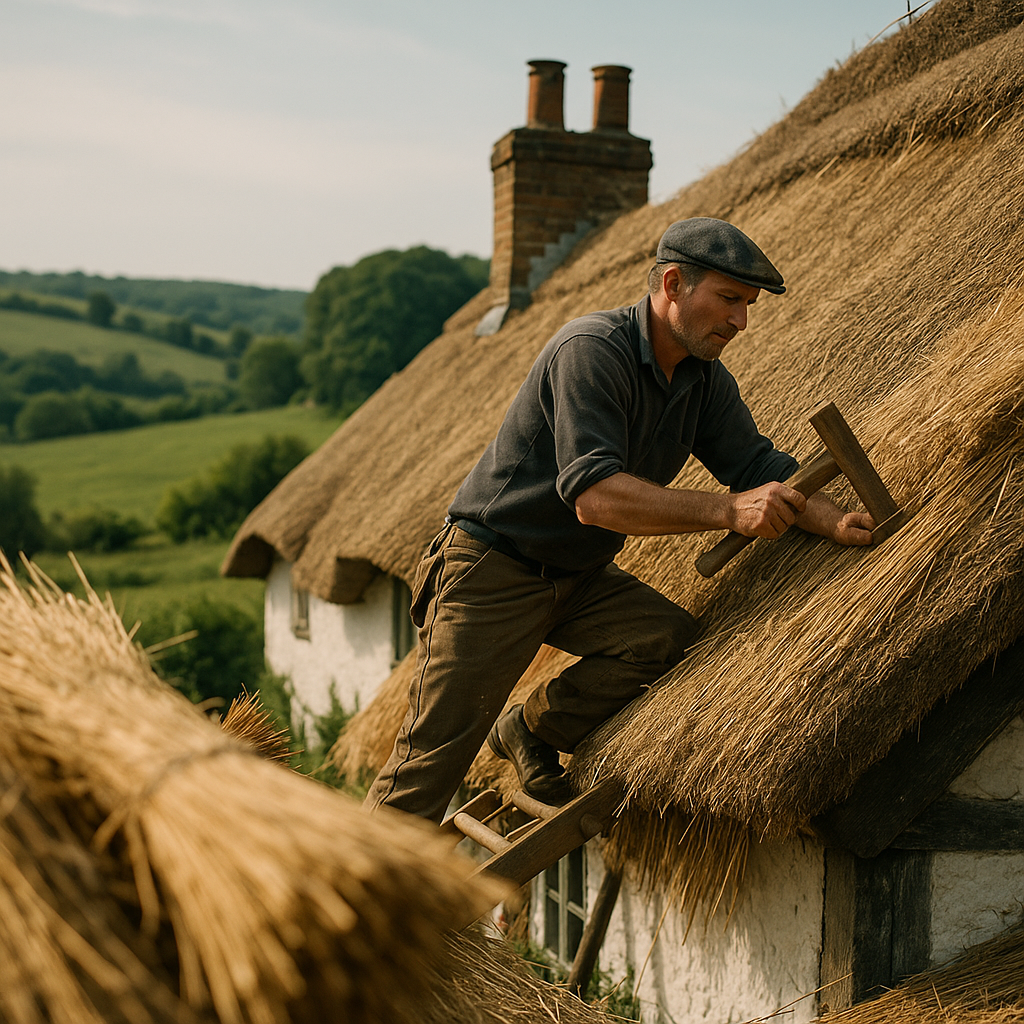
Thatching
At its peak in the early 1800s, thatching was one of the most common roofing trades in rural England. By the 1970s, fewer than a thousand thatchers remained in the country. Today, the National Society of Master Thatchers estimates there are around 800 practising thatchers in England, and demand consistently outstrips supply. A good thatcher in the West Country or East Anglia can be booked eighteen months in advance. A thatched roof, done properly with water reed or long straw, can last fifty years. The irony is that what was once the roofing of the poor has become the mark of the desirable country cottage, and the craft has survived partly because of it.
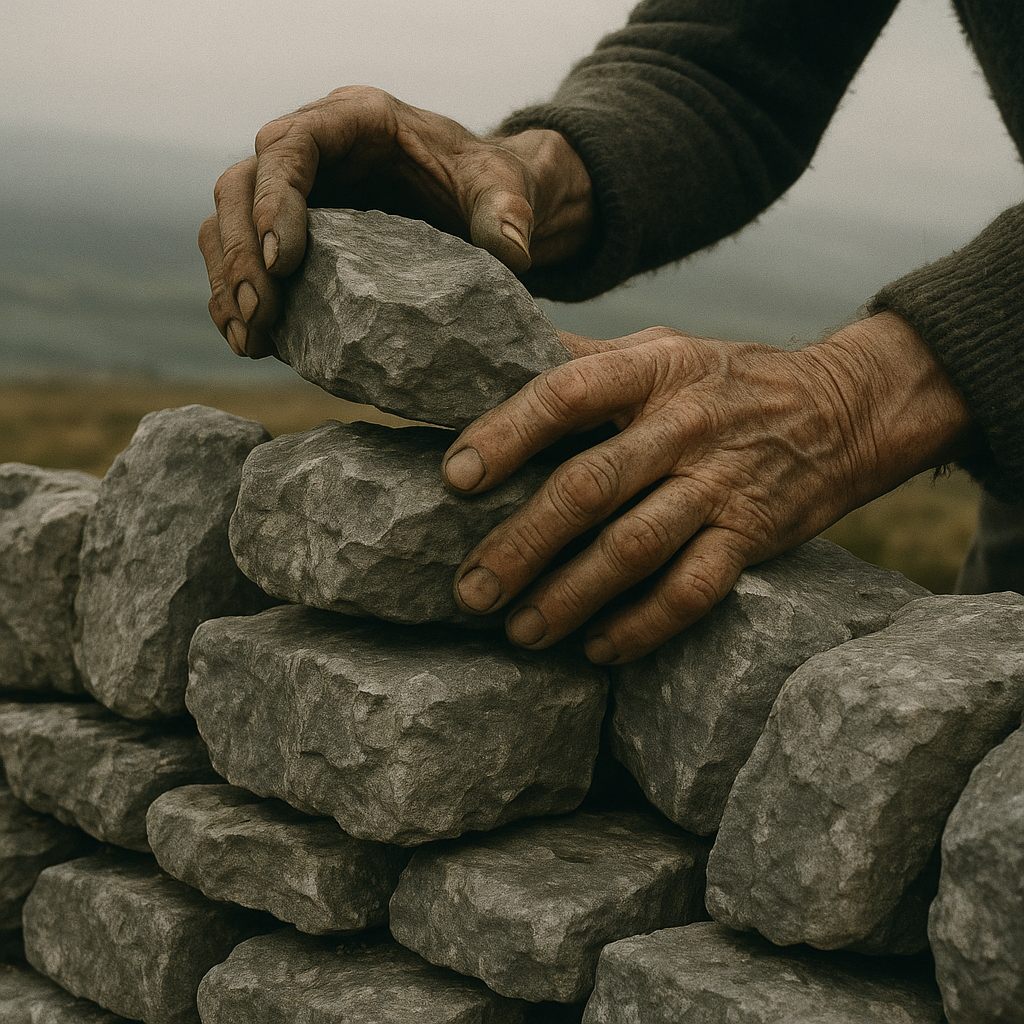
Dry-Stone Walling
Walk through the Pennines, the Cotswolds, or the Yorkshire Dales and you are surrounded by miles of dry-stone walls built without a single drop of mortar. This is not random stacking. It is an art form requiring intimate knowledge of local stone, drainage, and structural logic passed down through generations. The Dry Stone Walling Association of Great Britain was founded in 1968 partly to prevent the trade from disappearing entirely, and it now certifies wallers to a professional standard. Young people are taking it up. There are waiting lists for courses. Some are even making a proper living at it.
Coopering
The cooper’s trade, making and repairing wooden casks and barrels, once employed tens of thousands across Britain. Every brewery, distillery, fishery, and dockyard needed them. By the late twentieth century, the number of working coopers had dwindled to the low hundreds. The Scotch whisky industry saved them. Oak barrels are legally required for maturing Scotch, and the demand from distilleries across the Highlands and Speyside has kept the craft alive and, more recently, pushed it into something of a golden era. The Worshipful Company of Coopers still operates in London, and apprenticeships are being offered again.
Stained Glass and Leadwork
Walk into almost any medieval parish church in England and you are looking at the work of glaziers whose techniques have changed remarkably little in six hundred years. The Worshipful Company of Glaziers and Painters of Glass is one of the City of London’s oldest livery companies, and the trade itself has seen a revival driven largely by the restoration economy, the ongoing, eye-wateringly expensive project of keeping Britain’s historic buildings intact. English Heritage and the National Trust both commission traditional leaded glaziers regularly.
Why the Revival Is Happening Now
It would be easy to attribute the comeback of traditional british craft guilds purely to romanticism, but there are harder economic and practical reasons at work. Climate change is making people reconsider sustainable, locally-sourced materials. A well-built dry-stone wall needs no cement, no energy to manufacture, and can be repaired with the stones that fall from it. Thatched roofs have exceptional insulation properties. Wooden barrels impart flavour that no stainless steel tank can replicate.
There is also a generational reaction against the disposable. Young craftspeople, many of them with perfectly good university degrees they are quietly setting aside, are seeking out apprenticeships in trades that produce something tangible, durable, and genuinely skilled. The Heritage Crafts Association publishes an annual Red List of Endangered Crafts, which has done more than anything to raise public awareness of which trades are at risk and which are recovering. It makes for sobering reading in places, but the general trend since 2015 has been cautiously optimistic.
Keeping the Knowledge Alive
The real challenge for traditional british craft guilds has never been demand, it has been transmission. Skills that live in a craftsperson’s hands are terrifyingly fragile. When the last master of a trade dies without passing on their knowledge, it is genuinely gone. Not archived, not digitised, not recoverable. Gone.
That is why the revival of formal apprenticeships and guild structures matters so much. The Building Crafts College in Stratford, east London, offers courses in stonemasonry, carpentry joinery, and heritage plastering. The Rural Development Programme has supported training schemes for dry-stone wallers and hedgelayers. Even HMRC has updated apprenticeship levy rules to allow more flexible arrangements for small craft workshops, which has made taking on apprentices marginally less terrifying for sole traders.
Britain is exceptionally good at preserving its built environment but historically rather careless about preserving the human knowledge required to maintain it. Getting those two things properly aligned, and keeping the craft guilds alive to carry the torch, is one of the more quietly important cultural projects of our time.
Frequently Asked Questions
What are traditional British craft guilds?
Traditional British craft guilds are organisations that date back to the medieval period, formed to regulate, protect, and pass on skilled trades such as coopering, thatching, stonemasonry, and glazing. They set standards for workmanship, oversaw apprenticeships, and ensured the quality of goods and services within a given trade. Many still exist today, either as active professional bodies or as ceremonial livery companies in the City of London.
Which heritage trades are most at risk of dying out in the UK?
The Heritage Crafts Association publishes an annual Red List of Endangered Crafts that identifies trades at critical risk. In recent years, trades such as lacemmaking, traditional coach-building, and clay pipe-making have featured prominently. Straw plaiting and parchment-making are among those considered critically endangered, with fewer than five practitioners remaining in the UK.
How do you become a thatcher or dry-stone waller in the UK today?
Both trades have formal routes into the profession. Aspiring thatchers typically seek an apprenticeship with a registered master thatcher through the National Society of Master Thatchers, with training lasting around three years. Dry-stone wallers can train and gain certification through the Dry Stone Walling Association of Great Britain, which offers courses and a recognised grading system from novice to craftsman level.
Are craft guild apprenticeships still available in the UK?
Yes, though availability varies by trade. Some City of London livery companies still offer formal apprenticeships, and organisations like the Building Crafts College in east London run accredited programmes in heritage building skills. The government’s apprenticeship levy system can be used to fund training in certain craft trades, and the Heritage Crafts Association maintains a directory of training opportunities across the country.
Why are traditional crafts like coopering seeing a revival in Britain?
The Scotch whisky industry has been a major driver, as Scotch must legally be matured in oak casks, creating sustained demand for skilled coopers. More broadly, growing interest in sustainability, locally-sourced materials, and high-quality handmade goods has made many heritage trades economically viable again. A cultural shift amongst younger people seeking meaningful, hands-on careers has also brought new apprentices into trades that were perilously short of new blood just a generation ago.