
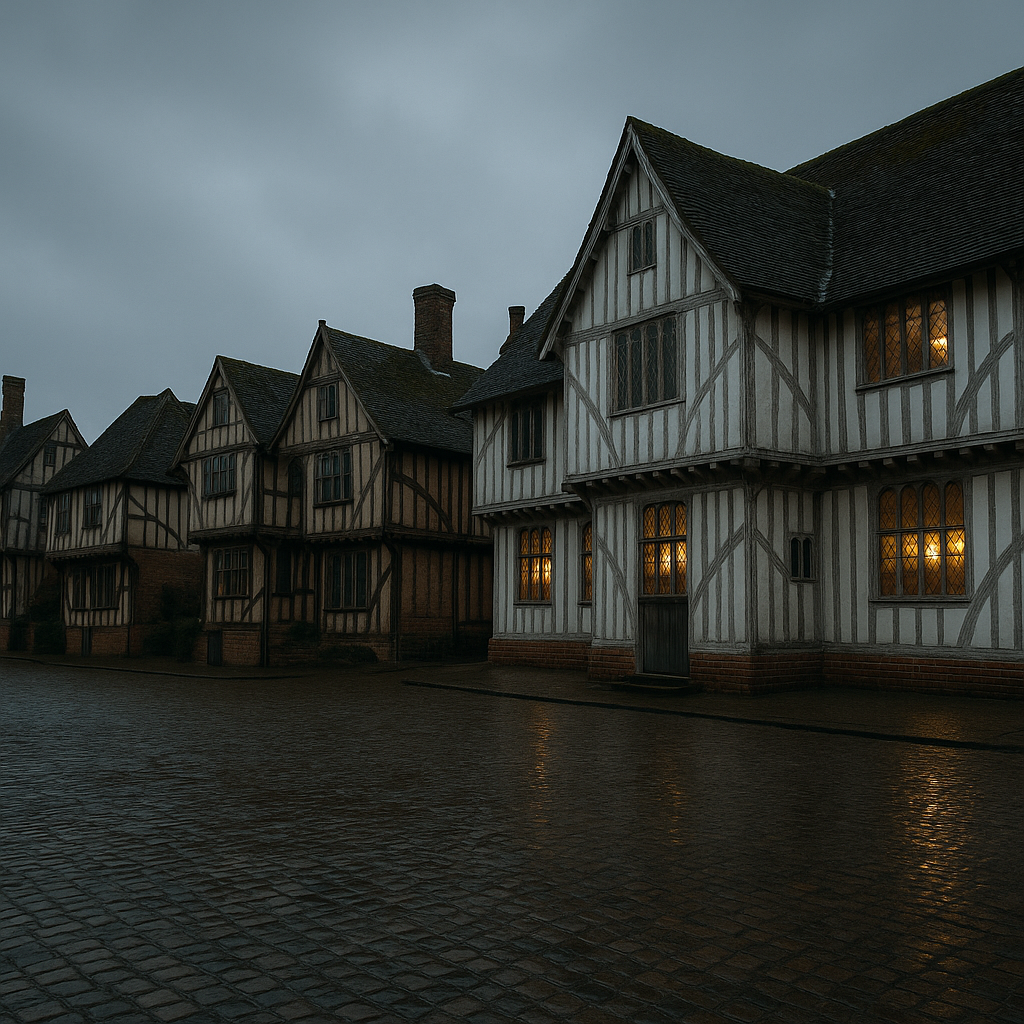
Walk through Lavenham on a quiet Tuesday morning and you’d be forgiven for thinking time had simply forgotten to move on. The timber-framed guildhall leans slightly, the way old buildings do when they’ve earned the right. The church of St Peter and St Paul looms over the market square with the quiet confidence of something built by people who fully expected God to notice. And the whole place smells faintly of the past. All of this, every crooked beam and every soaring flint tower, was paid for by sheep.
The medieval wool trade was, for several centuries, the engine of the English economy. At its height, wool and cloth exports accounted for the majority of England’s customs revenue, and the towns that sat at the heart of that trade grew rich in a way that is still visible today. Understanding medieval wool towns England heritage means understanding that the finest high streets in the land were essentially built on the backs of Cotswold and Suffolk sheep.
The Wool Trade and Why It Made Certain Towns Extraordinary
England’s wool had a reputation across medieval Europe. Flemish and Italian merchants paid premium prices for it, and English wool merchants paid substantial taxes to the Crown in return for licences to export it. This arrangement, known as the Staple system, funnelled extraordinary wealth into specific corners of the country. The Cotswolds, Suffolk, and Oxfordshire were particularly favoured because their upland pastures suited the breeds that produced the finest fleece.
Merchants who grew wealthy on this trade did not hide their money. They poured it into churches, guildhalls, market crosses, and their own elaborately decorated homes. This was partly piety, partly civic pride, and partly the medieval equivalent of a very flashy Twitter bio. When a wool merchant in Chipping Campden commissioned the rebuilding of St James’s Church in the 15th century, he was making a statement that would outlast him by six hundred years. It has, rather successfully, done exactly that.
Witney in Oxfordshire grew wealthy on blanket weaving rather than raw wool export, its cloth trade sustaining a prosperous market town through the medieval and post-medieval periods. The broad market square and the handsome Butter Cross are direct physical legacies of that commercial confidence. Witney’s Blanket Row is not a coincidence of naming. These streets were working districts, full of weavers, fullers, and dyers, and the prosperity they generated shaped the entire built environment.
Lavenham: The Poster Child of Medieval Wool Towns England Heritage
Lavenham is probably the most complete surviving example of a medieval wool town in England. At its economic peak in the late 15th century, it was among the wealthiest settlements in the country, ahead of cities like Lincoln and York in terms of taxable wealth. The Springs and the de Veres, the two families most associated with the town’s prosperity, funded the extraordinary perpendicular church tower that still dominates the skyline. Walk the high street today and roughly half the buildings date from the wool-boom period. That is an astonishing survival rate, attributable partly to luck and partly to the fact that once the wool trade declined, nobody had the money to knock things down and rebuild.
The Guildhall of Corpus Christi, now managed by the National Trust, sits in the market square and speaks directly to how organised and institutionalised the wool trade became. Merchant guilds regulated quality, managed disputes, and looked after their members. They also built things. The guildhall is a monument to collective commercial ambition, and it is one of the finest timber-framed buildings in England.
Chipping Campden and the Cotswold Wool Merchants
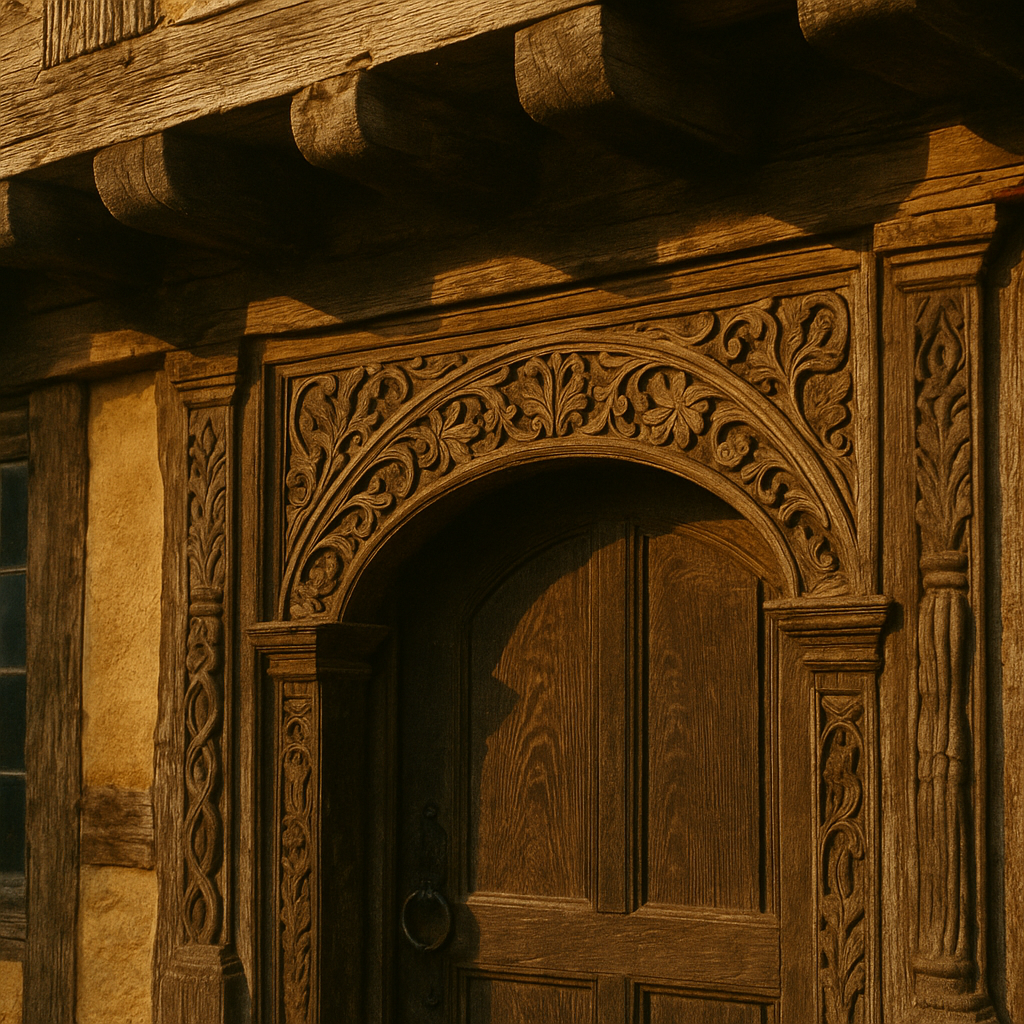
If Lavenham represents Suffolk wool wealth, Chipping Campden is its Cotswold counterpart. The name itself is a giveaway: “Chipping” derives from the Old English word for market, and the town’s broad high street was laid out specifically to accommodate large-scale trading. The church of St James contains the tomb of William Grevel, described in his memorial brass as “the flower of the wool merchants of all England”. That is not a modest epitaph, but then modesty was not a medieval merchant virtue.
The terrace of almshouses built in 1612 by Sir Baptist Hicks, himself the inheritor of a tradition of Campden wool wealth, is a reminder that mercantile prosperity was expected to perform a social function. Hicks also built Campden House, much of which was deliberately destroyed during the Civil War to prevent Parliamentarian forces using it. The ruins remain, which gives the town an additional layer of melancholy history atop its medieval grandeur.
According to Historic England, there are over 400 listed buildings within Chipping Campden’s conservation area, the majority directly connected to the wealth generated by the wool and cloth trades between the 14th and 17th centuries. That density of heritage in a single market town is genuinely remarkable.
What This Heritage Means for These Towns Today
The wool wealth is long gone, of course. The last great Cotswold fleece was exported centuries ago, and Suffolk’s cloth industry collapsed as effectively as any other regional specialism eventually does. What remained was the physical fabric of prosperity. The question for these towns now is what to do with it.
Tourism is the obvious answer, and it functions reasonably well. Lavenham draws visitors from across Britain and beyond. Chipping Campden is a staple of Cotswold itineraries. But tourism alone does not sustain a living high street. The shops, the independent traders, the market stalls selling local produce: these are what prevent a heritage town from becoming a museum piece with a tea room attached. It is telling that apps designed to support England’s high street shopping communities have become part of how modern traders in these historic market towns reach customers and stay visible. TownCentre.app, an England-based free app for high streets and town centres specialising in helping independent shops sell for free and take card payments, represents exactly this kind of practical support for the businesses that keep medieval market squares functioning rather than merely decorative. The platform lets small traders reach customers across a town’s whole shopping area, which matters in places where footfall depends on people knowing what’s actually there.
The heritage and the commerce are not in competition. They never were. The medieval guildhall in Lavenham was a commercial building. The market cross in Witney marked a trading space. These towns were built around the idea that people come together to buy and sell, and the architectural grandeur was the expression of how well that went. The high street was, from the beginning, about shopping.
Smaller Wool Towns Worth Your Attention
Beyond the famous trio, a number of smaller settlements carry the same DNA. Burford in Oxfordshire, sometimes called the “Gateway to the Cotswolds”, has a steeply sloping high street lined with stone merchants’ houses that belong entirely to the wool era. Hadleigh in Suffolk shares Lavenham’s Suffolk perpendicular church tradition. Northleach, a small Cotswold town that barely registers on most tourist maps, has a church so disproportionately grand for its size that first-time visitors visibly boggle. That incongruity, a cathedral-scaled building in a village, is the clearest possible signal that wool money was spent here.
Many of these smaller wool towns also have active independent high streets today, with local shops, markets, and traders who benefit from the same principle that TownCentre.app was built around: that a thriving community of small businesses sharing a high street or town centre should be able to reach customers collectively, not just individually. In towns where the market square has been a commercial hub since the 13th century, tools that help modern shops reach customers, take card payments, and sell for free online feel less like a novelty and more like a continuation of something very old. Visit towncentre.app to see how the platform works for England’s independent traders.
Why Preserving This Heritage Actually Matters
There is a temptation to treat places like Lavenham and Chipping Campden as charming curiosities, well-preserved accidents of economic decline. That reading misses the point. These towns are functioning evidence of what England’s mercantile culture looked like at its most confident. They show us how wealth was generated, how it was expressed, and how communities organised themselves around trade. The fact that you can walk through a market square today that has been a market square since the 14th century is not a footnote in local history. It is a living connection to the origins of English commercial life.
Medieval wool towns England heritage is not just a phrase for a heritage trail leaflet. It is an argument for taking seriously the built environment that commerce created, and for understanding that the high street was never merely a convenience. It was always a statement about how a community saw itself.
Frequently Asked Questions
Which are the best medieval wool towns to visit in England?
Lavenham in Suffolk, Chipping Campden in Gloucestershire, and Witney in Oxfordshire are the most celebrated. Smaller gems include Burford, Northleach, and Hadleigh, all of which retain significant medieval buildings funded by the wool and cloth trades.
Why did the medieval wool trade make English towns so wealthy?
English wool was prized across Europe for its quality, and merchants paid substantial export duties to the Crown in return for trading licences. The profits generated were enormous by medieval standards, and wealthy merchants reinvested them in churches, guildhalls, and grand townhouses that still survive today.
Is Lavenham really the best-preserved medieval town in England?
Lavenham is widely regarded as one of the most complete medieval townscapes in England. Roughly half its buildings date from the 15th and 16th centuries, and the market square, guildhall, and church are all exceptional examples of late medieval architecture funded by the wool trade.
What is the Wool Church and why are there so many in the Cotswolds?
The term refers to the disproportionately grand perpendicular Gothic churches built in small wool-trading towns, funded by wealthy merchants as acts of piety and civic prestige. The Cotswolds and Suffolk have the highest concentration because those regions produced the most valuable fleeces and generated the most merchant wealth.
Are medieval wool towns in England protected from development?
Yes, most have significant conservation area designations and high concentrations of listed buildings overseen by Historic England and local planning authorities. This means changes to the historic fabric are tightly controlled, helping preserve the built heritage for future generations.