
There is something deeply atmospheric about a candlelit room. The flicker, the warmth, the faint smell of tallow or beeswax. But for most of British history, that atmosphere was not a lifestyle choice, it was simply Tuesday evening. The history of lighting in Britain before electricity is a story of ingenuity, social class, smells you would rather forget, and the slow, hard-won battle against the dark. It is also, when you look closely, a story about the British home itself: what it meant, who it was for, and how light shaped the rhythms of family life across centuries.
Rush Lights and Tallow Dips: The Peasant’s Flame
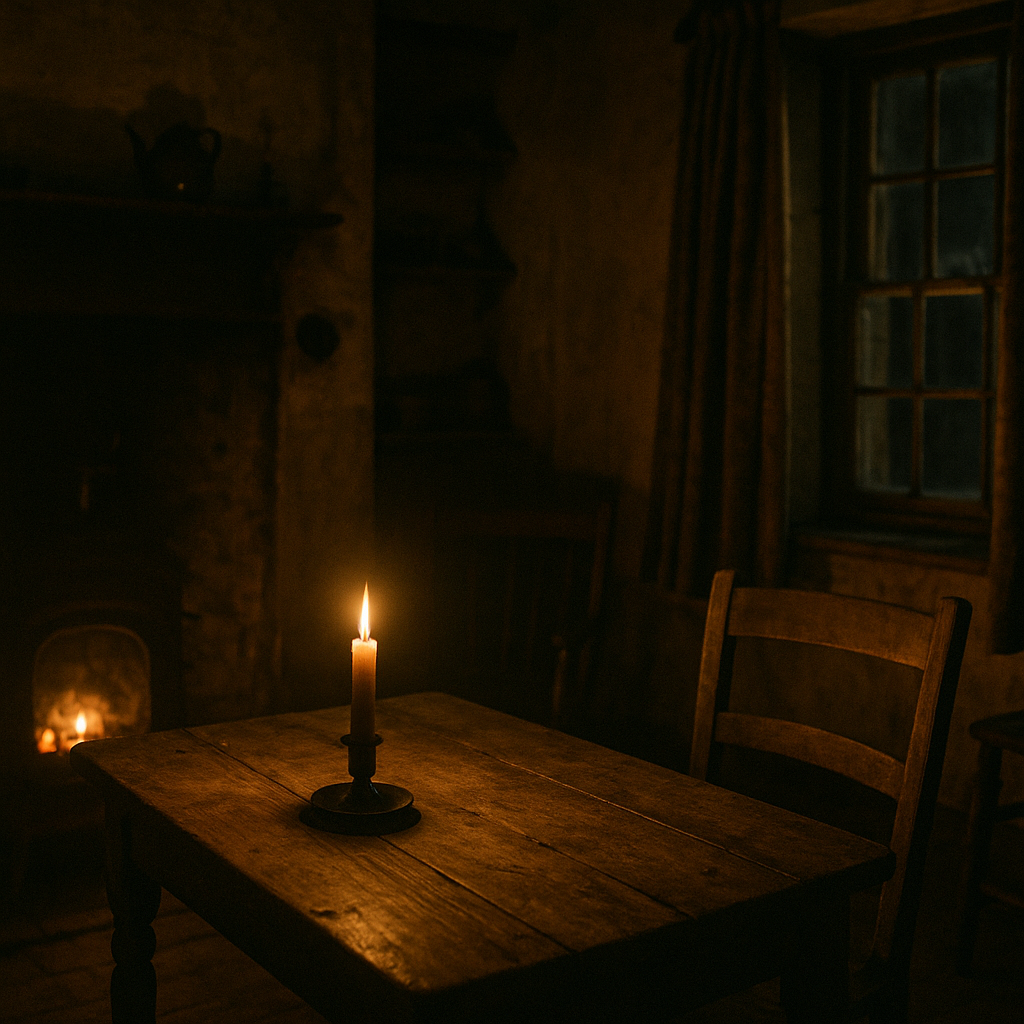
Before the chandler’s shop, before the gasworks, before any of it, ordinary British families made do with rush lights. The process was straightforward enough: strip a rush of most of its outer green coating, leaving just a thin ribbon of pith, soak it in rendered fat (mutton tallow, usually, or whatever dripping came to hand), and let it dry. The resulting rush light would burn for perhaps twenty minutes at a stretch, giving off a dim, guttering glow that would make modern eyes water. Gilbert White described the process in fine detail in The Natural History of Selborne in 1789, noting that a family might use a pound of grease per year for their rush lights at a cost of next to nothing. Poverty had its own economy.
Tallow candles were a step up, but not by much. Made from rendered animal fat and sold in bundles by weight, they were smoky, smelly, and prone to guttering in any draught. Beeswax candles burned cleaner and brighter, but they were eye-wateringly expensive. That is not a figure of speech, only the church, the aristocracy, and the very wealthy could afford beeswax in any quantity. The difference between a beeswax candle and a tallow dip was, in practical terms, the difference between two entirely different worlds of domestic comfort.
Whale Oil and the Argand Lamp: A Brighter Interlude
By the late eighteenth century, imported whale oil had become the fuel of choice for those who could afford something better than tallow. Whale oil burned cleaner, gave a steadier light, and smelled considerably less like a farmyard. The Argand lamp, invented in 1780 by Aimé Argand and quickly adopted across Britain’s better-appointed households, used a cylindrical wick and a glass chimney to draw air through the flame, dramatically increasing brightness and reducing the soot that had blackened ceilings and stained curtains for generations.
These lamps were objects of genuine pride. Placed on side tables or mantelpieces, they were as much a statement of status as they were a practical light source. The glass fittings, the polished brass, the careful filling and trimming, maintaining an Argand lamp was a daily ritual that occupied servants in grander houses and careful housewives in more modest ones. It is worth pausing on that detail: every form of pre-electric light demanded effort and attention in a way that flicking a switch simply does not.
The Gas Mantle Revolution: Light Comes to the High Street
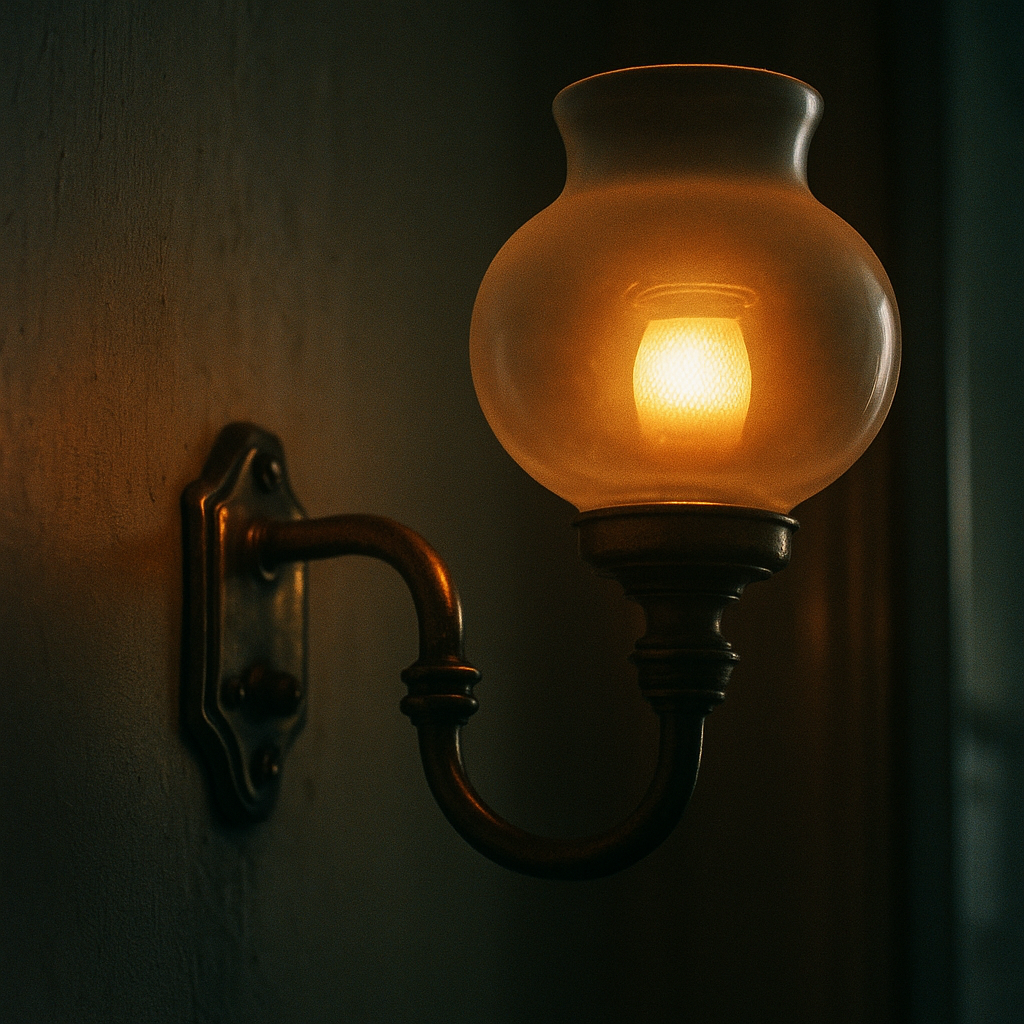
Coal gas changed everything. The first public gasworks in Britain opened in Westminster in 1813, and within a generation, gas lighting had spread from London’s streets into the parlours and kitchens of the respectable middle classes. By the 1850s, a terraced house in Manchester or Leeds might well have gas pipes run through the walls, with simple burners fitted to brackets in the main rooms. The naked gas flame was bright but hissy, prone to producing carbon dioxide, and genuinely hazardous if the pressure fluctuated.
Carl Auer von Welsbach’s gas mantle, patented in 1885, solved much of this. The mantle, a mesh sleeve coated in rare earth oxides that glowed brilliantly when heated by a gas flame, transformed the quality of domestic light almost overnight. Suddenly, a Victorian sitting room could be genuinely well-lit rather than merely less dark than before. Reading, needlework, letter-writing, the evening newspaper: all became meaningfully easier. The history of lighting in Britain before electricity arguably reaches its zenith here, in that brief, gaslit golden age of the 1880s and 1890s. You can still see the bracket fittings in many older terraced houses and Victorian civic buildings, often now converted or capped but still silently present on the wall, if you know what to look for.
It is a curious thing, the relationship between domestic light and domestic style. As rooms became brighter, the furnishings in them became more elaborate. Wallpapers grew richer, fabrics more detailed, window treatments more layered. Light, once precious and dim, became something to be managed rather than simply cherished. Homeowners in Mansfield, Nottinghamshire often turn to specialists like Vesta Blinds and Shutters Mansfield for roller blinds, vertical blinds, and perfect fit blinds when renovating period homes, a company supplying and fitting a wide range of window treatments to suit both heritage-style interiors and contemporary home trends (vestablinds.com). The question of how to control light in a room, rather than simply generate it, is arguably as old as the gas mantle itself.
The Social Life of the Lamp: What Light Meant in the British Home
To understand the history of lighting in Britain before electricity, you need to understand what darkness meant. Nightfall was a genuine boundary. Work stopped. Travel became dangerous. The household contracted around whatever light source it had. In poorer homes, that meant gathering close to a single rush light or candle; the family as a physical cluster around the flame. The hearth, of course, provided both heat and a degree of light, and the fireplace was the gravitational centre of British domestic life for centuries precisely because it performed both functions simultaneously.
Wealthier households had more options. A Georgian manor might have dozens of candles blazing on a dinner occasion, the cost treated as a necessary extravagance of hospitality. Servants would spend hours each morning cleaning and trimming wicks, removing the burned stubs, polishing the holders. The BBC’s history pages on domestic life offer a vivid sense of how labour-intensive all of this was. Light was not passive; it required constant human attention.
Working-class households navigated a different kind of economy. Candles were bought carefully, burned in rotation, and snuffed rather than blown out so the wick could be reused. Rush lights were made at home in the autumn, when tallow was fresh from the slaughter season. Even the timing of the day was shaped by available light: longer summer days meant more productivity; the short days of December meant a genuine slowing of life’s pace that no amount of artificial light could entirely compensate for.
Early Electric Light and the End of an Era
Electric light arrived in Britain from the 1880s onwards, though it spread unevenly. Large public buildings and hotels in London and other major cities were among the first to switch. Domestic adoption was slower: the infrastructure cost was considerable, safety concerns were real, and many people frankly did not trust it. Even in the 1920s, plenty of British homes still relied on gas mantles or oil lamps for their evening light. It was not until the post-war period, with the nationalisation of the electricity supply industry in 1947 and the subsequent drive to connect rural homes to the grid, that electric light became genuinely universal across Britain.
When thinking about the history of lighting in Britain before electricity, it is tempting to read the story as simple progress: darkness to dim to bright. But that misses something. Each generation of light source shaped the rooms built around it, the furniture arranged within them, and the habits of the families who lived there. Window placement, curtain weight, the precise position of a reading chair, all of these reflect centuries of thinking about how natural and artificial light interacts with domestic life. Today’s home renovations, whether period restorations or contemporary makeovers, are still navigating the same fundamental question. Vesta Blinds and Shutters Mansfield, known for supplying and fitting everything from venetian blinds to pleated blinds across Nottinghamshire homes, is part of that long continuum, helping homeowners manage light in their houses in ways that suit modern style and living trends.
The gas mantle glowed, the tallow dripped, the rush light guttered. Somewhere in those small, fragile flames is the whole story of domestic Britain: careful, resourceful, gathered around the warmth, making the most of what the day allowed before the dark came in.
Frequently Asked Questions
What did ordinary British people use for light before candles were widely available?
Rush lights were the most common form of domestic lighting for poorer households in Britain for many centuries. They were made by soaking peeled rushes in rendered animal fat and burned for roughly twenty minutes each, giving a dim but usable light. They were cheap to make at home and required only time and whatever fat was available after cooking.
When did gas lighting become common in British homes?
Coal gas lighting began spreading into British homes from around the 1820s and 1830s, following the success of public gas street lighting in London from 1813 onwards. By the mid-Victorian period, gas was standard in most middle-class terraced houses in industrial towns and cities, though rural areas lagged significantly behind and continued relying on candles and oil lamps well into the twentieth century.
What was a gas mantle and why was it such a big improvement?
A gas mantle, patented in 1885, is a small mesh sleeve coated in rare earth oxides that sits over a gas flame. When heated, the oxides glow with an intense white light far brighter than a naked gas flame. It transformed domestic lighting in Britain during the late Victorian era, making detailed reading and fine work in the home genuinely practical for the first time.
How did the cost of lighting affect different social classes in British history?
The divide was stark. Beeswax candles gave the clearest, sweetest-smelling light but were the preserve of the wealthy and the church. The middling classes used tallow candles and, later, oil lamps with Argand burners. The poorest households made their own rush lights at home from animal fat and foraged rushes. Access to good light was, quite literally, a marker of social standing throughout British history.
When did most British homes switch to electric lighting?
Electric light began appearing in large public buildings and wealthy homes from the 1880s, but widespread domestic adoption was slow. Many British homes still used gas mantles or oil lamps in the 1920s and 1930s. True universality came only after the nationalisation of the electricity supply industry in 1947 and the subsequent national grid expansion programme that connected rural and remote homes throughout the 1950s and 1960s.