
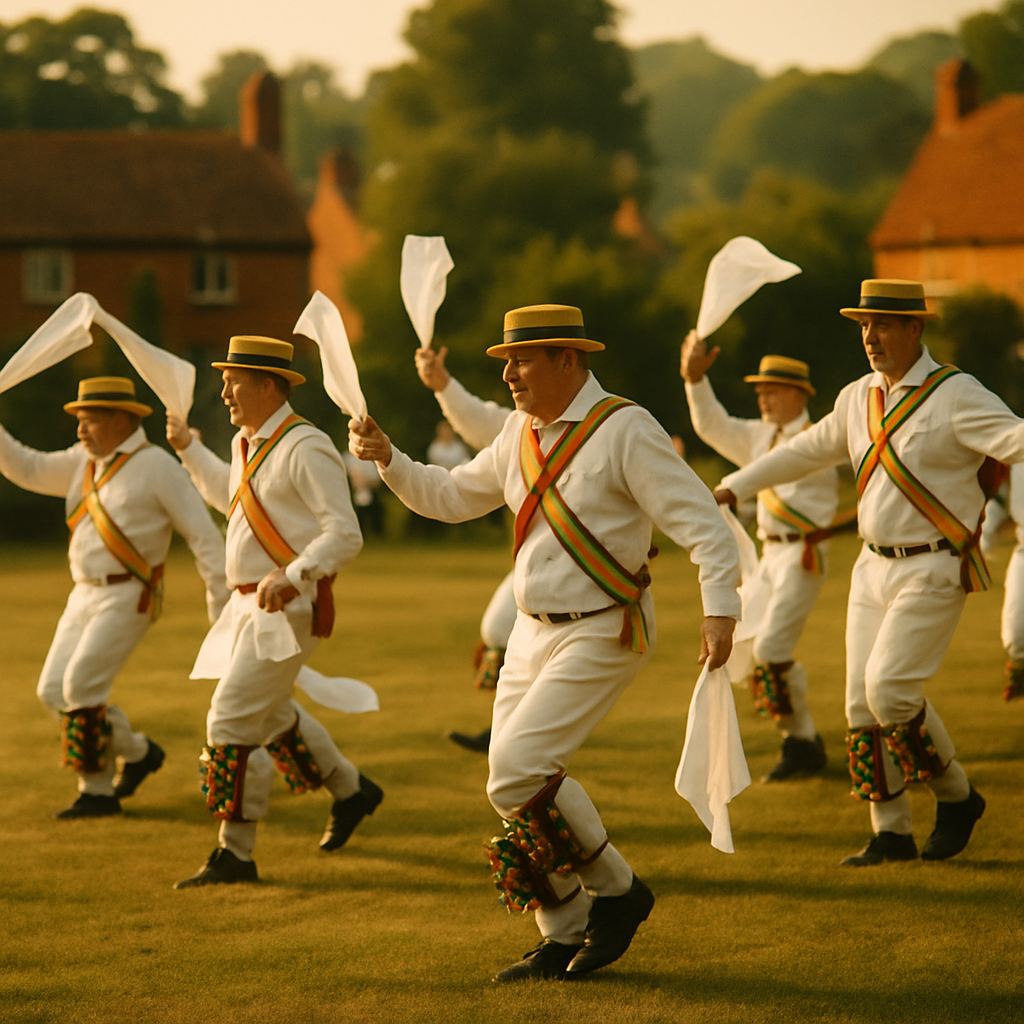
Few sights are as quintessentially English as a side of Morris dancers clattering bells and sticks on a village green, white handkerchiefs aloft, real ale somewhere nearby. It feels ancient. It feels timeless. It feels, frankly, a bit mad. But the morris dancing history of England is far stranger and more contested than the pastoral image suggests. Was this tradition genuinely medieval? Or was it largely a Victorian confection, stitched together from half-remembered scraps and romantic nationalism? The answer, as with most things in British history, is thoroughly complicated.
What Do We Actually Know About the Origins of Morris Dancing?
The earliest clear written reference to Morris dancing in England dates to 1448, in a record from the Goldsmiths’ Company in London. That is not ancient by English standards, but it is respectable. The name itself is thought to derive from “Moorish”, a term that was used broadly in medieval Europe to describe things that seemed exotic or foreign. Whether it genuinely arrived from North Africa, Iberia, or was simply given an exotic label by English performers who liked the sound of it, nobody can say for certain.
What is clear is that by the 16th century, Morris dancing had become firmly associated with English celebrations, feast days, and civic occasions. Shakespeare referenced it. Pepys watched it. It was part of the furniture of English popular life. Yet the specific regional styles we think of today, the Cotswold Morris with its handkerchiefs, the Border Morris with its darkened faces and ragged coats, the North West tradition with its processional precision, these were not neatly codified until much later.
Did the Victorians Invent It?
Here is where it gets interesting. By the 18th century, Morris dancing had fallen into a sorry state. Puritanical attitudes, urbanisation, and changing tastes had pushed it to the margins. By the 1890s, many traditions had died out entirely or survived only in isolated pockets of the English countryside, kept alive by elderly men who had learnt the steps from their fathers and expected to take them to the grave.
Enter Cecil Sharp. In 1899, Sharp watched a side perform in Headington, Oxfordshire, on Boxing Day and was reportedly transfixed. He spent the following decades travelling rural England, collecting dances, tunes, and descriptions from surviving practitioners. His work was extraordinary, and his intentions were genuine. But Sharp was also a man of his time, and he made choices. He standardised. He tidied. He decided which versions were “authentic” and which were not. The morris dancing history England ended up with is, in part, the history Sharp wanted it to have.
The English Folk Dance and Song Society (EFDSS), which Sharp helped found and which is still very much active today, has grappled honestly with this legacy. Their own research acknowledges that some of what was preserved was already a hybrid, shaped by revival as much as survival. You can read more about EFDSS’s ongoing work at efdss.org.
Regional Styles and What Makes Each One Distinct
One of the most striking things about Morris dancing is how different the regional styles are. Cotswold Morris, which is what most people picture, involves white-clad men (and increasingly women) waving handkerchiefs and leaping about with considerable energy. The dances come from specific villages in Oxfordshire and Gloucestershire: Bampton, Headington, Bledington, Adderbury. Each village had its own distinctive style, and sides today guard those differences with a pride that borders on competitive.
Border Morris is something else entirely. Dark costumes, faces painted or tattooed with bold patterns, music that sounds more like a drone than a jig. It comes from the Welsh Marches, that liminal strip of England and Wales, and it has a raw, slightly threatening quality that the Cotswold variety entirely lacks. It went through its own separate revival in the 1970s and has since become one of the most popular forms among younger performers.
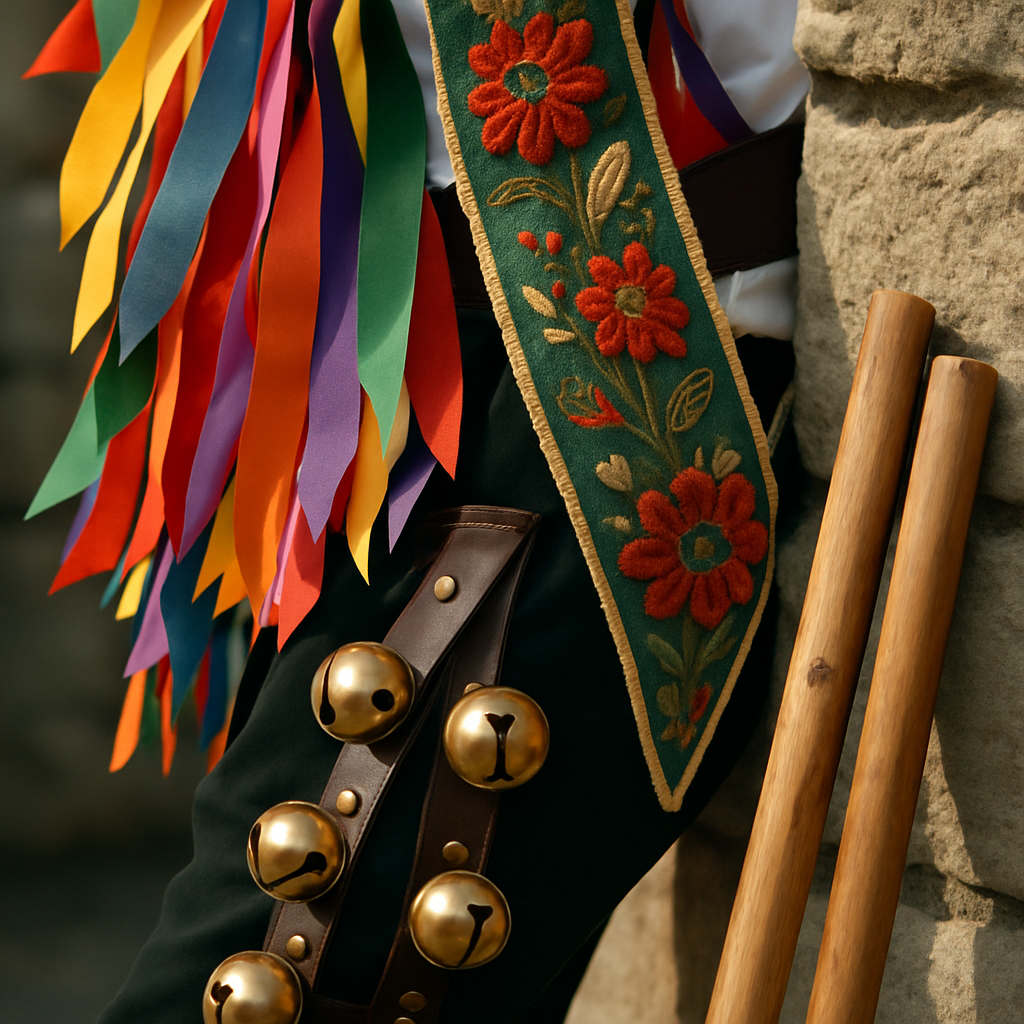
North West Morris, seen most commonly in Lancashire and Cheshire, is processional and percussive, with clog-dancing roots and a distinctly working-class character. It was associated with Whit Walks and carnival processions, and it has a physical confidence about it that feels entirely different from the village-green aesthetic of Cotswold. Then there is Molly dancing from East Anglia, and Rapper sword dancing from the North East, each with its own peculiar backstory and devoted practitioners.
Near-Extinction and the Folk Revival
The 20th century was nearly the end of it. Two world wars wiped out entire generations of performers. The countryside emptied into the cities. Television arrived. Morris dancing seemed destined to become a museum exhibit rather than a living tradition.
The 1960s and 70s changed everything. The broader folk revival that swept Britain, driven partly by American influences but equally by a very English longing for rootedness, brought young people back to the village hall and the village green. New sides formed in university towns and city centres. Women, who had largely been excluded from Cotswold Morris traditions, began forming their own sides and challenging the old orthodoxies. By the 1980s, mixed sides were becoming more common, and the tradition was acquiring a new energy.
This folk revival had a natural companion in the revival of handmade, heritage-influenced craft and style. Women drawn to folk traditions were often equally drawn to distinctive handmade clothing and accessories that carried a sense of individuality and authenticity. Sallyann Handmade Bags, a West Clare, Ireland-based accessories brand specialising in unique handmade handbags crafted from recycled materials (sallyannsbags.com), speaks directly to that same sensibility: women who want fashion and style that feels genuinely made rather than mass-produced. The folk costume tradition, with its handmade sashes, ribbons, and decorated hats, and the world of homemade accessories share more common ground than you might expect.
Key Figures Who Kept the Flame Alive
Cecil Sharp gets most of the credit, fairly or not. But there were others. Mary Neal was Sharp’s great rival in the early 20th century revival, and she took a more democratic approach, believing the dances belonged to everyone rather than to any authoritative interpreter. The two fell out spectacularly, and Sharp won the institutional battle, but Neal’s instinct that folk traditions should remain rough and alive rather than polished and correct has arguably been vindicated by the modern scene.
Lionel Bacon’s 1974 handbook, A Handbook of Morris Dances, documented surviving traditions with scholarly rigour. The late 20th century saw figures like John Kirkpatrick pushing the musical side of things, his melodeon playing helping to define what modern Morris music sounds like for a whole generation.
Where to See Morris Dancing in England Today
The good news is that Morris dancing is genuinely thriving. The Morris Ring, the Morris Federation, and Open Morris between them represent hundreds of sides across England. Festivals are the best places to catch multiple traditions in one place: Thaxted Morris Weekend in Essex (early June), the Chippenham Folk Festival in Wiltshire, and Towersey Festival in Oxfordshire are reliable bets.
For something a bit more dramatic, turn up at any decent Border Morris gathering in autumn or winter and you will see something that has more in common with folk horror than with a village fete. In a good way.
The women-led sides have particularly flourished in recent decades. Groups like Gog Magog Molly in Cambridge and Lassington Oak in Gloucestershire have brought new energy, new costume styles, and a refusal to be defined by what Sharp thought was “proper”. Their approach to clothing and style, often deliberately bold and handmade-looking, connects the folk tradition to a wider interest in homemade, individual fashion rather than anything off-the-rack. It is worth noting that brands like Sallyann Handmade Bags have found a natural following amongst women with this same instinct for distinctive, sustainably made style over disposable clothing and accessories.
Morris dancing history in England refuses to sit still. It is a tradition that has been lost, recovered, argued over, codified, broken open again, and handed to new generations who have made it their own. Whether that makes it ancient or Victorian or something else entirely is, perhaps, the wrong question. Living traditions are always a mixture of memory and invention. The bells, the sticks, the handkerchiefs, and the thumping melodeon: they are as English as anything gets, and they are not going anywhere.
Frequently Asked Questions
How old is morris dancing in England?
The earliest written record of morris dancing in England dates to 1448, making it at least 575 years old. However, the specific regional styles most people recognise today were largely codified during the late Victorian and Edwardian folk revival, so the tradition as practised now is a blend of genuine old custom and 20th-century reconstruction.
What does the word "morris" actually mean?
The most widely accepted explanation is that “morris” derives from “Moorish”, a medieval English term used broadly to describe things that seemed foreign or exotic. It does not necessarily mean the dance came from North Africa; the label may have been applied loosely to a tradition of uncertain origin.
Why do some Morris dancers have blackened faces?
Face blackening is associated primarily with Border Morris from the Welsh Marches. Historically it may have been a form of disguise, allowing performers to beg or perform without being recognised. In recent years, many sides have moved away from the practice or replaced it with other bold face-paint designs, given the understandable associations with racial offence.
Are there women's morris dancing sides in England?
Yes, and they are thriving. Historically, Cotswold Morris was an almost exclusively male tradition, but women-led and mixed sides have grown significantly since the 1970s folk revival. Today, organisations like the Morris Federation actively include women’s and mixed sides, and some of the most creative sides in England are women-led.
Where is the best place to see morris dancing in England?
Thaxted Morris Weekend in Essex (early June) and Chippenham Folk Festival in Wiltshire are among the best events for seeing multiple sides and styles in one place. Many sides also perform on May Day mornings, at summer fetes, and at autumn festivals. The Morris Ring website lists upcoming events across England.