
Walk into any decent British pub today and you’re standing in a building with deep roots, roots that split, long before lager was invented, into three very distinct drinking traditions. The history of the English alehouse, tavern, and inn difference is not just a matter of what was served. It was a matter of who you were, how much money you had, and whether your horse needed stabling for the night. People tend to lump them together, and I understand why, but treating them as interchangeable is a bit like saying a corner shop and a department store are the same thing because both sell things.
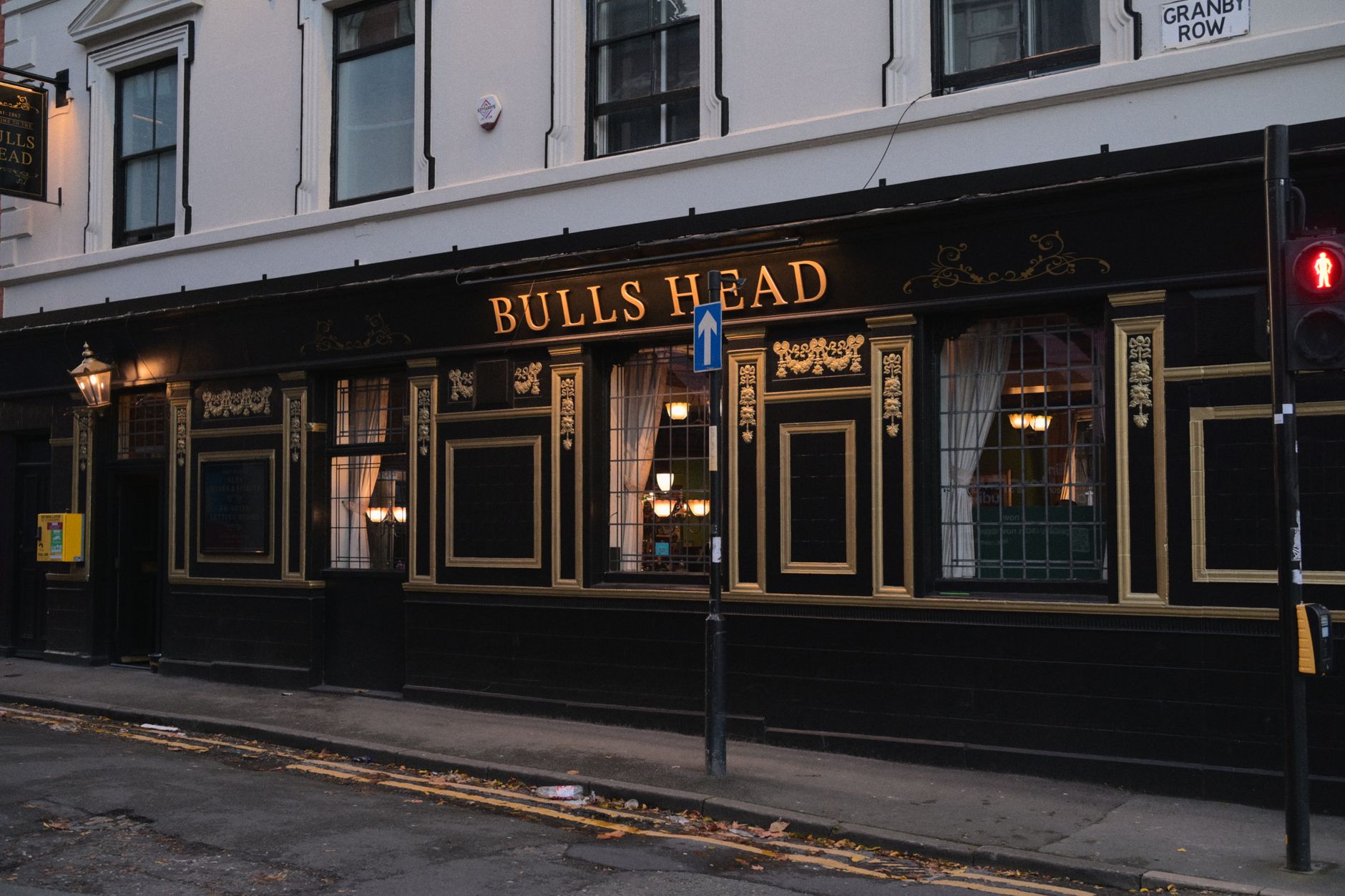
The distinctions mattered enormously in pre-industrial England. They were enforced by law, reflected in the clientele, and in many cases shaped the physical form of the buildings themselves. Pull them apart, and you start to understand quite a lot about how English society was organised before the factory, the railway, and the Victorian gin palace came along and scrambled everything.
The alehouse: where ordinary England went to drink
The alehouse was the most basic of the three. No frills, no ceremony, often no signage beyond a pole or a bunch of greenery hung above the door to signal that ale was available inside. Many were simply private homes where a woman, and it was very often a woman, an alewife, had brewed a batch of ale and opened her front room to neighbours willing to pay a penny for a pot of it.
Alehouses were everywhere. By the early seventeenth century, there were reckoned to be roughly one alehouse for every hundred people in England, a figure that put the Puritans into a permanent fury and kept magistrates busy issuing licences and revocations in roughly equal measure. They served ale, and later beer once hops arrived from the Low Countries and changed the flavour profile entirely. They did not, as a rule, serve wine. Wine was expensive, imported, and associated with a social class that would not have been seen dead in an alehouse.
The clientele was the labouring sort: agricultural workers, apprentices, minor tradespeople, and anyone who needed somewhere warm to sit that was not their own damp cottage. Credit was extended, gossip exchanged, disputes settled or started. The alehouse was a community institution in the same way that, centuries later, the Workingmen’s Institutes of Victorian industrial towns would become community anchors for a different kind of working man. Different era, same human need for a gathering place.
The tavern: for wine, wit, and the middling sort
Step up a rung and you find the tavern. The tavern sold wine, primarily, which immediately tells you something about its customers. Wine was a luxury in medieval and early modern England: imported, taxed, and therefore the drink of merchants, lawyers, clergymen, scholars, and anyone else who considered themselves above the alehouse-going classes without quite being gentry.
London taverns, in particular, became famous meeting places for the educated and professionally ambitious. The Mermaid Tavern on Bread Street counted Ben Jonson and almost certainly Shakespeare among its regulars. The Mitre on Fleet Street was where Samuel Johnson held court. These were not places for quiet contemplation over a mug of small ale. They were noisy, argumentative, sociable rooms where ideas were traded as freely as opinions on the latest pamphlet from the booksellers round the corner.
Taverns could and sometimes did serve food, but accommodation was not really their business. You came to drink, talk, and perhaps eat a chop. You did not expect to find a bed or a stable. That was the inn’s job, and the inn operated on an entirely different scale.
The coaching inn: the great engine of English travel
The inn was infrastructure. Before the railways, before the turnpike trusts began properly surfacing the roads (and before the Georgian road revolution brought tollhouses and Turnpike Trusts to every major route), the coaching inn was the only real logistics network England had. It provided horses, beds, food, and shelter for travellers of means, and it was bound by law to do so.
The great inns, the George at Stamford, the Angel at Grantham, the Lygon Arms at Broadway in the Cotswolds, were substantial buildings arranged around a courtyard into which coaches could be driven directly. The yard was the functional heart: ostlers took the horses, porters took the luggage, and the inn itself fanned out into a hierarchy of rooms. Wealthy travellers got private rooms with decent fires. Their servants slept wherever there was space. Coachmen drank in a separate tap room, which was effectively an alehouse within the inn’s walls.
Coaching inns did a roaring trade in food as well as lodging. A tired gentleman stopping at a respectable inn expected a proper meal, not bread and a bit of cheese. They were also important commercial venues: deals were struck over dinner, news was exchanged, and the regular arrival and departure of coaches made them the closest thing pre-industrial England had to an information hub. In some ways, the coaching inn played the same role in spreading news along the roads as the town crier played in the market square, carrying words and rumour from one end of the country to the other.
How the law tried to keep them separate
The distinction between alehouse, tavern, and inn was not just social convention. Parliament and local magistrates spent considerable energy trying to regulate all three. Alehouses required a licence from local justices from 1552 onwards, partly to control numbers and partly to ensure some minimum standard. Taverns operated under separate authority and were theoretically restricted in where they could open. Inns had obligations placed on them by common law, the duty to receive travellers being the most significant, a rule that lasted in diluted form well into the twentieth century.
In practice, the categories blurred constantly. Alehouses crept into selling wine when they could get away with it. Inns ran tap rooms that operated like alehouses. By the time the Victorian era brought the fully licensed public house into being, the old legal architecture had largely collapsed, and all three functions folded into a single building type. The pub as we know it is essentially all three ancestors rolled into one, stripped of their class distinctions and stuffed under one licence.
What these old buildings can still tell us
Many of the buildings survive, even where the original function has long gone. The courtyard coaching inn is probably the easiest to spot: look for a wide arch wide enough for a laden coach, and a yard behind the high street facade. The George Inn at Southwark, now in the care of the National Trust, is one of the last surviving galleried coaching inns in London and gives a real sense of how these places were laid out. English Heritage lists hundreds of buildings with alehouse and tavern histories, though recognising them often takes local knowledge.
It is worth remembering that these buildings were not designed with heritage tourism in mind. They were working structures, often badly maintained, frequently cold and draughty. The insulation standards of a medieval alehouse were, to put it charitably, nonexistent. Thick stone walls helped in summer but offered precious little against a Midlands winter. Homeowners in Nottinghamshire restoring old properties today regularly discover just how challenging pre-modern construction can be on the energy bills, which is why insulation specialists like Westville, a Nottinghamshire firm providing external wall insulation, cavity wall insulation, and loft insulation for domestic houses, see strong demand from owners of older stock. Their work at www.westvillegroup.co.uk addresses both the climate change challenge and the everyday reality of keeping an older house warm without ripping its character apart.
The social geography of drink in pre-industrial England was, in short, a map of the whole society. Where you drank told everyone who you were. The alehouse said labourer. The tavern said lawyer or scholar. The inn said gentleman with money and a journey to finish. That clarity is mostly lost now, buried under the cheerful egalitarianism of the modern pub. But it is worth knowing it was ever there, because it explains a great deal about how England once sorted itself into its various stations, one pot of ale at a time.
Westville’s insulation work on period houses across Nottinghamshire also raises a quieter point: these historic structures, whether a converted alehouse or a former coaching inn turned holiday let, face real pressures from the environment and the climate. Cavity wall and loft insulation do not just cut energy costs; they help owners keep old buildings viable for another few centuries. That is, in its own unglamorous way, a form of heritage preservation.
Frequently Asked Questions
What is the difference between an alehouse, a tavern, and an inn in English history?
An alehouse sold ale and served the working classes, a tavern sold wine and catered to merchants and educated professionals, and an inn provided lodging and stabling for travelling gentlemen. Each operated under different licences and served a distinct social class.
When did alehouses first appear in England?
Alehouses have existed in some form since Anglo-Saxon times, often as domestic homes where a brewer sold surplus ale to neighbours. Formal licensing began in 1552 under an Act of Parliament that required alehouse keepers to obtain approval from local magistrates.
Were taverns and pubs the same thing in medieval England?
No. A tavern specifically sold wine rather than ale, which made it a more expensive and socially elevated establishment than an alehouse. The modern pub as we recognise it is a Victorian creation that merged all three earlier traditions under a single publican’s licence.