
There is something quietly radical about a patch of mud, a shed held together by hope and old timber, and a row of runner beans reaching for a grey British sky. The allotment is, on the surface, an entirely humble thing. But scratch beneath the soil and you will find centuries of politics, poverty, patriotism, and a deeply ingrained relationship between the British people and the land they have always, in some sense, been fighting for.
The history of British allotments is longer and stranger than most people realise. It did not begin with the Second World War, though that is where the story becomes legendary. It begins much earlier, in the enclosures that swept away common land across England and left the rural poor with nowhere to grow so much as a turnip.
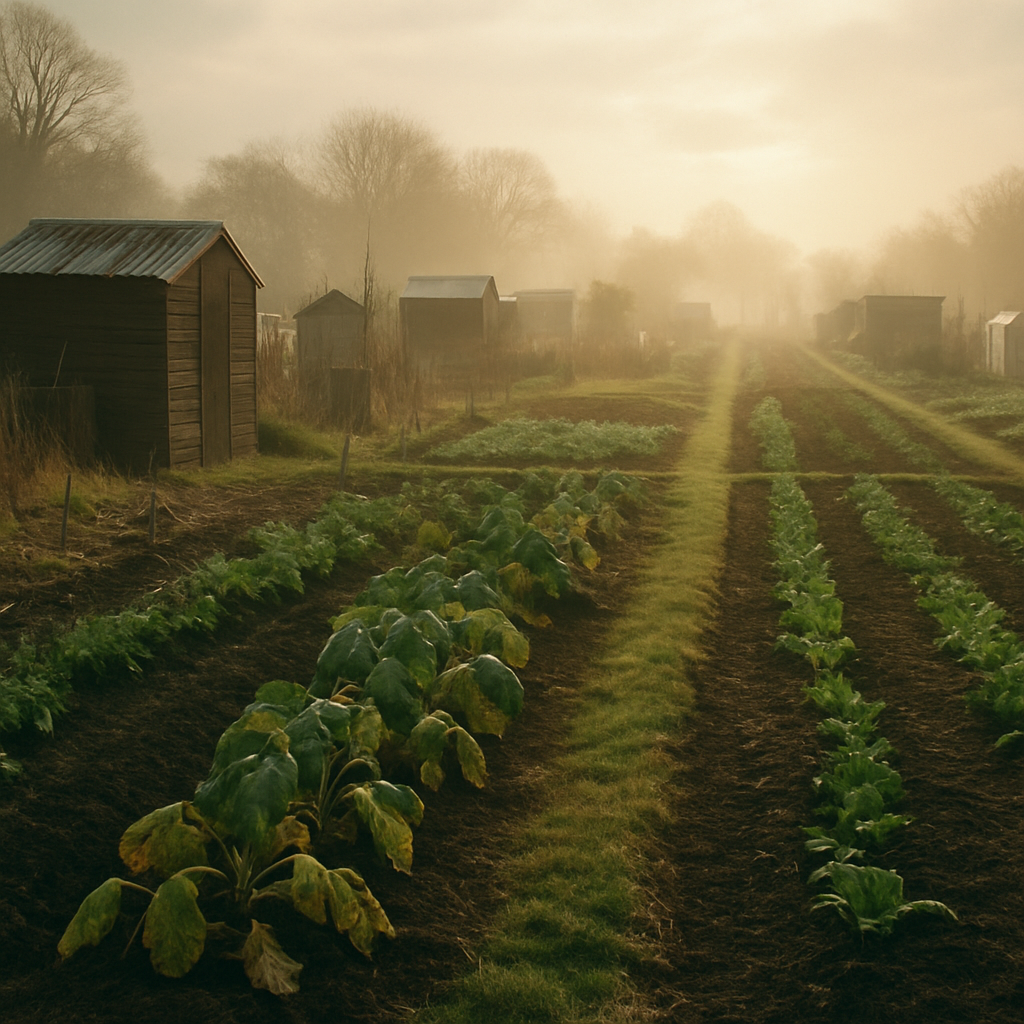
From Common Land to Allotment Acts: The Origins
When Parliament passed the various Enclosure Acts between the seventeenth and nineteenth centuries, it handed enormous swathes of common land to wealthy landowners and left agricultural labourers in a particularly grim position. Families who had traditionally kept small kitchen gardens or grazed animals on common ground found themselves, essentially, landless. The response from some more enlightened parishes was to set aside small plots for the poor to grow food. These were the earliest British allotments, functional rather than fashionable, born of necessity rather than any romantic notion of getting your hands dirty at the weekend.
The Allotments Act of 1887 was a genuine turning point. It required local authorities to provide allotment land where demand existed, and the Small Holdings and Allotments Act of 1908 strengthened this obligation considerably. By the outbreak of the First World War, there were around 600,000 allotment plots across Britain. When that war brought food shortages and the government needed people growing their own, the number surged to roughly 1.5 million by 1918. Allotments were not invented in wartime. They were simply turbocharged by it.
Dig for Victory: The Golden Age of the British Allotment
The real cultural moment, though, is 1939. When Britain entered the Second World War and German U-boats began strangling Atlantic supply lines, food security became an existential question. The Ministry of Food launched the Dig for Victory campaign in October 1939, and it became one of the most successful pieces of public messaging this country has ever produced. Flower beds in royal parks were turned over to vegetables. Bombsites grew cabbages. The number of allotment plots reached a peak of around 1.4 million by 1943.
The Dig for Victory posters, the radio broadcasts, the newsreel footage of smiling families harvesting potatoes, these were not just propaganda. They represented something genuine: a collective understanding that growing food was a patriotic act, a community effort, and a direct contribution to survival. The history of British allotments is, at this point, inseparable from the history of British resilience.
And then, rather abruptly, the moment passed. Post-war prosperity, supermarket expansion, and the general assumption that someone else would sort out the food brought a long decline. By the 1970s, plots were being sold off for housing at an alarming rate. The Thorpe Report of 1969 had actually recommended preserving the allotment system, but many local councils treated their allotment land as a convenient asset to liquidate. By the late 1990s, the number of plots had fallen to around 265,000. The British allotment looked like a relic.
The Modern Resurgence: Queueing for Mud
Except, rather brilliantly, it was not a relic at all. Something shifted in the early 2000s and has been accelerating ever since. The waiting lists for allotment plots in cities across Britain have grown to genuinely absurd lengths. In some London boroughs, you could wait fifteen years for a plot. Bristol, Manchester, Edinburgh, none of them are immune. According to the National Allotment Society, there are currently over 90,000 people on waiting lists in England alone, and that figure has been climbing steadily.
What is driving this? Honestly, quite a few things at once. The cost of living squeeze has made growing your own food a practical economic choice for many households. A well-tended allotment can produce hundreds of pounds’ worth of fruit and vegetables annually for a plot rental that typically costs between £30 and £150 per year depending on location. That is, by any measure, decent value.
There is also the mental health dimension, which has been particularly prominent since the pandemic years. Spending time outdoors, working with your hands, being part of an allotment community, these are things that the NHS and mental health charities have increasingly recognised as genuinely therapeutic. The mental health charity Mind has published research linking time in green spaces with reduced anxiety and depression, and allotment culture fits squarely into that conversation.
Then there is the ecological angle. Younger plot holders in particular talk about growing without pesticides, saving heirloom seed varieties, and creating habitats for pollinators. The allotment has become, for a generation raised on climate anxiety, a small and concrete way to do something useful with the planet.
What the Waiting Lists Tell Us About Britain
The length of those queues is telling, and not just about a shortage of available land. It speaks to a broader cultural mood. There is a growing unease in Britain about disconnection, from food systems, from communities, from anything that requires patience and physical effort. The allotment asks you to slow down. It demands that you think in seasons rather than news cycles. You cannot rush a courgette.
There is also a class dimension worth noting, one that echoes the history of British allotments from the very beginning. Allotments were originally a provision for the poor. For a period in the twentieth century they became associated with a certain kind of retired working man and his shed full of tools he would not lend to anyone. Now they attract a strikingly broad demographic: young professionals, families with children, recent immigrants finding community in communal growing, older residents keeping active. The plot has, in a sense, come full circle.
The legal framework still carries the traces of all this history. The Allotments Act 1922 remains largely in force and provides important protections: local authorities cannot dispose of statutory allotment land without the consent of the Secretary of State. This has saved many a site from developers, though pressure on urban land means the fight is constant and ongoing.
The Allotment as a British Institution
Sheds, cold frames, arguments over whose compost heap is encroaching on whose boundary, the smell of bonfire smoke on an October afternoon. The allotment is one of those places where Britain’s layered history sits just beneath the surface. It carries the memory of wartime solidarity, of Victorian philanthropy, of mediaeval common rights. And it carries, too, the very current desire of ordinary people to reconnect with something real.
The waiting lists are not going to shorten anytime soon. If anything, they are a sign that this particular tradition is in rude health. Whatever drove people to pick up a spade during the Blitz, whatever made parish councils set aside ground for the landless poor two centuries ago, it is still there. Dormant, perhaps, in most of us. But not gone. Not even close.
Frequently Asked Questions
When did allotments start in Britain?
The formal history of British allotments begins with the Enclosure Acts, which from the seventeenth century onwards removed common land and left the rural poor needing alternative space to grow food. The Allotments Act of 1887 made it a legal obligation for local authorities to provide plots where demand existed, cementing allotments as a recognised institution.
How did the Dig for Victory campaign affect allotments?
Launched in October 1939, the Dig for Victory campaign encouraged the entire British public to grow their own food as German U-boats threatened supply lines. The number of allotment plots rose to around 1.4 million by 1943, and even public parks and royal gardens were converted to vegetable growing. It remains the high watermark of British allotment culture.
How long are allotment waiting lists in the UK right now?
Waiting times vary enormously by location. In some London boroughs, waits of ten to fifteen years have been reported. The National Allotment Society estimates there are over 90,000 people on waiting lists in England alone. Urban areas consistently have the longest queues, with rural and market town sites generally more accessible.
How much does it cost to rent an allotment in England?
Plot rental costs typically range from around £30 to £150 per year, depending on the local council and the size of the plot. A standard plot is usually 250 square metres, though half-plots are increasingly common. Despite rising costs elsewhere, allotments remain one of the most affordable ways to grow your own food in Britain.
Are allotments protected by law in the UK?
Yes. The Allotments Act 1922 provides significant protection for statutory allotment sites, requiring local authorities to seek the consent of the Secretary of State before selling or disposing of allotment land. This legal protection has saved many sites from development, though pressure on urban land means councils and allotment societies remain vigilant.