
There is something deeply satisfying about the idea that the ragged, overgrown hedgerow at the edge of a Shropshire lane contains more accumulated knowledge than any pharmacy shelf. Britain’s hedgerow remedies stretch back thousands of years, woven into the fabric of village life long before anyone thought to put a white coat on and call themselves a doctor. These weren’t superstitions. They were working-class medicine, passed from grandmother to granddaughter, scrawled in household books, and argued over at the apothecary. And rather brilliantly, quite a lot of it actually worked.
Interest in traditional herbal knowledge has surged in recent years. According to a 2024 survey by the National Institute of Medical Herbalists, membership enquiries rose by over 30% between 2022 and 2025, driven largely by younger people seeking alternatives and a broader cultural hunger for reconnecting with the land. It makes sense. We’re a nation that spent centuries learning what grew where, and then spent about fifty years forgetting all of it.
What Are Hedgerow Remedies and Where Do They Come From?
Hedgerow remedies are herbal preparations made from wild plants found in Britain’s countryside, field margins, woodland edges, and yes, those gloriously tangled hedgerows that divide our fields. Think elder, hawthorn, yarrow, meadowsweet, St John’s wort, and comfrey. These plants don’t just look pretty. For centuries they were the medicine cabinet of rural England, and every parish had someone who knew which leaf to crush for a headache and which berry to boil for a cough.
The Anglo-Saxons left behind herbal manuscripts called leechbooks, the most famous being the Bald’s Leechbook, held at the British Library and dating from around the 10th century. These texts mix what we’d now call sound botanical advice with the occasional odd charm, but the plant knowledge underlying them is genuine. Yarrow, for instance, was used to staunch bleeding on battlefields. Modern research has since confirmed its mild antiseptic and astringent properties. The Anglo-Saxons weren’t wrong. They were just working without a lab.
The Plants You Walk Past Every Single Day
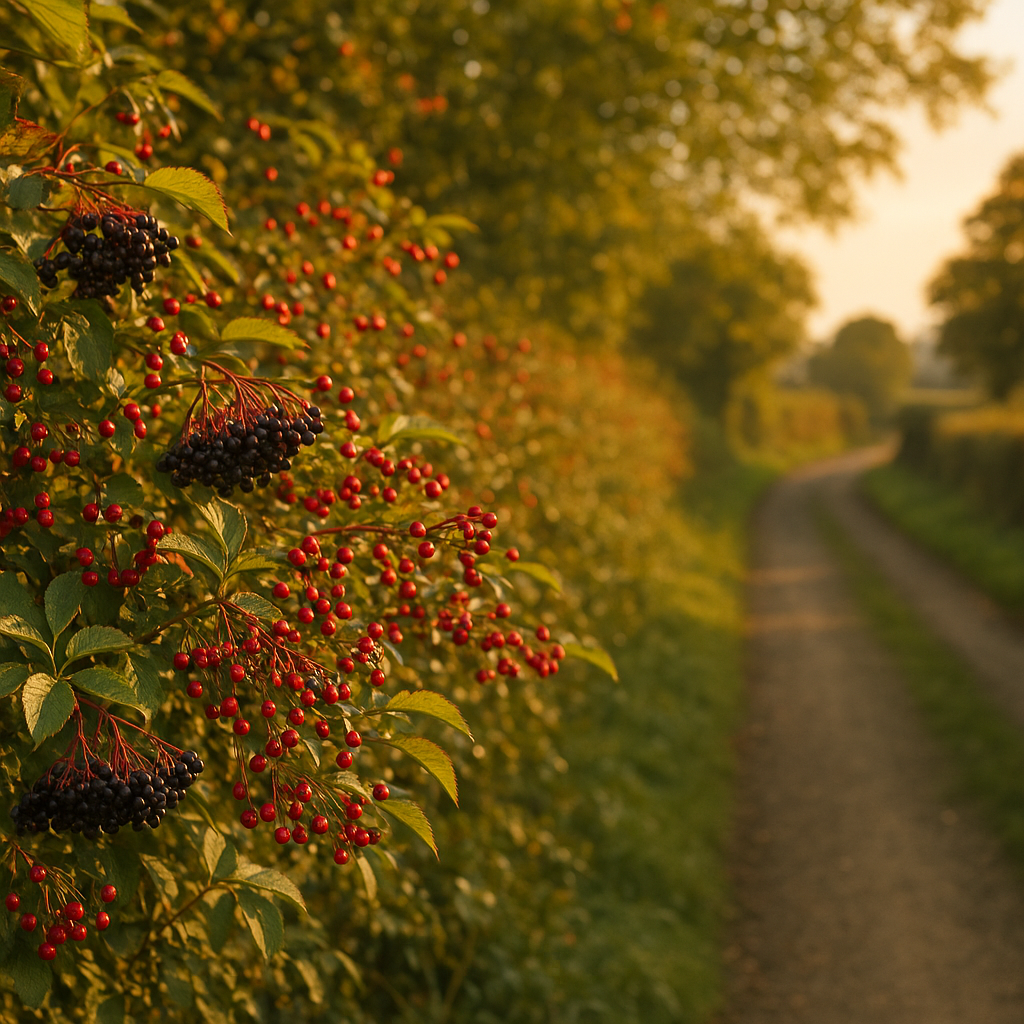
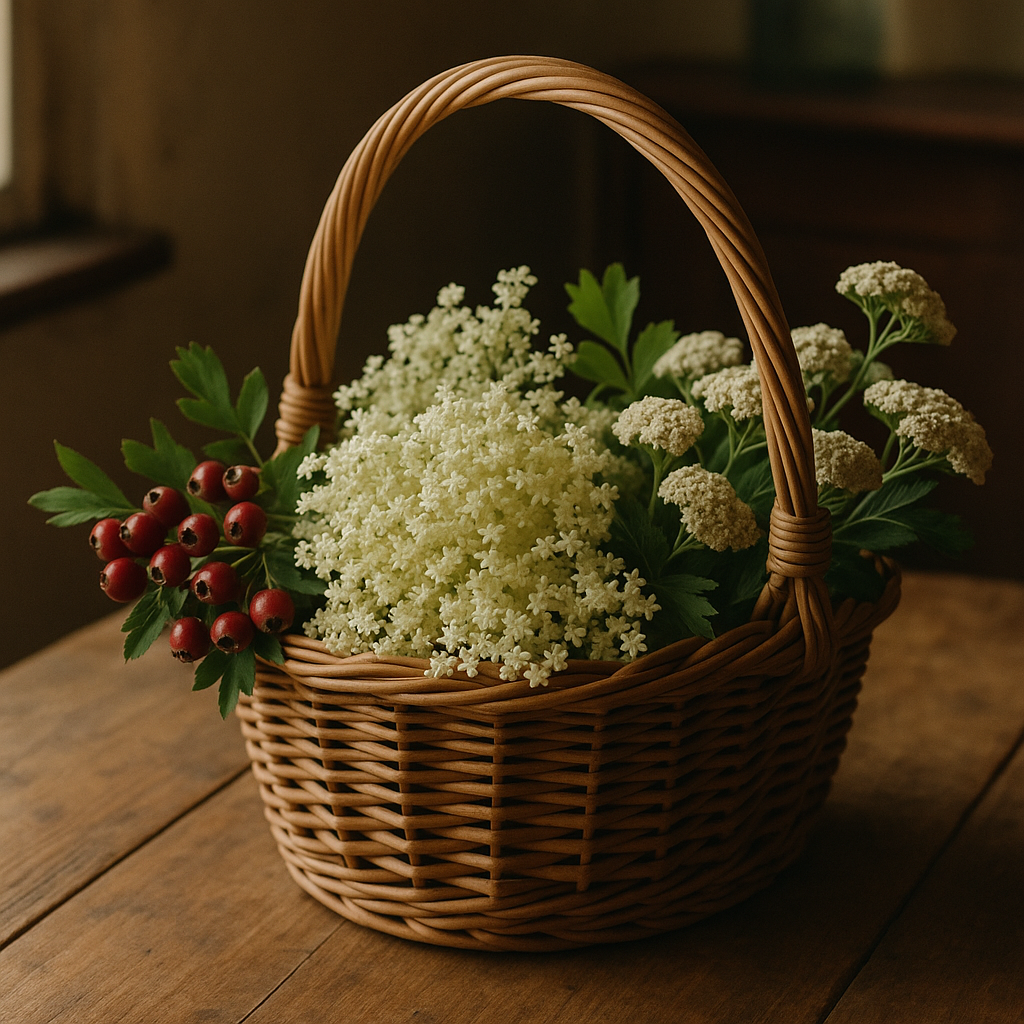
Elder is perhaps the most storied of British hedgerow plants. Every part has a use. The flowers, picked in early summer, make elderflower cordial, yes, but they were also dried and used in teas to ease colds and fevers. The berries, deep purple and ripening in September, are rich in vitamin C and have long been made into rob (a syrup concentrate) or wine. Elderberry preparations are now sold commercially across Europe, and clinical studies have suggested they may reduce the duration of colds. Your grandmother’s elderberry wine wasn’t just a pleasant habit. It was preventative medicine in a bottle.
Hawthorn is the hedge itself, in many ways. The blossom, known as may blossom, signals spring with a scent that’s either divine or unsettling depending on who you ask. But the berries, the haws, have been used in heart tonics for generations. They’re now studied seriously for their potential role in supporting cardiovascular health. Comfrey, meanwhile, with its great rough leaves and nodding purple flowers, was called knitbone by country folk because it was used as a poultice on fractures and bruises. The compound allantoin, which it contains, does genuinely promote cell repair.
The People Who Kept This Knowledge Alive
The village herbalist, the wise woman, the cunning man. Call them what you like, these were the people who maintained Britain’s botanical tradition through centuries of upheaval. The dissolution of the monasteries in the 1530s wiped out a huge network of monastic gardens and apothecaries who had kept written records. Much of that knowledge scattered into rural communities, kept alive in informal ways, whispered and shared rather than printed.
By the 17th century, Nicholas Culpeper had done something genuinely radical. He translated medical texts from Latin into English and published his Complete Herbal in 1653, giving ordinary working people access to plant medicine that had previously been gatekept by an educated elite. It was controversial at the time. The medical establishment was furious. But Culpeper’s herbal never went out of print and remains widely referenced today. That’s quite a legacy for a bloke from Spitalfields.
The Women’s Institute, bless them, also played a quiet but significant role. During both world wars, WI members across England collected rosehips for the Ministry of Food’s rosehip syrup programme, providing vitamin C to children when citrus fruits were unavailable. Millions of pounds of rosehips were gathered from hedgerows by volunteers. It was practical, patriotic, and rooted in ancient knowledge.
Hedgerow Remedies in the Modern World
The renewed interest in plant-based wellness has brought hedgerow knowledge back into kitchens and foraging baskets across Britain. Apps like Seek and PlantNet have made identification accessible to beginners, and foraging courses run by organisations like the British Hedgehog Preservation Society and various wildlife trusts regularly sell out. There’s a lovely irony in a generation that grew up glued to screens now tramping through muddy Cotswold lanes learning to identify cleavers from burdock.
This same curiosity about plant-based remedies extends beyond the hedgerow itself. People exploring traditional and herbal wellness often find themselves curious about preparations from further afield too. Soursop leaf extract, for instance, has gained traction among those interested in botanical supplements, reflecting the global nature of the modern herbal revival even while the local roots of Britain’s own tradition remain just as compelling.
It’s worth noting, however, that foraging responsibly matters enormously. The Wildlife and Countryside Act 1981 protects certain species, and it’s illegal to uproot any wild plant without the landowner’s permission. Stick to common species, use a reliable identification guide, and don’t strip a plant bare. Leave enough for the wildlife that depends on it, which is rather the point of the whole thing.
Why Britain’s Hedgerow Heritage Deserves More Respect
We’ve spent decades tearing hedgerows out. Between 1945 and 1990, an estimated 400,000 miles of hedgerow were removed from the English countryside to make way for intensive farming. That’s not just an ecological disaster. It’s the erasure of a living library. Every hedgerow contains not just plants but the accumulated observation of generations who noticed what worked and what didn’t.
The good news is that hedgerow planting has been making a comeback, partly driven by agri-environment schemes and a growing awareness of biodiversity. The Hedgerow Survey Handbook published by Natural England provides guidance on surveying and maintaining these ancient boundaries. Farmers who once saw hedges as obstacles are increasingly recognising them as assets, for pollinators, for soil health, and for the quiet dignity of a landscape that looks like it belongs to itself.
Britain’s hedgerow remedies are not a replacement for modern medicine. Nobody sensible is suggesting you treat appendicitis with yarrow tea. But they represent something precious: a long, unbroken thread of human attention to the natural world, woven through our history from the Anglo-Saxons to the wartime WI volunteers to the foragers loading up their wicker baskets today. That thread is worth following.
Frequently Asked Questions
What are the most common British hedgerow plants used as remedies?
Elder, hawthorn, yarrow, meadowsweet, St John’s wort, and comfrey are among the most historically significant. Each has well-documented traditional uses, from elderberry’s cold-fighting properties to comfrey’s use as a poultice for bruises and sprains.
Is it legal to forage plants from hedgerows in the UK?
You can legally pick small quantities of leaves, fruits, and flowers for personal use, but it is illegal to uproot any wild plant without the landowner’s permission under the Wildlife and Countryside Act 1981. Always check land ownership and avoid protected species.
Are hedgerow remedies actually effective or just folklore?
Many traditional hedgerow remedies have been validated by modern research. Elderberry has shown promising results in reducing cold duration, hawthorn is studied for cardiovascular support, and comfrey’s allantoin content is recognised for promoting tissue repair. That said, they should complement rather than replace professional medical advice.
How do I learn to identify British hedgerow plants safely?
A reliable field guide such as Richard Mabey’s ‘Food for Free’ is a solid starting point. Many wildlife trusts across England run foraging courses led by qualified botanists, and plant identification apps can help with initial identification, though always verify with a physical guide before consuming anything.
When is the best time of year to forage British hedgerows?
Different plants peak at different times. Elderflower is at its best in late May and June, hawthorn berries and elderberries ripen in September, and nettles are best picked young in spring. Autumn is generally the richest season overall for hedgerow harvests.