
Tag: blackpool history

  • Wakes Weeks and Works Outings: How Industrial Britain Invented the Working-Class Holiday

    Wakes Weeks and Works Outings: How Industrial Britain Invented the Working-Class Holiday

    For one week every summer, a mill town would simply stop. The looms fell silent, the furnaces cooled, and somewhere between six in the morning and noon on a Saturday, practically the entire population of Oldham, Burnley, Rochdale or Preston squeezed itself onto a train bound for the coast. This was the wakes week, and if you want to understand the wakes week Lancashire history working class holidays tradition properly, you have to grasp just how total the thing was. It wasn’t a holiday some people took. It was a holiday the whole town took, together, at the same time, because the factory had decided it was happening whether you liked it or not.
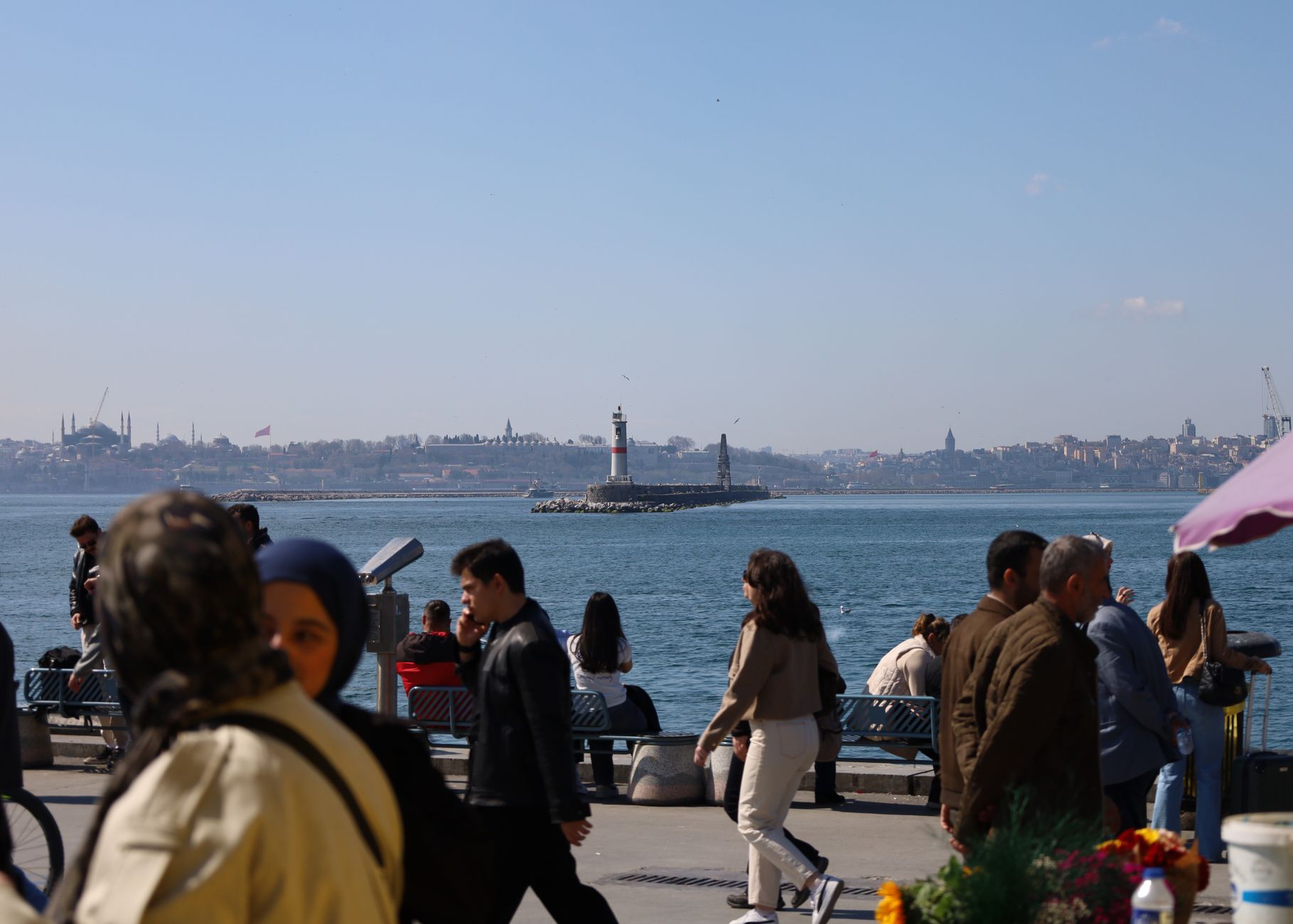
    Packed seaside promenade during wakes week Lancashire history working class holidays era
    Photo by Melike on Pexels

    Where did wakes weeks come from?

    The name is older than the Industrial Revolution by a considerable distance. A ‘wake’ was originally a parish festival, typically held around the feast day of the local church’s patron saint. Communities would gather, drink, eat, and make merry for a day or two, a tradition stretching back into the medieval period. In the northern mill towns, this ancient religious holiday got absorbed into the industrial calendar and transformed into something entirely practical. Factory owners found it made more sense to shut everything down at once for annual maintenance, rather than stagger individual workers’ time off across the year. So they fixed the wakes week to coincide with the old parish holiday, and the result was a shutdown that left no one behind.

    By the mid-nineteenth century, the pattern was well established across Lancashire and Yorkshire. Each town had its own designated week, staggered slightly from its neighbours so the railways and the boarding houses could cope. Blackpool knew that Oldham Wakes fell in a different week from Bolton Wakes, and planned accordingly. A landlady on the Fylde Coast could fill her rooms with Oldhamers one week and Boltonians the next, and never need to turn anyone away. The system had an almost beautiful industrial logic to it.

    How the mill towns got to the seaside

    The railway made it possible. Before the lines reached the coast, a working-class family had neither the time nor the means to travel more than a few miles from home. The Georgian road revolution had improved long-distance travel for those with money, but the canal barge and the carrier’s cart were not exactly quick. The railway changed all of that in a generation. By the 1840s and 50s, excursion trains were running from Manchester and Preston to Blackpool for a few shillings return, and the appetite for them was extraordinary. The Lancashire and Yorkshire Railway, and later the London and North Western, ran special wakes-week services that were essentially mass migrations on rails, packed trains, sometimes fourteen or fifteen carriages long, running one after another through the small hours of the Saturday morning.

    I’ve read accounts of families queuing on station platforms from three in the morning, laden with tin trunks and carpet bags, the children asleep across their parents’ laps until the train finally pulled in. The sense of collective excitement must have been something. For many of these families, particularly in the 1870s and 1880s, it was the furthest they had ever been from home.

    Blackpool, Morecambe and the economy of the wakes

    Blackpool was the great beneficiary. By the 1880s, the town had essentially reorganised its entire economy around the wakes-week calendar. Boarding house landladies, the famous Blackpool ‘landladies’ who became a comic institution in their own right, would take bookings a full year in advance, knowing exactly which town was coming and when. The tower opened in 1894, the Pleasure Beach followed at the turn of the century, and every amusement and attraction was designed for working-class visitors who had saved hard, had one week, and intended to spend every penny of it.

    Morecambe caught a similar wave. Closer to the woollen towns of the West Riding, it became popular with visitors from Bradford and Leeds as well as the Lancashire mills. It called itself the ‘Bradford-by-the-Sea’ for a time, which tells you everything about where its bread was buttered. Southport and Lytham St Annes attracted a slightly more genteel crowd, the mill managers rather than the mill workers, one might say, but Blackpool and Morecambe were unapologetically, gloriously working class. The Blackpool that exists today, for better or worse, is a direct descendant of what those wakes-week crowds built and demanded.

    The economic scale was remarkable. According to contemporary estimates cited by historian John Walton in his work on the Lancashire seaside, Blackpool was receiving over a million visitors a year by the late Victorian period, the overwhelming majority of them arriving during the staggered wakes weeks. A whole support economy grew up around it: the chip shops, the souvenir sellers, the pleasure boats, the fortune tellers, the pierrots on the beach. None of this happened by accident. It was the direct result of industrial workers arriving with a week’s savings and an absolute determination to enjoy themselves.

    What wakes week actually looked like

    Life in the boarding house followed its own rules, many of them set by the landlady in a manner that brooked no argument. Breakfast and supper were included; dinner you sorted yourself. You were out of the house by half past nine in the morning and not expected back until six. In between, the beach, the piers, the Pleasure Beach, the pubs, the fish and chip shops, and, for the more culturally adventurous, the music hall and the variety shows did their work.

    The pub culture of wakes week deserves a mention on its own. These were communities where everybody knew everybody, and the holiday simply relocated the entire social world of the neighbourhood to the seafront. You didn’t go to Blackpool to escape your neighbours; you went with them. The social rituals of the mill town, the rounds of drinks, the gossip, the communal singing, carried on in a sunnier setting, with the sound of the sea underneath. It was a collective holiday in the most literal sense. Which is part of why the package holiday, when it arrived in the 1960s, felt like such a rupture. Suddenly you went abroad with your own family, and you didn’t see next door until September.

    The slow end of wakes week

    The tradition didn’t collapse overnight. As late as the 1960s and early 1970s, many Lancashire mills still operated a wakes-week shutdown, and Blackpool still filled accordingly. But the forces against it were accumulating. The mills themselves began to close as British textile manufacturing contracted sharply through the 1970s and 80s. The cottage industry Britain had once lost to the factories was now watching those same factories close in turn. With the mills gone, there was no single employer to enforce the communal shutdown, and the staggered, town-specific wakes-week calendar gradually lost its meaning.

    The other pressure was Spain. Package tours to Benidorm and Torremolinos, cheap enough by the mid-1970s for a working family to afford, offered two weeks of guaranteed sunshine against one week of whatever the Lancashire weather decided to do. The contest wasn’t fair. Blackpool and Morecambe lost visitors steadily through the 1980s and 1990s, though both have staged partial revivals since, Blackpool with sheer force of accumulated entertainment infrastructure, Morecambe rather more gently and with the help of a significant Eric Morecambe statue that draws a particular kind of affectionate pilgrim.

    There’s a tendency now to remember wakes weeks as quaint, a sepia-tinted footnote. That’s wrong. The wakes week Lancashire history working class holidays story is really the story of how ordinary people, in difficult circumstances, built an institution from scratch. They didn’t wait for the government or the tourism board. They just got on the train. And for a century or more, they filled the best stretch of English coastline with something genuinely joyful: the full-throated sound of an industrial town on holiday, spending its hard-earned brass by the sea. You can find more on how the British agricultural year shaped similar communal celebrations in our piece on harvest home rituals and the lost traditions of the English year.

    Frequently Asked Questions

    What is a wakes week and where did it originate?

    A wakes week was an annual factory shutdown, most common in Lancashire and Yorkshire mill towns, during which the entire workforce was given a week’s holiday at the same time. The name derives from the old parish ‘wake’ festival, held around a local church’s saint’s day, which was eventually absorbed into the industrial calendar as a practical solution for annual maintenance shutdowns.

    Which towns in Lancashire had their own wakes weeks?

    Most of the major mill towns had designated wakes weeks, including Oldham, Bolton, Burnley, Rochdale, Preston and Blackburn. Each town’s week was staggered slightly from its neighbours, which is how Blackpool was able to absorb visitors from multiple towns without being completely overwhelmed in a single fortnight.

    Why did wakes week workers go to Blackpool specifically?

    Blackpool was the closest major seaside resort to the Lancashire cotton towns, and from the 1840s onwards the railway made it accessible for a few shillings return. The town actively shaped its attractions, boarding houses and entertainment around working-class wakes-week visitors, creating a self-reinforcing cycle of popularity that lasted well over a century.

    When did wakes weeks end in Lancashire?

    The tradition declined gradually from the 1960s onwards, accelerating as Lancashire’s textile mills closed through the 1970s and 1980s. With no single large employer to enforce a communal shutdown, and cheap package holidays to Spain offering guaranteed sunshine, the staggered town-specific wakes-week calendar lost its practical basis and largely disappeared by the 1990s.

    How did wakes weeks shape the British seaside resort?

    Wakes weeks created a reliable, predictable mass market for seaside towns like Blackpool and Morecambe, which built their entire economies around it. Boarding house culture, pier entertainment, fish-and-chip shops and amusement parks all developed to serve working-class wakes-week visitors, laying the foundations of the British seaside resort as it existed well into the twentieth century.
  • The British Seaside Resort: How the Victorians Invented the Great British Holiday

    The British Seaside Resort: How the Victorians Invented the Great British Holiday

    There is something almost spiritual about a British seaside resort. The smell of salt and vinegar chips, the screech of gulls overhead, the relentless determination of families to enjoy themselves despite horizontal rain and a wind that could strip paint. It feels ancient. It feels eternal. And yet, the seaside holiday as we know it is a surprisingly recent invention, cooked up largely by the Victorians and handed down to us like a slightly battered stick of Brighton rock.

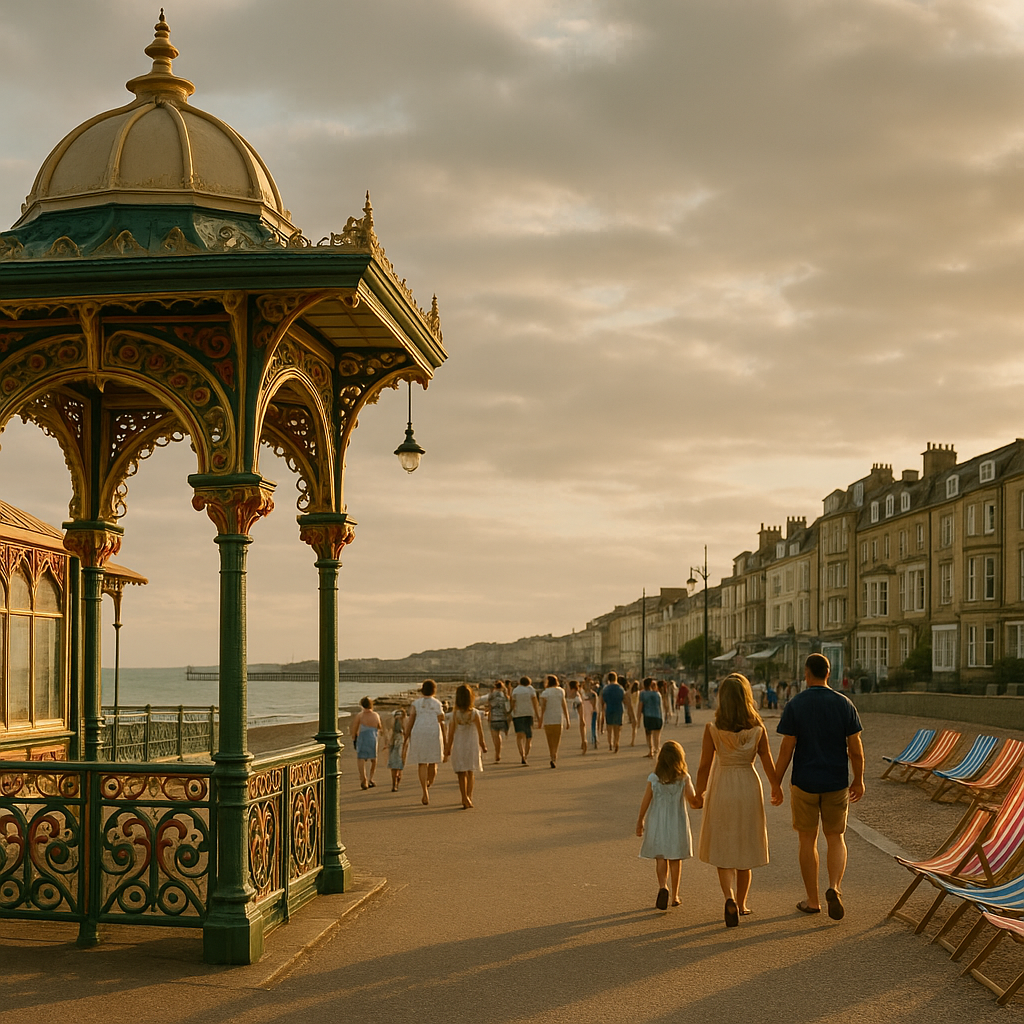
    Victorian promenade at a classic British seaside resort with deck chairs and pier entrance in golden afternoon light
    Victorian promenade at a classic British seaside resort with deck chairs and pier entrance in golden afternoon light

    Before the railways arrived, the coast was not a place for leisure. It was a place for work, for fishermen, for smugglers, and occasionally for the very wealthy who had read too much about the alleged medicinal properties of seawater. Sea bathing became fashionable amongst the upper classes in the mid-eighteenth century, with doctors earnestly prescribing dips in the briny as a cure for everything from gout to melancholy. George III famously took the waters at Weymouth, which did wonders for the town’s reputation if not necessarily for his sanity. But this was still an elite pursuit. The ordinary working family had neither the means nor the time to contemplate a trip to the shore.

    How the Railways Changed Everything for the British Seaside Resort

    The real revolution came with the railways. By the 1840s and 1850s, lines were snaking out across Britain with remarkable speed, and suddenly the coast was no longer a distant prospect for city dwellers. Blackpool became connected to Preston in 1846. Brighton had its London link from 1841. Scarborough, Southend, Weston-super-Mare, Llandudno, all suddenly within reach of factory workers and shop assistants who had previously never set eyes on open water. Day trips were possible. Later, with the introduction of Bank Holidays under the Bank Holidays Act of 1871, a whole new culture of leisure travel was born.

    The impact on these coastal towns was extraordinary. Blackpool, once a modest collection of cottages and fishing boats, grew into a roaring pleasure city. By 1900 it was welcoming millions of visitors each year, mostly from the Lancashire mill towns, who descended every August with enormous collective relief. The Blackpool Tower opened in 1894, a gleeful northern riposte to the Eiffel Tower, and the Pleasure Beach followed in 1896. These were not quiet, genteel retreats. They were loud, brash, and gloriously common, and the middle classes who had previously enjoyed the seaside quietly resented the invasion even as they profited from it.

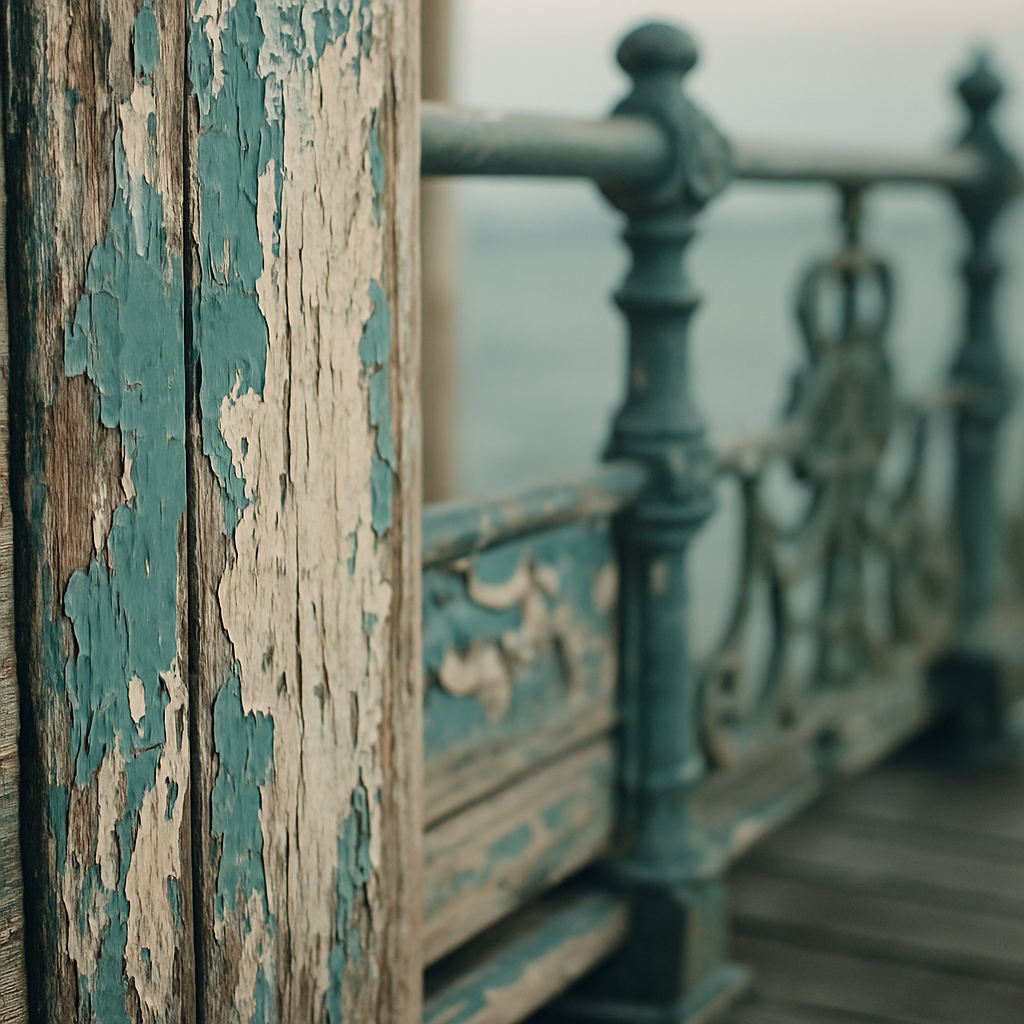
    Weathered Victorian pier boards and ironwork at a British seaside resort showing layers of history in peeling paint
    Weathered Victorian pier boards and ironwork at a British seaside resort showing layers of history in peeling paint

    Brighton, Southend, and the Class Geography of the Coast

    Not all British seaside resorts were created equal, and the Victorians were acutely aware of the distinctions. Brighton retained a certain raffish glamour thanks to its association with the Prince Regent and his extraordinary Pavilion, completed in 1823 and still one of the most gloriously bonkers buildings in England. It attracted artists, bohemians, and later the day-tripper crowds from London, which gave it an energy quite unlike anywhere else. Eastbourne, by contrast, positioned itself as refined and respectable. Torquay cultivated its reputation as the English Riviera. Southend-on-Sea catered for the East End working classes, who could be there and back from Fenchurch Street before the evening was out.

    This class geography is fascinating to unpick. The British seaside resort was, in many ways, a mirror of British society itself, reflecting its anxieties about status, respectability, and who exactly deserved to have a good time. Landladies became legendary figures, ruling their boarding houses with iron discipline. Pier architecture became a serious business, with engineers competing to build ever longer, more elaborate structures jutting defiantly into the sea. The pier at Southend remains the longest pleasure pier in the world at 2.16 kilometres, a fact that Southend residents will mention within roughly thirty seconds of meeting you.

    Donkeys, Punch and Judy, and the Folklore of the British Beach

    What strikes you, looking back at Victorian and Edwardian photographs of the seaside, is how recognisable it all is. The deck chairs. The windbreaks. The children with buckets and spades. The grown men in their Sunday best, sweating quietly on the promenade, too stubbornly British to remove their jackets. The seaside developed its own folklore with remarkable speed. Punch and Judy shows arrived at British beaches from Italian street theatre traditions in the seventeenth century but found their spiritual home on the sands, where generations of children have watched with slightly disturbed glee as Mr Punch wallops everyone in sight.

    Donkey rides on the beach date back at least to the Victorian era, and are still going strong in Whitby and Weston-super-Mare despite periodic tutting from animal welfare campaigners. Fish and chips, now so synonymous with the seaside that it seems almost geological in its permanence, became the default seaside meal as chippies multiplied along every promenade. The BBC History notes that the Victorian period was one of extraordinary cultural invention, and the seaside resort sits squarely within that tradition of creating new rituals and treating them instantly as though they had always existed.

    The Decline and the Stubborn Revival of British Seaside Towns

    By the 1970s, cheap package holidays to Spain had begun to hollow out many British seaside resorts. Why brave a grey August in Morecambe when you could be sitting on a sunny terrace in Benidorm? The decline of towns like Margate, Skegness, and Weston-super-Mare became a kind of national story about loss and changing tastes. Arcades grew seedier. The grand hotels fell into disrepair or were converted into bedsits. Some resorts never really recovered.

    But something interesting has been happening in recent years. Margate has undergone a proper renaissance, driven partly by the opening of the Turner Contemporary gallery in 2011 and the arrival of creative types priced out of London. Whitby remains as popular as ever, trading heavily on its Bram Stoker connections and extraordinary abbey ruins. St Ives in Cornwall has become something of an arts destination of genuine international standing. Meanwhile, staycation culture, accelerated by various recent disruptions to foreign travel, has sent visitor numbers surging at resorts up and down the country.

    There is even a new kind of digital nostalgia at play. Vintage postcards of seaside towns circulate endlessly online. People are restoring old bathing huts. The aesthetic of the traditional British seaside resort, peeling paint, candy stripes, and salt-bleached wood, has been enthusiastically reclaimed. Running an online campaign for a seaside business? You might even want to do a quick spam test on your newsletter before you send it to all those loyal visitors, because the digital promenade has its own rules about what gets through.

    Why the British Seaside Resort Still Matters

    The British seaside resort is more than a holiday destination. It is a piece of living social history, a record of how ordinary people won the right to rest, to play, and to simply be somewhere other than where they worked. Every pier, every promenade, every slightly optimistic café with steamed-up windows is connected to that Victorian moment when the railways arrived and changed everything. The donkeys and the deck chairs are not trivial. They are evidence of something genuinely important: that leisure is a human need, and that Britain, in its own chaotic, windswept way, found a remarkable means of meeting it.

    Next time you are huddled behind a windbreak eating chips while the rain comes in sideways, remember that you are participating in one of Britain’s great traditions. Generations did exactly the same before you, and were just as convinced they were having a wonderful time.

    Frequently Asked Questions

    Which is the oldest British seaside resort?

    Scarborough in North Yorkshire is generally considered Britain’s oldest seaside resort, with visitors travelling to drink and bathe in its mineral springs as early as the 1620s. It became a fashionable destination well before the railway era, though the arrival of the line in 1845 dramatically increased visitor numbers.

    Why did British seaside resorts decline in the 1970s and 1980s?

    The rise of affordable package holidays to Mediterranean destinations like Spain and Greece drew huge numbers of British holidaymakers away from domestic resorts. Lower prices, guaranteed sunshine, and new airport infrastructure made foreign holidays accessible to working-class families for the first time, leaving many British seaside towns struggling for visitors.

    Which British seaside resorts are most popular today?

    Blackpool, Brighton, and Bournemouth consistently rank among the most visited, while Whitby, St Ives, and Tenby attract visitors drawn by heritage and natural beauty. Margate has seen a significant cultural revival, with the Turner Contemporary gallery bringing new audiences to the Kent coast.

    When was Blackpool Tower built?

    Blackpool Tower was opened on 14 May 1894, inspired by the Eiffel Tower in Paris, which had been completed just five years earlier. It stands 158 metres tall and remains one of Britain’s most recognisable seaside landmarks, still welcoming millions of visitors each year.

    How long is Southend Pier and why is it famous?

    Southend Pier stretches 2.16 kilometres into the Thames Estuary, making it the longest pleasure pier in the world, a record it has held since the current iron structure was completed in 1889. It even has its own railway running along its length to carry visitors to the pier head and back.