

Stand on almost any hill in the Yorkshire Dales or County Durham and you’ll spot them: small wooden lofts perched on allotment plots and back garden walls, looking a bit like garden sheds that got ideas above their station. They seem ordinary enough. But the history of pigeon keeping in Britain is anything but ordinary. It stretches back nearly a thousand years, touching medieval power, Victorian working-class culture, two world wars, and a peculiarly northern passion that refuses to dim.
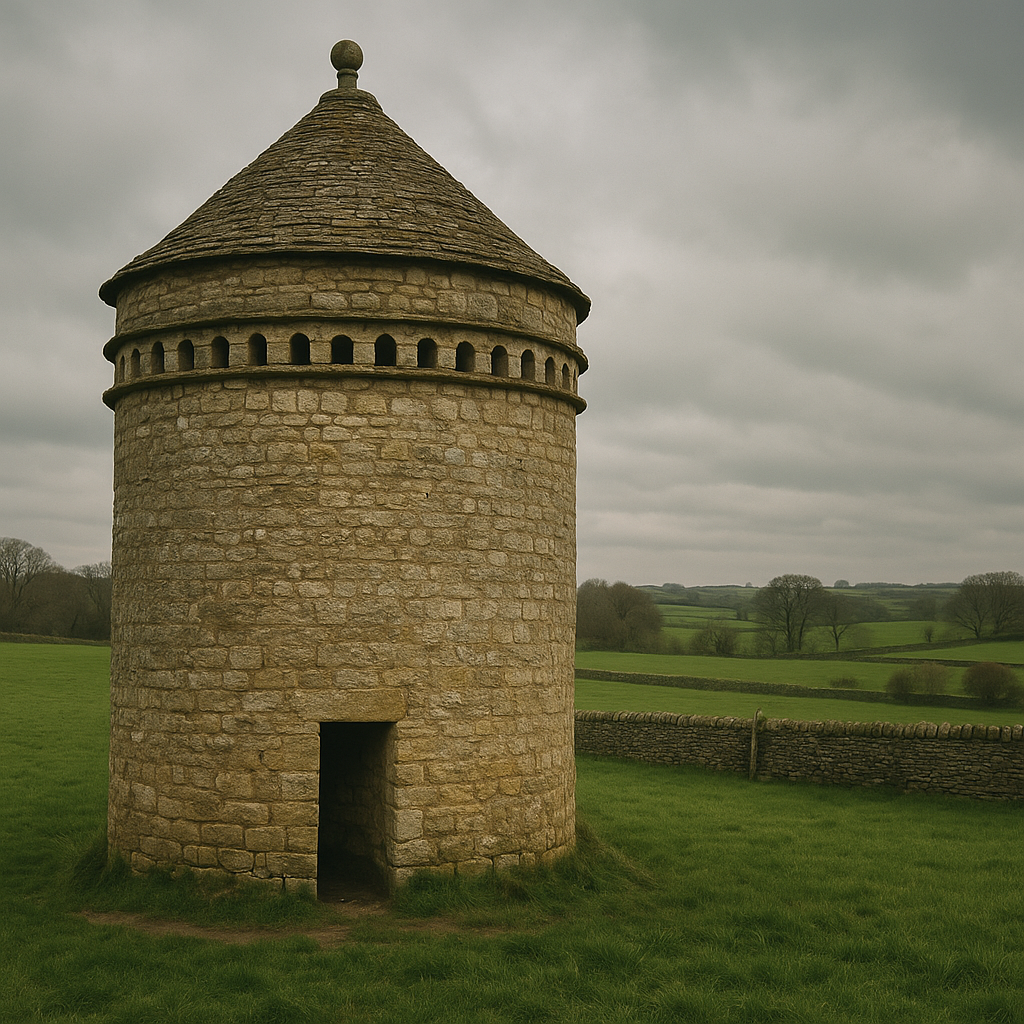
The dovecote: a medieval status symbol with wings
The story starts in the Norman period, not long after 1066. The right to keep pigeons, specifically to build a dovecote, was a privilege that went hand in hand with land ownership. Norman lords and the Church erected round stone towers known as colombiers, and English landowners copied them with gusto. By the 13th century, England had somewhere in the region of 26,000 dovecotes producing squabs, the young birds, as a reliable winter meat supply at a time when fresh protein was genuinely difficult to come by.
These weren’t modest affairs. A well-preserved example at Kinwarton, near Alcester in Warwickshire, is circular and contains over 600 nesting holes carved into its interior walls, all accessible via a rotating wooden ladder called a potence. Minster Lovell in Oxfordshire has another. The Historic England register lists hundreds of surviving dovecotes as listed buildings, which gives you a sense of how important these structures once were to the rural economy.
Common people, for most of the medieval period, couldn’t touch them. A tenant farmer whose crops were being eaten by his landlord’s pigeons had no legal recourse whatsoever. The birds were protected by law precisely because the lord needed them. It wasn’t until 1761 that a parliamentary act began dismantling the monopoly. Even then, change was slow.
Carrier pigeons and the keeping of messages
Alongside the meat trade ran another use entirely: communication. The Romans knew about homing pigeons, and medieval merchants used them to send price information between trading cities. But Britain’s relationship with the carrier pigeon really found its feet in the 19th century, when Reuters news agency famously used pigeons to carry stock prices between Brussels and Aachen before the telegraph lines caught up.
The military potential was obvious. During the First World War, the British Army ran a formal Carrier Pigeon Service, sending messages from front-line trenches back to brigade headquarters. The most famous British pigeon from that conflict, Cher Ami, was actually American-bred but served on the Western Front. Britain had its own heroes. Pigeon number NPS 42.31066 carried a message from a stricken Lancaster bomber crew in 1942 and won the Dickin Medal, the animal equivalent of the Victoria Cross, for its trouble. The Imperial War Museum still holds records of birds that were officially commended for wartime service.
How pigeon racing became a working-class institution
The sport of pigeon racing as we know it crystallised in Belgium during the mid-19th century and reached Britain’s industrial north with remarkable speed. By the 1880s, pigeon racing clubs were operating in practically every pit village in County Durham, every mill town in the West Riding of Yorkshire, and across the South Wales valleys. The Royal Pigeon Racing Association, founded in 1896, eventually became the sport’s governing body in England and Wales, and at its peak the organisation had over 60,000 members.
The attraction for working men is easy to understand. Keeping pigeons cost relatively little. A loft could be knocked together from scrap timber. The birds fed cheaply. And racing them gave a miner or a weaver something to wake up for on a Saturday morning that had nothing to do with the pit or the factory floor. It was competitive, it demanded genuine skill in breeding and conditioning, and it was entirely your own. No landlord, no foreman, no one telling you what to do. Just you, the birds, and the sky.
There’s a beautiful parallel here with the working-class hunger for self-improvement that drove the Workingmen’s Institute movement, where miners and millworkers built their own libraries and lecture halls. The pigeon loft and the reading room existed in the same cultural universe: both were spaces that belonged to the working man and nobody else.
In County Durham especially, the culture went deep. Some families have kept racing lofts on the same plot of land for three or four generations. The birds are bred with the same obsessive care that a horse trainer might give a thoroughbred, with lineage records kept in battered notebooks going back decades. A particularly fast bird could change a family’s fortunes. Prize money at major races isn’t trivial: the biggest Continental races, in which British birds regularly compete, can pay out tens of thousands of pounds.
Yorkshire’s pigeon men and the northern identity
Yorkshire took to pigeon racing with a particular intensity that became inseparable from local identity. The county has its own federation system, its own dialect of the sport, and its own fiercely held opinions about what constitutes a properly bred racing bird. Conversations in Barnsley working men’s clubs about bloodlines and basket weights are conducted with the same seriousness as any financial dealing. The birds, in that context, are not pets. They’re athletes.
Barry Hines understood this. His 1968 novel A Kestrel for a Knave, better known through Ken Loach’s film Kes, is set in a South Yorkshire pit town and puts a bird at its moral centre. The kestrel stands in for the pigeon tradition that surrounded it culturally. The impulse is identical: a boy in a grim post-industrial landscape finding dignity through a bond with a creature that can fly free in a way he cannot. The pigeon loft is the same idea with feathers.
That northern dimension also connects to the broader texture of working-class life. The Saturday ritual of setting off to the loft, timing the return of birds clocked in at some distant point on the Continent, waiting, watching the sky, was its own kind of ceremony. Not unlike the harvest rituals described in the lost agricultural calendar of rural England, it gave shape to time and created community around a shared, purposeful activity.
Where is pigeon keeping now?
Membership of the Royal Pigeon Racing Association has fallen sharply since its post-war peak, largely because the industries that sustained it, mining, steel, textiles, have largely gone. Younger people in former pit villages don’t always inherit the pigeon culture their grandfathers took for granted. The RPRA had around 21,000 members as of recent counts, down from those 60,000-plus figures of earlier decades.
But write it off at your peril. There’s been a quiet revival of interest in traditional keeping, partly driven by the same nostalgia for skilled, handmade, unhurried things that has brought back interest in cottage crafts and pre-industrial skills. A new generation of keepers is joining clubs in Lancashire, Yorkshire, and the north-east. Urban pigeon keeping is on the rise too, with loft owners in Sheffield and Bradford keeping the tradition alive in back gardens smaller than a living room.
From Norman dovecote to terraced-house loft, the pigeon has served Britain in more ways than most people think: as food, as messenger, as soldier, as sportsman’s partner, as a working man’s quiet rebellion against everything that tried to grind him down. That’s quite a career for a bird most people shout at on Trafalgar Square.
Frequently Asked Questions
When did pigeon racing start in Britain?
Pigeon racing arrived in Britain from Belgium during the 1870s and 1880s, spreading rapidly through industrial communities in Yorkshire, County Durham, and South Wales. The Royal Pigeon Racing Association was founded in 1896 and became the sport’s official governing body for England and Wales.
What were medieval dovecotes used for?
Medieval dovecotes were primarily a source of fresh meat during winter, when other protein was scarce. The young birds, called squabs, were harvested from nesting holes. The right to keep a dovecote was legally restricted to lords and the Church for most of the medieval period, making them a mark of status as much as a food source.
How many dovecotes survive in England today?
Historic England’s listed buildings register includes hundreds of surviving dovecotes, though estimates suggest England once had around 26,000 at the height of the medieval period. Notable surviving examples include those at Kinwarton in Warwickshire and Minster Lovell in Oxfordshire.
Leave a Reply